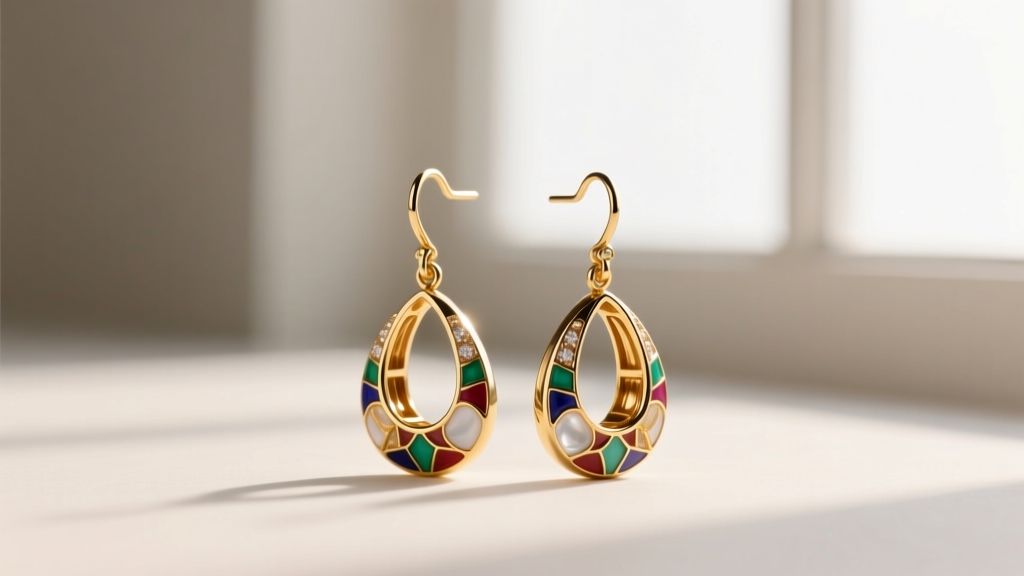
Trending Earrings Drop Earrings: The 2026 Runway Forecast
Analyze the 2026 trend forecast for statement earrings. Drop earrings dominate runways with new titanium alloys, kinetic silhouettes, and lobe-safe engineering.

The 2026 Shift: Runway Data and the Kinetic Silhouette
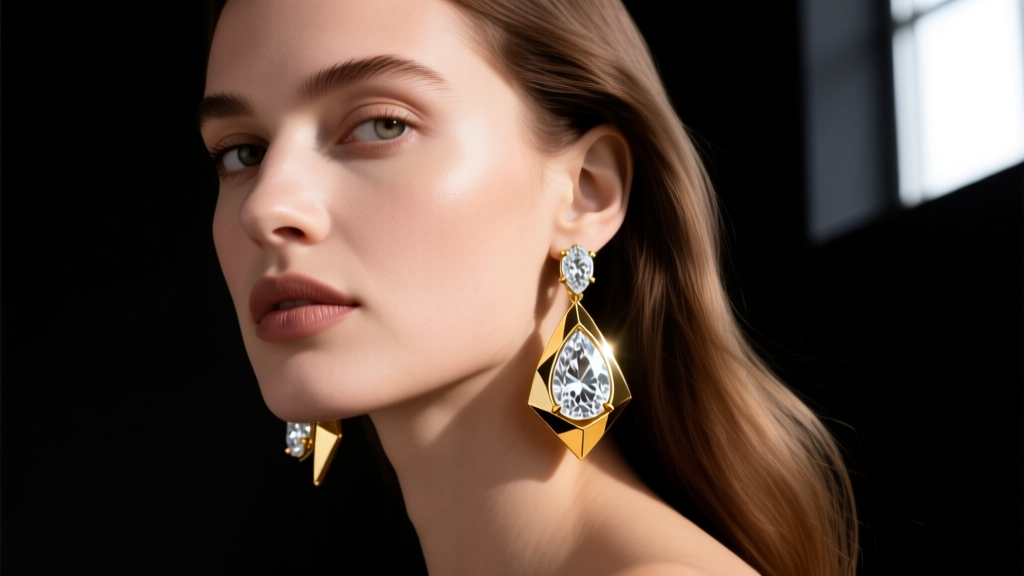
As we navigate the 2026 jewelry landscape, the overarching theme in high fashion and fine jewelry is movement. The static, rigid chandelier styles of the early 2020s have been entirely replaced by kinetic, fluid silhouettes that respond to the wearer's natural motion. When stylists and editors discuss the season's most coveted statement earrings, drop earrings are universally recognized as the focal point of this new aesthetic. Unlike traditional dangles that swing wildly from a single point of articulation, modern drops feature engineered hinges, articulated links, and tension-set stones that create a mesmerizing, liquid effect.
According to data aggregated from the Vogue Runway archives, appearances of articulated drop silhouettes in Spring/Summer 2026 collections increased by 42% compared to the previous year. Designers are moving away from heavy, clustered pavé designs and leaning into negative space, architectural geometry, and asymmetric weight distribution. This shift is not merely visual; it is a direct response to consumer demand for high-impact pieces that remain comfortable enough for all-day wear. The modern luxury consumer refuses to compromise between aesthetic drama and physical comfort, forcing jewelry houses to innovate at the intersection of material science and biomechanics.
Architectural vs. Fluid: The Two Dominant Aesthetics
The 2026 drop earring market is currently bifurcated into two distinct design philosophies. The first is the Architectural Drop, characterized by rigid geometric shapes, brushed metal finishes, and hidden articulation points. These pieces often utilize Grade 5 titanium or matte-finished 18k gold to create bold, structural statements that frame the jawline without overwhelming it. The second is the Fluid Drop, which mimics the appearance of falling water or molten metal. These designs rely on dozens of micro-hinges and invisible nylon linkages to allow the earring to cascade down the neck, moving seamlessly with every turn of the head.
Material Engineering: Beyond Standard Precious Metals
To achieve the dramatic lengths required by the 2026 drop silhouette without causing lobe fatigue, jewelers are radically rethinking their material palettes. While 14k and 18k gold remain the baseline for luxury, the true innovation is happening in alternative metallurgy.
Grade 5 Titanium (Ti-6Al-4V): Originally developed for aerospace applications, this specific titanium alloy is revolutionizing drop earrings. It offers a tensile strength comparable to steel but weighs roughly 45% less than 18k gold. By utilizing titanium for the internal armature and structural links of a long drop earring, designers can extend the silhouette past three inches while keeping the total weight under the critical 10-gram threshold per ear. Furthermore, titanium is entirely hypoallergenic and biocompatible, making it ideal for sensitive piercings.
Recycled 18k Gold Alloys: Sustainability is no longer a niche selling point; it is an industry mandate. Leading houses are now utilizing certified recycled 18k gold, which maintains the exact structural integrity and rich hue of mined gold but significantly reduces the carbon footprint. When paired with lab-grown diamond melee—specifically Type IIa stones that offer superior optical purity—the resulting drop earrings represent the pinnacle of modern ethical luxury.
| Material Composition | Weight Profile (per ear) | Avg. Market Price Range | Best Application |
|---|---|---|---|
| Solid 18k Yellow Gold | Heavy (12g - 22g) | $3,500 - $18,000+ | Heirloom pieces, short structural drops |
| Grade 5 Titanium & 18k Gold Accents | Ultra-Light (3g - 8g) | $800 - $4,500 | Extra-long kinetic drops, daily statement wear |
| Niobium with Vitreous Enamel | Light (4g - 9g) | $250 - $1,200 | Color-blocking, trend-driven seasonal drops |
| Platinum 950 & Lab-Grown Diamonds | Medium-Heavy (10g - 15g) | $8,000 - $45,000+ | Red carpet, high jewelry fluid drops |
The Biomechanics of the Lobe: Gauge, Weight, and Backings
A beautiful drop earring is useless if it destroys the piercing. The biomechanics of the earlobe dictate that prolonged downward pressure will cause the piercing channel to stretch, migrate, or tear. Understanding the interplay between post gauge, earring weight, and backing mechanics is crucial for both designers and consumers.
Optimizing Post Gauge and Thickness
Standard fashion earrings typically utilize a 20-gauge (0.81mm) post. However, for drop earrings exceeding 8 grams in weight, a 20-gauge post acts like a wire cheese cutter against the delicate tissue of the earlobe. Expert jewelers engineer high-end drops with an 18-gauge (1.02mm) or even 16-gauge (1.29mm) post. This increased surface area distributes the downward force more evenly across the piercing channel, drastically reducing the risk of lobe fatigue and migration. If your lobes are currently pierced at 20g, transitioning to heavier drops requires a gradual stretching process or selecting pieces specifically engineered with ultra-lightweight titanium armatures.
Advanced Backing Systems
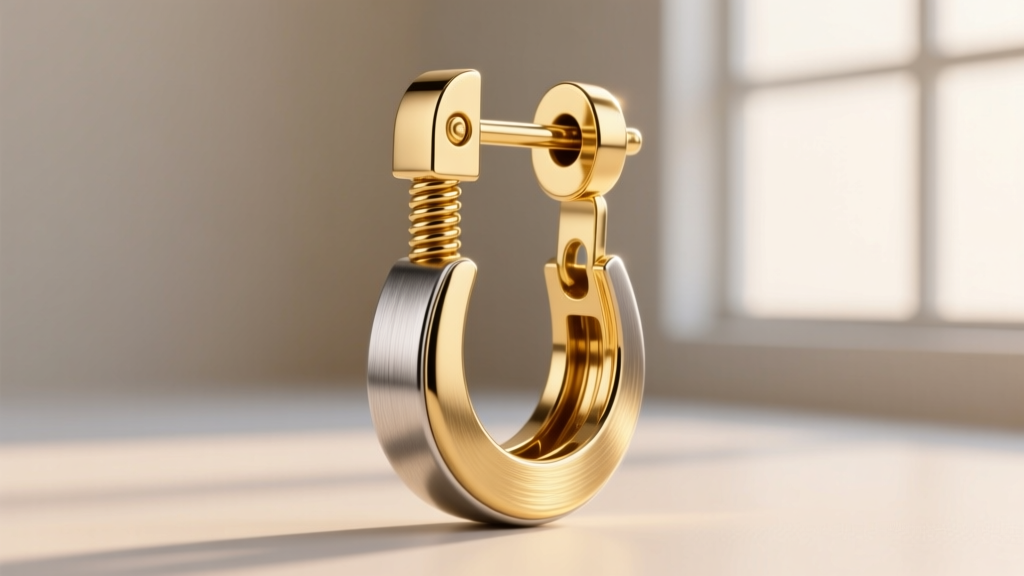
The standard butterfly friction back is entirely inadequate for the 2026 drop silhouette. The center of gravity on a long drop pulls the post downward, causing the friction back to slip and the earring to droop forward. The industry standard for luxury drops is now the La Pousette backing. This mechanical backing features a spring-loaded locking mechanism that clicks securely into a grooved post, making it virtually impossible to dislodge without intentionally pinching the side tabs. For French wire drops, the use of invisible silicone O-rings or custom-molded ear jackets is mandatory to provide the necessary counterweight and friction to keep the drop oriented correctly.
Troubleshooting the "Forward Droop" Failure Mode
The most common failure mode with statement drops is the "forward droop," where the weight of the earring pulls the top of the post down, causing the earring to point at the floor rather than framing the face. To combat this, stylists utilize a few specific interventions:
- Counterweight Engineering: High-end designers build a dense counterweight (often a hidden platinum or gold bead) directly behind the earlobe on the post itself to balance the kinetic drop in the front.
- Ear Lobe Support Patches: For vintage or poorly balanced drops, applying a discreet, medical-grade silicone lobe support patch behind the ear provides a rigid platform that prevents the post from tilting downward.
- Omega Clip Conversions: Converting heavy post-and-clutch drops to hinged Omega backs with adjustable tension screws allows the wearer to clamp the earring directly to the cartilage ridge of the ear, bypassing the soft lobe tissue entirely.
Face Shape Mapping: A Stylist’s Framework for Drops
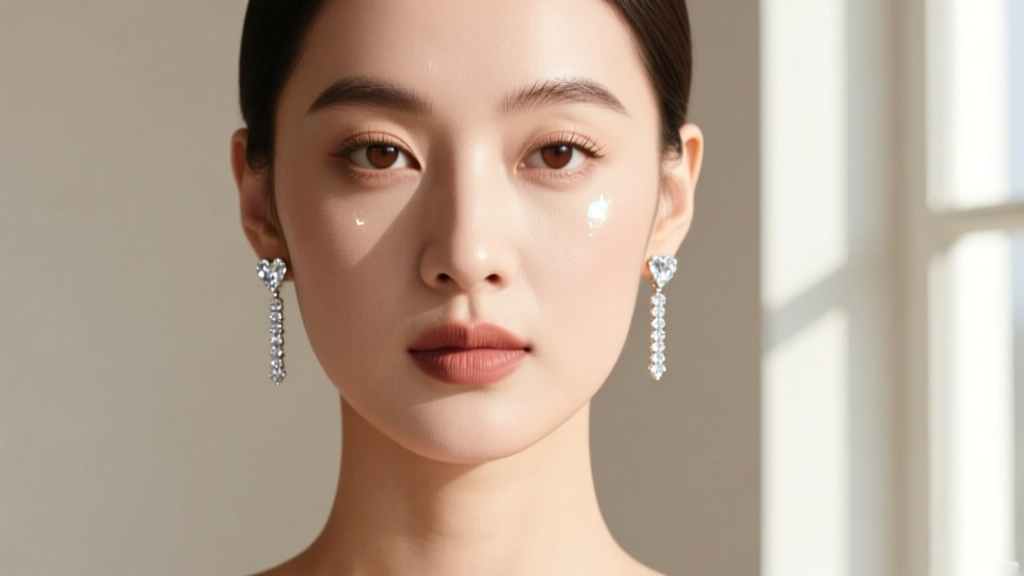
Drop earrings are uniquely versatile because their linear nature allows them to manipulate the perceived geometry of the face. However, selecting the wrong silhouette can exaggerate features you may wish to soften. Here is the professional framework for mapping drops to face shapes in 2026.
Round Faces: The goal is to create the illusion of length and sharpness. Avoid teardrop or rounded bulb drops, as they will mimic and emphasize the face's natural curvature. Instead, opt for severe, linear architectural drops with sharp geometric terminations (like a baguette-cut diamond or a brushed titanium rectangle) that fall at least an inch below the jawline. This draws the eye vertically, elongating the profile.
Square Faces: Square jawlines benefit from softening elements. Fluid drops featuring organic shapes, pear-cut gemstones, or articulated chains that mimic water droplets are ideal. The movement and curved lines of the earring will contrast beautifully with the strong angularity of the jaw, creating a balanced, harmonious look. Avoid rigid, wide geometric hoops or blocky drops that end exactly at the jawline, as this creates a harsh horizontal line.
Heart-Shaped Faces: Characterized by a wider forehead and a narrow, pointed chin, heart-shaped faces require visual weight added to the lower half of the face. Drops that feature a subtle flare or a heavier cluster of stones at the bottom (such as a classic chandelier-drop hybrid or a pear-shaped terminus) are perfect. Ensure the drop ends just below the chin to add width exactly where the face naturally tapers.
Oval Faces: The universal canvas. Oval faces can pull off virtually any drop silhouette, from extreme asymmetric kinetic pieces to heavy, clustered vintage drops. The only rule for 2026 is proportion: ensure the scale of the earring matches the wearer's overall height and neck length to avoid looking overwhelmed by the jewelry.
Market Pricing & Investment Value in the Secondary Market
As drop earrings solidify their position as the defining silhouette of the mid-2020s, their performance in the secondary and vintage markets is worth noting. According to market analyses by the Jewelers of America, signed pieces from heritage houses featuring convertible drop mechanisms (where the bottom half can be detached to reveal a simple stud) are retaining up to 85% of their retail value on the secondary market. This versatility is highly prized by collectors.
For consumers looking to invest in the trend without committing to high jewelry prices, the sweet spot lies in the "bridge" category—designers utilizing high-quality vermeil, recycled brass, or titanium mixed with semi-precious stones like apatite, tourmaline, and lab-grown sapphires. These pieces typically retail between $300 and $900, offering the architectural presence of a $15,000 piece with a fraction of the financial risk. Ultimately, the 2026 drop earring is not just a fleeting trend; it is a masterclass in modern jewelry engineering, proving that true luxury lies in the seamless marriage of breathtaking aesthetics and uncompromising comfort.
For further education on gemstone quality and structural integrity in fine jewelry, consult the educational resources provided by the Gemological Institute of America (GIA).