Big Butterfly Earrings: The Ultimate 2026 Buying Guide
Discover how to choose big butterfly earrings in 2026. Learn about weight distribution, hypoallergenic metals, and backings for statement pieces.

The Evolution of the Statement Butterfly
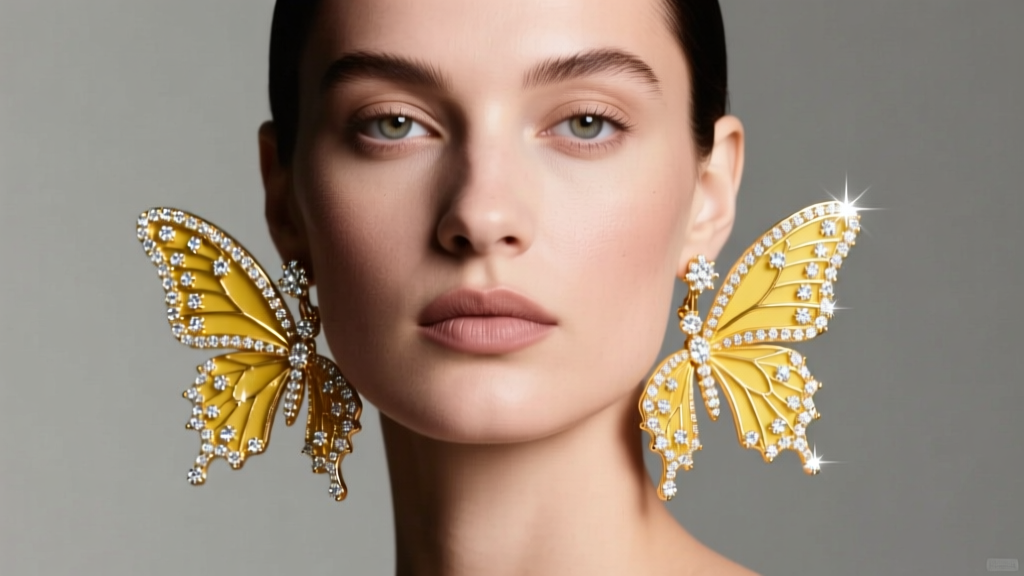
In 2026, the Y2K-inspired butterfly motif has matured into a sophisticated, sculptural art form. We are no longer looking at flimsy, mass-produced stamped metal. Today's big butterfly earrings are artisan-crafted statement pieces that blend intricate metalwork, vibrant enameling, and architectural proportions. However, scaling up a delicate nature motif into a bold, oversized earring introduces unique structural challenges. When a wingspan exceeds two inches, factors like material density, center of gravity, and lobe health become just as critical as the aesthetic design. This comprehensive buying guide will walk you through the exact specifications, material grades, and mechanical backings you need to evaluate before investing in large-scale butterfly jewelry.
Material Density and Hypoallergenic Requirements
When dealing with a large surface area, the density of your chosen metal dictates the overall weight of the earring. Solid 18k gold is incredibly dense; a pair of solid 18k gold butterfly earrings measuring 2.5 inches across can easily weigh over 25 grams per ear, leading to severe lobe stretching and discomfort within hours.
Optimal Metals for Oversized Designs
- 14k Gold (Yellow or Rose): Offers a better strength-to-weight ratio than 18k gold. The higher alloy content (usually copper and silver) makes the metal more rigid, allowing jewelers to cast thinner, lightweight wing structures without sacrificing durability.
- Sterling Silver (.925): A fantastic lightweight alternative, though it requires rhodium plating to prevent tarnishing and reduce skin oxidation. According to the Jewelry Shopping Guide, ensuring your sterling silver is strictly nickel-free is vital for large pieces that rest heavily against the skin.
- Grade 23 Titanium (Ti-6Al-4V): The ultimate choice for hyper-sensitive ears. Titanium is roughly 45% lighter than steel and highly biocompatible, making it ideal for the posts of heavy statement earrings, even if the decorative face is cast in silver or gold.
The Physics of Statement Earrings: Weight and Backings
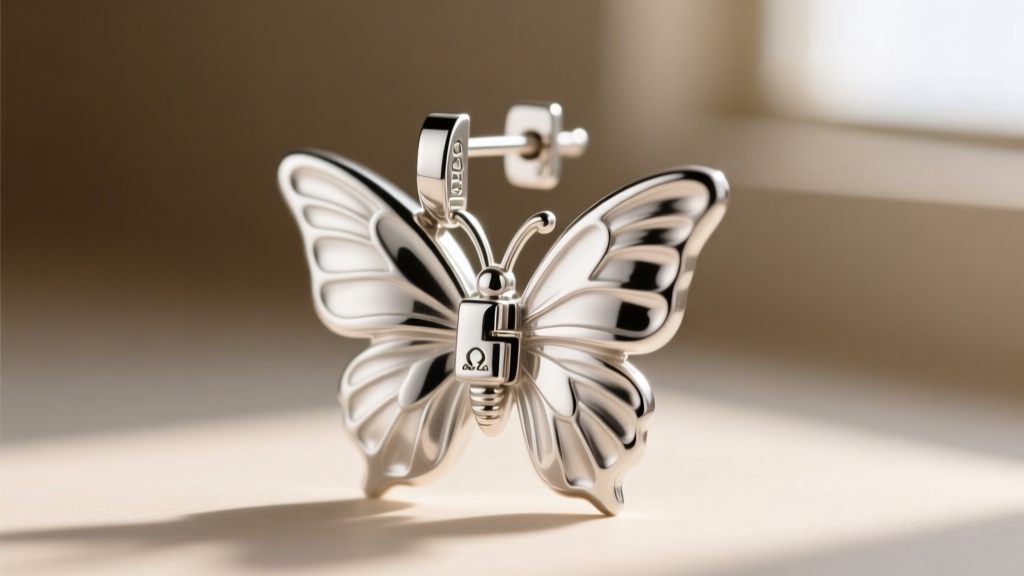
The most common point of failure for big butterfly earrings is the backing mechanism. The standard "butterfly clutch" (friction back) is ironically the worst choice for heavy, oversized pieces. The leverage created by a large, top-heavy wingspan will cause a standard post to droop, forcing the earring to face downward and putting immense pressure on the piercing fistula.
Backing Mechanics and Weight Capacities
To maintain a forward-facing silhouette, you must match the backing to the earring's center of gravity. Below is a structural breakdown of the best backing types for large butterfly motifs:
| Backing Mechanism | Max Weight Capacity | Security Rating | Ideal Butterfly Style |
|---|---|---|---|
| Omega Back | Up to 28g | High | Wide-winged Monarch studs |
| Leverback | Up to 18g | Medium-High | Dangling Swallowtail drops |
| French Wire + Silicone | Up to 14g | Medium | Lightweight Resin/Acrylic hoops |
| Flat Disc Friction | Up to 20g | Medium-High | Stud-style Geometric wings |
Pro-Tip: If you are purchasing a post-style big butterfly earring, look for a post thickness of 18-gauge (1.0mm) rather than the standard 20-gauge (0.8mm). The thicker post resists bending under the torque of a heavy, oversized wing.
Enamel and Gemstone Durability
Large butterfly wings provide a broad canvas for color, but not all coloring techniques are created equal. When evaluating enameled big butterfly earrings, you must distinguish between cold enamel and kiln-fired techniques.
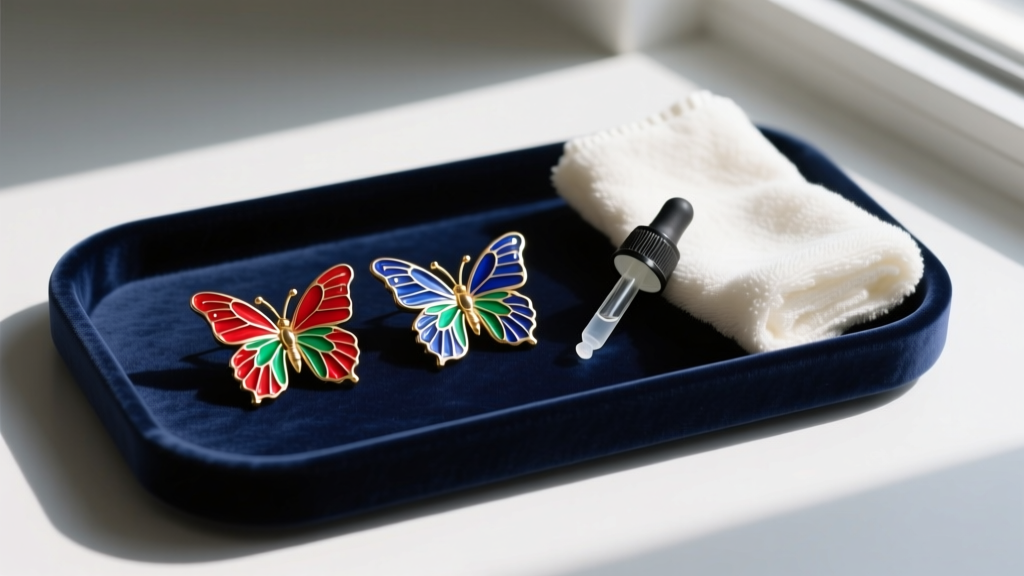
- Guilloché Enamel: This is a kiln-fired technique where glass powder is fused over an engraved metal base. It is incredibly durable, resistant to UV fading, and possesses a luminous depth. It is the hallmark of luxury big butterfly earrings.
- Cold Enamel (Epoxy Resin): A painted, air-dried resin. While it allows for vibrant, multi-colored gradients, it is highly susceptible to chipping if the large earring is dropped on a hard surface.
If your chosen design features pavé diamonds or colored gemstones across the wings, consider the Mohs scale of mineral hardness. The GIA Gem Encyclopedia notes that stones like opal (Mohs 5.5-6.5) or turquoise (Mohs 5-6) are highly vulnerable to scratching and impact, especially on large earrings that are prone to bumping into doorframes or hairbrushes. Opt for sapphires or diamonds (Mohs 9-10) for everyday statement wear.
Proportion and Facial Architecture
Big butterfly earrings are an exercise in proportion. The wingspan and silhouette of the butterfly should be used to balance your natural facial architecture.
- Round Faces: Avoid wide, circular Monarch wings that emphasize cheek width. Instead, opt for elongated, angular Swallowtail butterflies that drop below the jawline to create a lengthening visual effect.
- Square Faces: Soften a strong jawline with curved, rounded wing edges. Medium-to-large oval wing shapes or butterflies with soft, scalloped enamel edges work beautifully.
- Heart-Shaped Faces: Balance a narrower chin by choosing big butterfly earrings that feature wider, heavier bottom wings, drawing the eye downward and adding visual weight to the lower half of the face.
- Oval Faces: The universal canvas. You can confidently pull off extreme, oversized geometric butterfly cuffs and wide-spanning stud styles without throwing off your natural symmetry.
Care, Maintenance, and Storage
The leverage inherent in large earrings means that the connection point between the post and the wing is a structural vulnerability. Never store big butterfly earrings loosely in a jewelry box where they can be crushed by heavier items. Store them flat in individual velvet pouches to protect delicate cold enamel and prevent the posts from bending. When cleaning, avoid ultrasonic cleaners if your earrings feature glued gemstones or cold enamel, as the high-frequency vibrations will shatter the resin or loosen the adhesive. Instead, use a mild, phosphate-free dish soap and a soft-bristled baby toothbrush to gently clear skin oils from the intricate crevices of the wings.
"When investing in oversized motif jewelry, always inspect the soldering joint where the post meets the wing. A high-quality piece will feature a reinforced 'pad' or gallery wire at the junction to distribute the mechanical stress evenly across the metal."
Final Verdict
Big butterfly earrings are a triumph of 2026's maximalist-yet-refined aesthetic. By prioritizing lightweight metals like 14k gold or titanium, demanding reinforced backing mechanisms like Omega clasps, and selecting durable kiln-fired enamels, you can curate a collection of statement pieces that are as comfortable as they are captivating. Always respect the physics of your jewelry, and your lobes will thank you.


