The Ultimate Cross Earring Value Guide: Budget to Fine
Discover how to evaluate a cross earring for true value. Compare surgical steel, vermeil, and solid gold pricing, durability, and gauge sizing.

The Anatomy of Cross Earring Pricing
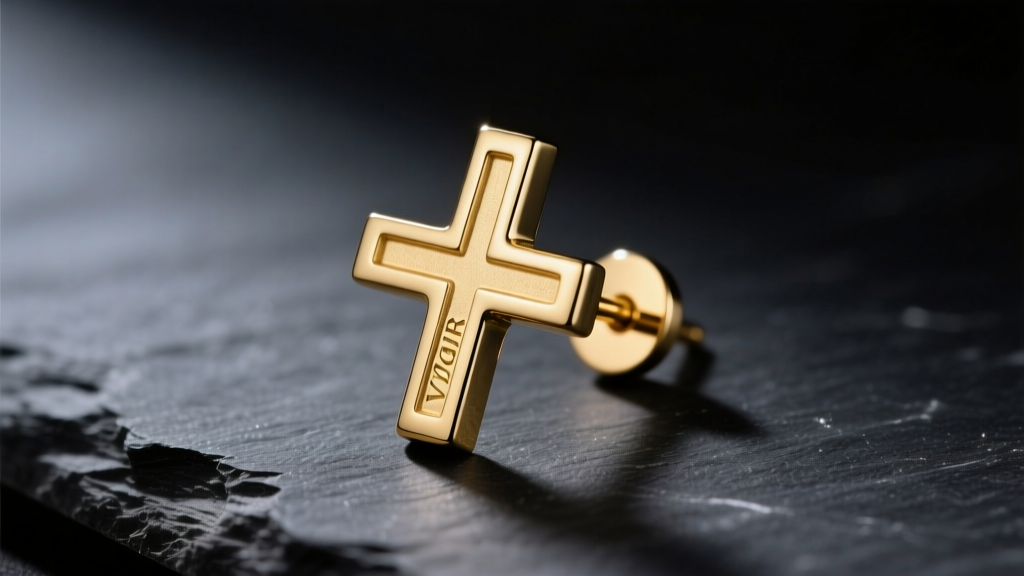
When shopping for a cross earring, the price gap between a $12 fashion accessory and a $350 fine jewelry staple can be staggering. As we navigate the 2026 jewelry market, consumers are increasingly prioritizing longevity and material safety over fast-fashion trends. Evaluating the true value of a cross earring requires looking past the brand markup and examining the metallurgy, manufacturing techniques, and structural integrity of the piece. A budget-friendly option might suffice for occasional wear, but if you plan to wear your cross earring daily, understanding the cost-per-wear and material degradation is essential.
The price of any earring is dictated by three main factors: raw material costs, labor and manufacturing methods, and brand positioning. While a luxury brand might charge a premium for their logo, the intrinsic value lies in the metal grade and the precision of the setting. In this comprehensive assessment, we break down exactly what you are paying for at every tier of the market, ensuring you make an informed investment that protects both your wallet and your piercing health.
Material Grades and Longevity
The most critical determinant of value is the base metal. Your earlobes and cartilage are highly sensitive, and introducing reactive metals can lead to contact dermatitis, migration, or outright rejection. According to the Association of Professional Piercers (APP), only specific grades of titanium, niobium, and high-karat gold are recommended for long-term wear, especially in fresh or sensitive piercings.
| Material Grade | Average Price Range | Nickel-Free? | Best Use Case |
|---|---|---|---|
| 316L Surgical Steel | $10 - $25 | No (Contains trace nickel) | Occasional wear, healed lobes |
| 925 Sterling Silver | $25 - $60 | Mostly (Copper alloyed) | Low-sweat environments, healed lobes |
| Gold Vermeil | $45 - $120 | Yes (If base is pure silver) | Daily wear, demi-fine collections |
| ASTM F136 Titanium | $30 - $80 | Yes (100% biocompatible) | Cartilage, fresh piercings, allergies |
| Solid 14k / 18k Gold | $150 - $400+ | Yes (If nickel-free alloy) | Lifetime wear, heirloom investment |
While 316L surgical steel is heavily marketed as 'hypoallergenic,' it actually contains up to 14% nickel. For a cross earring worn in a cartilage piercing, this can trigger severe allergic reactions over time. Solid 14k gold remains the gold standard for value retention. The Gemological Institute of America (GIA) notes that 14k gold consists of 58.3% pure gold, with the remainder being a mix of copper, silver, and zinc. This specific alloy ratio provides the necessary tensile strength to prevent the thin posts of a cross earring from bending during sleep.
The Vermeil vs. Gold Plated Distinction
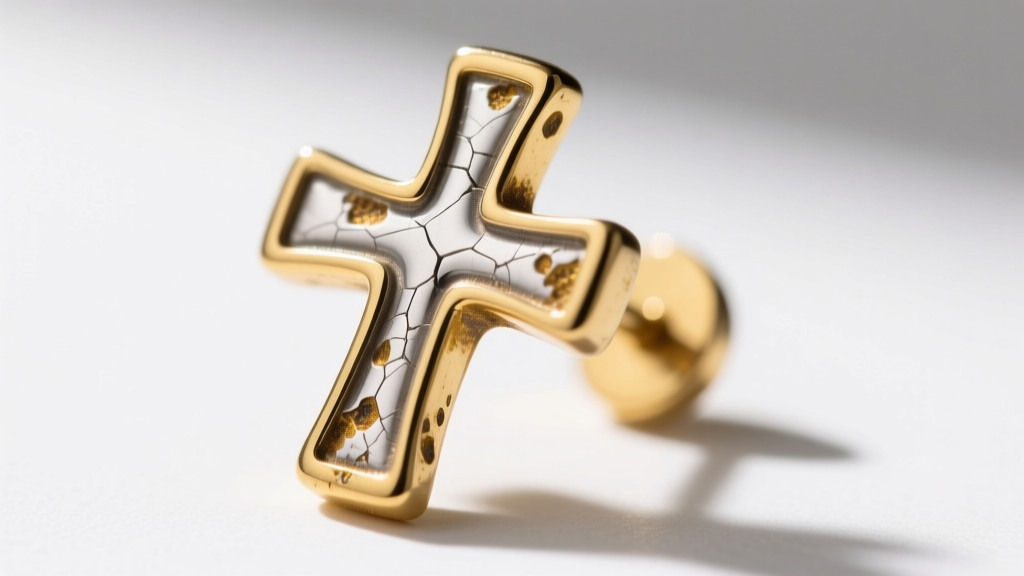
A common trap in the mid-tier budget range is confusing standard gold plating with gold vermeil. Standard gold-plated cross earrings typically feature a brass or copper base coated with a microscopic layer of gold (often less than 0.5 microns). This plating will wear away within months of daily friction, exposing the reactive base metal to your skin.
Gold vermeil, by contrast, is strictly regulated. To be legally classified as vermeil, the base must be 925 sterling silver, and the gold layer must be at least 2.5 microns thick, usually in 14k or 18k. While a vermeil cross earring will cost roughly 40% more than a standard plated piece, its lifespan is exponentially longer. However, vermeil is still susceptible to eventual wear on high-friction areas like the earring post and the butterfly backing groove. If you are buying a cross earring for a helix or tragus piercing where clickers or threaded backs are used, vermeil threading will strip quickly; solid gold or titanium is mandatory for threaded cartilage jewelry.
Gauge Sizing and Piercing Health
Value is not just about the metal; it is about the structural compatibility with your anatomy. Purchasing a beautifully crafted 14k gold cross earring in the wrong gauge will result in physical damage to your piercing channel. Standard lobe piercings are typically done at 20-gauge (0.81mm) or 18-gauge (1.02mm). Most commercial cross earring studs are manufactured at 20g to save on precious metal costs.
However, cartilage piercings (such as the helix, conch, or forward helix) are standardly pierced at 16-gauge (1.29mm) or 14-gauge (1.60mm). Inserting a thin 20-gauge cross earring post into a 16-gauge cartilage hole creates a phenomenon known in the body modification community as the 'cheese cutter effect.' The thin wire exerts excessive pressure on the surrounding tissue, slowly migrating downward and eventually tearing through the skin. Always verify the exact millimeter gauge of the post before purchasing, especially when shopping from international vendors where sizing standards can vary.
Common Failure Modes in Budget Options
- Solder Joint Fracture: Budget cross earrings are often cast with porosity. The microscopic air bubbles in the metal weaken the solder joint where the horizontal beam meets the vertical post, leading to snapping under minor stress.
- Butterfly Back Tension Loss: Cheap friction backs are stamped from thin sheets of metal. Over time, the loops lose their tension, causing the cross earring to fall out and get lost.
- Plating Delamination: In humid environments or when exposed to skincare acids (like salicylic acid), poor-quality plating will bubble and flake off the brass base.
Cost-Per-Wear Analysis: Vermeil vs. Solid Gold
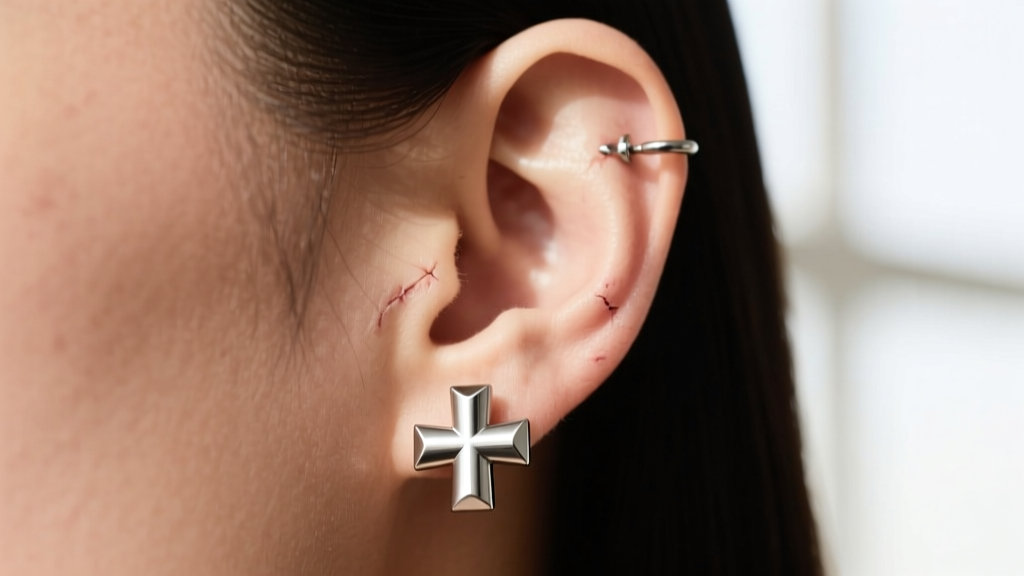
To truly assess value, we must calculate the Cost-Per-Wear (CPW). Let us compare a $60 gold vermeil cross earring with a $250 solid 14k gold cross earring. If you wear the vermeil piece daily, the friction from hair, pillows, and cleaning will likely wear through the 2.5-micron gold layer at the post and high-contact edges within 14 months. Your CPW is roughly $0.14 per day, but the piece is ultimately ruined and relegated to a jewelry box.
The solid 14k gold cross earring, however, will never tarnish, flake, or degrade. If worn daily over a 10-year period, the CPW drops to $0.06 per day. Furthermore, solid gold retains intrinsic scrap value. In the event you decide to part with the piece, a 14k gold earring can be sold to a precious metal refiner, recouping 20% to 30% of its original purchase price. A vermeil or brass piece has zero secondary market value. Therefore, for a staple piece like a cross earring that transcends seasonal trends, the higher initial capital outlay for solid gold is mathematically and practically superior.
Final Verdict: Where to Invest
If your budget is strictly under $30, opt for implant-grade titanium (ASTM F136) rather than surgical steel or silver. You will sacrifice the traditional yellow gold aesthetic, but you will gain a biocompatible, highly durable cross earring that will never corrode or irritate your skin. For budgets between $50 and $120, seek out reputable demi-fine brands that guarantee heavy vermeil plating over nickel-free sterling silver, and commit to removing them before showering or swimming to preserve the gold layer.
For those willing to invest $150 or more, a solid 14k gold cross earring is an unparalleled value proposition. It offers lifelong durability, complete water resistance, and heirloom potential. When making your final selection, prioritize laser-welded or die-struck manufacturing over traditional casting to ensure the structural integrity of the cross arms, and always double-check the gauge thickness to ensure a safe, comfortable fit for your specific piercing placement.


