How to Shop for Hoop Earrings in Spanish: A Technical Guide
Master the technical specs, regional terms, and material hallmarks when shopping for hoop earrings in Spanish-speaking markets worldwide.

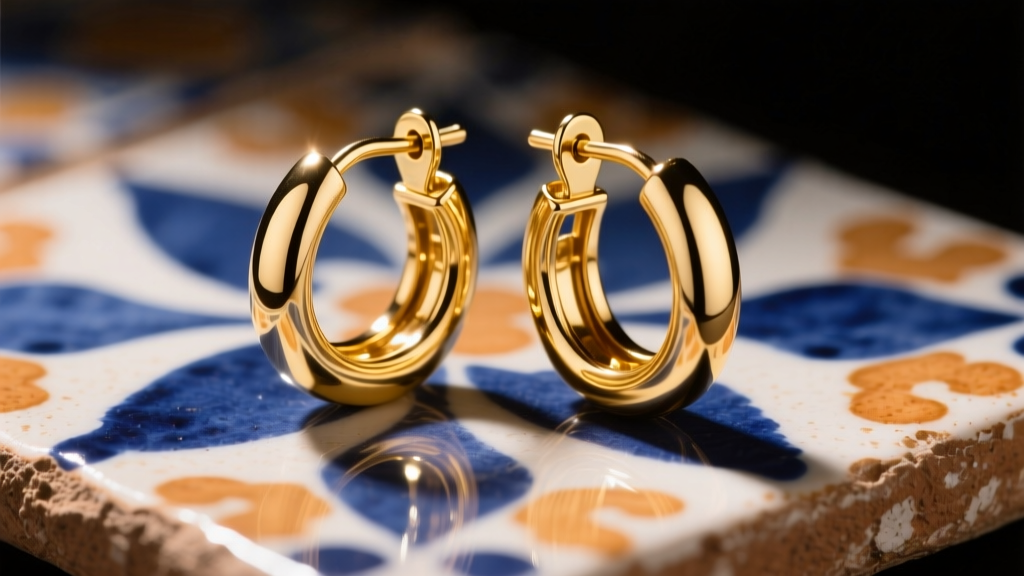
The Linguistic Landscape of Hoop Earrings
When you begin searching for hoop earrings in spanish, you are not merely translating a phrase; you are unlocking access to some of the world's most historically significant jewelry markets, from the silver capital of Taxco, Mexico, to the high-karat gold hubs of Bogotá, Colombia. However, the terminology shifts dramatically across borders. To navigate these markets like a seasoned gemologist or master jeweler, you must first understand the regional lexicon.
- Mexico & Central America: Aretes de aro or argollas. The term 'arete' specifically denotes the earring itself, while 'aro' defines the hoop geometry.
- Spain: Pendientes de aro. In the Iberian Peninsula, 'pendiente' is the universal term for any suspended or attached ear ornament.
- South America (Argentina, Chile, Colombia): Aros or argollas. In these regions, the word for earring is often dropped entirely, with the geometric shape serving as the noun.
Understanding these distinctions is critical when communicating with international bench jewelers regarding custom dimensions, clasp tolerances, and alloy compositions.
Technical Specifications: Translating the Metrics
The most common point of friction for international buyers is the measurement system. While the United States relies heavily on the American Wire Gauge (AWG) system to denote the thickness of the ear wire, Spanish-speaking markets predominantly use the metric system (millimeters). Requesting a 'calibre 20' from a silversmith in Oaxaca might lead to confusion unless you specify the millimeter equivalent.
Gauge to Millimeter Conversion Chart for Hoops
| AWG (US Standard) | Metric (mm) | Spanish Term | Best Application |
|---|---|---|---|
| 20G | 0.81 mm | 0.8 milímetros | Standard lobe piercings, lightweight pendientes |
| 18G | 1.02 mm | 1 milímetro | Standard for most LATAM commercial argollas |
| 16G | 1.29 mm | 1.2 milímetros | Cartilage, helix, and sturdy everyday hoops |
| 14G | 1.63 mm | 1.6 milímetros | Thick statement hoops, daith piercings |
| 8G | 3.26 mm | 3.2 milímetros | Heavy, solid-core artisan aros |
Expert Insight: When ordering custom aros continuos (continuous/endless hoops) from a LATAM artisan, always specify the diámetro interior (inner diameter) rather than the outer diameter, as the wire thickness (grosor) will drastically alter the fit through the fistula.
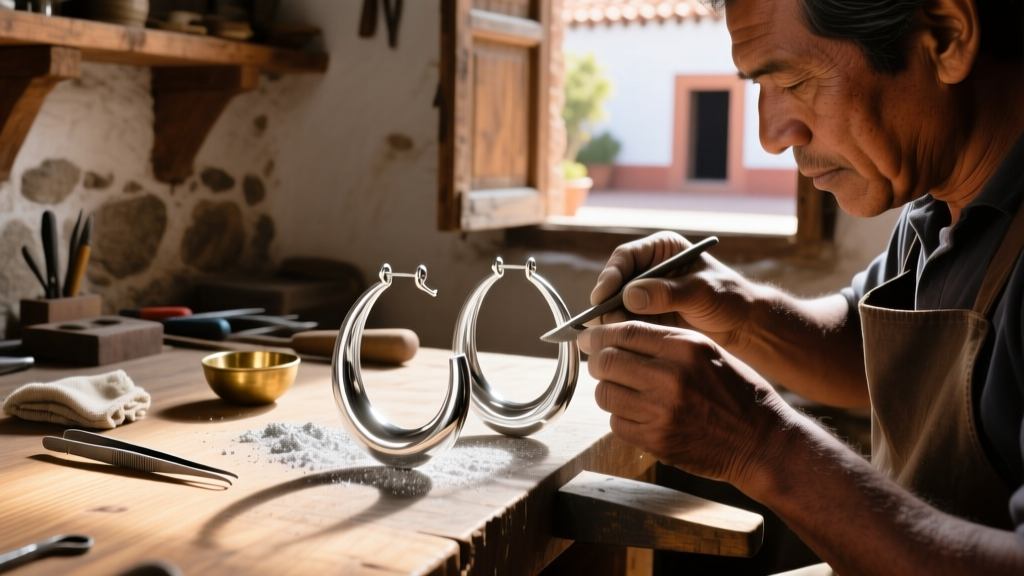
Material Standards and Regional Hallmarks
Authenticity verification in Spanish-speaking markets requires knowledge of local hallmarking laws (leyes de metales preciosos). The Silver Institute outlines global purity standards, but local enforcement and stamping traditions vary wildly.
Mexican Silver (Plata .925)
Taxco, Guerrero, is globally renowned for its silver craftsmanship. When purchasing sterling silver hoops here, look beyond the standard '925' stamp. Authentic, high-grade Mexican silver often features the Assay Eagle Mark (a stylized eagle with a number indicating the specific workshop or artisan registered with the Consejo Regulador de la Plata). Beware of tourist-trap hoops stamped '925' that are actually nickel-silver alloys (alpaca or metal blanco), which contain zero actual silver and can cause severe contact dermatitis.
Colombian & Spanish Gold (Oro de 18k)
Unlike the US market, where 14k (58.5% purity) is the standard for durability, Colombia and Spain heavily favor 18k gold (75% purity). According to the Gemological Institute of America (GIA), 18k gold offers a richer, warmer color saturation but requires careful engineering for clasp mechanisms due to the metal's lower tensile strength. When buying 18k argollas de oro, inspect the pasador (the wire that goes through the ear). Master jewelers will often engineer the clasp wire in 14k or use a specialized heat-treated 18k alloy to prevent the hinge from warping under the weight of a large-diameter hoop.
Clasp Engineering: Los Cierres
The structural integrity of a hoop earring relies entirely on its clasp mechanism. When discussing custom orders or repairs with a Spanish-speaking bench jeweler, precise terminology is required to avoid mechanical failure.
Cierre de Bisagra (Hinged Snap / Clicker)
The most common mechanism for medium-to-thick hoops. The engineering challenge here is the tolerance of the lengüeta (the tongue or latch). In high-end manufacturing, the latch should engage with an audible 'click' and require a deliberate lateral or vertical force to open. If the tolerances are off by even 0.05mm, the hoop will open during sleep, leading to loss.
Cierre de Rosca (Screw-Back)
Used primarily for high-value, heavy-gauge gold hoops to prevent accidental loss. The precision of the threading is paramount. A standard M1.0 x 0.25mm thread pitch is common in fine jewelry. When evaluating a cierre de rosca, the threading must be cut with a tap and die, not merely pressed. Pressed threads will strip after repeated use, ruining the poste (post).
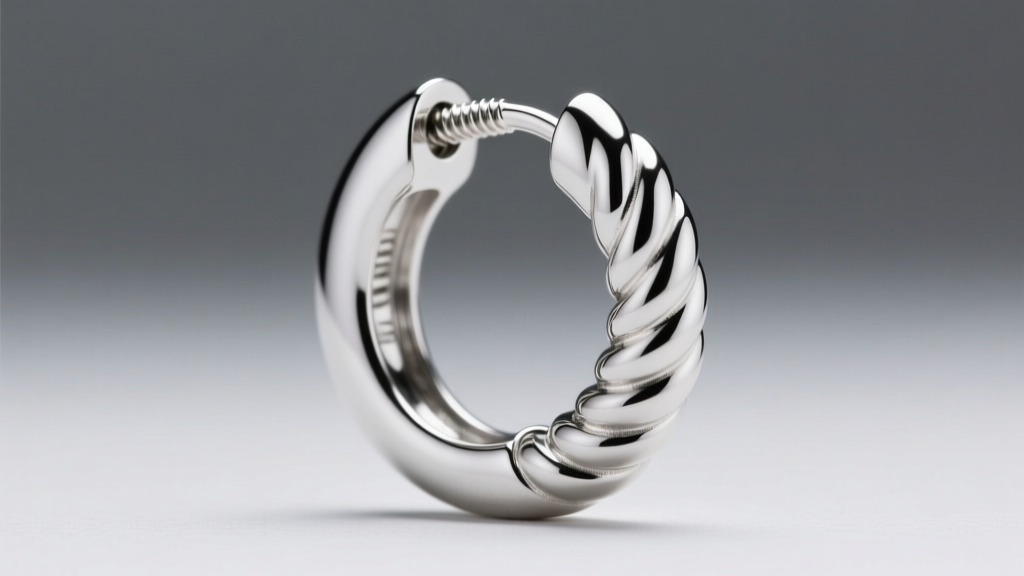
Aro Continuo (Endless / Continuous Hoop)
This design features a seamless wire where one end is slightly tapered (punta cónica) and the other is a hollow tube (tubo hueco). The tension of the metal holds the tapered tip inside the tube. For this mechanism to survive long-term wear, the artisan must use a work-hardened alloy. If the silver or gold is left in an annealed (soft) state, the tension will relax within weeks, causing the hoop to fall out.
Expert Buying Framework for International Markets
To ensure you are acquiring high-quality, technically sound hoop earrings in Spanish-speaking regions, follow this verification checklist:
- Request the Weight in Grams: Ask for the peso en gramos. A pair of solid 18k gold, 20mm diameter, 1.2mm thick hoops should weigh approximately 2.8 to 3.2 grams. If they are significantly lighter, they are likely hollow-tubing (tubo hueco), which dents easily and cannot be repaired by a traditional jeweler.
- Verify the Alloy Color: In Colombia, ask if the 18k gold is oro amarillo puro (traditional copper/silver mix) or if it has been rhodium-plated (baño de rodio) to mimic white gold. Plated hoops will eventually wear down to the yellow core on the friction points of the clasp.
- Test the Hinge Tension: For cierres de bisagra, open and close the hoop 10 times. The resistance should be uniform, and the flush fit (ajuste a ras) should leave no visible gap where the wire meets the body of the hoop.
By mastering the technical vocabulary and understanding the regional metallurgical standards, you elevate your purchasing power from a casual tourist to an informed collector, ensuring that every pair of aretes de aro you acquire is a masterpiece of structural engineering and cultural heritage.


