The Anatomy of Button Earrings: Metallurgy and Post Engineering
Discover the technical anatomy of button earrings, from dome curvature and metal weight distribution to post soldering and clutch mechanics.

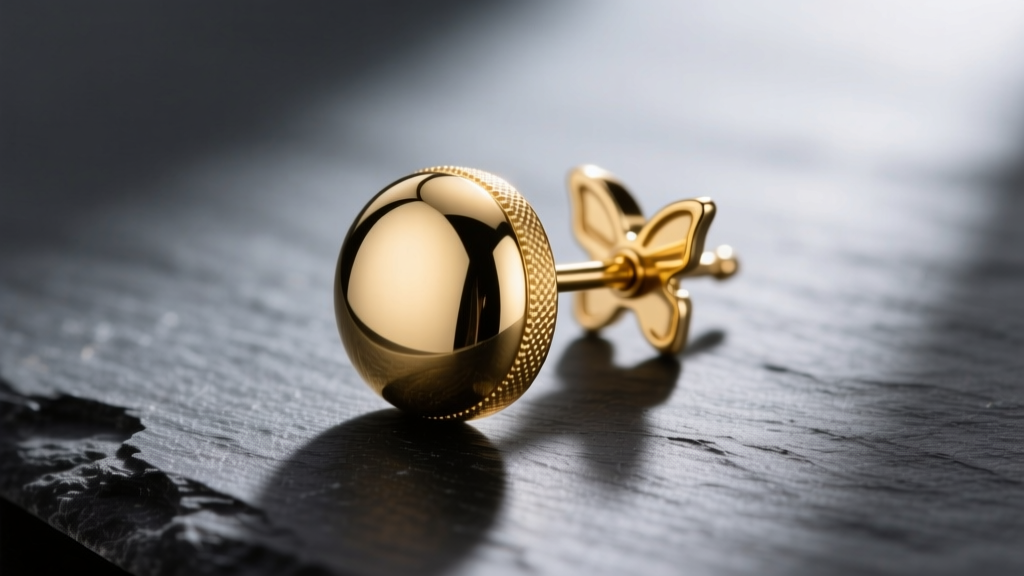
Most consumers view button earrings as simple, understated wardrobe staples. However, from a manufacturing and metallurgical perspective, the button earring is a complex study in structural integrity, weight distribution, and ergonomic design. Unlike dangle earrings that rely on kinetic movement, or hoops that depend on tensile wire strength, the button earring must achieve perfect static balance against the earlobe. In this expert deep dive, we deconstruct the engineering, alloy grades, and mechanical failure modes of high-end button earrings.
The Geometry of the Dome: Stamping vs. Casting
The defining feature of a button earring is its domed face. The manufacturing method used to create this dome dictates the earring's weight, durability, and acoustic resonance. There are two primary techniques used in modern jewelry fabrication:
- Die Stamping (Hollow Domes): A sheet of precious metal, typically 0.4mm to 0.6mm thick, is pressed between a male and female steel die under immense hydraulic pressure. This work-hardens the metal, increasing its tensile strength while keeping the final piece hollow. An 8mm stamped 14k gold button earring will weigh approximately 1.2 to 1.5 grams, making it ideal for all-day wear.
- Lost-Wax Casting (Solid/Semi-Solid Domes): A wax model is 3D-printed or hand-carved, encased in investment plaster, and burned out before molten metal is injected via centrifugal or vacuum casting. Cast domes are thicker and heavier. An 8mm cast dome can easily weigh 3.5 to 5.0 grams. While they offer a premium, heavy feel, they require robust post engineering to prevent lobe fatigue.
Master jewelers often utilize a technique called 'dapping' to manually shape smaller gauge sheets into shallow domes, allowing for custom, organic curvatures that machine stamping cannot replicate.
Metallurgy and Alloy Grades for Sensitive Lobes
Because button earrings sit flush against the skin, the metallurgical composition of the alloy is critical for preventing contact dermatitis. The earlobe is highly vascular and sensitive to ion release, particularly from copper and nickel.
White Gold and the Nickel Problem
Standard 14k white gold is often alloyed with nickel to achieve a bright, hard finish. However, nickel is a leading cause of allergic contact dermatitis. For hypoallergenic button earrings, high-end manufacturers utilize palladium-alloyed white gold. According to the Gemological Institute of America (GIA), palladium acts as a superior bleaching agent for gold, eliminating the need for nickel while providing a naturally white metal that does not require rhodium plating.
Implant-Grade Titanium
For the most sensitive piercings, implant-grade titanium is the gold standard. Specifically, manufacturers must adhere to the ASTM F136 standard for Titanium-6Aluminum-4Vanadium (Ti-6Al-4V) alloy. This specific grade contains tightly controlled interstitial elements, ensuring zero allergic reaction and superior corrosion resistance against the slightly acidic pH of human sweat.
Post Engineering: Soldering and Gauge Dynamics
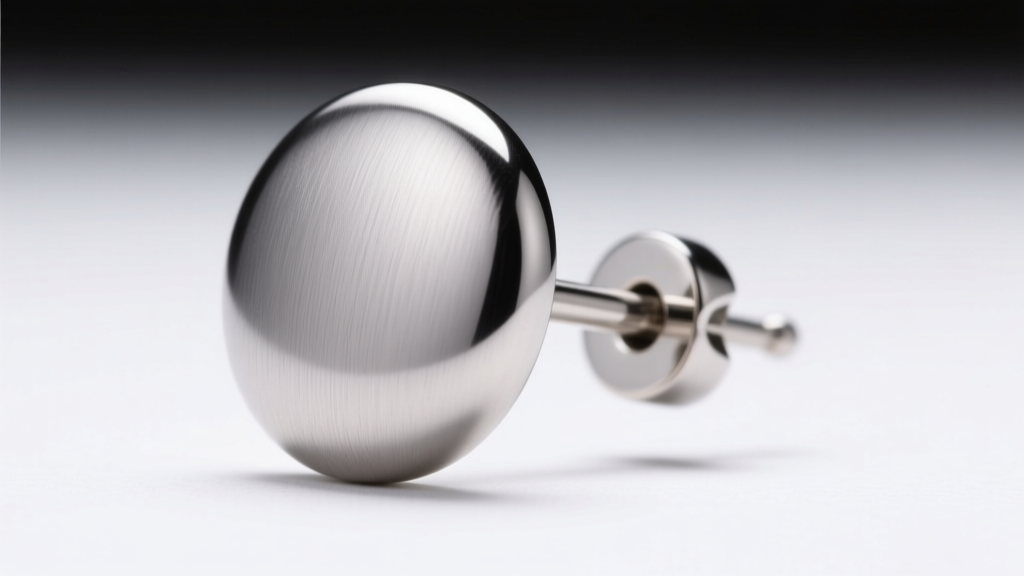
The post is the structural anchor of the button earring. The two most common gauges used are 20-gauge (0.81mm) and 18-gauge (1.02mm). While 20-gauge is standard for lightweight stamped earrings, any cast button earring exceeding 2.5 grams requires an 18-gauge post to prevent shearing forces from bending the metal during insertion.
Laser Welding vs. Torch Soldering
The method used to attach the post to the dome dramatically affects the structural integrity of the earring:
'Traditional torch soldering relies on capillary action to draw a lower-melting-point solder alloy into a V-notch at the base of the post. While effective, the ambient heat can anneal (soften) the surrounding work-hardened dome. Laser welding, conversely, uses a concentrated Nd:YAG beam to fuse the post directly to the dome in milliseconds, preserving the dome's hardness and creating a joint that is often stronger than the base metal itself.' — Rio Grande Fabrication Guidelines
Furthermore, premium button earrings feature a 'pad' or 'plate' soldered between the post and the dome. This distributes the shear stress across a wider surface area, drastically reducing the likelihood of the post snapping off at the base.
The Clutch Mechanism: Tension and Friction Data
A heavy button earring is useless if the backing mechanism fails. The clutch must provide enough spring tension to counteract the rotational pull of the dome's center of gravity. Below is a technical comparison of the three primary clutch systems used in fine jewelry:
| Clutch Type | Spring Tension | Security Rating | Best Application |
|---|---|---|---|
| Standard Bullet (Friction) | Low to Medium | Moderate | Lightweight stamped domes (< 1.5g) |
| La Pousette (Screw/Spring) | High (Locking) | Maximum | Heavy cast domes, diamond-set buttons |
| Omega / Clip Back | Variable (Hinged) | High | Non-pierced ears or vintage heavy buttons |
The La Pousette mechanism utilizes an internal spring-loaded sleeve that clicks into a precision-machined groove on the post. This mechanical lock prevents the earring from sliding off, even if the earlobe is pulled or snagged on clothing.
Weight Distribution and Lobe Ergonomics
The most common complaint with poorly engineered button earrings is 'toppling'—where the earring faces upward or downward rather than sitting flush. This is a failure of center-of-gravity mapping.
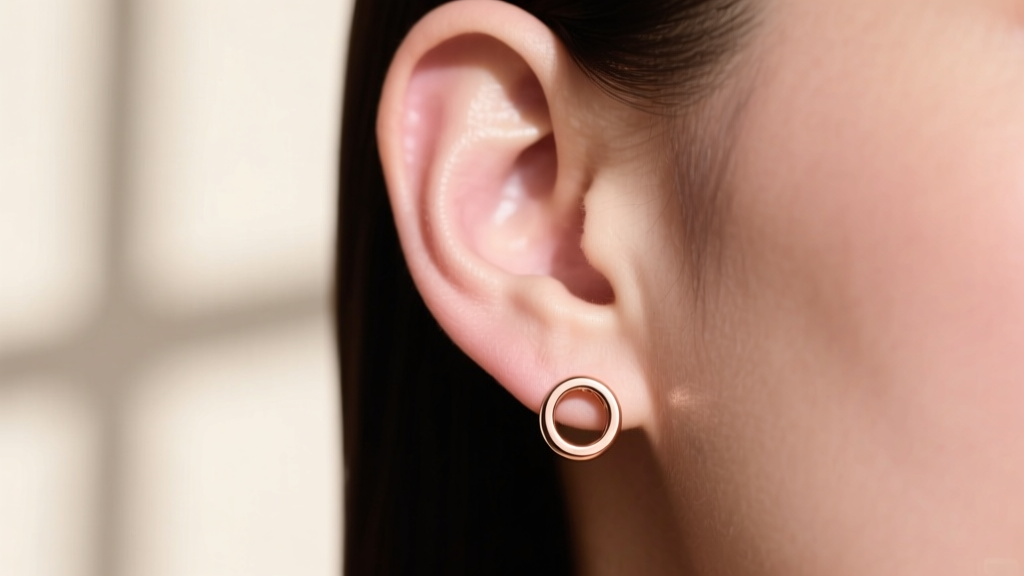
The human earlobe does not hang perfectly perpendicular to the ground; it angles slightly outward and downward. If a jeweler solders the post exactly in the geometric center of a heavy cast dome, the top edge of the earring will tilt away from the face. To counteract this, expert fabricators offset the post placement 1.0mm to 1.5mm higher than the true vertical center. This micro-adjustment aligns the earring's center of mass with the natural pitch of the earlobe, ensuring the dome sits perfectly parallel to the observer's line of sight.
Troubleshooting Common Failure Modes
Even with meticulous engineering, button earrings are subject to specific mechanical failures over years of wear. Understanding these failure modes helps in both purchasing and maintenance:
- Hollow Dome Denting: Stamped earrings are highly susceptible to compressive denting if dropped on a hard surface. Because the metal is work-hardened, attempting to pop the dent out from the inside with a punch will often crack the gold. Prevention via proper storage in individual velvet pouches is the only reliable safeguard.
- Clutch Spring Fatigue: Standard butterfly clutches rely on the elasticity of the base metal (often brass or nickel silver). Over 3 to 5 years of daily compression, the metal undergoes plastic deformation and loses its grip. Upgrading to solid 14k gold or platinum clutches with thicker wire gauges extends the functional lifespan indefinitely.
- Post Shearing at the Solder Joint: If an earring is repeatedly subjected to lateral torque (such as sleeping in them), the post will eventually snap at the solder line. If your earring features a laser-welded post with a stress-distribution pad, the risk of this failure mode drops by over 80%.
By understanding the metallurgy, geometry, and mechanical engineering that goes into a seemingly simple piece of jewelry, collectors and daily wearers alike can make highly informed decisions that prioritize both aesthetic perfection and structural longevity.


