Schiaparelli Eye Earrings: Troubleshooting Weight, Fit & Fakes
Solve common issues with Schiaparelli eye earrings. Expert troubleshooting for lobe sag, heavy posts, metal allergies, and spotting high-end counterfeits.

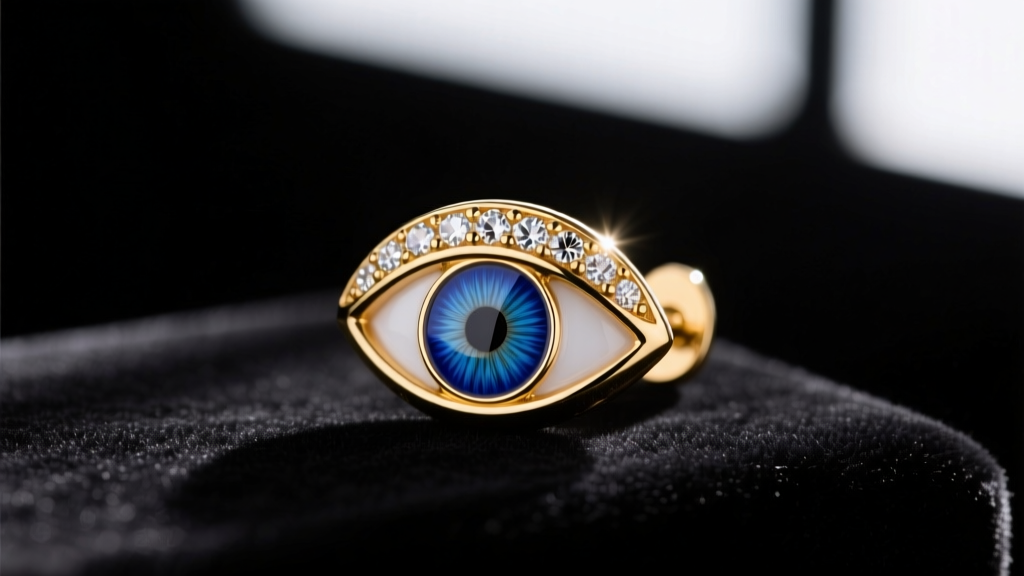
The surrealist allure of Schiaparelli eye earrings has cemented them as one of the most recognizable luxury accessories of the decade. Reviving Elsa Schiaparelli’s 1930s fascination with ocular motifs, creative director Daniel Roseberry transformed the weeping eye into a heavy, gold-tone brass statement piece adorned with epoxy enamel and lead-free crystals. However, owning and wearing these avant-garde masterpieces comes with a unique set of physical and logistical challenges. From severe lobe sagging due to their substantial heft to navigating a secondary market flooded with high-end counterfeits, these earrings require specialized care and troubleshooting. In this comprehensive guide, we break down the exact engineering, dermatological, and authentication hurdles associated with Schiaparelli eye earrings and provide actionable, expert-level solutions.
The Weight Dilemma: Preventing Lobe Sag and Tearing
The most immediate problem wearers face is the sheer mass of the earrings. A standard Schiaparelli eye earring weighs between 18 and 24 grams per piece. For context, a standard diamond stud weighs less than 2 grams, and the average human earlobe can comfortably support up to 5 grams without experiencing downward torque. When a 22-gram brass eye is suspended from a standard 18-gauge (1.02mm) piercing hole, gravity creates a fulcrum effect that pulls the post downward. This not only ruins the aesthetic alignment of the piece—causing the eye to look perpetually droopy—but also risks micro-tearing the fistula (the piercing channel) over time.
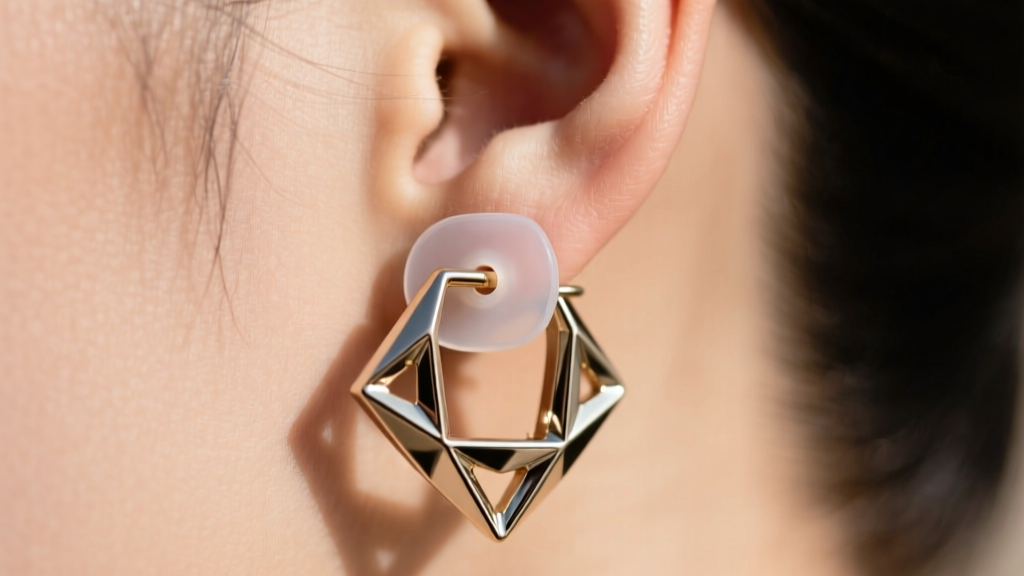
Step-by-Step Lobe Support Protocol
To troubleshoot the weight issue without resorting to invasive surgical lobe reductions, you must distribute the physical load across a wider surface area of the ear. Here is the professional styling protocol used by editorial fashion stylists:
- Adhesive Lobe Patches: Apply a medical-grade, invisible ear support patch (such as LobeWonder) directly to the back of the earlobe. Pierce the patch with the earring post. This distributes the 24g weight across a 2-inch surface area rather than a 1mm hole.
- Double-Back Silicone Stoppers: Discard the standard metal butterfly backs provided by the maison. Instead, thread the post through a thick, disc-shaped silicone earring back, followed by a secondary locking metal clutch. The silicone acts as a shock absorber and increases friction against the post.
- The Tape Sling Method: For events lasting over four hours, use a micro-strip of 3M Transpore surgical tape to anchor the top of the earring's halo or brow to the upper cartilage of the ear, relieving vertical pressure on the lobe.
Authentication Troubleshooting: Spotting Counterfeit Schiaparelli Eyes
Because the retail price of Schiaparelli eye earrings hovers around $750 to $950 depending on the seasonal colorway, they are a prime target for counterfeiters. High-tier fakes have flooded the resale market, often deceiving casual buyers. According to authentication standards outlined by The RealReal, luxury costume jewelry requires scrutiny of the hallmark, enamel depth, and crystal setting. Counterfeiters often struggle to replicate the proprietary epoxy resin pouring technique used by Schiaparelli's artisans in Paris.
| Feature | Authentic Schiaparelli | Common Counterfeit |
|---|---|---|
| Enamel Application | Deep, glass-like epoxy resin with a perfectly smooth, domed meniscus. No bubbles. | Flat, painted-on resin or cheap acrylic. Often contains micro-bubbles or dust trapped under the surface. |
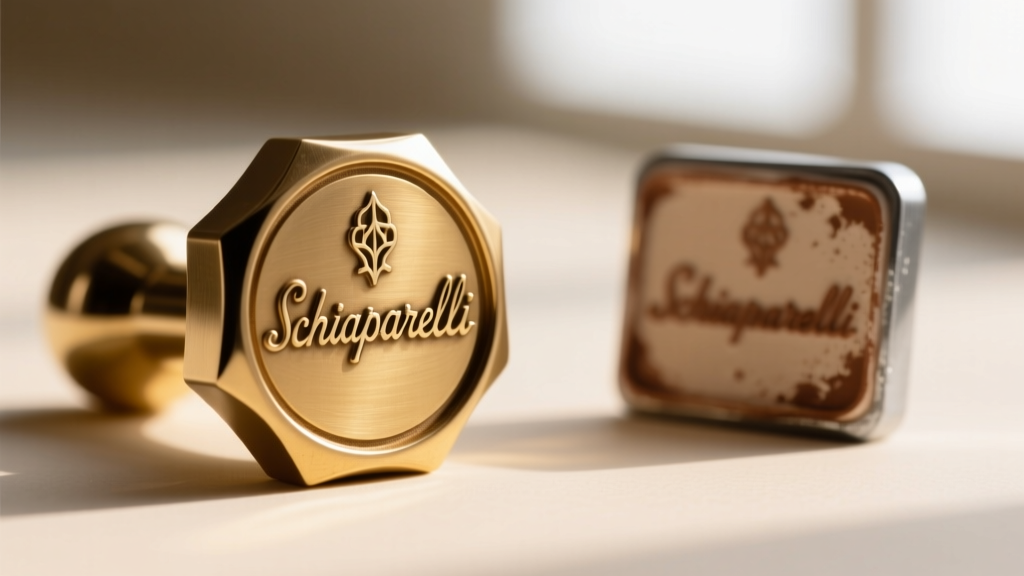
| Hallmark Stamp | Crisp, deeply laser-etched or stamped "Schiaparelli" in a specific serif font on the flat backplate. | Shallow, blurred, or acid-etched stamp. Font weight is often too thick or kerning is uneven. |
| Crystal Setting | Lead-free crystals are prong-set or bezel-set seamlessly into the brass brow. High light refraction. | Crystals are often glued directly to the metal with visible epoxy residue. Glass appears cloudy. |
| Weight & Heft | Heavy, solid brass base (approx. 18-24g). Feels dense and cold to the touch. | Hollow-feeling alloy or zinc base. Significantly lighter (often under 12g per earring). |
Post and Clasp Failures: Securing Heavy Statement Pieces
A frequent complaint among collectors is the failure of the friction back to hold the earring flush against the lobe. Because the center of gravity on the eye motif sits slightly below the post, the earring naturally wants to rotate forward. When the metal butterfly back wears down its internal grooves, the earring slips, exposing the post and creating an awkward gap between the brass backplate and the skin.
The Troubleshooting Fix: You must upgrade the clasp mechanism. Because Schiaparelli typically uses a standard 18-gauge (1.0mm) or occasionally a 16-gauge (1.2mm) post for structural integrity, you can easily swap the back. Invest in "La Pousette" style locking backs or screw-back clutches specifically designed for 18G posts. These mechanisms use a tiny internal screw or a locking collar that grips the post grooves mechanically, making it physically impossible for the earring to slide off due to rotational torque. If the post itself becomes bent from the weight, do not attempt to bend it back with pliers, as this will work-harden the brass and cause it to snap. Take it to a professional bench jeweler for a gentle annealing and straightening.
Metal Sensitivity and Plating Wear: Dermatological Fixes
While Schiaparelli utilizes high-quality gold-tone plating over a brass base, brass is an alloy of copper and zinc, and occasionally contains trace amounts of nickel depending on the specific casting batch. For individuals with contact dermatitis or metal allergies, prolonged wear—especially when the earlobe sweats under the heavy brass plate—can trigger severe localized allergic reactions, resulting in redness, itching, and weeping of the fistula.
Dermatological & Material Solutions:
- Barrier Creams: Before wearing, apply a layer of a clinically proven barrier cream (such as Skintifique Protective Cream HPS) to the back of the earlobe. This creates an invisible, breathable shield that blocks nickel and copper ions from migrating into the skin.
- Re-Plating Services: If the gold-tone plating on the backplate has worn away, exposing the raw brass, do not use clear nail polish as a DIY fix; it will degrade and trap bacteria against the piercing. Instead, send the earrings to a specialized electroplating service to be dipped in a thick layer of 24k gold or rhodium, which are hypoallergenic and highly durable.
- Post Coating: If the post itself is causing irritation inside the piercing channel, a jeweler can coat the post in medical-grade Parylene, a biocompatible polymer used in surgical implants, ensuring zero metal-to-tissue contact.
Maintenance and Storage: Preserving the Enamel and Gold Tone
The surrealist beauty of the Schiaparelli eye relies heavily on the contrast between the polished gold-tone brass and the vibrant, tear-drop enamel. However, epoxy resin, while durable, is susceptible to micro-scratches and chemical degradation. As noted in archival care guides featured in Vogue, luxury fashion jewelry requires a different storage protocol than fine jewelry.
Never store Schiaparelli eye earrings loose in a jewelry box where they can collide with diamonds or sapphires; harder gemstones will easily gouge the epoxy enamel. Furthermore, avoid leaving them in direct sunlight or high-humidity environments like a bathroom vanity, as UV exposure can yellow the clear resin over time, and humidity can accelerate the oxidation of the brass base beneath the plating. Store each earring individually in a microfiber-lined, hard-shell compartment to prevent the heavy pieces from crushing one another. To clean, use only a dry, ultra-soft microfiber cloth. Never use ultrasonic cleaners, silver dip, or alcohol-based solutions, as these will strip the gold-tone finish and cloud the crystal settings instantly.


