Onyx Earring Buying Guide: Stone Grades, Metals & Fit
Discover how to choose the perfect onyx earring. Learn about stone grades, metal pairings, gauge sizes, and pricing in our expert buying guide.

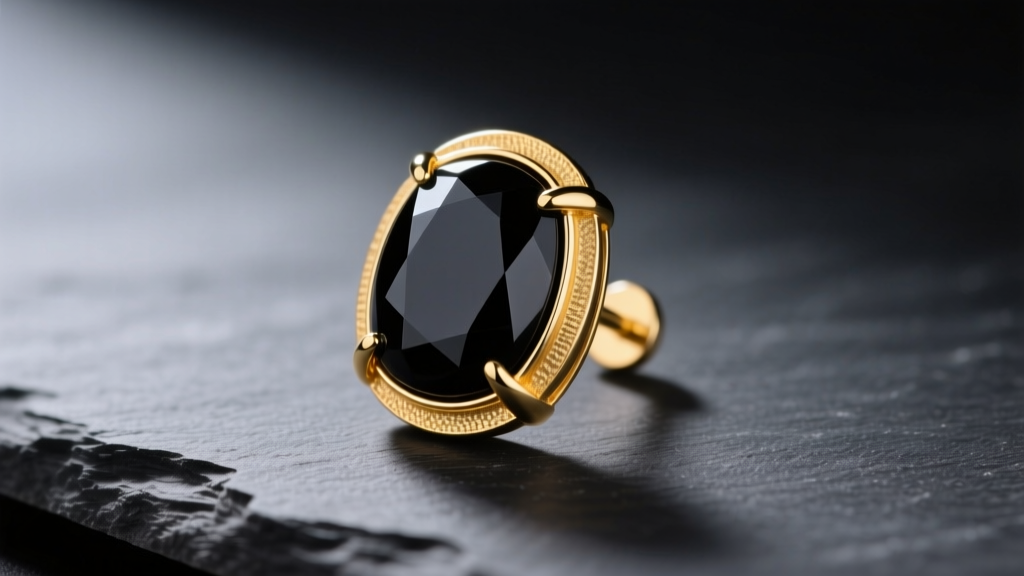
The Enduring Appeal of the Onyx Earring
Few gemstones command the same level of quiet sophistication as black onyx. Whether you are navigating the world of fine jewelry for the first time or adding to a curated collection, an onyx earring offers a striking contrast that flatters virtually every skin tone and personal aesthetic. However, the market is saturated with varying qualities of stone, metal pairings, and structural designs. As a buyer, understanding the gemological realities, structural vulnerabilities, and precise sizing requirements is critical to making an informed purchase.
This comprehensive buying guide breaks down exactly what to look for when shopping for onyx earrings in 2026, moving beyond superficial aesthetics to evaluate stone treatments, metal grades, and setting durability. According to the Gemological Institute of America (GIA), onyx is a banded variety of chalcedony, ranking at 6.5 to 7 on the Mohs hardness scale. While it is durable enough for everyday wear, its specific crystalline structure demands careful consideration regarding setting types and daily care.
Natural vs. Treated: The Gemological Reality
The most important factor to understand when purchasing an onyx earring is the origin of its color. True, naturally occurring black onyx is exceptionally rare. The vast majority of black onyx on the market today is actually gray or white agate that has undergone a permanent color enhancement process.
The Sugar-Acid Treatment Explained
Most commercial black onyx is created using a traditional 'sugar-acid' treatment. The porous agate is soaked in a hot sugar water solution, allowing the sugar to penetrate the stone's microscopic layers. It is then boiled in concentrated sulfuric acid, which carbonizes the sugar and turns the stone a deep, uniform black. This treatment is considered permanent and stable under normal conditions, and it is fully accepted in the gemological community, provided it is disclosed.
What to Look For in the Stone
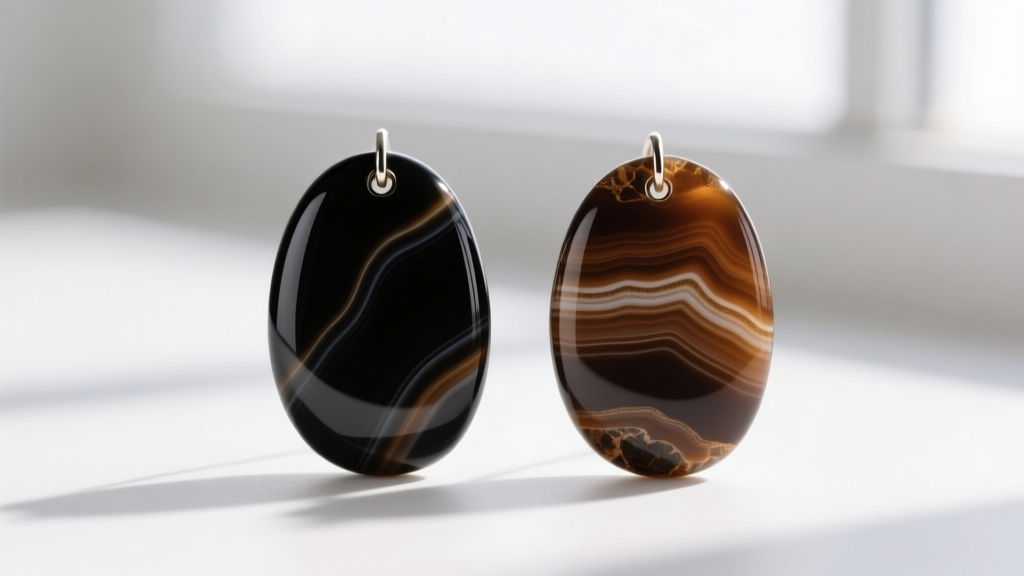
When inspecting a high-quality onyx earring, look for a cabochon or faceted stone with a mirror-like polish. Because onyx is cryptocrystalline (composed of microscopic quartz crystals), it takes an exceptionally high polish. Avoid stones that appear waxy, dull, or feature visible surface pitting, as these indicate poor lapidary work or low-grade base material. If you are specifically seeking natural untreated black onyx, be prepared to request gemological lab certification, as it commands a significant premium and is mostly found in antique or bespoke pieces, as noted by Lang Antiques University.
Optimal Metal Pairings for Black Onyx
The deep, light-absorbing black of onyx acts as a neutral canvas, making it highly versatile. However, the metal you choose dictates the earring's longevity, hypoallergenic properties, and overall aesthetic. Below is a comparative breakdown of the most common metals used in onyx earring settings.
| Metal Type | Aesthetic Profile | Durability & Pros | Estimated Price Range |
|---|---|---|---|
| 14k Yellow Gold | High contrast, vintage warmth, Art Deco revival | Excellent durability, resists tarnish, ideal for heirloom pieces | $150 - $600 |
| 18k White Gold / Platinum | Sleek, monochromatic, modern minimalist | Platinum is incredibly dense and secures heavy onyx cabochons safely | $400 - $1,500+ |
| 925 Sterling Silver | Edgy, gothic, accessible everyday wear | Prone to tarnish, softer metal; requires rhodium plating for best results | $30 - $120 |
| Implant-Grade Titanium | Industrial, utilitarian, body-jewelry focused | 100% hypoallergenic, lightweight, essential for fresh cartilage piercings | $40 - $90 |
Expert Tip: If you have sensitive skin or nickel allergies, avoid cheap 'silver-plated' or 'gold vermeil' settings for heavy onyx drops. The weight of the stone can cause the earring to pull and stretch the earlobe, pressing base metals against the skin and triggering contact dermatitis. Always opt for solid 14k gold or platinum for heavy dangle styles.
Piercing Gauges and Style Configurations
An often-overlooked aspect of buying an onyx earring is ensuring the post or wire thickness matches your specific piercing. Wearing the wrong gauge can lead to irritation, migration, or tearing, especially with heavier stones.
- Standard Lobe Studs (20G - 18G): Most onyx stud earrings are crafted at 20-gauge (0.81mm) or 18-gauge (1.02mm). If the onyx cabochon is larger than 8mm, ensure the earring features a secure friction back or a screw-back to prevent the heavy stone from drooping forward on the lobe.
- Cartilage and Helix Huggies (16G): For upper ear piercings, a 16-gauge (1.29mm) post is standard. Onyx huggies or small clicker rings are highly popular here. Ensure the internal diameter of the huggie is at least 8mm to 10mm to accommodate the natural swelling and curvature of the helix.
- Dangles and Drops (20G - 18G): Onyx is a dense stone (specific gravity of roughly 2.60). Long onyx drop earrings can easily exceed 10 grams per ear. Look for designs that incorporate a lightweight metal framework or hollowed-out backing to reduce the overall gram weight and prevent lobe stretching over time.
Setting Types and Common Failure Modes
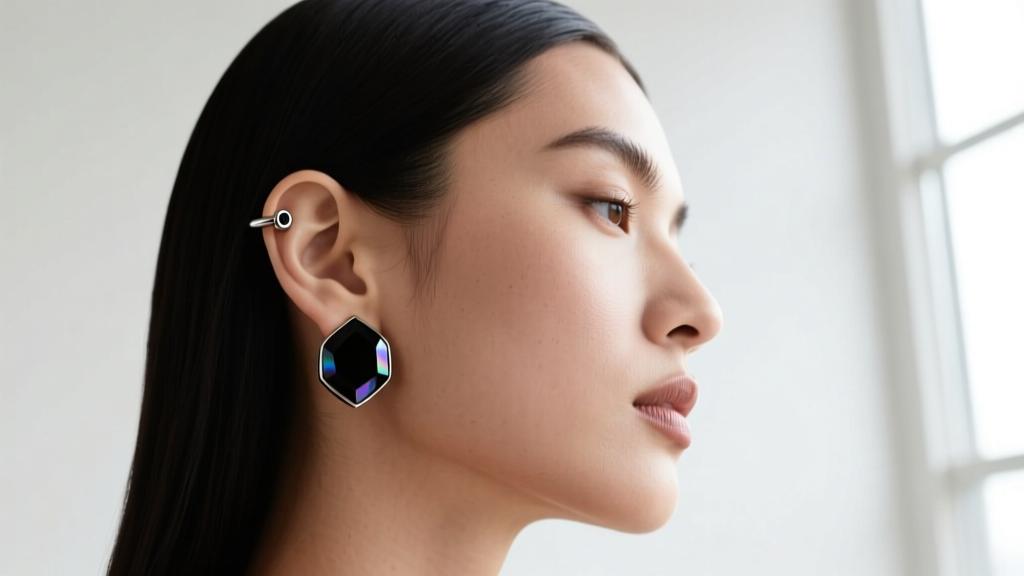
How the onyx is secured within the metal framework is the single biggest determinant of the earring's lifespan. Onyx lacks cleavage (meaning it doesn't split along flat planes like diamonds), but it is brittle and prone to chipping along the girdle (the outer edge) if struck against a hard surface.
Bezel vs. Prong Settings
For an onyx earring, a full bezel setting is highly recommended. A bezel wraps a continuous rim of metal entirely around the stone's perimeter, protecting the vulnerable girdle from impacts. If you prefer the look of a prong setting, ensure the prongs are thick and regularly checked by a jeweler. A common failure mode in older or poorly made prong-set onyx earrings is the stone slipping out of a worn prong and shattering when dropped on a tile or hardwood floor.
'When evaluating vintage Art Deco onyx earrings, always inspect the backing of the stone. Many antique pieces feature a closed-back foil setting to enhance the blackness of the stone. Never submerge these in water, as moisture trapped behind the onyx will ruin the foil and cause the stone to look cloudy or gray.' — Master Jeweler Appraisal Notes
Pricing Tiers: What You Should Expect to Pay
Understanding the pricing landscape prevents you from overpaying for treated stones or underestimating the value of fine craftsmanship. Because the raw material for treated black onyx is relatively inexpensive, you are primarily paying for the metal weight, the lapidary precision, and the brand design.
Tier 1: Fashion and Commercial Silver ($20 - $90)
At this level, expect 925 sterling silver (often rhodium-plated) set with mass-produced, calibrated dyed onyx cabochons. These are excellent for trendy, seasonal wear but may suffer from prong wear or silver tarnishing over time.
Tier 2: Fine Jewelry and Solid Gold ($150 - $600)
This tier includes solid 14k or 18k gold settings with expertly polished onyx. You will find precision bezel settings, secure screw-backs for studs, and integrated diamond accents. The onyx used here is typically high-grade agate with zero visible surface pitting.
Tier 3: Vintage, Bespoke, and High Jewelry ($800 - $5,000+)
Reserved for authentic Art Deco pieces, platinum settings, or earrings featuring rare, untreated natural black onyx. These pieces often incorporate intricate enamel work (guilloché) or calibre-cut onyx custom-fitted to the metal framework.
Care, Cleaning, and Maintenance
Proper maintenance ensures your onyx earring retains its mirror finish and structural integrity. While the sugar-acid treatment is permanent, the stone's polish can be degraded by improper cleaning methods.
- Avoid Ultrasonic Cleaners: Never place dyed onyx in an ultrasonic jewelry cleaner. The high-frequency vibrations combined with heat can cause microscopic fractures and potentially leach the carbonized color, leaving the stone with a faded, brownish tint.
- Skip the Harsh Chemicals: Bleach, ammonia, and even heavy perfumes can degrade the polish of the chalcedony and tarnish the metal settings. Always put your onyx earrings on after applying hairspray and cosmetics.
- The Warm Soap Method: The safest way to clean an onyx earring is with lukewarm water, a drop of mild dish soap, and a very soft baby toothbrush. Gently brush the back of the stone and the metal setting, rinse quickly, and dry immediately with a microfiber cloth to prevent water spots.
By prioritizing a secure bezel setting, verifying the metal grade, and understanding the realities of onyx treatments, you can confidently select an onyx earring that will serve as a striking, enduring staple in your jewelry wardrobe for decades to come.


