How to Fix Peeling Vintage CD Pearl Earrings & Spot Fakes
Learn how to restore peeling vintage CD pearl earrings, verify Christian Dior authenticity markers, and safely clean faux pearl finishes.

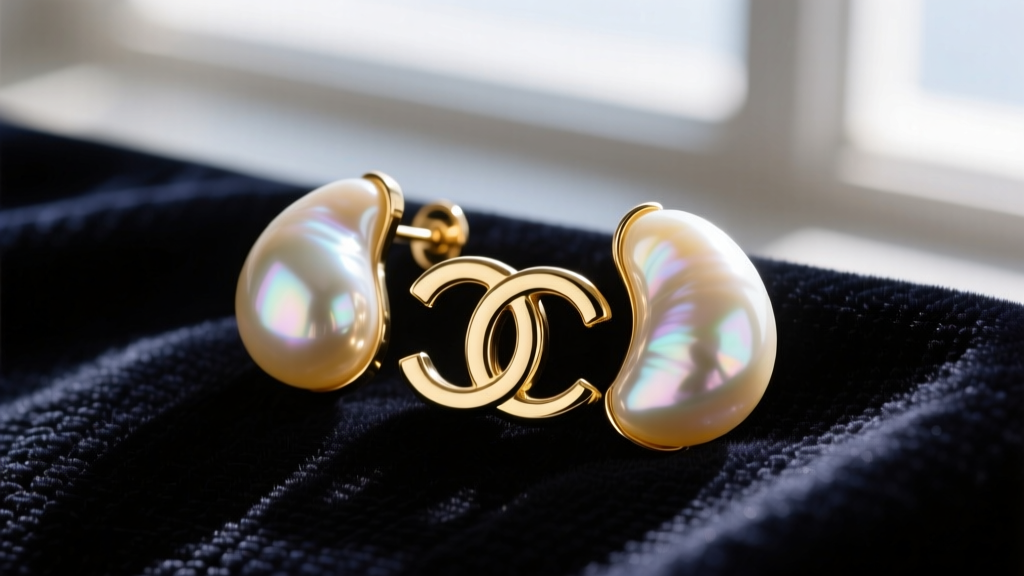
Collecting vintage designer jewelry is a thrilling pursuit, but it comes with distinct maintenance challenges. Among the most highly sought-after pieces in the secondary market are vintage CD pearl earrings—specifically, the iconic Christian Dior faux pearl designs from the 1950s through the 1980s. While their lustrous sheen and heavyweight brass construction are legendary, these pieces are notorious for two major issues: deteriorating pearl coatings and a flood of sophisticated counterfeits.
Whether you are a seasoned collector or have just inherited a pair of mid-century Dior clip-ons, this comprehensive troubleshooting guide will walk you through the exact metallurgy, conservation-grade restoration techniques, and authentication matrices required to preserve and verify your CD pearl earrings.
The Anatomy of Vintage CD Pearl Earrings
To troubleshoot effectively, you must first understand the materials you are working with. Authentic vintage Dior faux pearls are not plastic. They are crafted using a technique that dates back to the 17th century, utilizing a solid glass bead core dipped multiple times in essence d'orient. According to the Gemological Institute of America (GIA), essence d'orient is a suspension of guanine crystals (derived from fish scales) in a lacquer binder. This creates the deep, iridescent glow that mimics a natural saltwater pearl.
The hardware on authentic vintage CD pearl earrings is typically cast from heavy base metals like brass or tombac, then heavily plated in gold or rhodium. The signature "CD" charm is often cast separately and attached via a micro-jump ring. Understanding this multi-layered construction is critical, as using the wrong cleaning agents or adhesives will permanently destroy the guanine coating or strip the gold plating.
Troubleshooting the #1 Issue: Peeling Faux Pearls
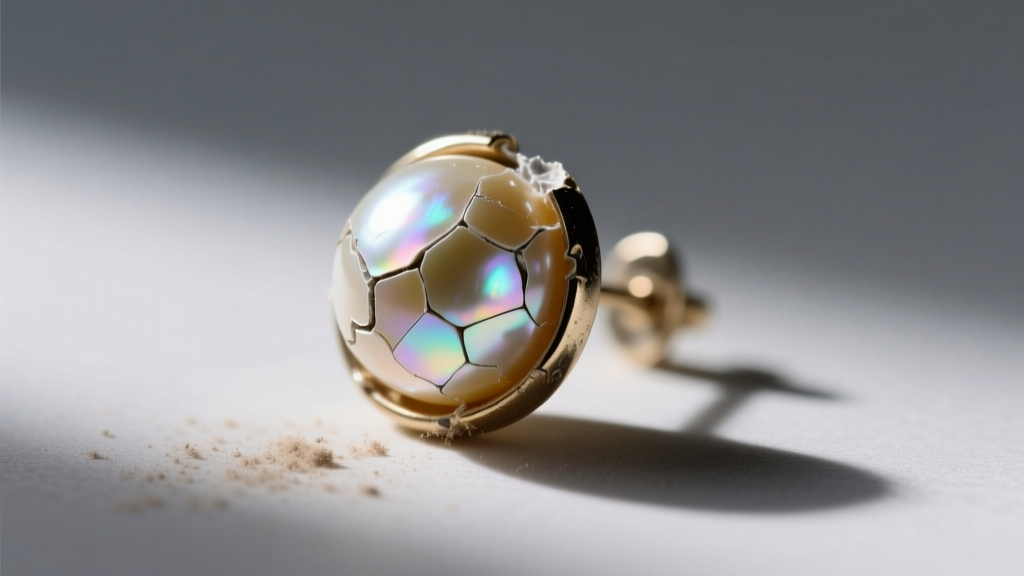
Why Do They Peel?
The most common complaint with vintage CD pearl earrings is the flaking or peeling of the pearl coating. This failure mode is almost always caused by one of three factors:
- UV Degradation: Prolonged exposure to sunlight breaks down the organic lacquer binder holding the guanine crystals together.
- Acidic pH Exposure: Decades of contact with skin oils, perfume, and hairspray alters the chemical stability of the outermost lacquer layer.
- Desiccation: Storing earrings in overly dry environments (like a safety deposit box without humidity control) causes the lacquer to become brittle and micro-fracture.
Step-by-Step Conservation Restoration
Do not attempt to fix peeling CD pearl earrings with clear nail polish or cyanoacrylate (Superglue). Nail polish contains solvents that will melt the remaining essence d'orient, and Superglue cures with a cloudy, irreversible white haze. Instead, follow conservation protocols recommended by institutions like the American Institute for Conservation.
- Consolidation: For micro-flaking, use a conservation-grade acrylic resin like Paraloid B-72 dissolved in pure acetone (5% weight/volume ratio). Apply it sparingly over the flakes using a fine-tipped sable brush. The acetone evaporates rapidly, leaving a stable, non-yellowing acrylic matrix that binds the flakes back to the glass core.
- Professional Re-dipping: If the peeling has exposed the glass bead core entirely, consolidation will not work. You must take the earrings to a specialist vintage jewelry restorer who can chemically strip the remaining coating and re-dip the beads in modern, stable synthetic pearl essence.
Authentication Matrix: Spotting Fake CD Earrings
The secondary market is saturated with replica CD pearl earrings. Modern fakes often use laser etching and lightweight zinc alloys. Use the following matrix to authenticate your pieces.
| Authentication Marker | Authentic Vintage Dior (1950s-1980s) | Modern Replica / Fake |
|---|---|---|
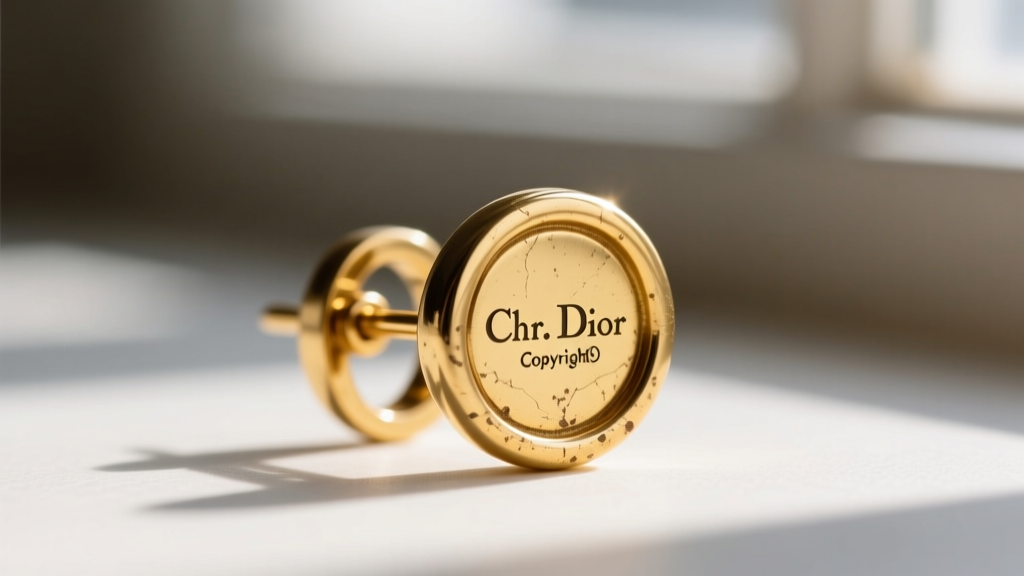
| Hallmark Style | Deeply stamped into the metal. Early 50s: 'Dior'. 60s-80s: 'Chr. Dior' with © and often a year (e.g., '1966'). | Laser-etched or lightly stamped. Often missing the copyright © symbol or features modern font serifs. |
| Metal Weight | Heavyweight brass or tombac base. Earrings feel substantial and dense in the hand. | Lightweight zinc alloy or hollow-cast aluminum. Feels suspiciously light. |
| Pearl Coating | Deep, multi-layered luster. Often features a tiny, nearly invisible 'dip hole' near the drill site. | Uniform, plastic-like shine. Coating is often painted on plastic beads rather than dipped glass. |
| Origin Stamps | Frequently stamped 'Made in Germany' or 'Made in France' on the clip-back mechanism. | Rarely features country-of-origin stamps, or features modern 'Made in China' markings. |
Hardware Troubleshooting & Clip-On Conversions
Most vintage CD pearl earrings were originally designed as clip-ons. Over decades, the mechanical tension on these hinges fails, leading to painful pinching or earrings that slide off the earlobe.
Adjusting Clip-On Tension
Dior utilized two main clip-back styles: the paddle clip and the omega clip. If your paddle clips are too tight, do not bend the metal arm with pliers, as this will snap the brittle vintage brass. Instead, locate the micro-screw at the hinge joint. Using a precision jeweler's screwdriver (usually 0.8mm or 1.0mm flathead), turn the screw counter-clockwise by a quarter-turn to reduce the spring tension. Apply a microscopic drop of synthetic watch oil to the hinge pin to eliminate squeaking and friction.
Converting to Pierced: Metallurgical Considerations
Many collectors prefer to convert vintage clip-ons to pierced earrings. This requires soldering a post to the back of the brass base. Warning: Traditional torch soldering generates massive heat that will instantly scorch and boil the essence d'orient coating on the adjacent pearl.
To safely convert CD pearl earrings, a jeweler must use laser welding. Laser welding focuses a high-energy beam on a 0.5mm focal point, fusing an 18-gauge (1.0mm) or 20-gauge (0.8mm) titanium or 14k gold post to the brass base without transferring ambient heat to the pearl. Always insist on laser welding; if a jeweler suggests using a butane torch and heat shield, find a different professional.
Safe Cleaning Protocols for Faux Pearls
Routine cleaning of CD pearl earrings requires a delicate touch. Ultrasonic cleaners are strictly forbidden—the high-frequency cavitation will shatter the glass core and strip the pearl coating in seconds. Similarly, commercial silver dips and ammonia-based cleaners will dissolve the lacquer binder.
The Expert Cleaning Method:
- Dampen a microfiber cloth with distilled water and a single drop of pH-neutral baby shampoo.
- Gently wipe the surface of the faux pearl, avoiding the drill holes where moisture can become trapped and degrade the internal glass.
- Use a dry, soft-bristled makeup brush to dust the crevices around the 'CD' charm and the rhinestone settings.
- Buff the gold-plated hardware with a dry, untreated jeweler's polishing cloth. Never use treated rouge cloths, as the mild abrasives will strip the thin vintage gold plating down to the base brass.
Archival Storage Tip: Never store vintage CD pearl earrings in PVC plastic bags or cotton balls. PVC off-gasses plasticizers that chemically react with faux pearl lacquer, causing it to turn sticky and yellow. Store them in acid-free tissue paper inside an archival-quality polyethylene bag with a silica gel packet to maintain a stable 40-50% relative humidity.
Final Expert Verdict
Troubleshooting vintage CD pearl earrings requires a shift in mindset from standard jewelry repair to historical conservation. By understanding the organic nature of essence d'orient, utilizing non-destructive authentication matrices, and employing laser-welding for conversions, you can preserve these mid-century masterpieces for decades to come. Whether you are hunting for a rare 1960s aurora borealis pair or restoring a family heirloom, respecting the original material science is the key to maintaining both the beauty and the market value of your Christian Dior collection.


