The Ultimate Buying Guide to Women's Earrings Hoops in 2026
Discover how to choose the perfect women's earrings hoops in 2026. Learn about gauge sizes, clasp types, metals, and face-shape styling in our expert guide.


The Anatomy of the Perfect Hoop
When navigating the vast market of women's earrings hoops, the difference between a comfortable, lifelong staple and an irritating, poorly constructed accessory comes down to precise anatomical details. In 2026, the jewelry industry has seen a massive shift toward ergonomic designs and hypoallergenic metallurgy, yet many consumers still purchase hoops based solely on aesthetics. As a foundational piece in any jewelry collection, a hoop must balance structural integrity, metal purity, and proportion. This comprehensive buying guide strips away the marketing fluff to focus on the exact specifications—gauge thickness, clasp mechanics, and alloy grades—that dictate the quality and comfort of your earrings.
Sizing Matrix: Diameter and Gauge Explained
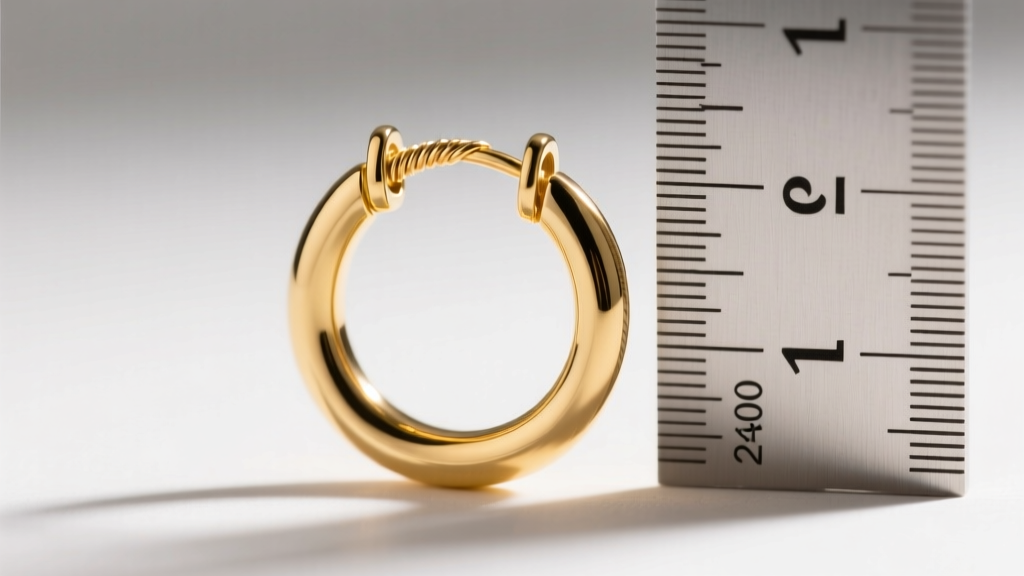
The two most critical measurements for any hoop are its outer diameter (measured in millimeters) and its wire thickness (measured in American Wire Gauge, or AWG). Selecting the wrong gauge for your specific piercing can lead to tearing, migration, or the dreaded "cheese-cutter effect," where a heavy, thin wire slowly slices through the earlobe tissue.
Standard lobe piercings are typically done at 20G (0.81mm) or 18G (1.02mm), while cartilage piercings (like the helix or tragus) are usually 16G (1.29mm). Wearing a 22G hoop in a standard lobe piercing is a primary cause of lobe splitting over time due to the lack of surface area distributing the weight of the metal.
| Style Category | Diameter (mm) | Recommended Gauge | Best For |
|---|---|---|---|
| Huggies | 10mm - 15mm | 18G - 16G | Everyday wear, cartilage, active lifestyles |
| Small Hoops | 15mm - 25mm | 20G - 18G | Office environments, minimalist stacking |
| Medium Hoops | 30mm - 45mm | 18G - 16G | Statement pieces, evening wear |
| Large / Oversized | 50mm - 80mm+ | 16G - 14G | High-fashion, editorial looks (requires healed, mature lobes) |
Clasp Mechanisms: Security vs. Comfort
The clasp is the most common point of failure in hoop earrings. A poorly engineered hinge will loosen over time, leading to lost jewelry. Understanding the mechanics of different closures will help you match the earring to your lifestyle.
Hinge with Snap Closure (Latch-Back)
The most ubiquitous design on the market. A hinged post clicks into a V-shaped notch on the opposite side of the hoop. While highly secure for medium to large hoops, the internal spring mechanism can accumulate sebum and debris, requiring regular cleaning with isopropyl alcohol to maintain the "click" tension. If the post bends even slightly, the snap closure will fail to engage.
Continuous (Endless) Hoops
These feature a seamless design where a slightly thinner, tapered wire end slides directly into the hollow tubing of the opposite side. They offer the sleekest aesthetic with no visible hinges, making them ideal for sleeping and showering. However, they require a gentle twisting motion to open and close. Repeatedly pulling the wire outward instead of twisting it will cause metal fatigue and eventually snap the post.
Clicker / Segment Rings
Originally designed for body modification and cartilage piercings, clickers feature a hinged segment that snaps shut with an audible click, utilizing a captive bead or tension-fit groove. They are exceptionally secure and easy to insert, making them the top recommendation for 2026 for anyone with limited dexterity or multiple cartilage piercings.
Material Grades and Hypoallergenic Standards
Metal sensitivity is a growing concern, with contact dermatitis from cheap alloys ruining the piercing experience for millions. According to the American Academy of Dermatology, nickel is the most common culprit in jewelry allergies. When shopping for women's earrings hoops, ignore vague terms like "hypoallergenic" and look for specific metallurgical grades.
- ASTM F-136 Implant-Grade Titanium: The absolute gold standard for sensitive ears and fresh piercings. It contains zero nickel and is lightweight, reducing the drag on the earlobe.
- 14k Solid Gold (58.5% Pure): The best balance of durability and luxury. The alloy mix (usually containing silver, copper, and zinc) provides enough tensile strength to prevent the hoop from bending out of shape. As noted by the Gemological Institute of America (GIA), 14k gold remains the most practical choice for everyday jewelry that must withstand mechanical stress.
- 18k Solid Gold (75% Pure): Offers a richer, deeper yellow hue but is significantly softer. 18k continuous hoops are prone to warping if you sleep on them, making them better suited for occasional wear or huggie styles where the structural integrity is reinforced by a thicker overall design.
- Gold Vermeil vs. Gold Plated: Vermeil requires a thick layer of gold (minimum 2.5 microns) over a sterling silver base, whereas standard plating can be less than 0.5 microns over brass. For hoops, which experience high friction against the neck and hair, vermeil will last years, while standard plating will rub off in months, exposing the reactive base metal.
Expert Tip: If you are buying white gold hoops, ensure they are rhodium-plated and check if the alloy contains nickel. Many 14k white gold alloys use nickel as a whitening agent. If you have a known nickel allergy, opt for platinum, palladium, or titanium instead.
Face Shape Framework for Hoop Styling
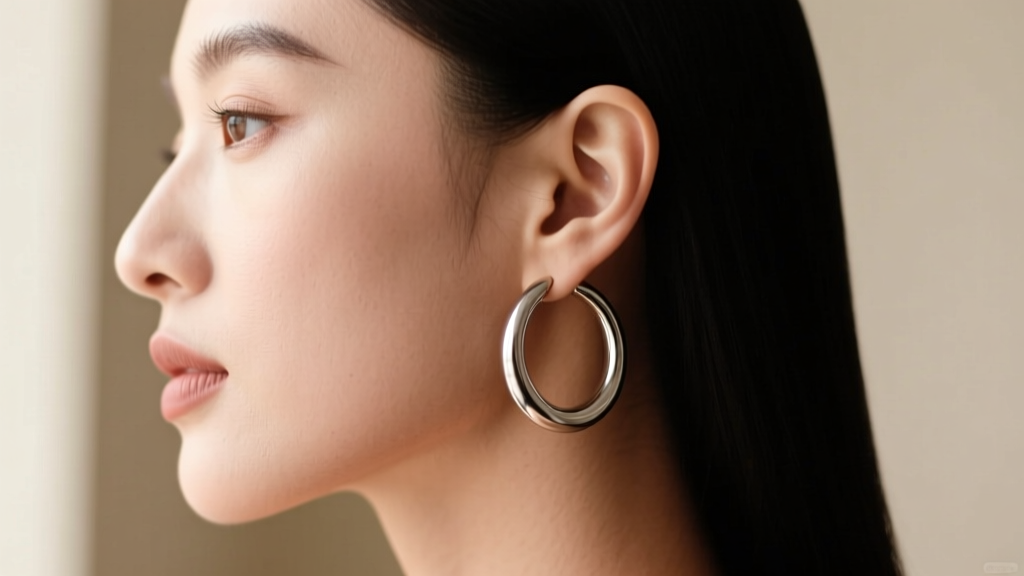
While personal preference always reigns supreme, understanding how the geometry of a hoop interacts with your facial structure can elevate your styling. Hoops draw the eye downward and outward, which can be used to balance or accentuate natural features.
- Round Faces: Opt for elongated, oval-shaped hoops or medium-to-large circular hoops (40mm+) that drop below the jawline. This creates a vertical line that visually lengthens the face. Avoid thick, chunky huggies that sit tightly against the lobe, as they can emphasize width.
- Square Faces: Soften a strong jawline with medium-sized hoops (30mm-40mm) that feature rounded edges or subtle texturing. Avoid sharp, geometric, or square-shaped hoops that mimic the angles of the jaw.
- Heart-Shaped Faces: Teardrop hoops or styles that are slightly wider at the bottom help balance a narrower chin. Huggies and small, delicate hoops also work beautifully to keep the focus on the upper cheekbones and eyes.
- Oval Faces: The most versatile face shape can pull off virtually any style, from ultra-thick, architectural tube hoops to diamond-encrusted huggies. Experiment with asymmetrical sizing for a modern, editorial edge.
Common Failure Modes & Troubleshooting
Even high-end jewelry can fail if the mechanics are misunderstood. Here are the most common issues buyers face with hoops and how to avoid them:
- The "Cheese-Cutter" Effect: Caused by wearing heavy, large-diameter hoops in a very thin gauge (22G or higher). The weight of the gold concentrates on a microscopic edge of tissue, slowly migrating the piercing downward. Solution: Always size up to at least 16G or 14G for hoops larger than 40mm.
- Hinge Seizing: Lotions, hairspray, and dead skin cells build up inside the microscopic tolerances of a snap-closure hinge, preventing it from clicking shut. Solution: Once a month, soak the closure mechanism in warm water with a drop of mild dish soap, then use a soft-bristled toothbrush to clear the debris. Never use harsh chemicals that can degrade the internal tension spring.
- Post Shearing on Continuous Hoops: Forcing a continuous hoop open by pulling the ends apart laterally rather than twisting them vertically creates a stress fracture in the metal. Solution: Always use a gentle twisting motion (one hand pushes up, the other pulls down) to open the ring, and ensure your piercing is fully healed and wide enough to accommodate the thicker seam of the continuous wire.
Final Verdict: Investing in Quality
The market for women's earrings hoops in 2026 offers incredible variety, but true value lies in the details. Prioritize 14k solid gold or implant-grade titanium, ensure your gauge is thick enough to support the weight of the diameter you choose, and select a clasp that matches your daily activity level. By focusing on these structural and material fundamentals, you will build a collection of hoops that remain comfortable, secure, and visually stunning for decades to come.


