Dagger Earrings 2026: The Edgy Trend & Styling Guide
Discover the 2026 dagger earrings trend. Learn how to style elongated gothic drops, choose the right metal gauge, and prevent lobe fatigue.


The intersection of gothic romance and high-end fine jewelry has officially peaked in 2026, and the undisputed centerpiece of this movement is the dagger earring. No longer relegated to costume jewelry bins or seasonal Halloween accessories, the modern dagger earring has been elevated through lost-wax casting, pavé black diamond settings, and architectural metalwork. Whether you are embracing the 'dark coquette' aesthetic or simply looking to add a subversive edge to your minimalist wardrobe, understanding the mechanics, materials, and styling nuances of this aggressive silhouette is essential.
In this comprehensive style and trend analysis, we break down the anatomy of dagger earrings, explore the material science that prevents tarnishing and lobe fatigue, and provide a strategic framework for wearing this bold motif across different face shapes and piercing placements.
The 2026 Resurgence: From Subculture to Fine Jewelry
Historically, the dagger motif in jewelry symbolizes protection, betrayal, or a rite of passage. In the context of 2026 fashion, it represents a rejection of hyper-polished, delicate 'quiet luxury' in favor of 'subversive basics' and heirloom gothic aesthetics. High-fashion runways and independent jewelers alike are reimagining the blade. We are seeing asymmetric pairings—one ear featuring a diamond-encrusted hilt with a matte gold blade, the other a simple, razor-thin silver stiletto drop.
According to trend forecasters and industry analysts at Vogue, the modern consumer is seeking jewelry that tells a story and projects a distinct, slightly dangerous persona. The dagger earring fulfills this by offering a sharp, linear contrast to the soft curves of the human face and neck. However, as the design shifts from lightweight base metals to solid golds and gemstone-heavy hilts, the physical weight of the earring becomes a critical factor in both comfort and longevity.
Anatomy of a Drop: Weight, Gauge, and Hardware
The most common failure mode when purchasing elongated dagger earrings is ignoring the physics of the human earlobe. A standard 2-inch to 3-inch dagger drop can easily weigh between 14 and 24 grams. The human earlobe, composed of areolar connective tissue and fat without cartilage support, begins to experience fatigue, stretching, and downward drooping at around 15 grams of sustained pull.
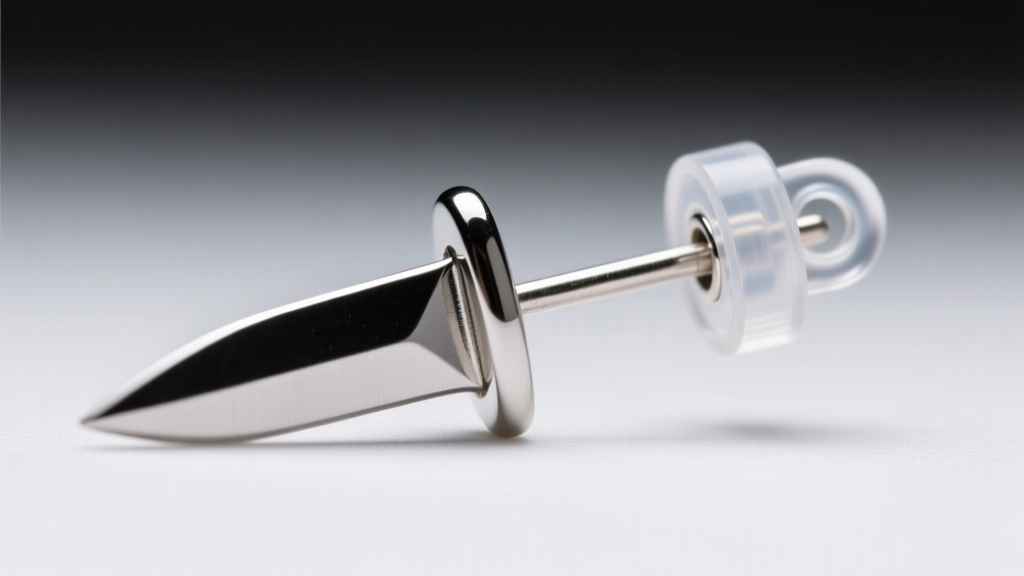
Gauge Specifications and Post Integrity
To combat the 'drooping dagger' effect, you must pay strict attention to the wire gauge of the earring post or hook:
- 22-Gauge (0.64mm): Too flimsy for daggers. The wire will bend under the weight of a metal blade, causing the earring to tilt awkwardly forward.
- 20-Gauge (0.81mm): The industry standard for lightweight drops. Acceptable only if the dagger is hollow-cast or under 10 grams.
- 18-Gauge (1.02mm): The ideal specification for solid metal dagger earrings. This thickness provides the structural rigidity needed to keep the blade hanging perfectly plumb without bending the wire.
- 16-Gauge (1.29mm): Reserved for cartilage placements (such as a helix or conch dangle) where the thicker wire is required to prevent the 'cheese-cutter effect' through the dense cartilage tissue.
Hardware and Support Systems
If your dagger earrings exceed 15 grams, standard butterfly friction backs are insufficient. The metal back will slide down the post, pulling the lobe with it. For heavy drops, utilize silicone earring stabilizers (such as BlingWraps or large silicone discs) that distribute the weight across a wider surface area of the back of the ear. For French wire hooks, always pair them with a secure silicone O-ring stopper to prevent the heavy blade from slipping out when you remove a coat or scarf.
Material Breakdown: Patina, Tarnish, and Pricing
The visual impact of a dagger earring relies heavily on its finish. The deep crevices of a cast hilt and the flat planes of the blade require specific metal treatments. According to metallurgical guidelines from the Gemological Institute of America (GIA), the interaction between skin oils, environmental sulfur, and metal alloys dictates how your jewelry will age.
| Material Grade | Durability & Maintenance | Average Price Range | Best Aesthetic Application |
|---|---|---|---|
| Oxidized 925 Sterling Silver | High tarnish risk. The dark patina is intentional but can wear off on high-friction edges. Never use a rouge cloth, which will strip the blackened crevices. | $60 - $180 | Gothic, Vintage, Dark Academia |
| 14k Solid Yellow or White Gold | Excellent. Hypoallergenic and impervious to tarnish. Requires only mild soap and water for cleaning. | $300 - $850+ | Everyday Luxury, Heirloom Pieces |
| Black Rhodium over Silver | High durability. Provides a dark, gunmetal finish that is much more resistant to friction wear than chemical oxidation. | $120 - $250 | Modern Minimalist, Edgy Corporate |
| Gold Vermeil (Silver Base) | Moderate. The thick gold layer will eventually wear away on the sharp edges of the blade, revealing the silver beneath. | $80 - $150 | Trend-Testing, Occasional Wear |
Expert Tip: If you purchase oxidized silver daggers, clean them using a soft-bristled makeup brush and a drop of mild dish soap. Avoid ultrasonic cleaners, as the high-frequency vibrations can strip the liver-of-sulfur treatment from the intricate hilt details.
Face Shape and Placement Strategy
The elongated, sharp geometry of dagger earrings makes them a powerful tool for facial contouring, but they must be scaled correctly to avoid overwhelming your features.

Scaling for Face Shapes
- Round Faces: Dagger earrings are your best friend. The sharp, vertical lines create an optical illusion that elongates the jawline and draws the eye downward. Opt for drops that fall 2 to 3 inches below the earlobe.
- Oval Faces: Highly versatile. You can pull off everything from delicate, 1-inch dagger studs to dramatic, shoulder-grazing blade chandeliers.
- Square/Angular Faces: Avoid overly rigid, straight-line daggers, which can amplify the sharpness of your jaw. Instead, look for daggers with a curved hilt, a teardrop blood-drop motif at the base, or a slight organic wave in the blade to soften the geometry.
- Oblong/Long Faces: Avoid extreme length. Choose shorter, wider dagger motifs (such as a broad, triangular dirk or a dagger integrated into a horizontal huggie hoop) to add width rather than further elongating the face.
Cartilage vs. Lobe Placement
While the standard lobe piercing is the traditional home for the dagger drop, the 2026 trend cycle has seen a massive spike in upper cartilage dagger placements. A small, 16-gauge dagger stud worn in the flat or conch area of the ear creates a striking, armor-like effect. However, cartilage piercings are highly susceptible to irritation bumps from heavy jewelry. If placing a dagger in the cartilage, ensure the piece is internally threaded or threadless (push-pin) to avoid the microscopic tears caused by externally threaded posts sliding through the fistula.
Styling Frameworks: Wearing the Blade IRL
Integrating aggressive, weapon-motif jewelry into daily life requires a balanced styling approach. The key is to let the earrings serve as the focal point while grounding the rest of the outfit.
"The dagger earring is an exclamation point. If you are wearing a heavily embellished neckline, a ruffled collar, or statement necklaces, the visual noise will clash with the sharp lines of the blade. Opt for open necklines, structured blazers, or sleek turtlenecks to provide a blank canvas for the metalwork."
The 'Corporate Subversion' Look
Pair medium-length (1.5 inch) black rhodium or white gold dagger drops with a sharply tailored, monochromatic pantsuit. The severe lines of the tailoring echo the geometry of the earrings, creating a powerful, authoritative silhouette that remains entirely boardroom-appropriate.
The 'Dark Coquette' Evening Look
Contrast the aggression of the dagger with hyper-feminine textures. Wear elongated, oxidized silver daggers featuring tiny pavé ruby 'blood drops' at the tip alongside a black silk slip dress, lace gloves, or a velvet choker. The juxtaposition of delicate fabrics and dangerous metalwork is the defining hallmark of the 2026 evening aesthetic.
Final Verdict: An Investment in Edge
Dagger earrings have transcended their status as a fleeting subculture trend to become a permanent fixture in the modern jewelry wardrobe. By prioritizing 18-gauge structural integrity, utilizing silicone weight-support hardware, and selecting metals that align with your maintenance tolerance, you can wear this bold silhouette comfortably and confidently. Whether cast in heirloom 14k gold or moody oxidized silver, the dagger remains a potent symbol of personal armor and unapologetic style.
For further reading on jewelry manufacturing standards and metal alloys, consult the technical resources available at Rio Grande's Jewelry Making Articles.


