The Dangle Earrings Cross Trend: 2026 Style & Material Guide
Discover the 2026 dangle earrings cross trend. Explore styling tips, face-shape guides, material grades, and weight distribution for statement crosses.

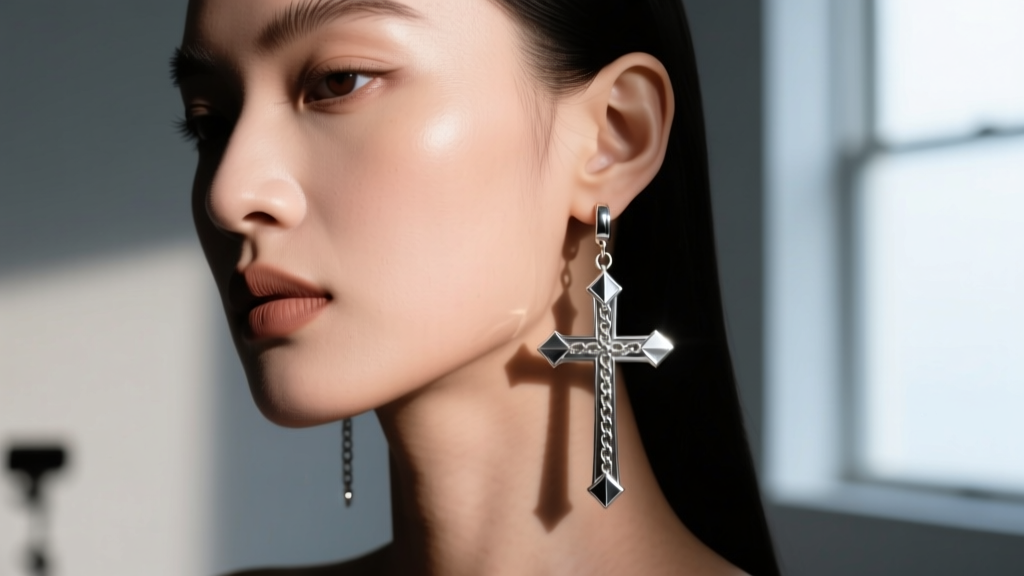
The 2026 Renaissance of the Cross Dangle
The cross motif has transcended its traditional, understated boundaries. In 2026, the dangle earrings cross trend has evolved from simple minimalist studs into architectural, kinetic statement pieces. According to trend forecasts highlighted by Vogue's jewelry archives, this year is defined by the 'Neo-Gothic' and 'Liquid Metal' aesthetics. Designers are moving away from rigid, symmetrical geometry, favoring instead molten silver textures, oxidized detailing, and elongated silhouettes that interact dynamically with the wearer's movement.
This shift is not merely visual; it represents a broader cultural embrace of avant-garde self-expression. The modern cross dangle is no longer confined to religious symbolism but is celebrated as a masterclass in structural jewelry design. However, as these pieces grow in size and artistic complexity, understanding the engineering, material grades, and ergonomic requirements becomes critical for both collectors and everyday wearers.
From Minimalist to Maximalist: What Changed?
In the early 2020s, the market was saturated with micro-pave diamond crosses and thin, 14k gold wire silhouettes. Today, the pendulum has swung heavily toward maximalism. We are seeing asymmetric crosses, double-layered dangles with independent kinetic hinges, and mixed-metal designs that pair matte black rhodium with high-polish 18k yellow gold. This evolution demands a higher level of craftsmanship, particularly in how the earring's weight is distributed across the earlobe.
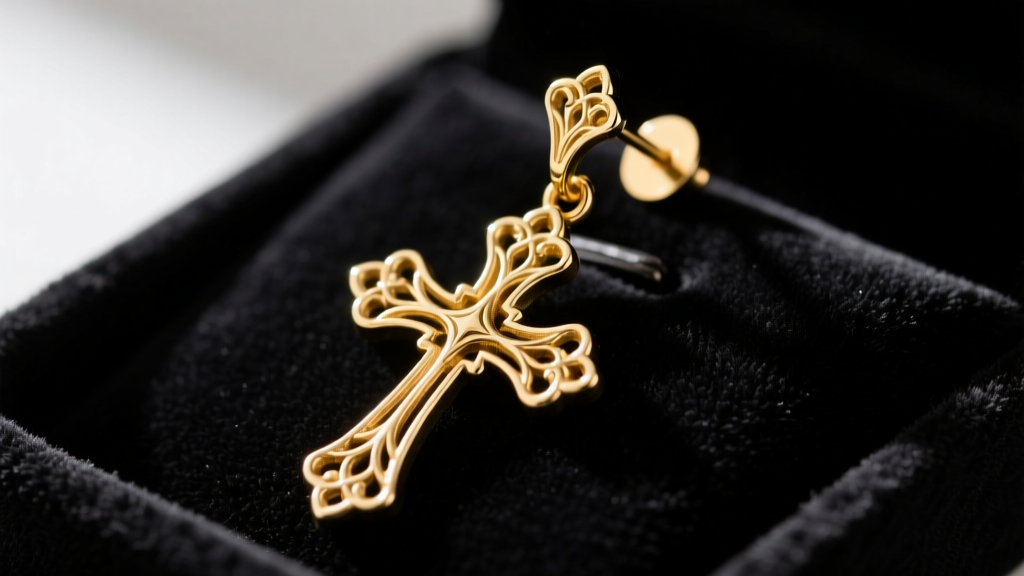
The Engineering of Heavy Dangles: Gauges & Failure Modes
The most common failure mode in statement dangle earrings is the 'cheese-cutter effect.' This occurs when a heavy earring is suspended from a post that is too thin, causing the metal to slowly slice through the earlobe tissue over time. Standard lobe piercings are typically done at 20-gauge (0.81mm) or 18-gauge (1.02mm). While sufficient for lightweight studs, these gauges are structurally inadequate for the oversized cross dangles trending in 2026.
For any dangle earring exceeding 12 grams per pair, a 16-gauge (1.29mm) or even 14-gauge (1.63mm) post is mandatory. The Association of Professional Piercers (APP) frequently warns against prolonged wear of heavy, thin-wire jewelry due to the risk of permanent lobe elongation and tissue tearing.
Securing the Kinetic Piece: Beyond the Butterfly Clutch
Standard friction-back 'butterfly' clutches are obsolete for heavy dangles. The kinetic energy generated by walking or turning your head can easily dislodge a standard push-back. For valuable or heavy cross dangles, you must upgrade your securing mechanisms:
- La Poussière Locking Backs: These feature a specialized clutch that physically locks into a grooved post, making accidental loss nearly impossible.
- Silicone O-Rings: A cost-effective, high-friction alternative that grips the post tightly while providing a cushion between the metal and the back of the earlobe.
- Screw-Back Threads: Common in fine jewelry, the backing screws onto a threaded post, ensuring absolute security during active wear.
Material Density & Lobe Stress Matrix
Not all metals are created equal when it comes to weight. The specific gravity (density) of the metal dictates how heavy the earring will feel, even if the physical dimensions are identical. Below is a comparative matrix of common metals used in 2026 cross dangles:
| Material Grade | Density (g/cm³) | Lobe Stress Level | Best Use Case | 2026 Price Range (Pair) |
|---|---|---|---|---|
| Titanium (Grade 23) | 4.43 | Low | Oversized, avant-garde shapes | $80 - $250 |
| 316L Surgical Steel | 8.00 | Medium | Everyday gothic/industrial styles | $30 - $90 |
| Sterling Silver (925) | 10.49 | Medium-High | Intricate casted neo-gothic designs | $60 - $180 |
| 14k Solid Gold | 12.90 | High | Premium, heirloom-quality dangles | $450 - $1,200+ |
As noted by the GIA Gem Encyclopedia, precious metals like gold and silver are inherently dense. Therefore, a 3-inch solid 14k gold cross dangle will weigh significantly more than the same design cast in titanium, necessitating a thicker gauge post and more robust backing.
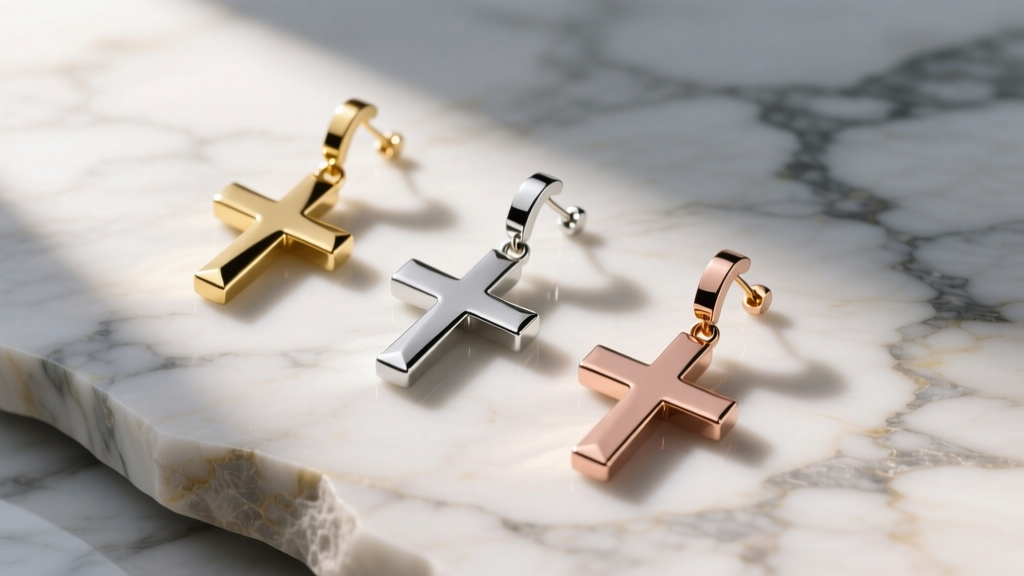
Face Shape & Proportion Styling Guide
Because dangle earrings cross the threshold of the jawline and neck, they fundamentally alter the perceived geometry of the face. Selecting the right cross silhouette is an exercise in optical balancing.
Round Faces
The Goal: Elongation and vertical emphasis.
The Style: Opt for narrow, elongated Latin crosses or sword-style crosses that drop at least 2.5 inches below the earlobe. Avoid wide, chunky cruciforms or heavy horizontal elements, which will accentuate facial width.
Square Faces
The Goal: Softening the jawline and adding movement.
The Style: Choose crosses with curved edges, ornate filigree, or 'liquid metal' finishes that lack harsh, rigid angles. A cross with a teardrop or pearl element dangling from the bottom intersection helps draw the eye downward softly.
Oval Faces
The Goal: Maintaining natural balance while making a statement.
The Style: Oval faces can carry the most architectural and avant-garde designs. Wide, geometric crosses, asymmetric intersecting bars, and heavy mixed-metal pieces will complement the natural symmetry of an oval face without overwhelming it.
Heart-Shaped Faces
The Goal: Adding visual weight to the lower half of the face.
The Style: Look for crosses that are wider at the bottom or feature a flared base. Inverted crosses (when styled in a secular, fashion-forward context) or crosses with heavy gemstone clusters at the lower terminus help balance a narrower chin.
Sourcing & Pricing Tiers in 2026
Navigating the market requires an understanding of what you are paying for. The 2026 landscape is distinctly segmented into three tiers:
1. Fast Fashion & Alloy (Under $40): Typically made from zinc alloys with thin flash plating. These are prone to rapid oxidation, skin discoloration, and post bending. They are suitable for one-off editorial photoshoots but lack longevity.
2. Mid-Tier Artisan & Vermeil ($60 - $250): This tier features independent designers working with 316L steel, titanium, or heavy sterling silver with thick 2.5-micron gold vermeil. This is the sweet spot for trend-driven pieces that offer structural integrity and hypoallergenic properties.
3. Fine Jewelry & Heritage ($500+): Cast in solid 14k or 18k gold, often featuring lab-grown diamond accents or black rhodium detailing. These pieces are engineered with internal structural armatures to prevent bending and are meant to be passed down as heirlooms.
Care, Maintenance & Storage
The kinetic nature of dangle earrings makes them susceptible to environmental wear. Sterling silver crosses, particularly those with oxidized 'Neo-Gothic' detailing, require specific care to maintain their contrast. Never use harsh chemical dip cleaners on oxidized silver, as this will strip the intentional dark patina from the recesses. Instead, use a soft, dry microfiber cloth to gently buff only the high-polish raised surfaces.
Storage is equally critical. Dangles should never be tossed into a communal jewelry box where the posts can become tangled or bent. Store each pair individually in a soft flannel pouch, hanging them from a dedicated jewelry tree or laying them flat in a compartmentalized tray to protect the hinges and kinetic joints from dust and friction.


