The Best Materials for Oversized Statement Earrings
Discover the best materials for oversized statement earrings. Compare weight, durability, and hypoallergenic properties for comfortable, bold jewelry.

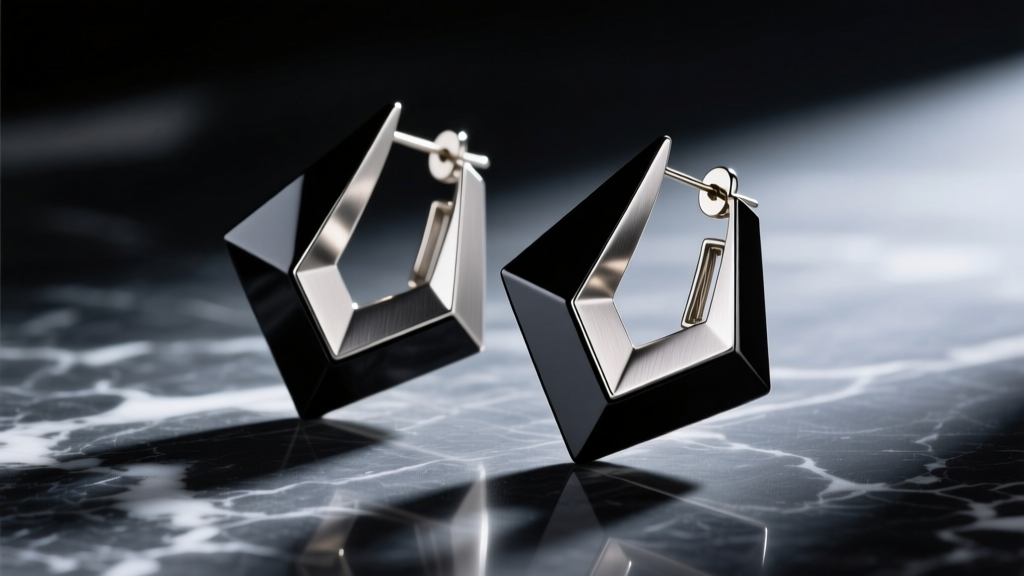
The Biomechanics of Bold Jewelry: Why Material Density Matters
The renaissance of bold, architectural jewelry in 2026 has brought oversized statement earrings back to the forefront of high fashion and everyday styling. However, the primary failure point of these dramatic pieces is rarely aesthetic; it is biomechanical. The human earlobe fistula (the piercing channel) is essentially a tube of scar tissue. When subjected to the pendulum effect and sheer gravitational drag of heavy metals, this tissue experiences micro-tears, leading to a phenomenon known as 'cheese-wiring' or migration.
To prevent permanent lobe elongation, the specific gravity (density) of the chosen material is the most critical variable. A standard 2-inch brass drop earring can easily weigh 35 grams per ear. By contrast, the same volume crafted from aerospace-grade aluminum or bio-acetate weighs less than 8 grams. Understanding the metallurgical and polymeric properties of these materials is essential for anyone looking to wear dramatic silhouettes without sacrificing tissue health or comfort.
Top-Tier Metals for Dramatic Silhouettes
Implant-Grade Titanium (ASTM F136)
When shopping for metallic oversized statement earrings, 'titanium' is a buzzword that requires strict scrutiny. You must look for Grade 23 Titanium (Ti-6Al-4V ELI), which complies with the ASTM F136 standard for surgical implants. Unlike Grade 5 titanium, the ELI (Extra Low Interstitial) variant minimizes oxygen, nitrogen, and carbon, resulting in superior biocompatibility and a lower risk of contact dermatitis. According to the National Institutes of Health, titanium's naturally occurring oxide layer makes it virtually inert against human sweat and sebum.
With a density of approximately 4.43 g/cm³, titanium is nearly 45% lighter than surgical steel or brass. This allows designers to cast thick, voluminous, and structural geometric shapes that remain comfortable for all-day wear. Expect to pay between $80 and $180 for high-quality, solid titanium statement pieces from specialized independent jewelers.
Niobium: The Anodization Master
Niobium is a highly malleable, hypoallergenic transition metal that contains zero nickel, making it a safe harbor for those with severe metal allergies, as noted by the American Academy of Dermatology. However, niobium is dense (8.57 g/cm³). To use niobium for oversized statement earrings, master jewelers employ 'hollow-forming' or use ultra-thin sheet metal (24-gauge to 22-gauge thickness) that is structurally reinforced with hidden internal ribs. Niobium's true superpower is anodization: by applying specific voltages, the metal's surface oxide layer thickens, refracting light into vivid, permanent colors without the use of toxic dyes or plating that can chip over time.
Hollow-Formed 14k and 18k Gold
Solid gold is incredibly heavy and prohibitively expensive at oversized scales. The Gemological Institute of America (GIA) notes that alloying gold with copper and silver increases durability, but the mass remains. The luxury solution is electroformed or hollow-cast 14k gold. This process creates a seamless, lightweight shell with a honeycomb-like interior structure, reducing the weight by up to 70% compared to solid cast gold while maintaining the exact exterior dimensions and luxurious luster. Prices for hollow-formed gold statement earrings typically range from $450 to over $1,500.
Advanced Polymers and Alternative Materials
Cellulose Acetate vs. Injection-Molded Acrylic
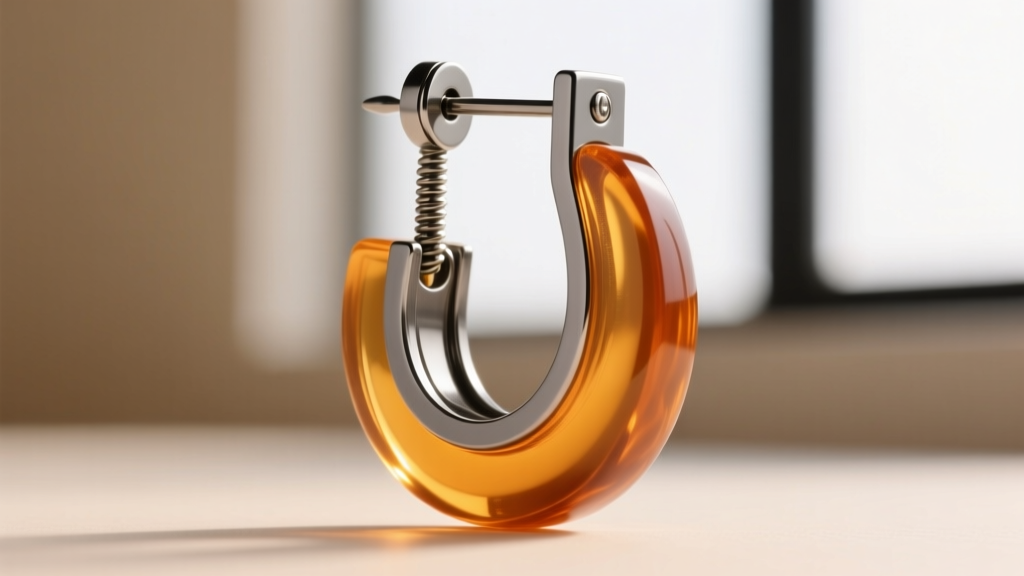
Many fast-fashion brands use injection-molded acrylic for large earrings. Acrylic is brittle, prone to shattering upon impact, and degrades under UV exposure. The premium standard for 2026 is Cellulose Acetate, specifically sourced from heritage manufacturers like Mazzucchelli 1930. Acetate is a plant-based plastic derived from wood pulp and cotton fibers. It is slightly flexible, meaning it can absorb the shock of being dropped without cracking. Furthermore, acetate sheet is cut and hand-polished, revealing deep, marbled translucency that acrylic cannot replicate. Bio-acetate, which replaces petroleum-based plasticizers with plant-based alternatives, is now the benchmark for eco-conscious luxury brands, with large hoop and drop styles retailing between $60 and $140.
Aerospace-Grade Aluminum (6061-T6)
Aluminum is the undisputed king of extreme volume. With a density of just 2.7 g/cm³, it is roughly one-third the weight of steel. Jewelers utilizing 6061-T6 aluminum can create massive, shoulder-grazing oversized statement earrings that weigh less than a standard pair of small steel hoops. The primary drawback is that raw aluminum can oxidize and leave a harmless but annoying grey residue on the skin. Therefore, high-end aluminum earrings must be treated with a clear, hard-anodized Type III coating or feature a PVD (Physical Vapor Deposition) finish to seal the metal and provide a scratch-resistant, hypoallergenic barrier.
Material Weight & Comfort Comparison Matrix
| Material | Density (g/cm³) | Hypoallergenic Rating | Best Application | Avg. Price Range |
|---|---|---|---|---|
| Brass (Standard) | 8.4 - 8.7 | Poor (High Nickel/Lead risk) | Short-term editorial wear | $15 - $40 |
| Stainless Steel (316L) | 8.0 | Moderate (Contains Nickel) | Medium-sized structured hoops | $25 - $75 |
| Titanium (Grade 23 ELI) | 4.43 | Excellent (Implant Grade) | Thick, geometric sculptural drops | $80 - $180 |
| Cellulose Bio-Acetate | 1.2 - 1.3 | Excellent | Massive chunky hoops and shields | $60 - $140 |
| Aluminum (6061-T6) | 2.7 | Good (Requires Anodization) | Shoulder-dusting extreme lengths | $45 - $120 |
Engineering the Drape: Hardware and Load Distribution
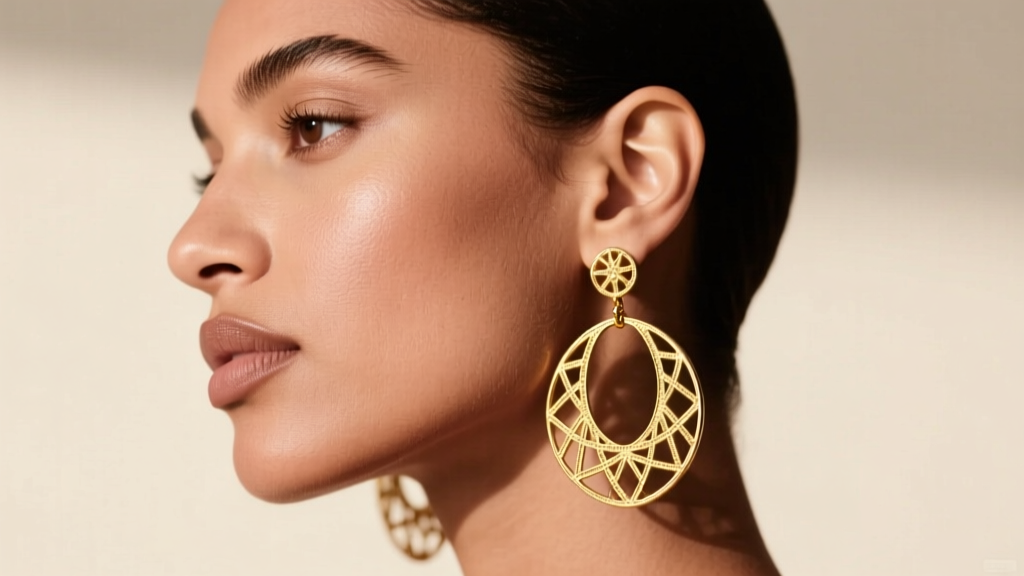
The most exquisite lightweight titanium or acetate body will fail if paired with inadequate hardware. The mechanics of the ear wire dictate how the weight of oversized statement earrings is transferred to the fistula.
The Gauge Problem
Standard fashion earrings utilize 20-gauge (0.81mm) or 18-gauge (1.02mm) posts. For any earring exceeding 15 grams, a 20-gauge post will exert immense localized shear stress, gradually stretching the piercing hole downward. For oversized pieces, you must look for 14-gauge (1.63mm) or 12-gauge (2.05mm) posts or ear wires. This thicker diameter distributes the gravitational load across a wider surface area of the fistula wall, preventing the cheese-wire effect.
Ear Wire Geometry and Backings
French wires (the standard fish-hook style) are fundamentally unsuited for heavy statement pieces. The lack of a posterior counterweight causes the earring's center of gravity to pull the bottom of the piercing forward, resulting in an unnatural, horizontal protrusion from the lobe. Instead, seek out:
- Leverback Wires: These feature a hinged clasp that locks the wire completely through the ear, preventing loss if the heavy earring catches on clothing.
- Omega Clips: A hinged, curved paddle that rests flush against the back of the earlobe. Omega clips distribute the weight across the entire posterior surface of the lobe rather than just the piercing hole, allowing the wearer to support 30+ gram earrings with zero pain.
- Silicone O-Ring Discs: If the piece uses a standard post, replacing the tiny metal butterfly back with a wide, 10mm silicone friction disc is mandatory to provide a supportive scaffold behind the lobe.
Final Verdict: Curating Your Collection
Investing in oversized statement earrings requires looking past the initial visual impact and auditing the material science beneath the surface. For hyper-sensitive skin and structural geometric designs, ASTM F136 Titanium remains the undisputed champion, offering an unbeatable strength-to-weight ratio. For vibrant, voluminous, and retro-inspired silhouettes, hand-carved Cellulose Bio-Acetate provides luxurious depth without the gravitational penalty. By pairing these advanced materials with 14-gauge hardware and weight-distributing Omega backs, you can confidently wear dramatic, shoulder-grazing jewelry from morning until midnight, completely free from tissue fatigue or discomfort.


