The Metallurgy of Black Earrings: Coatings and Durability
Explore the metallurgy of black earrings. We compare DLC titanium, oxidized silver, and black rhodium for durability and hypoallergenic cartilage safety.

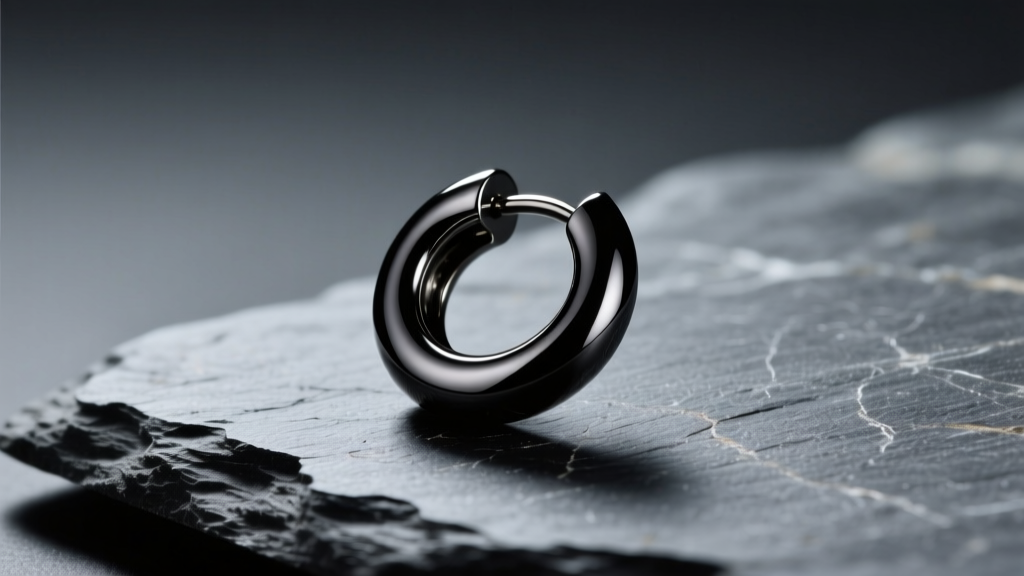
The Science of Black Metals in Jewelry
Achieving a true, permanent black finish in fine jewelry is one of the most persistent challenges in metallurgy. Unlike yellow gold, rose gold, or sterling silver, black is rarely a native metal color in hypoallergenic jewelry. When you shop for black earrings, you are almost never looking at a solid black alloy; instead, you are evaluating surface alterations, chemical patinas, or advanced physical vapor deposition (PVD) coatings. For sensitive ear lobes and freshly pierced cartilage, understanding the exact chemical makeup of these dark finishes is critical to avoiding contact dermatitis, galvanic corrosion, and premature coating failure.
The human body's natural pH, combined with the friction of sleeping and the chemical composition of sebum, creates a highly corrosive micro-environment for jewelry. According to the American Academy of Dermatology, prolonged exposure to reactive metals and degrading platings is a primary trigger for allergic contact dermatitis. Therefore, selecting black earrings requires a rigorous assessment of both the core substrate metal and the methodology used to achieve the black coloration.
Material Breakdown: Alloys vs. Surface Coatings
To make an informed purchase, we must deconstruct the four primary methods used to manufacture black earrings on the modern market. Each method carries distinct implications for biocompatibility, structural integrity, and long-term wearability.
Diamond-Like Carbon (DLC) Coated Titanium
DLC coating represents the pinnacle of black earring technology for body jewelry. The process begins with a core of ASTM F136 Grade 23 titanium (Ti-6Al-4V ELI), an aerospace-grade alloy renowned for its absolute biocompatibility. The titanium is placed in a vacuum chamber where a hydrocarbon gas is ionized and deposited onto the metal's surface via Physical Vapor Deposition (PVD). The resulting DLC layer is an amorphous carbon structure that mimics the crystal lattice of a diamond.
- Hardness: 2,000 to 3,000 Vickers (HV), making it highly resistant to micro-abrasions from hair and clothing.
- Thickness: Typically 1 to 3 microns, thick enough to prevent substrate exposure but thin enough to maintain precise gauge tolerances.
- Biocompatibility: Exceptional. The carbon surface is entirely inert, making it the gold standard for fresh cartilage piercings.
Oxidized Sterling Silver (The Patina Approach)
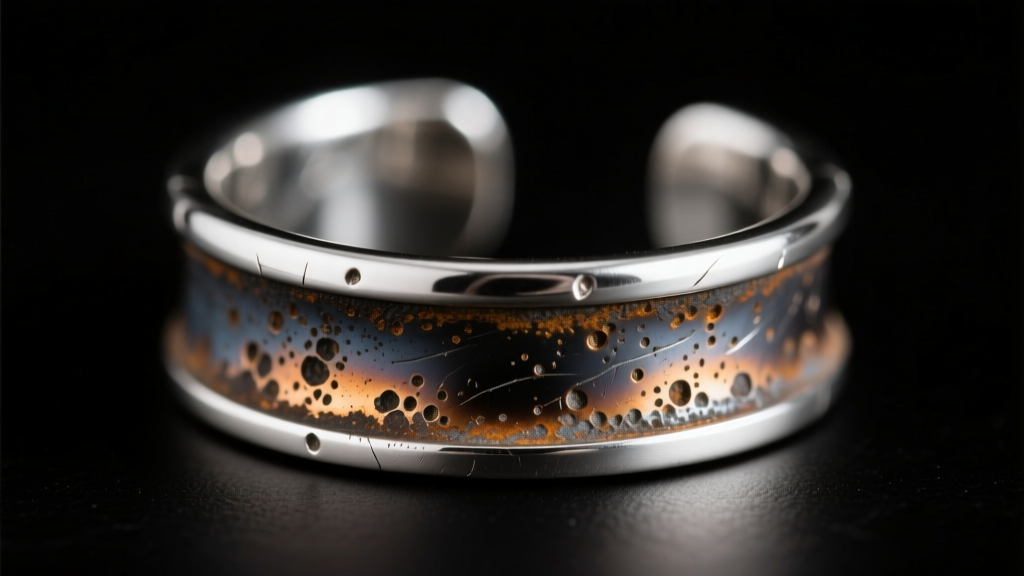
Oxidized silver is not actually oxidized in the traditional rusting sense; it is sulfided. Jewelers expose 925 sterling silver (92.5% silver, 7.5% copper) to potassium polysulfide, commonly known as liver of sulfur. This chemical reaction creates a layer of silver sulfide (Ag2S) on the surface, yielding a matte, charcoal-black finish. While aesthetically striking, the copper content in the sterling core makes it unsuitable for unhealed piercings, as copper ions can leach into the fistula and cause severe irritation.
Black Rhodium Plating (The High-Maintenance Luxury)
Black rhodium is achieved by electroplating a thin layer of rhodium mixed with darkening agents (often ruthenium or indium) over a white gold or silver core. Unlike PVD coatings, electroplated black rhodium is exceptionally soft, measuring only around 130 HV. It is strictly intended for occasional-wear lobe studs or dangles. When used in cartilage hoops or huggies, the friction against the ear will strip the plating down to the white gold substrate within weeks, resulting in a patchy, two-toned appearance that requires frequent and expensive re-plating.
Black Zirconium (The Heat-Treated Oxide)
Zirconium is a transitional metal that, when heated to extreme temperatures in the presence of oxygen, develops a permanent, incredibly hard black oxide layer (ZrO2). Unlike plating, this oxide layer is a permanent chemical transformation of the metal's surface. Black zirconium earrings are highly durable and hypoallergenic, but the material is notoriously difficult to machine. Once a black zirconium clicker ring or barbell is cut and finished, it cannot be resized or re-threaded without destroying the structural integrity of the piece.
Comparative Durability and Biocompatibility Matrix
When sourcing black earrings, use this technical matrix to evaluate the long-term viability of the piece based on your specific piercing type and lifestyle.
| Material / Finish | Core Substrate | Surface Hardness (HV) | Biocompatibility | Ideal Piercing Type | Avg. Price Range |
|---|---|---|---|---|---|
| DLC PVD Titanium | ASTM F136 Ti | 2,000 - 3,000 | Superior (Inert) | Fresh Cartilage, Lobes | $45 - $120 |
| Oxidized Silver | 925 Sterling | ~100 (Surface) | Poor (Copper core) | Healed Lobes Only | $25 - $80 |
| Black Rhodium | 14k/18k White Gold | ~130 | Moderate | Healed Lobes (Low friction) | $150 - $600+ |
| Black Zirconium | Pure Zirconium | ~1,200 (Oxide layer) | Excellent | Healed Cartilage, Daith | $60 - $150 |
Gauge Sizing and Cartilage Considerations for Dark Metals
The application of black coatings introduces microscopic dimensional changes to jewelry. A standard 16-gauge (1.2mm) titanium barbell that undergoes PVD DLC coating will emerge from the vacuum chamber measuring approximately 1.203mm. While this 3-micron increase is negligible for a fully healed fistula, it can cause insertion trauma in a tight, healing daith or rook piercing. Always verify that your piercer accounts for PVD thickness when ordering custom-length black titanium barbells for swelling.
Furthermore, the threading mechanism on black earrings is a critical point of failure. Externally threaded black earrings will inevitably scrape the coating off the threads as they pass through the piercing, depositing microscopic metal shavings into the tissue. Always demand internally threaded or threadless (press-fit) black earrings. According to manufacturing standards outlined by the ASTM International body jewelry guidelines, threadless titanium ends rely on tension rather than threading, preserving the integrity of the black DLC coating indefinitely.

Maintenance Protocols and Failure Modes
Even the most advanced black earring finishes are subject to specific environmental failure modes. Understanding these will help you establish a proper maintenance protocol and extend the lifespan of your jewelry.
The Galvanic Reaction in Plated Earrings
When black rhodium or oxidized silver earrings are exposed to highly acidic sweat or chlorine, a galvanic cell can form between the coating and the core metal. This micro-current accelerates the degradation of the surface layer. To prevent this, plated black earrings must be removed before swimming and wiped down with a dry, lint-free microfiber cloth immediately after wearing to remove acidic sebum.
Micro-Abrasions and Patina Loss
Oxidized silver relies on a superficial layer of silver sulfide. High-friction areas, such as the posts of stud earrings or the clasp mechanisms of huggies, will naturally polish back to bright silver over time. While some collectors appreciate this 'antiqued' wear pattern, those seeking a uniform black aesthetic must periodically re-oxidize their jewelry using at-home liver of sulfur kits. Jewelers of America recommends avoiding ultrasonic cleaners entirely, as the high-frequency cavitation will strip chemical patinas in seconds.
Sourcing and Price Benchmarks
When investing in black earrings, the price is a direct indicator of the manufacturing methodology. If you encounter 'black titanium' earrings priced under $20, they are almost certainly electroplated with a cheap black oxide or painted, rather than PVD coated. True DLC titanium requires multi-million-dollar vacuum deposition chambers, and the cost is reflected in the retail price. Always request a mill certificate or proof of ASTM F136 compliance from the manufacturer when purchasing black cartilage jewelry. By prioritizing advanced metallurgy over superficial plating, you ensure that your black earrings remain as biocompatible and structurally sound as they are visually striking.


