Day of the Dead Earrings: A Material Comparison Guide
Explore the best materials for Day of the Dead earrings. Compare sterling silver, enamel, and polymer clay for durability, weight, and skin safety.

The Cultural and Physical Weight of Día de los Muertos Jewelry
Day of the Dead earrings are far more than seasonal novelties; they are wearable tributes to Día de los Muertos, a profound Mexican holiday honoring deceased loved ones. Whether featuring intricate sugar skulls (calaveras), blooming marigolds (cempasúchil), or traditional Oaxacan filigree, these designs demand attention. However, as we navigate the jewelry landscape in 2026, the aesthetic appeal of these festive pieces must be balanced against their material properties, structural integrity, and dermatological safety.
The primary challenge with Day of the Dead earrings—particularly dangles and drops—is physical weight. A heavily detailed calavera design crafted from solid brass or glass enamel can easily weigh 15 to 25 grams per ear. When suspended from a standard 20-gauge (0.81mm) ear wire, this weight creates a pendulum effect that can stretch the earlobe piercing or cause the wire to bend and snap. Understanding the metallurgical and composite properties of these earrings is essential for selecting a pair that is both culturally respectful and physically comfortable.
Material Breakdown: What Are Sugar Skull Earrings Actually Made Of?
The market is flooded with Day of the Dead designs, but the base materials dictate the longevity, price, and wearability of the piece. Here is a deep dive into the most common materials used in 2026.
Sterling Silver and Traditional Oaxacan Filigree
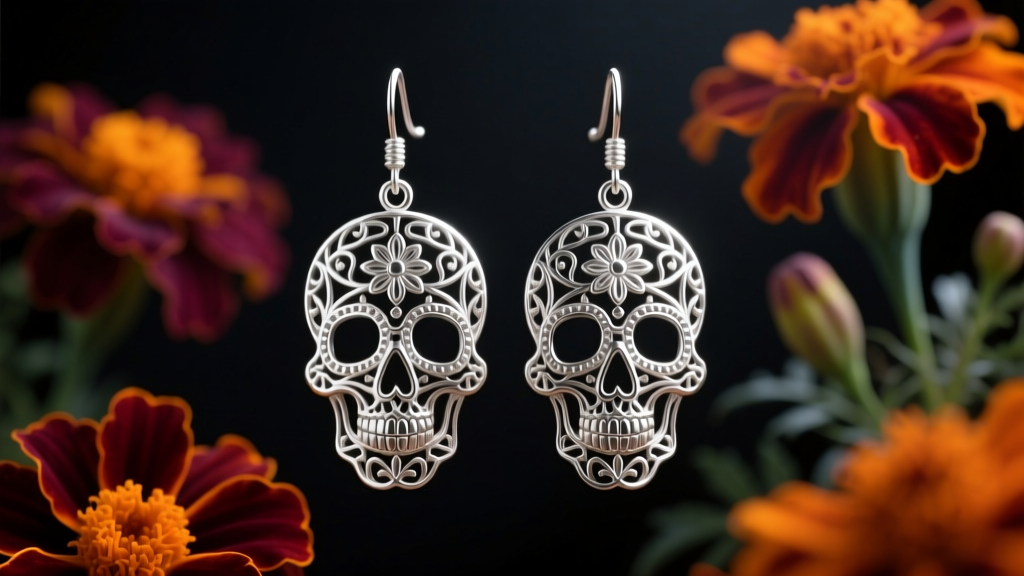
Authentic Mexican filigree (filigrana) is a hallmark of high-end Day of the Dead jewelry. Artisans twist and curl fine threads of .925 sterling silver (92.5% pure silver, 7.5% copper) into intricate, lace-like skull and floral motifs.
Properties & Performance: Sterling silver offers a brilliant luster and inherent hypoallergenic properties for most wearers. However, the copper alloy required to harden the silver makes it susceptible to tarnishing when exposed to sulfur and humidity. Furthermore, because filigree relies on ultra-thin silver wires (often 24-gauge or thinner within the design matrix), these earrings are highly delicate. A single drop onto a hard surface can crush the intricate wirework. Expect to pay between $80 and $250+ for authentic artisan-crafted silver pieces.
Enameled Brass vs. Copper Bases
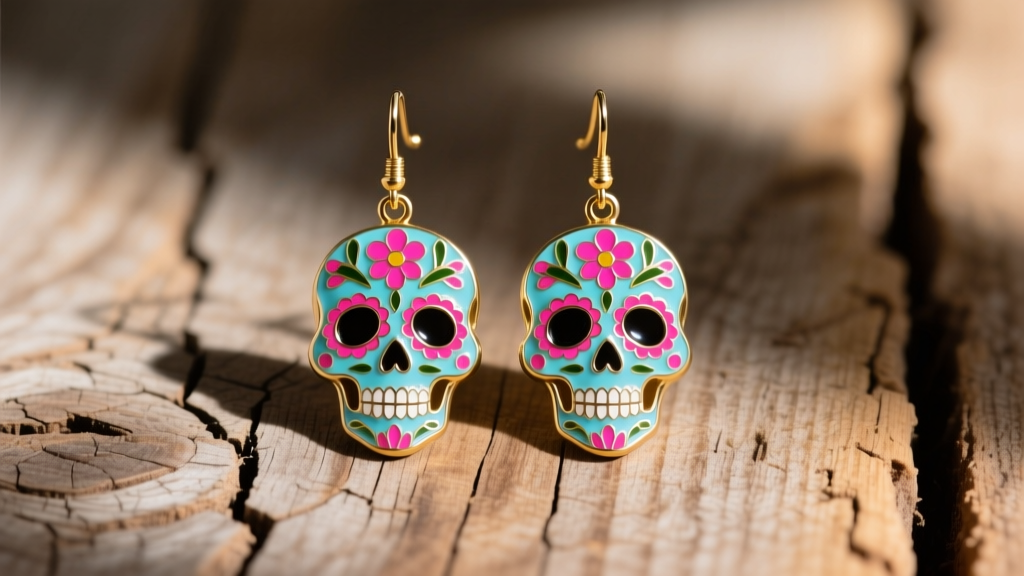
Mass-produced sugar skull dangles frequently utilize brass or copper bases coated in cold enamel (an epoxy-based resin) to achieve vibrant, opaque colors.
Properties & Performance: Brass is an alloy of copper and zinc. It is highly malleable, making it easy to cast into detailed 3D skull molds, and it provides a heavy, premium feel. However, brass has a major failure mode: oxidation. When the copper in brass reacts with the acidity in your sweat, it produces copper chelate, which stains the earlobe green. Additionally, cheap brass alloys often contain nickel flash to brighten the metal before enameling. The American Academy of Dermatology warns that nickel is the leading cause of contact dermatitis, causing severe itching and blistering on the earlobe. If purchasing enameled brass, ensure the ear wires and posts are explicitly plated in rhodium or made of surgical steel to create a barrier between the brass and your skin.
Polymer Clay and Advanced Bio-Resins
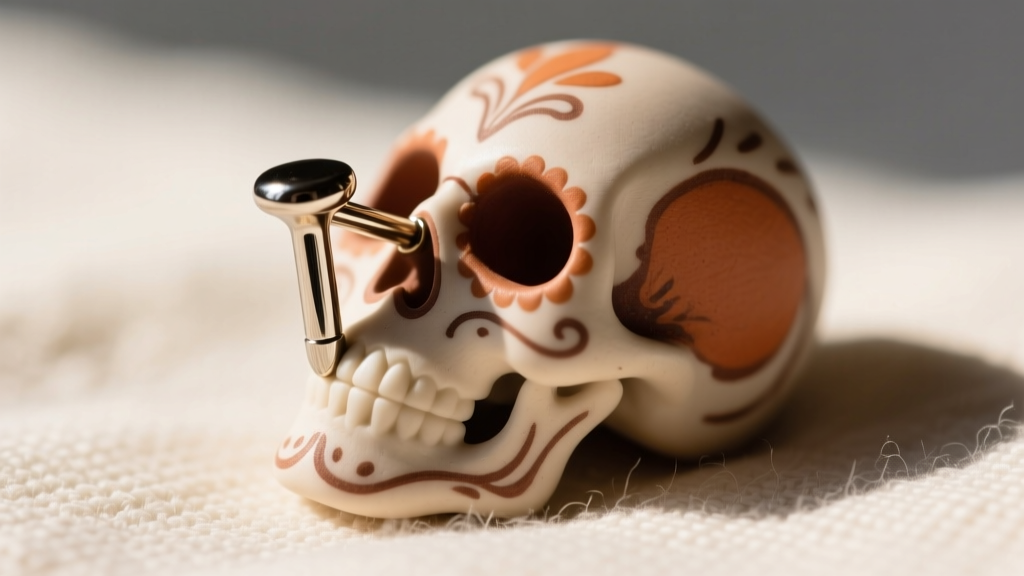
For oversized statement pieces that won't tear the earlobe, polymer clay has become the dominant material in the indie jewelry market. Composed primarily of polyvinyl chloride (PVC) mixed with plasticizers, polymer clay is incredibly lightweight—a 3-inch sugar skull dangle might weigh a mere 3 grams.
Properties & Performance: The primary advantage is weight reduction, allowing for massive, dramatic silhouettes without requiring heavy-duty ear wires. In 2026, we are also seeing the rise of UV-stable bio-resins that mimic the glossy finish of ceramic without the fragility. The main vulnerability of polymer clay is thermal and UV degradation; prolonged exposure to direct sunlight can cause the plasticizers to break down, leading to brittleness and color fading over several years. Pricing is highly accessible, typically ranging from $15 to $45.
The Post and Wire: Where Hypoallergenic Properties Matter Most
Regardless of whether the decorative element is made of clay, enamel, or silver, the component that actually pierces your skin—the post or ear wire—must be biocompatible. The earlobe is highly vascular, and a fresh or irritated piercing will quickly absorb reactive metal ions.
- Implant-Grade Titanium (ASTM F136): The gold standard for sensitive ears. It contains zero nickel and is entirely biocompatible. Look for 18-gauge (1.02mm) titanium posts for Day of the Dead studs to ensure the post doesn't bend under the weight of a clay calavera.
- 316L Surgical Steel: Contains trace amounts of nickel, but the nickel is tightly bound within the alloy matrix. Generally safe for healed lobes, but not recommended for fresh piercings or those with severe metal allergies.
- Gold-Plated Brass: A common cost-cutting measure. Once the microscopic layer of gold wears away from friction against the ear, the underlying brass will cause immediate irritation. Avoid these for heavy dangles where friction is high.
When buying Day of the Dead earrings, always check the 'post material' separately from the 'decorative material.' A product listed as 'Silver-Tone Skull Earrings' usually means a zinc alloy plated in a silver-colored metal, not actual sterling silver.
Comprehensive Material Comparison Chart
To help you make an informed purchasing decision, we have synthesized the physical and chemical properties of the most common materials used in Día de los Muertos earwear.
| Material | Avg. Weight (per ear) | Allergy Risk | Durability & Failure Mode | Price Range |
|---|---|---|---|---|
| .925 Sterling Silver (Filigree) | 5g - 12g | Low (Nickel-free) | High tarnish risk; wires bend if crushed | $80 - $250+ |
| Cold Enamel over Brass | 12g - 22g | High (if unsealed) | Enamel chips on impact; brass turns skin green | $25 - $65 |
| Polymer Clay | 2g - 6g | None (Inert PVC) | UV fading; snaps if bent sharply | $15 - $45 |
| Vitreous Enamel on Copper | 15g - 25g | Low (Glass surface) | Glass enamel shatters if dropped on tile | $50 - $120 |
| 3D Printed Bio-Resin | 3g - 8g | Low (Cured resin) | Resin yellows over time with UV exposure | $20 - $55 |
Care and Maintenance for Festive Earwear
Because Day of the Dead earrings often combine multiple materials (e.g., a silver wire wrapped around a painted clay skull), cleaning them requires a nuanced approach. Using the wrong chemical cleaner can instantly ruin the piece.
Safe Cleaning Protocols by Material
- For Sterling Silver Filigree: Never use liquid silver dips, as they can leave chemical residues in the tight wire coils that are impossible to rinse out. Instead, use a dry, treated silver polishing cloth. Gently dab the cloth into the crevices using a soft-bristled makeup brush to lift tarnish from the intricate skull details.
- For Cold Enameled Brass: Avoid alcohol-based cleaners, hand sanitizers, and harsh soaps. Alcohol acts as a solvent to epoxy-based cold enamels and will cause the vibrant sugar skull colors to cloud, soften, and peel. Wipe only with a damp microfiber cloth and dry immediately to prevent water from seeping under the enamel and rusting the base metal.
- For Polymer Clay: Clay is porous and can absorb oils from your skin and hair products, leading to a dull, grayish film around the edges. Use a soft eraser or a slightly damp cloth with a mild dish soap to gently lift surface oils. Never submerge polymer clay in water, especially if it is glued to a metal post, as the moisture will degrade the cyanoacrylate adhesive.
Final Verdict: Matching Material to Your Wearability Needs
Choosing the right Day of the Dead earrings ultimately depends on how and when you plan to wear them. If you are attending a multi-day festival or dancing at a Día de los Muertos celebration, polymer clay or bio-resin is the undisputed winner. The ultra-lightweight nature of these materials ensures your earlobes won't suffer from fatigue, and the vibrant, hand-painted details photograph beautifully.
Conversely, if you are looking for a sophisticated, year-round homage to the culture that can be worn in professional settings, invest in .925 sterling silver Oaxacan filigree. While it requires more careful maintenance and a higher upfront investment, the artisanal heritage and biocompatible properties of high-grade silver make it a timeless addition to any jewelry collection. Always prioritize the metallurgical safety of the ear wire, and your festive earwear will remain as vibrant and comfortable as the holiday itself.
For further reading on metal allergies and jewelry safety, consult the American Academy of Dermatology or explore the Gemological Institute of America (GIA) resources on enamel and metal alloy properties.


