Material Guide to Large Chunky Gold Hoop Earrings
Discover the best karats, alloys, and constructions for large chunky gold hoop earrings to balance durability, weight, and lobe health.

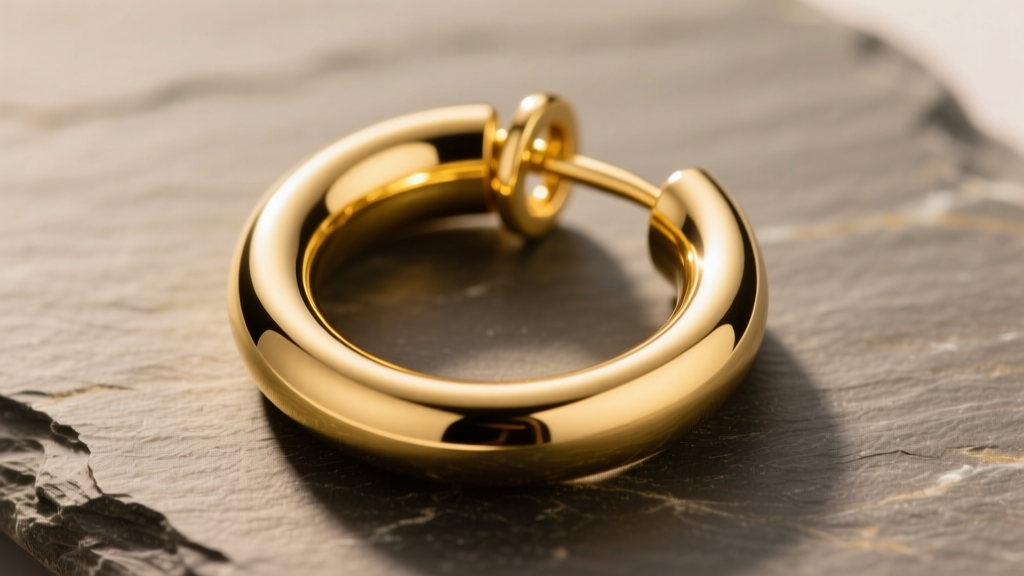
The resurgence of bold, sculptural jewelry has cemented large chunky gold hoop earrings as a definitive wardrobe staple. However, the physics of wearing substantial metal on a delicate earlobe introduces unique material challenges that most buyers overlook. As jewelry manufacturing techniques advance in 2026, understanding the metallurgy, structural engineering, and weight distribution of these statement pieces is essential for both comfort and longevity.
When selecting large chunky gold hoop earrings, 'gold' is not a single material. It represents a spectrum of alloys, plating techniques, and structural constructions. Choosing the wrong combination can result in warped metal, stretched piercings, or severe contact dermatitis. This comprehensive guide breaks down the exact material properties you need to know before investing in your next pair.
The Physics of Chunky Hoops: Weight vs. Tensile Strength
A hoop earring acts as a lever on the earlobe. The larger the diameter and the thicker the 'chunky' profile, the greater the pendulum effect when you move your head. This creates two primary failure modes:
- Tensile Failure (Warping): If the metal alloy is too soft, the downward drag and friction of daily wear will pull the hoop out of its perfect circular shape, resulting in an oval or teardrop distortion.
- Biological Failure (Lobe Migration): If the metal is too dense and heavy, the constant gravitational pull will slowly stretch the piercing fistula, leading to irreversible lobe sagging or tearing.
To mitigate these risks, jewelers must carefully balance the Vickers hardness (HV) of the gold alloy with the overall gram weight of the finished piece. The ideal weight for a large, daily-wear hoop is between 4 and 7 grams per earring. Anything exceeding 10 grams per ear requires specialized structural engineering or limited wear times.
Solid Gold Karats: 24k, 18k, 14k, and 10k Compared
Pure gold is inherently soft. To create durable jewelry, it must be alloyed with metals like copper, silver, zinc, or palladium. According to the Gemological Institute of America (GIA), the karat system dictates the ratio of pure gold to these strengthening alloys, directly impacting the metal's hardness and color.
24k Gold (99.9% Pure)
With a Vickers hardness of roughly 25 HV, 24k gold is entirely unsuitable for large chunky gold hoop earrings. It lacks the tensile strength to support its own weight in a thick, large-diameter profile and will warp almost immediately upon regular wear.
18k Gold (75% Pure)
Alloyed to a hardness of approximately 120-130 HV, 18k gold offers a rich, deep yellow hue. However, because it contains a high percentage of dense pure gold, solid 18k hoops are exceptionally heavy. They are best reserved for hollow-tube constructions or smaller diameters to prevent lobe strain.
14k Gold (58.3% Pure)
Registering between 140-160 HV, 14k gold is the undisputed industry standard for durable, everyday hoops. It provides an excellent balance of rich color, high tensile strength, and resistance to scratching. For solid wire or thick tube constructions, 14k is the most reliable choice.
10k Gold (41.7% Pure)
Exceeding 170 HV, 10k gold is incredibly hard and highly resistant to deformation. The trade-off is a noticeably paler, less saturated yellow color. It is an excellent budget-friendly option for massive, oversized chunky hoops where structural rigidity is the top priority.
| Karat | Gold Content | Vickers Hardness (HV) | Best Construction Type | Lobe Strain Risk |
|---|---|---|---|---|
| 24k | 99.9% | ~25 | Not recommended for hoops | N/A (Will warp) |
| 18k | 75.0% | ~125 | Hollow electroformed tube | High (if solid) |
| 14k | 58.3% | ~150 | Solid wire or hollow tube | Moderate |
| 10k | 41.7% | ~175 | Solid cast or thick wire | Low |
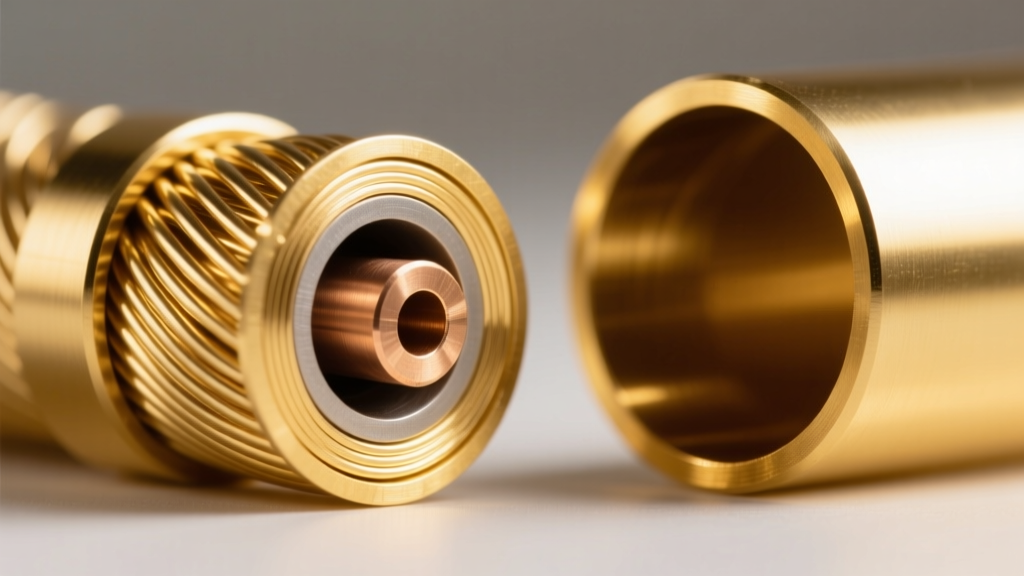
Hollow Tube vs. Solid Wire Construction
The most critical distinction in the market for large chunky gold hoop earrings is the manufacturing method. 'Chunky' typically refers to a tube width or wire gauge between 3mm and 8mm.
The Weight Problem of Solid Metal
A solid 14k gold hoop with a 50mm diameter and a 5mm thickness weighs approximately 14 to 16 grams per earring. This far exceeds the comfortable threshold for standard lobe piercings. Wearing solid hoops of this magnitude for more than a few hours will cause significant fatigue and micro-tearing in the fistula.
The Electroforming Solution
To solve this, high-end jewelers use electroforming or stamped hollow tube construction. By creating a seamless hollow interior, a 5mm thick 14k gold hoop can weigh as little as 3.5 to 5 grams. This preserves the bold, chunky visual impact while maintaining a featherlight feel that protects the earlobe. When buying hollow hoops, ensure the brand specifies 'seamless tubing' to prevent the hollow chambers from trapping moisture, soap, and bacteria, which can lead to localized skin infections.
Gold-Filled, Vermeil, and Plated Alternatives
For those navigating budget constraints, alternative gold finishes are widely available. However, their material properties dictate vastly different lifespans, especially on high-friction items like chunky hoops.
1/20 14k Gold-Filled (GF)
Gold-filled metal is created by mechanically bonding a thick layer of 14k gold to a brass core using extreme heat and pressure. By law, the gold layer must constitute at least 5% (1/20th) of the total weight. Because it is drawn into wire or tubing, gold-filled is an exceptional, durable choice for chunky hoops. It will not flake or peel under normal friction and can last decades.
Gold Vermeil
Vermeil consists of a sterling silver base plated with a thick layer of gold (minimum 2.5 microns). While hypoallergenic and beautiful, vermeil is typically cast rather than drawn into tubes, making it heavier. Furthermore, the plating will eventually wear thin at the high-friction clasp points.
Gold-Plated Brass (The Failure Mode)
Cheap gold-plated brass hoops are a dermatological hazard. The thin flash plating (often less than 0.5 microns) wears away quickly, exposing the brass core. According to the American Academy of Dermatology, base metals like brass and nickel-silver are leading causes of allergic contact dermatitis. Once the plating breaches, the copper and zinc in the brass will oxidize, turning the earlobe green and causing severe irritation.
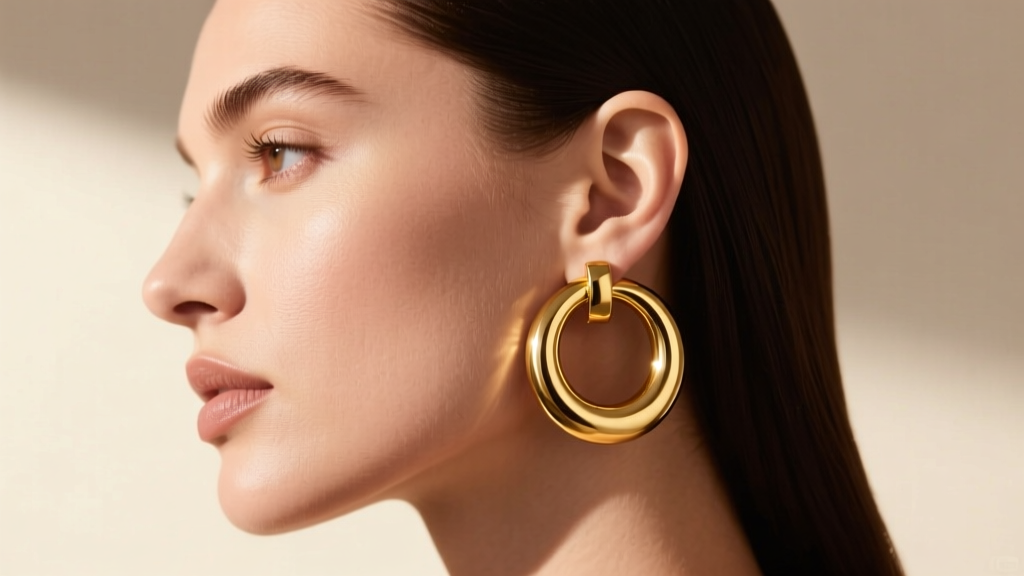
Hardware Mechanics: Clasp and Hinge Engineering
The material of the hoop is only half the battle; the hardware securing it to the ear is equally vital. Heavy, chunky hoops require specialized clasps to prevent accidental loss.
- Click-Hinge with Snap Latch: The gold standard for hollow tube hoops. A hidden hinge allows the post to swing through the ear, clicking securely into a grooved latch on the opposite side. This distributes the weight evenly and prevents the earring from sliding out.
- Saddleback Clasp: Features a hinged saddle that snaps over a grooved post. While secure, the bulky hardware can disrupt the seamless visual flow of a chunky hoop.
- Friction Posts (Butterfly Backs): Highly discouraged for large chunky gold hoop earrings. The sheer weight and pendulum motion of a thick hoop will easily overcome the friction grip of a standard butterfly back, leading to lost jewelry.
Expert Sizing and Gauge Recommendations
When evaluating 'chunky' proportions, pay attention to the millimeter width of the metal itself, not just the overall diameter.
- Subtle Chunk (3mm - 4mm): Ideal for daily wear and office environments. Best executed in solid 14k wire or medium-weight hollow tubes.
- Statement Chunk (5mm - 8mm): High visual impact. Must be constructed using hollow electroformed tubing or lightweight resin-cored gold vermeil to prevent lobe stretching.
- Oversized Sculptural (10mm+): Usually reserved for runway or editorial wear. Often crafted from lightweight materials like anodized aluminum or brass with heavy gold PVD (Physical Vapor Deposition) coating to bypass the weight issue entirely.
Final Verdict: Which Material Should You Choose?
If you are investing in a permanent fixture for your jewelry rotation, 14k gold in a hollow tube construction is the ultimate choice for large chunky gold hoop earrings. It provides the necessary Vickers hardness to maintain a perfect circle, the lightweight comfort required for lobe health, and the intrinsic value of solid karat gold. For budget-conscious buyers, 1/20 14k gold-filled wire offers the best compromise of durability and price, provided you avoid hollow brass alternatives that compromise your skin health. Always prioritize mechanical click-hinges over friction backs, and consult the World Gold Council guidelines for ethical sourcing when making high-karat purchases.


