Decoding Bijoux Givenchy Earrings: Hallmarks, Metals & Authenticity
Master the technical details of bijoux Givenchy earrings. Learn to identify hallmarks, base metals, gold plating thickness, and vintage authentication.

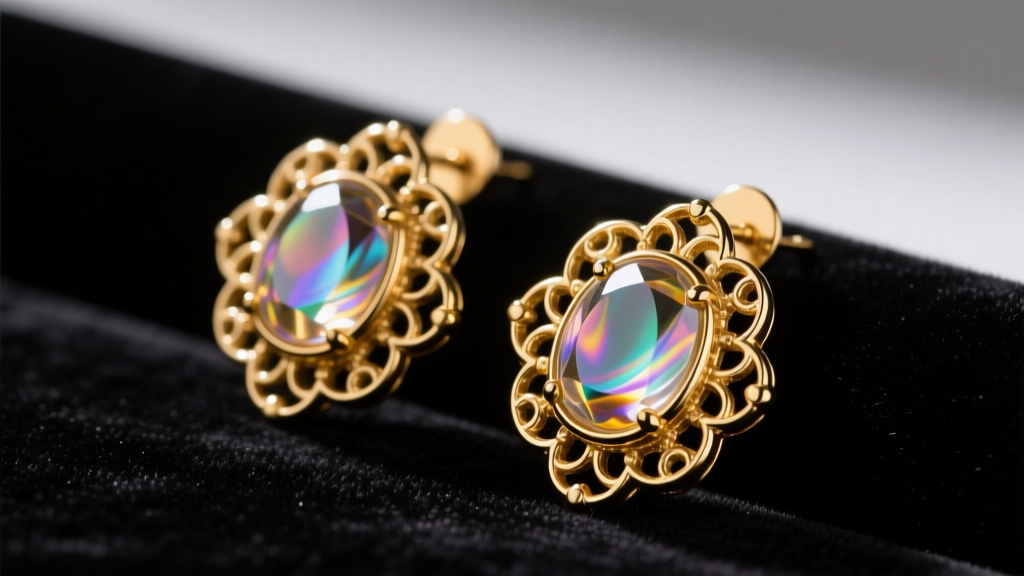
When navigating the secondary market for haute couture costume jewelry, the phrase bijoux Givenchy earrings commands immediate respect and a premium price point. Hubert de Givenchy’s foray into accessories in the 1960s was not merely an afterthought to his textile designs; it was a rigorous exercise in metallurgical artistry and avant-garde glasswork. As we move through the 2026 vintage jewelry boom, collectors and archivists are increasingly scrutinizing the technical anatomy of these pieces. Understanding the exact alloy compositions, plating microns, and hallmarking evolution is no longer optional—it is essential for accurate valuation and authentication.
The Metallurgy of Givenchy Costume Jewelry
The structural integrity of vintage Givenchy earrings relies heavily on specific base metal alloys, chosen for their cold-working properties and ability to hold intricate electroplating. Unlike contemporary fast-fashion jewelry that relies on lightweight Zamak (a zinc-aluminum-magnesium-copper alloy), authentic mid-century Givenchy pieces predominantly utilize C26000 cartridge brass. This specific brass alloy (70% copper, 30% zinc) offers superior tensile strength and ductility, allowing for the deep, crisp mechanical stamping of the Givenchy logo without micro-fracturing the metal.
For cast components, such as the intricate floral motifs seen in the 1980s collections, a high-tin bronze or lead-free pewter was often employed to capture fine detail in the mold. The gold-tone finish on these vintage pieces is typically achieved through electroplating, depositing a layer of 18k or 22k gold that ranges from 2.0 to 3.5 microns in thickness. This is significantly heavier than the sub-0.5-micron 'flash plating' seen on modern mass-market jewelry, which explains why well-preserved vintage Givenchy earrings retain their luster decades later without exposing the base metal.
Deciphering Hallmarks and Maker Stamps
The hallmarking system for Givenchy jewelry evolved significantly from the brand's inception to its acquisition by LVMH and subsequent modernization. According to the Victoria and Albert Museum's jewelry archives, tracking these stamps is the most reliable method for dating a piece. Below is a technical breakdown of the primary stamps found on the reverse of Givenchy earring back-plates.
| Era | Primary Stamp Format | Secondary Marks | Base Metal & Plating Characteristics |
|---|---|---|---|
| 1960s - 1970s | 'Givenchy' (Script or Block) | 'Paris', '©', 'Made in France' | Heavy brass base, 2-3 micron 18k gold electroplate, high-gloss finish. |
| 1980s - 1990s | 'Givenchy' inside an oval cartouche | '©', '®', Date Codes (e.g., 'OB') | Brass and white metal alloys, matte and brushed gold finishes, rhodium accents. |
| 2000s - Present | 'GIVENCHY' (Sans-serif, spaced) | 'Made in Italy', CE mark, Nickel-free | Lighter brass/Zamak, PVD (Physical Vapor Deposition) coating, palladium plating. |
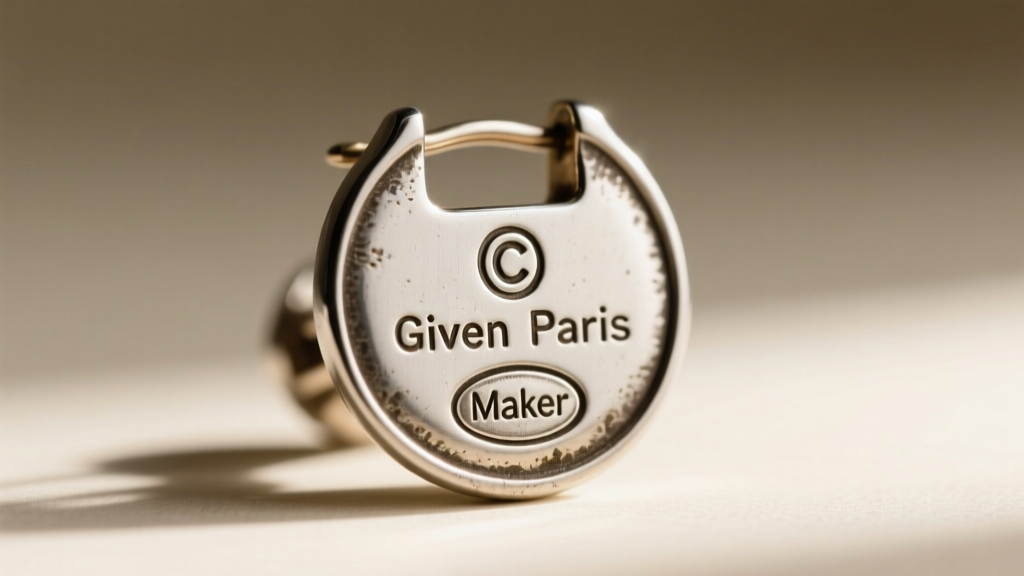
Pro-Tip for Collectors: Authentic vintage stamps were created using high-tonnage mechanical presses. Under a 10x jeweler's loupe, the edges of the stamped letters should appear sharp, deep, and slightly raised on the reverse side of the metal plate. Counterfeiters often use shallow CNC routing or laser engraving, which leaves a flat, uniform floor with no reverse-side displacement.
Gripoix Poured Glass vs. Standard Rhinestones
A defining characteristic of high-end bijoux Givenchy earrings from the 1970s and 1980s is the collaboration with Maison Gripoix. Gripoix is famous for its pâte de verre (poured glass) technique, which is fundamentally different from the faceted, foil-backed rhinestones produced by Swarovski or Preciosa.
Gripoix stones are crafted by melting lead glass (often containing up to 24% lead oxide to increase the refractive index to approximately 1.6) and pouring it directly into the metal settings. This creates a seamless, bezel-like bond without the need for prongs or adhesive. From a gemological perspective, as noted by the Gemological Institute of America (GIA), identifying poured glass requires observing specific internal characteristics:
- Air Bubbles: Unlike machine-pressed glass, hand-poured Gripoix stones often contain microscopic, perfectly spherical air bubbles trapped within the matrix.
- Lack of Foil Backing: The color is intrinsic to the glass itself, meaning the back of the stone will be smooth glass or metal, never a mirrored foil.
- Thermal Conductivity: Gripoix glass retains cold significantly longer than acrylic or resin imitations. A thermal probe or even a simple touch-test can help distinguish high-density lead glass from modern polymer fakes.
Hardware and Post Mechanics: A Technical Breakdown
The mechanical hardware of Givenchy earrings provides crucial clues regarding both authenticity and the intended ergonomics of the piece. Vintage clip-on earrings, which dominated the 1960s and 70s markets, utilize a specific omega back or hinged-clip mechanism. The spring component in authentic vintage clips is typically forged from beryllium copper, an alloy chosen for its exceptional fatigue resistance, ensuring the clip maintains its tension over thousands of articulation cycles.
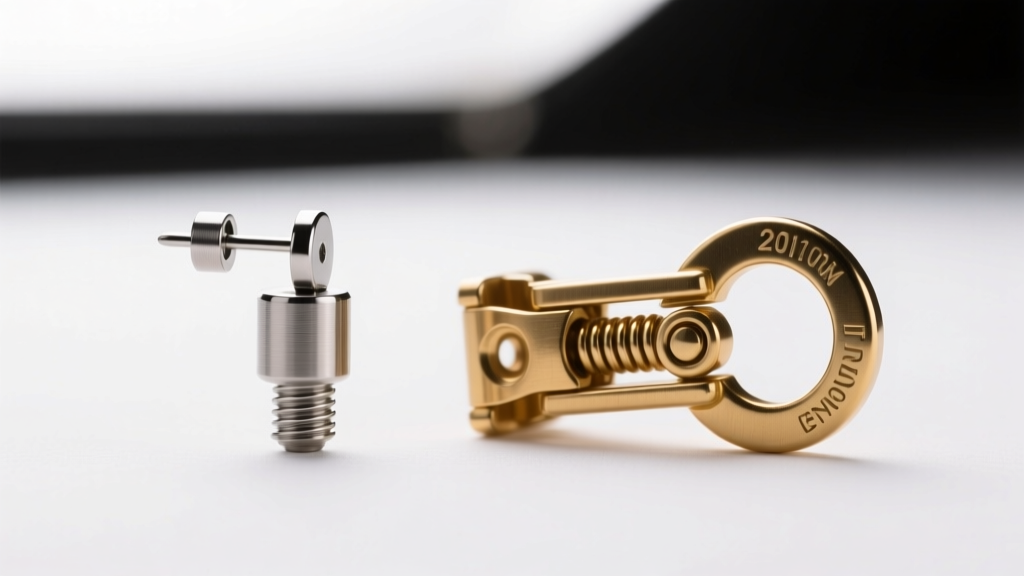
For pierced earrings, the transition in post materials marks a distinct timeline. Early vintage pieces often featured 18-gauge or 20-gauge posts made from the same gold-plated brass as the earring body. However, due to increasing awareness of contact dermatitis and nickel allergies in the late 1980s, Givenchy transitioned to using 316L surgical stainless steel for the posts, even on gold-tone earrings. If you encounter a pair of purported 1970s Givenchy studs with a non-magnetic, silver-colored steel post, it is highly likely the post has been replaced, or the piece is a later reproduction.
Authentication Framework: Spotting the Counterfeits
As the demand for archival haute couture jewelry surges, so does the sophistication of counterfeit bijoux Givenchy earrings. Auction houses like Sotheby's jewelry department employ rigorous multi-point inspections to verify provenance. When evaluating a potential acquisition, apply this four-point technical framework:
1. Weight Tolerance and Density
Authentic vintage Givenchy earrings possess a distinct heft due to the solid brass base and thick glass stones. Counterfeiters frequently substitute brass with hollow-cast Zamak or aluminum alloys to reduce manufacturing costs. Use a digital pocket scale; a discrepancy of more than 15% compared to a known authentic reference piece is a primary indicator of a fake.
2. Stone Setting Integrity
Examine the prongs on any faceted rhinestones. Authentic Givenchy pieces feature hand-set or precisely machine-set prongs that are smoothly folded over the girdle of the stone. Fakes often exhibit 'glue setting' disguised by poorly stamped, non-functional prongs, or they feature sharp, unfiled prong tips that catch on fabric.
3. Patina and Wear Patterns
Genuine aging on gold-plated brass occurs in specific high-friction areas: the earring post, the clutch contact point, and the edges of the clip mechanism. Artificial aging applied by counterfeiters often looks uniform, muddy, or accumulates unnaturally in the deep recesses of the casting rather than on the high-contact surfaces.
4. The 'Paris' Font Kerning
On pieces stamped 'Givenchy Paris', scrutinize the kerning (spacing) between the letters. The official mid-century dies used a very specific, slightly condensed sans-serif font for 'Paris'. Modern laser-etched fakes often use default digital fonts where the 'a' and 'r' are spaced too widely, or the baseline of the text wavers slightly.
Mastering the technical nuances of bijoux Givenchy earrings transforms the collecting experience from a game of chance into a disciplined practice of horological and gemological analysis. By understanding the metallurgy, respecting the Gripoix glasswork, and rigorously inspecting the mechanical hardware, collectors can confidently navigate the market and preserve these wearable archives of fashion history.


