Troubleshooting Black Hoop Earrings Mens Face: Fading & Breakage
Is your black jewelry turning brassy? Learn how to troubleshoot fading, snapping hinges, and gauge issues with black hoop earrings mens wear daily.


The market for men's jewelry has evolved dramatically, but one staple remains a persistent source of frustration: the dark, moody aesthetic of black hoops. While they offer a sleek, understated edge, the reality of daily wear often leads to premature fading, bent wires, and snapped hinges. When evaluating the common issues that black hoop earrings mens encounter, the root causes almost always trace back to inferior metallurgy, improper gauge sizing, and a misunderstanding of surface treatments. This comprehensive troubleshooting guide cuts through the marketing fluff to help you diagnose, repair, and prevent the most common failures in men's black hoop earrings.
The Core Problem: Why Black Finishes Fail on Men's Hoops
Not all black jewelry is created equal. The dark finish on a hoop earring is rarely solid black metal; it is almost always a surface treatment applied over a base metal or precious alloy. Understanding which treatment was used is the first step in troubleshooting discoloration.
Black Rhodium Electroplating
Black rhodium is a popular choice for fashion jewelry because it provides a deep, gunmetal-black shine. However, it is notoriously soft. When subjected to the friction of collars, headphones, and sleeping, black rhodium wears off rapidly, often within three to six months of daily wear. Furthermore, men's skin chemistry—specifically higher sebum production and slightly more acidic sweat—can accelerate the galvanic corrosion of the base metal underneath, causing the black finish to flake or turn brassy.
PVD (Physical Vapor Deposition) Coating
PVD is the gold standard for durable black jewelry. This process takes place in a vacuum chamber, where titanium carbonitride is vaporized and bonded to the metal at a molecular level. PVD coatings are up to five times harder than electroplated rhodium and are highly resistant to sweat and friction. If your black hoops are fading and they were sold as "PVD coated," they are likely counterfeit or applied in a substandard facility with poor surface preparation.
Oxidized Silver and Black Enamel
Oxidized sterling silver achieves its black look through controlled tarnishing (using liver of sulfur). This finish is purely superficial and will naturally rub off on high-contact points, revealing the bright silver beneath. Black enamel, meanwhile, is essentially glass fused to metal. While it does not fade, it is highly brittle and will chip or shatter if the hoop is dropped or bent.
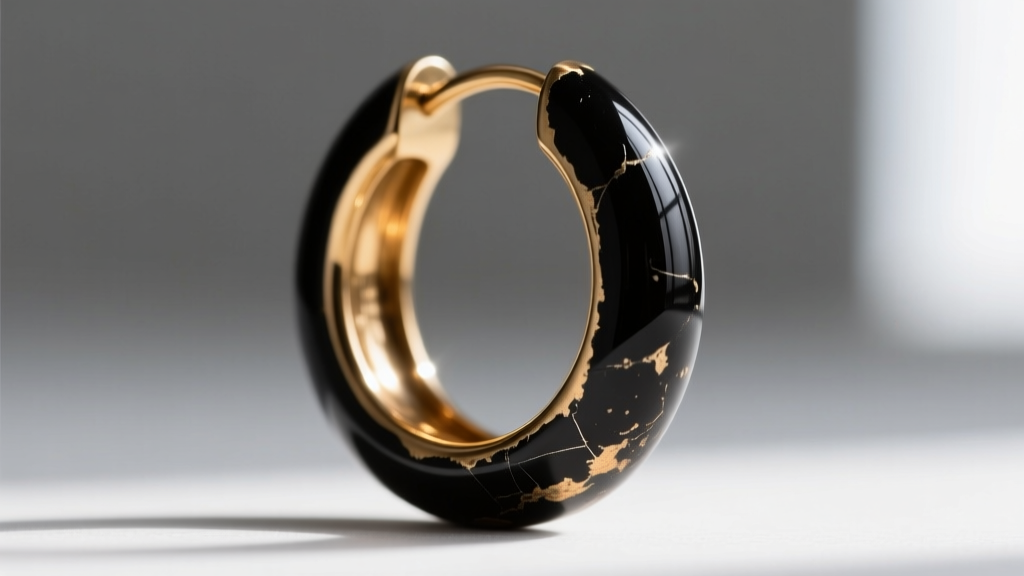
Troubleshooting Fading and Discoloration
If your favorite black hoops have already started to show signs of wear, all is not lost. The approach to restoration depends entirely on the original coating method.
- For Oxidized Silver: You can easily re-oxidize silver at home using a liver of sulfur solution. Clean the hoop with dish soap, dip it in the diluted solution until it turns black, and then use a polishing cloth to gently buff the high points, leaving the recesses dark.
- For Black Rhodium and Enamel: Once these are gone, they cannot be fixed with DIY chemicals. You must take the earrings to a professional jeweler for re-plating or re-enameling. Expect to pay between $30 and $60 per earring for professional black rhodium re-plating.
- The Preventative Wax Trick: To extend the life of any black finish, apply a micro-crystalline wax (such as Renaissance Wax) to the earrings. This museum-grade conservation wax creates a breathable, invisible barrier against sweat and skin acids without altering the matte or glossy finish of the metal.
Expert Insight: Never use ultrasonic cleaners or harsh chemical dips (like silver polish) on black-finished jewelry. The high-frequency vibrations will micro-fracture PVD and enamel, while the chemicals will instantly strip oxidized layers and black rhodium.
Solving Hinge Snaps and Clasp Failures
One of the most catastrophic failures with men's hoops is the hinge snapping or the clasp refusing to click shut. This is rarely a defect in the metal itself, but rather a failure of engineering relative to the wearer's lifestyle.
Men frequently pull t-shirts and hoodies over their heads, which creates sudden, high-tension torque on the earring. If you are wearing a Hinged Segment Ring (HSR) with a thin wire, the sheer lateral force will bend the wire or snap the microscopic pin inside the hinge.
The Solution: Switch from standard hinged hoops to a Clicker Ring. Clickers feature a thicker, solid barrel segment that houses the hinge, distributing tension across a much wider surface area. Additionally, always remove your hoops before changing clothes or working out. If a hinge becomes stiff, do not force it; apply a microscopic drop of synthetic watch oil to the hinge pin to clear out compacted dead skin cells and sebum that are jamming the mechanism.
Gauge and Sizing Mismatches: The Tension Problem
A massive point of failure in the market for black hoop earrings mens buy online is gauge mismatching. Fashion brands often manufacture hoops in 20-gauge or 22-gauge to save on material costs. However, a standard male lobe or cartilage piercing is usually 18-gauge or 16-gauge. Forcing a thick 16g earlobe to accommodate a thin 22g hoop creates a "cheese-cutter" effect, where the thin wire slowly migrates through the tissue, causing pain, tearing, and eventual deformation of the piercing hole.
Below is a structural breakdown of wire thickness and its tolerance for daily male wear:
| Gauge Size | Thickness (mm) | Tension Tolerance | Best Use Case |
|---|---|---|---|
| 22g | 0.64mm | Very Low | Occasional wear only; highly prone to bending and tissue tearing. |
| 20g | 0.81mm | Low | Standard fashion jewelry; will warp if slept on or snagged. |
| 18g | 1.02mm | Medium | Minimum acceptable thickness for daily lobe wear. |
| 16g | 1.29mm | High | Ideal for men's daily wear, clickers, and active lifestyles. |
| 14g | 1.60mm | Extreme | Heavy-duty wear, stretched lobes, and thick cartilage. |
For authoritative guidelines on how improper jewelry sizing affects tissue health, refer to the Association of Professional Piercers (APP) Material and Sizing Guidelines. Upgrading to a 16g ASTM F136 certified titanium hoop will virtually eliminate bending and snapping issues.
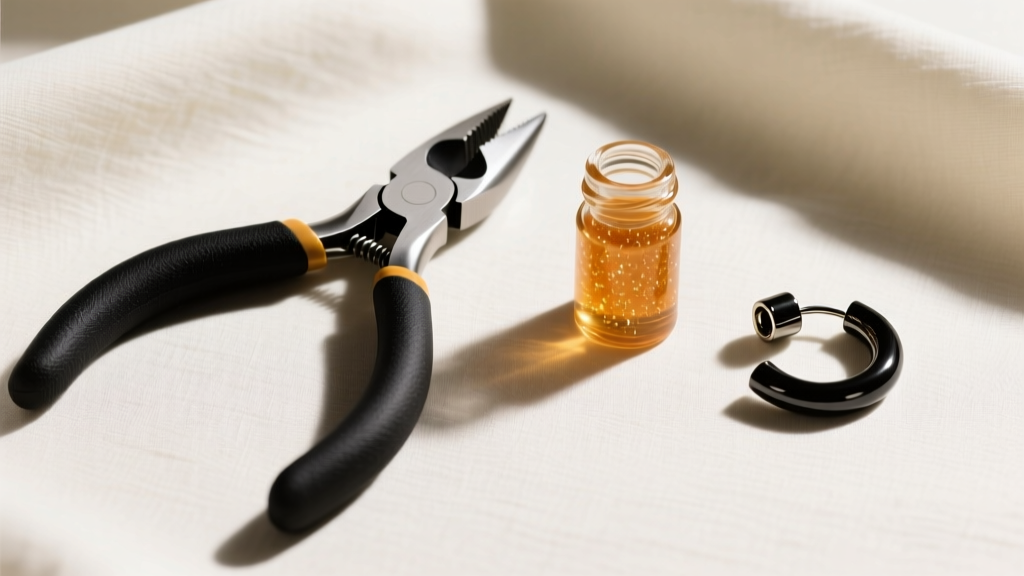
Step-by-Step Repair Guide for Minor Bends
If your 18g or 16g black hoop has become slightly oval or warped from being slept on, you can reshape it without damaging the finish. Never use standard steel jewelry pliers, as the hardened steel teeth will instantly scratch and gouge the black coating.
- Acquire Nylon Jaw Pliers: These feature smooth, replaceable nylon pads that grip metal firmly without marring the surface.
- Clean the Hoop: Wash the earring with warm water and a mild, fragrance-free dish soap to remove any grit that could get ground into the finish during reshaping. For more on safe cleaning agents, see the APP Aftercare Guidelines.
- Apply Gentle Pressure: Grip the warped sections gently and apply slow, steady pressure to coax the metal back into a perfect circle. Do not bend it back and forth repeatedly, as this will cause metal fatigue and snap the wire.
- Check the Clasp Alignment: Once circular, close the hoop and hold it up to a light. If light passes through the clasp seam, the hinge is slightly misaligned. Use the nylon pliers to make micro-adjustments to the segment opposite the hinge until the closure is flush.
The Ultimate Buying Checklist to Avoid Future Headaches
The best way to troubleshoot a failing black hoop is to avoid buying a defective one in the first place. Before checking out, verify that the earrings meet these strict criteria:
- Base Metal: Must be ASTM F136 Implant-Grade Titanium or solid 14k/18k Gold. Avoid brass, copper, or "surgical steel" (a vague, unregulated term that often contains nickel, which causes contact dermatitis).
- Coating Method: Look explicitly for "PVD Coated" or "Physical Vapor Deposition." If the listing just says "black plated," assume it will fade within months.
- Gauge Thickness: Minimum 16g (1.29mm) for any hoop intended for daily, active wear.
- Closure Type: Opt for a clicker ring with a solid barrel hinge rather than a thin continuous wire or a standard hinged segment ring.
By understanding the metallurgy and mechanics behind your jewelry, you can transition from constantly replacing faded, broken accessories to investing in permanent, high-performance pieces that withstand the rigors of daily life.


