Diamond Circle Earrings: The Ultimate Beginner's Buying Guide
Master the basics of diamond circle earrings. Learn about melee grading, pave vs. channel settings, metal alloys, and sizing in our guide.

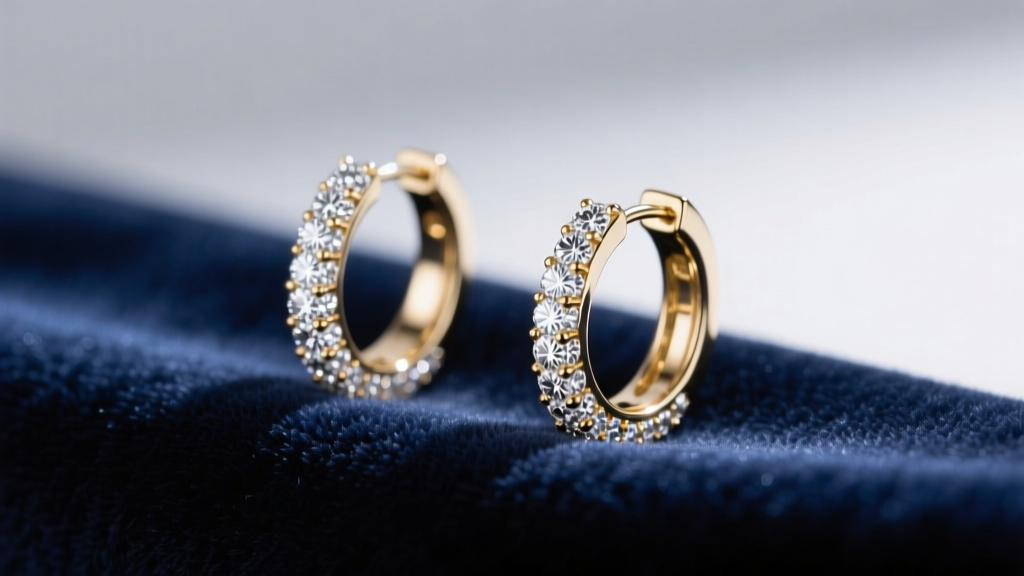
Defining the Silhouette: Huggies vs. Standard Hoops
When you begin exploring the world of ear styling, diamond circle earrings quickly emerge as a foundational staple. However, the term "circle earring" encompasses two distinct structural categories: huggies and traditional hoops. Understanding the mechanical differences between them is the first step in making an informed purchase.
Huggies are designed to "hug" the earlobe. They typically range from 10mm to 15mm in diameter and feature a thicker wire gauge (often 14-gauge or 12-gauge) to support a hinged "clicker" or saddle-back closure. This robust construction makes them ideal for everyday wear, as the thicker metal resists bending and the secure clasp prevents loss during sleep or physical activity.
Classic Hoops generally start at 16mm and can extend well past 50mm. They usually employ a thinner wire (18-gauge or 20-gauge) and utilize a latch-back, continuous wire, or post-and-clutch closure. Because the wire is thinner, classic hoops are lighter but more susceptible to warping if snagged on clothing or hair.
The "Melee" Diamond Crash Course
The most common mistake beginners make when buying diamond circle earrings is applying the same grading standards used for large solitaire engagement rings to tiny accent stones. Circle earrings almost exclusively utilize melee diamonds (pronounced meh-lay).
According to the Gemological Institute of America (GIA), melee diamonds are small stones weighing less than 0.15 carats each, often measuring between 1.0mm and 2.5mm in diameter. A 1.00 Total Carat Weight (TCW) pair of huggies might contain 40 to 60 individual melee stones.
Grading Melee: Where to Save and Where to Spend
- Clarity: Do not overpay for VVS (Very Very Slightly Included) clarity in melee stones. Inclusions are entirely invisible to the naked eye at 1.5mm sizes. SI1 to SI2 clarity is perfectly acceptable and significantly reduces the price.
- Color: This is where you should focus. If you are choosing white gold or platinum, insist on G-H color grades to ensure the stones look crisp and white. If you opt for yellow or rose gold, you can safely drop to I-J colors, as the warm metal reflections will mask slight yellow tints in the diamonds.
- Cut: Look for "Ideal" or "Excellent" cut grades. Because melee stones are so small, their brilliance relies entirely on precise facet alignment rather than sheer size.
Setting Mechanics and Failure Modes
The way diamonds are secured into the circular metal framework dictates both the aesthetic and the long-term durability of the earrings. Here are the three primary setting styles you will encounter.
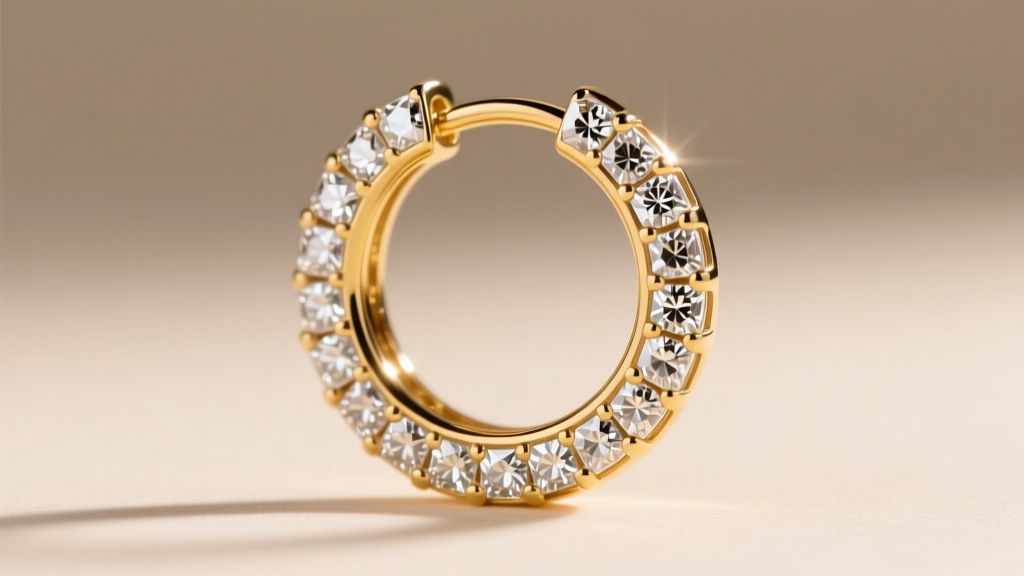
1. Pave and Micro-Pave Settings
In a pave setting, tiny beads or micro-prongs of metal are pushed over the girdle of the diamond to hold it in place. This creates a continuous "paved" surface of sparkle.
Failure Mode: The tiny prongs can wear down over time due to friction from hair or pillows. Expert Tip: Never put pave diamond circle earrings in an ultrasonic cleaner. The high-frequency vibrations can easily shake loose the tiny stones from their micro-prongs. Stick to gentle brushing with warm soapy water.
2. Channel Settings
Diamonds are set into a "channel" or trench between two vertical walls of metal. There are no prongs; the metal walls are hammered or pressed over the edges of the stones.
Failure Mode: Channel settings are highly secure against stone loss, but if the earring is crushed or bent severely, the metal walls can warp, causing the entire row of diamonds to pop out simultaneously. This is more common in thin, large-diameter hoops than in thick huggies.
3. Bezel Settings
Each diamond is encircled by a custom-fitted collar of metal. This is the most modern and secure setting available.
Failure Mode: Bezel settings have virtually no structural failure modes regarding stone loss. The only drawback is that the metal rim covers more of the diamond's surface area, slightly reducing the overall light return and making the earrings appear less "sparkly" than pave styles of the same carat weight.
Metal Alloys, Gauges, and Sensitivities
The metal chosen for your diamond circle earrings impacts both durability and skin compatibility. Pure 24k gold is far too soft for jewelry, so it is alloyed with other metals. The Jewelers of America provides strict guidelines on these alloy compositions and hallmarking.
| Metal Type | Gold Content | Durability & Characteristics | Best For |
|---|---|---|---|
| 14k Yellow/White Gold | 58.5% | Highly durable, resistant to bending. White gold requires rhodium plating. | Everyday huggies, active lifestyles, budget-conscious buyers. |
| 18k Yellow/White Gold | 75.0% | Soother, richer color. Prone to scratching. White gold needs frequent re-plating. | Special occasion hoops, heirloom pieces, warm skin tones. |
| Platinum (Pt950) | N/A (95% Pt) | Extremely dense, hypoallergenic, naturally white. Develops a soft patina over time. | Sensitive earlobes, high-end micro-pave settings (prongs don't wear away). |
A Note on White Gold and Nickel Allergies: Most 14k and 18k white gold is alloyed with nickel to achieve a white color, then plated with rhodium. If you have a nickel allergy, the earring post will irritate your piercing once the rhodium plating wears off (usually within 6 to 12 months). If you have sensitive lobes, bypass white gold entirely and opt for Platinum or Palladium-based white gold alloys.
Pricing Matrix: Lab-Grown vs. Natural Melee
The diamond industry has undergone a massive shift with the advent of Chemical Vapor Deposition (CVD) and High Pressure High Temperature (HPHT) lab-grown diamonds. Because melee diamonds are produced in massive quantities, the price disparity between natural and lab-grown melee is substantial.
When shopping for diamond circle earrings, a 1.50 ctw natural diamond huggie pair might retail between $2,800 and $4,500, depending on the brand markup and metal weight. The exact same specifications in lab-grown melee will typically drop the price to the $900 to $1,400 range. For beginners looking to maximize visual impact and total carat weight without compromising on optical performance, lab-grown melee is the most pragmatic choice on the market.
Sizing Guide: Millimeters to Real-World Proportions
Online shopping makes it difficult to gauge size. Use this framework to visualize how different millimeter (mm) diameters will sit on your earlobe:
- 10mm - 12mm (The Inner Huggie): Sits tightly inside the curve of the earlobe. Ideal for second or third lobe piercings.
- 13mm - 15mm (The Standard Huggie): Wraps perfectly around a standard lobe piercing with a 1mm to 2mm gap. The most versatile size for daily wear.
- 18mm - 20mm (The Small Hoop): Drops just below the earlobe. Great for round or square face shapes as it adds a slight vertical elongation.
- 25mm - 30mm (The Medium Hoop): Reaches the jawline. Offers a bold, classic look but may catch on collared shirts or scarves.
Care and Maintenance: Keeping the Sparkle Alive
Because diamond circle earrings sit close to the face, they are constantly exposed to skincare products, hairspray, and natural skin oils. These substances create a film on the pavilion (bottom) of the diamonds, drastically reducing light refraction and making the stones look cloudy or gray.
To maintain maximum brilliance, establish a bi-weekly cleaning routine. Use a dedicated jewelry brush with ultra-soft bristles and a solution of warm water and a few drops of mild, ammonia-free dish soap. Gently scrub the back of the settings where oil accumulates. Rinse thoroughly and dry with a lint-free microfiber cloth. Avoid harsh chemicals, chlorine, and ultrasonic cleaners to ensure your settings remain secure and your diamonds continue to catch the light beautifully.


