Diamond Drop Earring Value: Natural vs Lab-Grown 2026
Discover the true value of a diamond drop earring in 2026. Compare natural vs. lab-grown pricing, resale value, and budget tips for smart buyers.

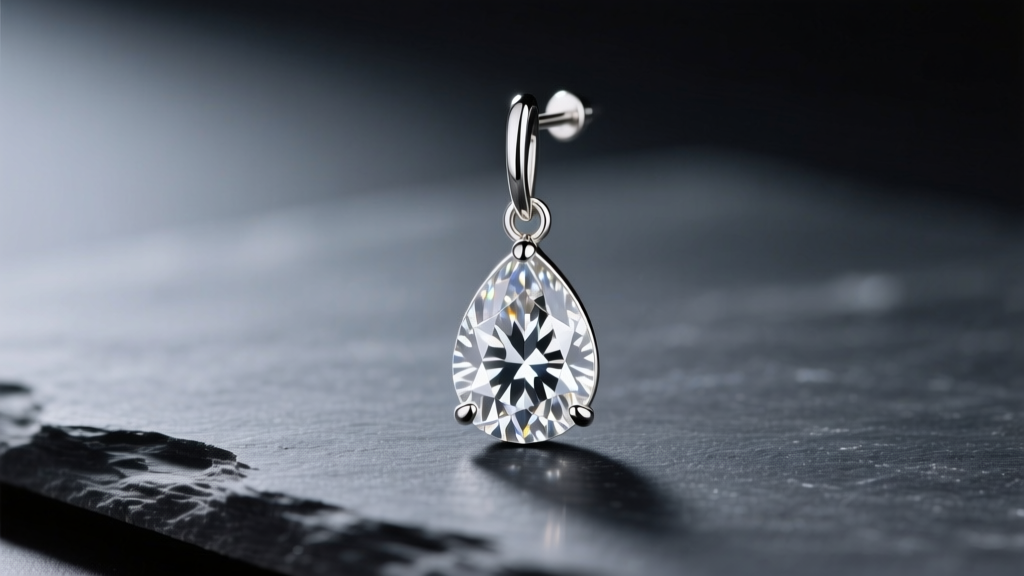
The 2026 Diamond Drop Earring Market Landscape
The jewelry market has undergone a seismic shift over the last few years, and as we navigate 2026, the pricing dynamics for fine jewelry have fundamentally changed. For decades, purchasing a diamond drop earring was considered a high-barrier investment, strictly tied to the rarity of earth-mined stones. Today, the proliferation of high-quality lab-grown diamonds has democratized the drop earring silhouette, allowing buyers to acquire larger carat weights and superior clarity grades for a fraction of the historical cost. However, this accessibility introduces a complex web of value assessment. Is a diamond drop earring still a sound financial investment, or has it transitioned purely into a consumable luxury good? To answer this, we must dissect the anatomy of drop earring pricing, evaluate the kinetic stresses unique to dangling jewelry, and compare the long-term value retention of natural versus lab-grown stones.
Anatomy of Value: What You Are Actually Paying For
When evaluating a diamond drop earring, the standard 4Cs (Cut, Color, Clarity, Carat) do not apply in the exact same way they do for engagement rings or stud earrings. Because drop earrings dangle and move continuously, they interact with light dynamically, which allows savvy buyers to make strategic compromises that save money without sacrificing visual impact.
Strategic Clarity and Color Trade-offs
Unlike studs, which sit flush against the earlobe and are viewed at close proximity, drop earrings rest further from the face and are constantly in motion. This kinetic movement masks minor inclusions. Consequently, you can comfortably downgrade your clarity requirement to SI1 or even a very clean SI2, provided the inclusions are not black or located directly under the table facet. According to grading standards outlined by the Gemological Institute of America (GIA), an SI1 diamond with white, feather-like inclusions will appear completely eye-clean in a moving drop setting, saving you up to 25% compared to a VS1 stone.
Color, however, requires more attention. If your drop earrings are set in white gold or platinum, the contrast between the white metal and a lower-color diamond (like a J or K) will be highly visible as the stone swings. For white metal settings, stick to the G-H color range. If you prefer 14k or 18k yellow gold, the metal's warm reflection will mask lower color grades, allowing you to safely purchase I or J color diamonds for a significant discount.
Metal Weight and Bail Durability
The most overlooked aspect of a diamond drop earring's value is its structural engineering. A drop earring experiences immense kinetic stress compared to a stud. The bail—the small metal loop connecting the diamond or halo to the earring post—is a primary failure point. In budget-friendly commercial jewelry, bails are often cast thinly, weighing less than 1.2 grams per earring. Over time, the friction of taking the earring on and off, combined with the pendulum effect of the drop, will warp thin metal, eventually leading to a snapped post and a lost diamond. For a valuable, long-lasting drop earring, insist on a minimum metal weight of 1.8 to 2.2 grams per earring in 14k gold, or ensure the bail is reinforced with a thicker, solid-cast wire.
Natural vs. Lab-Grown: The Ultimate Price Breakdown
The most critical decision for any buyer in 2026 is choosing between natural and lab-grown diamonds. While the visual and chemical properties are identical, the financial trajectories of these two categories are polar opposites. The International Gemological Institute (IGI) has reported massive surges in lab-grown diamond certification, reflecting their dominance in the under-$3,000 market segment.
Below is a comparative breakdown of a standard 1.00 CTW (Carat Total Weight) diamond drop earring pair, featuring pear-shaped stones in 14k white gold settings with G/VS2 equivalent grading.
| Value Metric | Natural Diamond (1.00 CTW) | Lab-Grown Diamond (1.00 CTW) |
|---|---|---|
| Average Retail Price (2026) | $4,200 - $5,800 | $550 - $850 |
| Price Per Carat | $4,200+ | $550+ |
| Estimated Resale Value | 25% - 40% of Retail | 5% - 10% of Retail (or near zero) |
| Insurance Appraisal Value | High (Tied to Rapaport Index) | Low (Tied to replacement cost only) |
| Grading Authority Standard | GIA (Strict, Conservative) | IGI (Detailed, Accessible) |
As the data illustrates, the upfront cost of a lab-grown diamond drop earring is exponentially lower. However, the American Society of Appraisers consistently notes that lab-grown diamonds possess virtually no secondary market resale value. If you view jewelry strictly as an adornment and want maximum visual impact for your budget, lab-grown is the undisputed winner. If you view the purchase as a store of generational wealth or an heirloom asset, natural diamonds remain the only viable option.
Hidden Costs and Failure Modes in Drop Earrings
Budgeting for a diamond drop earring extends beyond the initial purchase price. Dangling earrings introduce specific mechanical vulnerabilities that require specialized hardware, which can add to the overall cost of ownership.
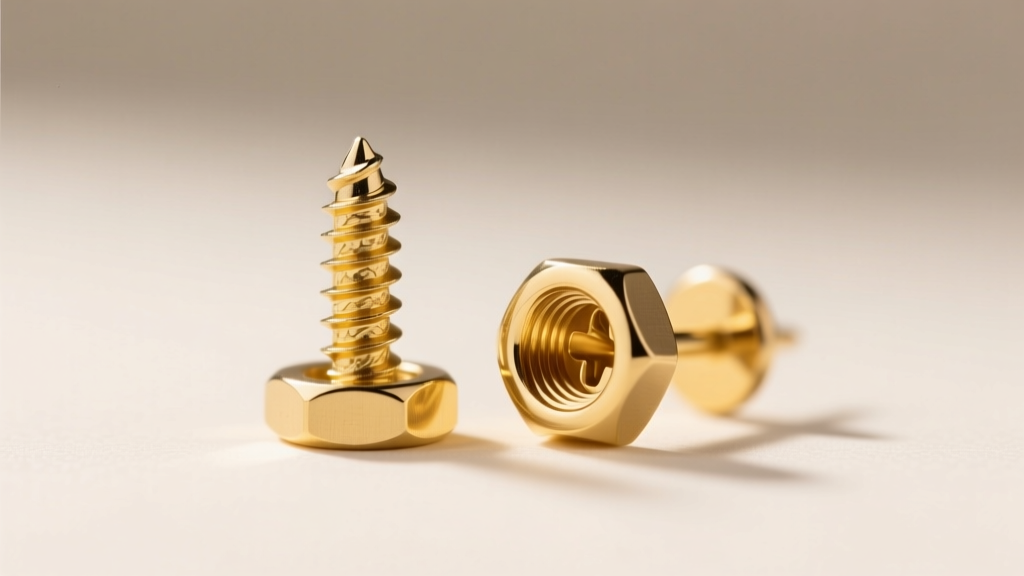
- The Earring Back Dilemma: A standard butterfly friction back relies on a simple groove on a 0.8mm post. Because drop earrings are bottom-heavy, the pendulum motion will gradually loosen a friction back, leading to a high risk of loss. You must upgrade to a threaded screw-back system. A high-quality 0.9mm or 1.0mm threaded post with a secure nut costs an additional $40 to $80 per pair but is non-negotiable for heavy drops.
- Rhodium Plating Maintenance: If your drops are set in 14k or 18k white gold, the rhodium plating will wear off over time, especially on the post and the back of the drop where it rubs against the neck and hair. Expect to pay $50 to $90 annually to have the earrings re-dipped by a jeweler to maintain their bright white luster.
- Prong Snagging: Drop earrings swing and catch on sweaters, scarves, and hair. Traditional four-prong settings are prone to lifting. Opt for bezel settings or rub-over settings for the main stone, which enclose the diamond's girdle in a continuous metal rim, eliminating snag points entirely.
Budget Framework: How to Maximize Visual Spread
If your goal is to acquire a diamond drop earring that commands attention and appears significantly larger than its actual carat weight, you must leverage optical illusions and specific diamond geometries. Here is a practical framework for maximizing visual spread on a strict budget:
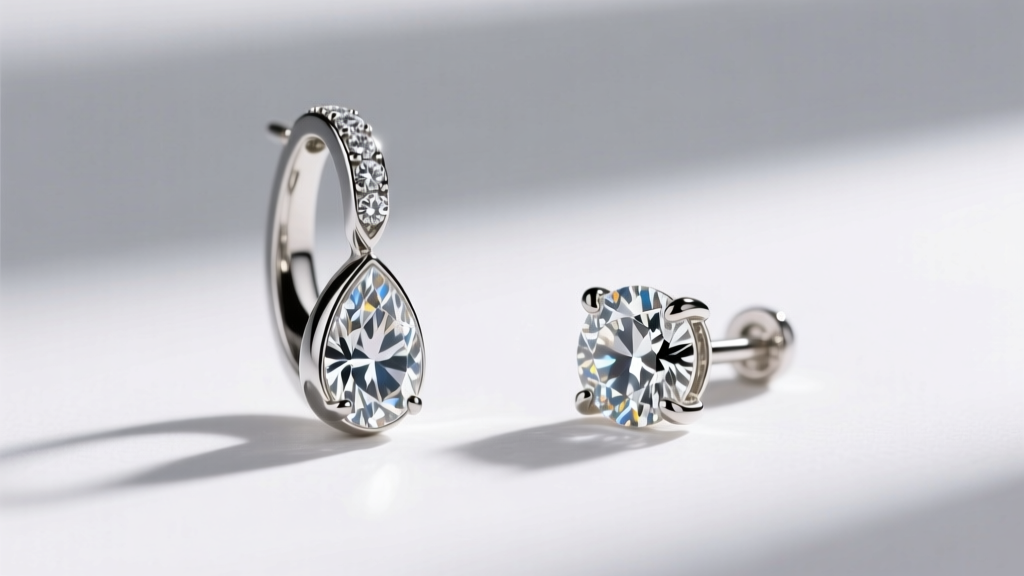
- Choose Elongated Shapes: Pear, marquise, and oval cuts have a larger surface area (spread) per carat compared to round brilliant cuts. A 0.75-carat pear-shaped diamond will visually outsize a 0.90-carat round diamond when viewed from above, while costing nearly 40% less.
- Leverage the Halo Effect: A micro-pave halo surrounding a 0.40-carat center stone can increase the overall visual diameter of the drop to match that of a solid 1.50-carat stone. Because the melee diamonds in the halo are mass-produced and inexpensive, you achieve a massive look without the exponential price curve of large single stones.
- Consider Illusion Settings: Some drop earrings utilize a faceted metal disc behind the diamond, patterned to mimic the light return of the stone. This technique, popular in mid-century jewelry and making a comeback in 2026 budget lines, can make a 0.25 CTW diamond drop look like a full carat from a conversational distance.
Certification Requirements for Drop Earrings
Never purchase a natural diamond drop earring over 0.50 CTW without a verifiable grading report from the GIA or AGS. For lab-grown stones, IGI and GCAL are the industry standards. In 2026, laser inscriptions on the girdle of the diamond are standard practice. Always ask the jeweler to verify the laser inscription under a 10x loupe to ensure the diamond in the earring matches the physical certificate. Uncertified 'promotional' drops sold by mall jewelers often feature heavily milkiness or poor symmetry that ruins the light performance essential for a moving drop earring.
Expert Verdict: Which Path Should You Take?
The true value of a diamond drop earring in 2026 depends entirely on your end goal. If your budget is capped at $1,500, allocate your funds toward a lab-grown diamond drop earring with an elongated pear shape, set in a secure bezel with a threaded 0.9mm screw back. This guarantees maximum sparkle, structural integrity, and modern luxury without the financial strain. Conversely, if you are allocating a $5,000+ budget with the intent of passing down an asset that retains intrinsic market value, seek out a GIA-certified natural diamond drop earring in the G-H color and SI1 clarity range, focusing heavily on the metal weight and bail construction to ensure it survives generations of wear.


