Diamond Square Earrings: Precious Metal Properties Guide
Discover the best precious metals for diamond square earrings. Compare platinum, white gold, and palladium settings for princess and asscher cuts.

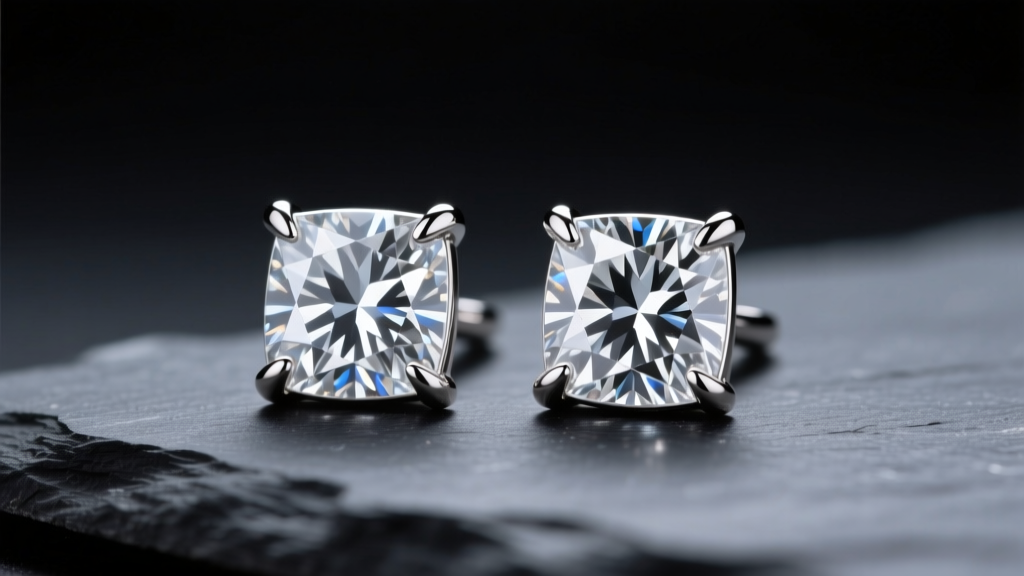
The Geometry of Square Diamonds: Why Metal Choice Matters
When selecting diamond square earrings, the untrained eye often fixates exclusively on the four Cs of the gemstone. However, from a structural engineering and metallurgical perspective, the precious metal setting is equally critical. Square diamond cuts—most notably the Princess, Asscher, Radiant, and Cushion cuts—possess distinct geometric vulnerabilities. Unlike the continuous, sweeping curves of a round brilliant or oval cut, square and rectangular cuts feature sharp, 90-degree corners. These corners are the most fragile points on the stone, highly susceptible to chipping from blunt force impacts or uneven pressure during the setting process.
The metal you choose dictates not only the aesthetic contrast and color perception of the diamond but also the long-term structural integrity of the earring basket. According to the Gemological Institute of America (GIA), the faceting pattern of a princess cut diamond requires precise light return, which can be obstructed by overly bulky metal galleries. Therefore, the ideal metal must offer a high strength-to-weight ratio, allowing for minimal, unobtrusive prongs that still provide maximum corner protection. In this comprehensive guide, we dissect the material properties, alloy compositions, and failure modes of the most common precious metals used in square diamond earring settings.
Platinum 950: The Benchmark for Structural Integrity
Platinum is universally regarded by master jewelers as the premier metal for high-value diamond settings. Unlike gold alloys, platinum used in fine jewelry is typically 95% pure (Pt950), alloyed with 5% ruthenium or cobalt to increase its Vickers Hardness (HV). For diamond square earrings, platinum offers a unique property known as malleability without material loss. When a platinum prong is scratched or bent, the metal is merely displaced, not shed. This means that over decades of daily wear, a platinum earring setting will develop a soft patina but will not lose the structural mass required to hold a heavy square diamond securely.
Ruthenium vs. Cobalt Alloys
Not all Pt950 alloys behave identically. Pt950/Ru (Ruthenium) is harder and more brittle, making it excellent for casting intricate, micro-pave gallery wires often seen in halo settings for square earrings. Conversely, Pt950/Co (Cobalt) is slightly more malleable and highly magnetic, which some jewelers prefer for hand-forging custom V-prongs. The density of platinum (approximately 21.45 g/cm³) gives square diamond stud earrings a premium, substantial feel on the earlobe, though this weight requires secure friction backs or screw-backs to prevent the earring from drooping forward.
White Gold: Rhodium Plating and Maintenance Cycles
White gold remains the most popular choice for diamond square earrings due to its lower initial price point and brilliant, reflective luster. However, white gold is not naturally white. 14K white gold consists of 58.3% pure yellow gold mixed with bleaching alloys like nickel, palladium, or manganese. 18K white gold contains 75% pure gold, requiring even stronger bleaching agents to achieve a neutral tone. To mask the underlying yellowish-gray hue, white gold earrings are electroplated with rhodium, a rare platinum-group metal.
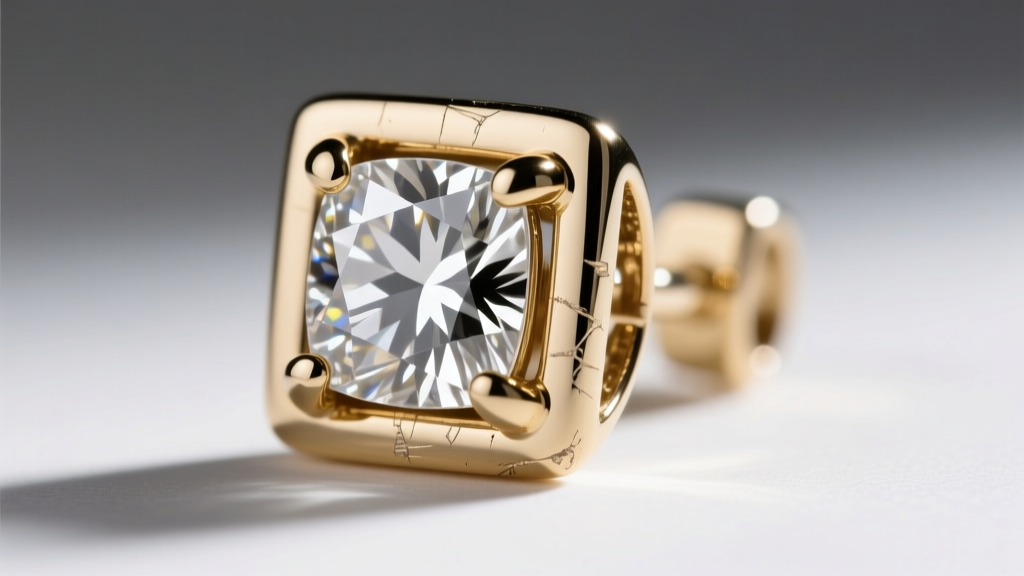
The critical failure mode for white gold earrings lies in the rhodium layer. Standard rhodium plating on earring posts and baskets ranges from 0.75 to 1.0 microns in thickness. Friction from hair, cosmetics, and the natural acidity of the skin will inevitably wear this plating away, particularly on the earring posts and the backs of the settings, exposing the warmer alloy beneath. For individuals seeking low-maintenance jewelry, white gold requires re-plating every 12 to 24 months. Furthermore, the Federal Trade Commission (FTC) Jewelry Guidelines strictly regulate how these alloys must be disclosed to consumers to prevent misleading marketing regarding metal purity.
Material Hardness and Prong Failure Modes
Understanding the Vickers Hardness (HV) scale is essential when evaluating how different metals will perform as prongs securing a square diamond. A metal that is too soft will bend and release the stone; a metal that is too hard will become brittle and snap under stress.
| Metal / Alloy | Vickers Hardness (HV) | Density (g/cm³) | Prong Durability | Maintenance Profile |
|---|---|---|---|---|
| Platinum 950 (Ru) | 135 - 150 | 21.45 | Exceptional (Bends, doesn't break) | Low (Polishing restores finish) |
| 18K White Gold (Pd) | 120 - 130 | 15.20 | Good (Requires rhodium upkeep) | High (Re-plating every 1-2 years) |
| 14K White Gold (Ni) | 130 - 145 | 13.50 | Very Good (Stiff, holds shape well) | High (Re-plating, allergy risk) |
| 18K Yellow Gold | 115 - 125 | 15.50 | Moderate (Prone to scratching) | Low (No plating required) |
| Palladium 950 | 110 - 120 | 12.02 | Good (Lightweight, hypoallergenic) | Moderate (Specialized polishing) |
The V-Prong Imperative for Square Cuts
The most crucial structural element in diamond square earrings is the V-prong. Standard round prongs leave the sharp 90-degree corners of a Princess or Asscher cut exposed. If the earring is dropped or struck against a hard surface, the kinetic energy transfers directly to the unprotected corner, resulting in a catastrophic cleavage fracture. A V-prong wraps around the corner of the diamond, encapsulating the vulnerable point in a protective metal jacket.
Master Jeweler Insight: When inspecting diamond square earrings, ensure the V-prongs have a minimum metal thickness of 0.8mm at the apex of the corner. Prongs filed too thin during the final polishing stage will wear through within five years, leaving the diamond corner exposed to chipping.
Platinum is the superior metal for V-prongs because its tensile strength allows jewelers to carve a precise, sharp interior angle that perfectly mirrors the diamond's corner without the metal becoming brittle. White gold V-prongs, while effective, can develop microscopic stress fractures at the bend over time due to the crystalline structure of the nickel or palladium alloys.
Yellow and Rose Gold: Contrast and Color Theory
While white metals are traditionally chosen to enhance the icy brilliance of colorless diamonds, warm metals like 18K yellow gold and 14K rose gold offer striking aesthetic contrast. The alloy composition of rose gold (typically 75% gold, 22.25% copper, and 2.75% silver) gives it a distinct pinkish hue that pairs exceptionally well with near-colorless diamonds (G-J on the GIA scale).
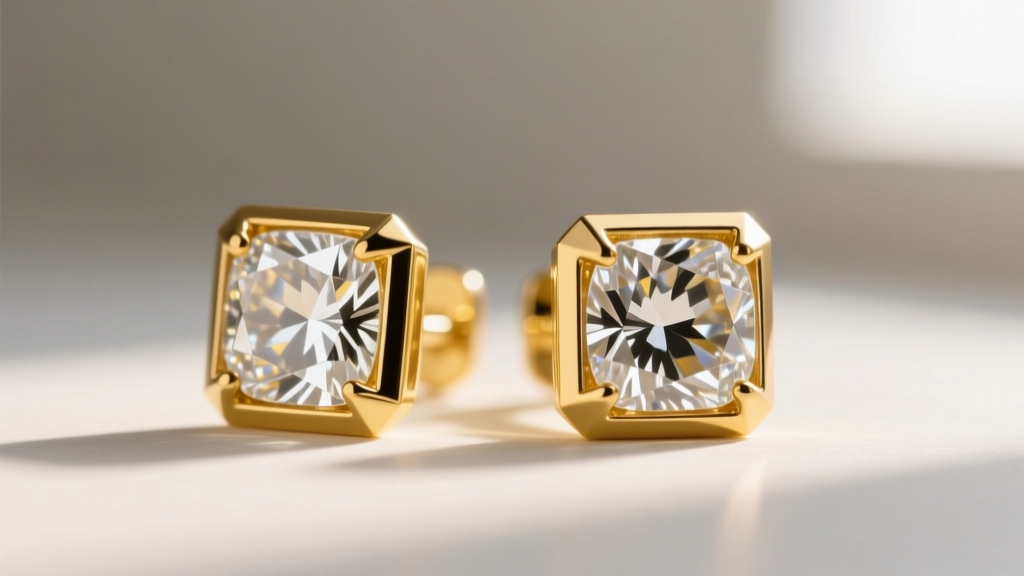
Setting a slightly warm diamond in a yellow or rose gold basket creates an optical illusion. The human eye perceives the color of the diamond relative to the metal holding it. By using a warm metal setting, the slight yellow tint of a G-J diamond is masked, making the stone appear whiter than its actual grade. However, if you are investing in D-F colorless square diamonds, setting them in yellow gold will cause the metal's color to reflect through the pavilion facets, effectively downgrading the visual color of your premium stone. According to the American Gem Society (AGS), maximizing light return and color contrast requires strategic pairing of metal tone and diamond color grade.
Alternative Metals: Why Titanium and Tungsten Fail
In the broader jewelry market, alternative metals like titanium and tungsten carbide are heavily marketed for their extreme scratch resistance. However, they are entirely unsuitable for high-end diamond square earrings. Tungsten carbide is incredibly hard (up to 1600 HV) but highly brittle; it cannot be cast into delicate prongs and will shatter upon impact rather than bend. Titanium, while strong and lightweight, is notoriously difficult to cast and resize. More importantly, the prongs cannot be easily bent back into place if they are knocked out of alignment. If a titanium prong lifts, the earring is often considered a total loss, as most jewelers lack the specialized laser-welding equipment required to repair it safely near a heat-sensitive diamond.
Sourcing, Certification, and Final Selection
When purchasing diamond square earrings, the metallurgical quality must be matched by rigorous gemological certification. Always demand a grading report from a top-tier laboratory like the GIA or AGS, which will detail the exact measurements, symmetry, and corner integrity of the square cut. Furthermore, ensure the precious metal is stamped with its proper hallmark (e.g., 'PT950', '18K', '750') and that the manufacturer adheres to the Kimberley Process to guarantee conflict-free sourcing.
Ultimately, the best metal for your diamond square earrings depends on your lifestyle and maintenance tolerance. Choose Platinum 950 for heirloom durability, zero plating maintenance, and the safest V-prongs for active lifestyles. Opt for 18K White Gold if you prefer a brighter, rhodium-enhanced luster and do not mind periodic maintenance. Select 18K Yellow or Rose Gold to create a bespoke, high-contrast aesthetic that maximizes the visual warmth and character of your square diamonds.


