Diamond Teardrop Earrings: 2026 Budget & Value Guide
Discover how to evaluate diamond teardrop earrings in 2026. Compare lab-grown vs. natural pricing, clarity grades, and setting styles for maximum value.

The Gemological Reality of Pear-Cut Diamonds
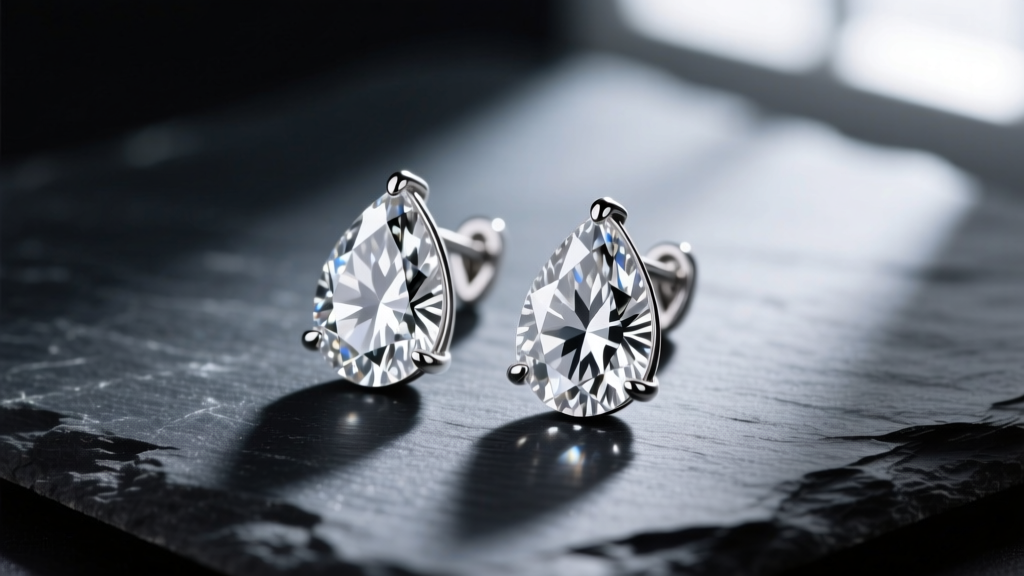
When evaluating diamond teardrop earrings, buyers are essentially looking at a hybrid cut. The pear shape marries the brilliance of a round cut with the elongated, elegant silhouette of a marquise. For earrings, this geometry is highly advantageous: the elongated shape creates a visual illusion of greater size, allowing you to achieve a dramatic face-framing effect at a lower carat weight than a round brilliant. However, assessing the true budget and value of these stones in 2026 requires looking far beyond standard carat weight and retail markup.
Unlike round brilliants, the Gemological Institute of America (GIA) does not assign an overall 'Cut Grade' to fancy shapes like the pear. This means the burden of quality assessment falls entirely on the buyer. The most critical metric for a teardrop diamond is the length-to-width (L/W) ratio. For a classic, balanced teardrop that flatters the earlobe and neck, you should target an L/W ratio between 1.45 and 1.75. Anything below 1.45 will look stubby and overly wide, while anything above 1.75 will appear needle-thin and suffer from severe light leakage.
Natural vs. Lab-Grown: The 2026 Price Matrix
The market for diamond teardrop earrings has shifted dramatically over the last few years. By 2026, lab-grown diamonds have completely disrupted the pricing tiers for fancy shapes, which are traditionally more expensive to cut from rough natural crystals. Because teardrops require a highly specific rough crystal shape to minimize yield loss, natural pear cuts carry a heavy premium. Lab-grown alternatives, cultivated via Chemical Vapor Deposition (CVD), offer identical optical and chemical properties at a fraction of the cost.
| Total Carat Weight (Per Pair) | Natural (VS1, F Color) | Lab-Grown (VS1, F Color) | Value Verdict |
|---|---|---|---|
| 0.50 ct (0.25 ct each) | $1,600 - $2,100 | $350 - $500 | Lab-grown offers immense value for everyday studs. |
| 1.00 ct (0.50 ct each) | $4,800 - $6,200 | $700 - $1,100 | Natural holds resale value; lab-grown is best for pure aesthetics. |
| 1.50 ct (0.75 ct each) | $10,500 - $14,000 | $1,400 - $1,900 | Lab-grown dominates the statement earring market. |
| 2.00 ct (1.00 ct each) | $21,000 - $28,000 | $2,500 - $3,400 | Natural is an investment asset; lab-grown is luxury without the premium. |
Note: Pricing estimates reflect early 2026 market averages for excellent polish/symmetry stones set in 14k gold. Platinum settings will add approximately $400-$800 to the final pair.
Navigating the Bow-Tie Effect and Light Performance
Every teardrop diamond exhibits a 'bow-tie' effect—a dark shadow resembling a man's bow-tie that stretches across the width of the stone's center. This is an optical phenomenon caused by light blockage from the pavilion facets. While a faint, subtle bow-tie can actually enhance contrast and make the diamond's facets pop, a prominent, pitch-black bow-tie is a major flaw that destroys the stone's brilliance.
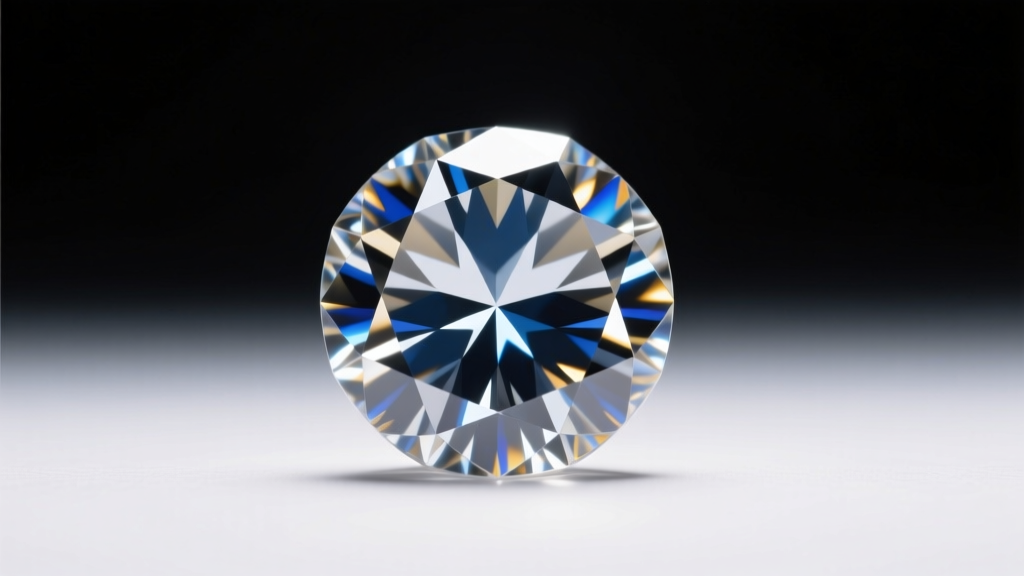
When shopping online in 2026, never purchase diamond teardrop earrings based on a static certificate or a single stock photo. You must utilize 360-degree high-definition video to evaluate the bow-tie. Tilt the stone mentally through the video; if the dark shadow remains static and opaque regardless of the angle, pass on the stone. According to the GIA Diamond Buying Guide, fancy shapes require meticulous visual inspection because their faceting patterns are highly variable and cannot be standardized by a simple algorithm.
Setting Architecture: Protecting the Vulnerable Tip
The most critical value-assessment factor for teardrop earrings is the setting. The pointed tip of a pear-cut diamond aligns directly with the stone's natural cleavage plane—the structural grain of the carbon crystal. If this tip is struck against a hard surface, or if it is held by a standard, rounded prong, the diamond can easily chip or split in half.
The Mandatory V-Prong
To protect your investment, the setting must feature a custom V-prong that completely cups the pointed tip. A V-prong wraps the vulnerable corner in a protective wedge of metal. When reviewing product specifications or consulting with a custom jeweler, explicitly verify the presence of a V-prong. If a retailer attempts to sell you a teardrop earring with a standard claw prong on the tip, walk away immediately; it is a structural liability.
Bezel Settings for Active Lifestyles
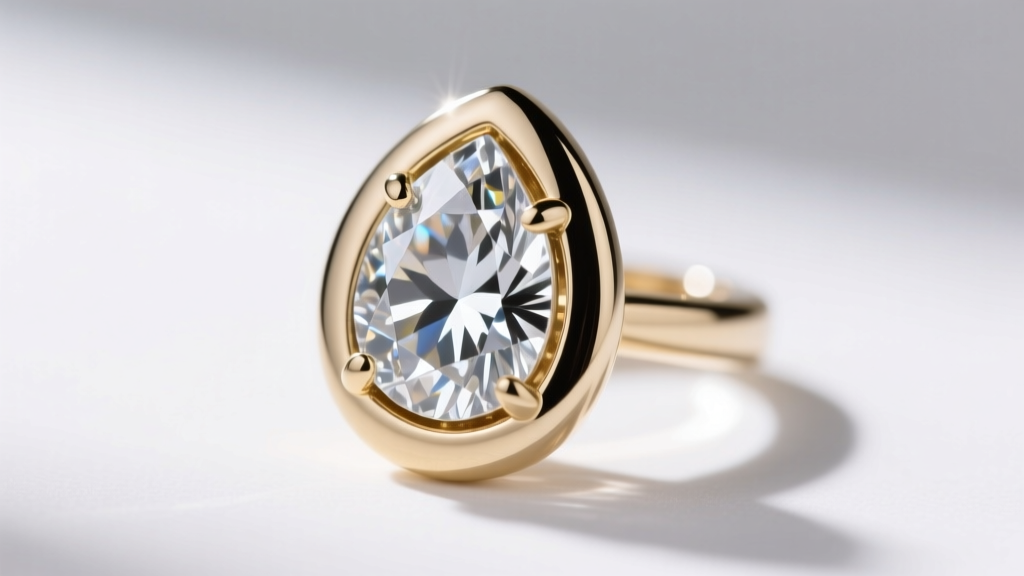
For those who prioritize extreme durability over maximum light return, a full bezel setting is the ultimate protective measure. A bezel encircles the entire perimeter of the teardrop in a continuous rim of metal. While this can reduce the diamond's visible surface area by roughly 5% and slightly dampen edge-to-edge brilliance, it guarantees that the stone will survive daily wear, gym sessions, and travel without snagging on hair or clothing.
Metal Alloys and Long-Term Wearability
The metal you choose for your diamond teardrop earrings impacts both the upfront budget and the long-term maintenance costs. Earrings endure significant friction from hair, scarves, and the natural oils of the skin and earlobe.
- Platinum (950): The gold standard for fine jewelry. Platinum is dense, hypoallergenic, and its prongs will bend rather than snap under pressure. It requires no rhodium plating but comes with a 40-60% price premium over gold.
- 18k White Gold: Offers a bright, luxurious white finish but requires rhodium plating every 12-18 months to maintain its color as the underlying yellowish alloy wears through.
- 14k White or Yellow Gold: The most budget-friendly and durable gold alloy. The higher alloy content makes the metal harder and more resistant to scratching, though it may trigger nickel allergies in sensitive wearers.
Certification and Retail Markup Analysis
When allocating your budget, never compromise on independent certification. For natural diamonds, insist on a grading report from the Gemological Institute of America (GIA) or the American Gem Society (AGS). These institutions maintain the strictest grading standards in the industry. A diamond graded 'F Color' by GIA might be graded 'D Color' by a softer, in-house lab, artificially inflating the price you pay for a lower-quality stone.
Expert Tip: For lab-grown diamond teardrop earrings, the International Gemological Institute (IGI) is the current industry standard, providing highly detailed reports that include specific laser inscriptions on the stone's girdle to verify its lab-grown origin.
Finally, consider the retail channel. Traditional brick-and-mortar jewelers typically mark up diamond earrings by 100% to 200% to cover showroom overhead and inventory holding costs. In 2026, purchasing from reputable online specialists who utilize virtual inventory networks allows you to secure identical GIA-certified diamond teardrop earrings at 30% to 50% less than mall-based retail prices. By mastering the L/W ratios, demanding V-prong settings, and leveraging lab-grown alternatives, you can acquire breathtaking teardrop earrings that offer unparalleled aesthetic value without the traditional luxury tax.


