How to Craft Earrings Christmas Tree Designs Step-by-Step
Learn how to craft and style festive earrings. Christmas tree wire-wrapping steps, material grades, and expert tips for holiday jewelry.

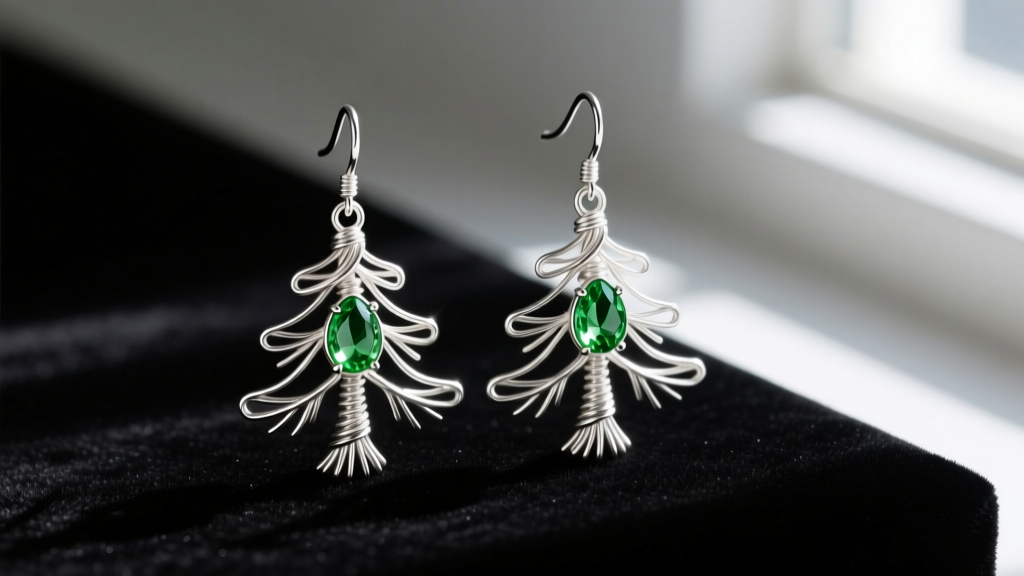
The Appeal of Handcrafted Holiday Jewelry
The holiday season brings a massive surge in festive jewelry demand, but mass-produced seasonal pieces often lack durability, unique craftsmanship, and hypoallergenic properties. Crafting your own earrings christmas tree designs allows for complete control over material quality, gauge thickness, and gemstone selection. Instead of relying on cheap, plated base metals that tarnish by January, professional-grade wire wrapping ensures your holiday jewelry remains a staple for years to come. In this comprehensive guide, we move beyond basic craft wire and delve into the metallurgy and structural engineering required to build elegant, durable pine tree dangles.
Essential Materials and Tools Checklist
Before beginning, it is crucial to understand wire temper and gauge. According to the metallurgical experts at Ganoksin, using the wrong temper will result in either a flimsy frame that bends out of shape or a brittle wire that snaps during manipulation. For structural frames, half-hard wire is mandatory. For weaving, dead-soft wire is required to prevent work-hardening and breakage.
| Material | Specification | Purpose | Est. Cost (2026) |
|---|---|---|---|
| Frame Wire | 20-gauge (0.81mm) Half-Hard Sterling Silver | Structural tree outline and trunk | $14 / spool |
| Weaving Wire | 28-gauge (0.32mm) Dead-Soft Gold-Filled | Wrapping and securing foliage beads | $22 / spool |
| Gemstones | 4mm Green Chalcedony or Peridot (0.8mm hole) | Tree foliage accents | $9 / strand |
| Ear Wires | 20-gauge Sterling Silver French Hooks | Hanging mechanism | $6 / pair |
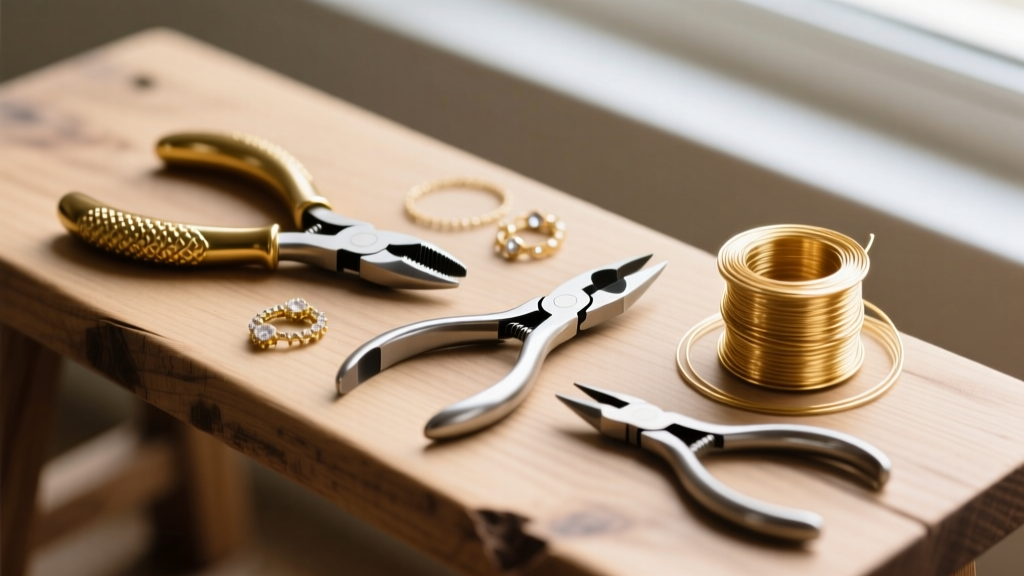
Required Tools: Flush cutters, round-nose pliers, chain-nose pliers, and nylon jaw pliers (to prevent marring the soft precious metals). Sourcing high-quality tools from suppliers like Rio Grande ensures clean cuts and precise bends without damaging your wire.
Step-by-Step Wire Wrapping Instructions
Step 1: Forging the Structural Frame
Cut two 4-inch lengths of your 20-gauge half-hard sterling silver wire. Using a fine-point marker, mark the exact center of each wire. With your chain-nose pliers, grip the wire at the center mark and bend it into a sharp 45-degree angle to form the top peak of the tree. Next, measure 1/2 inch down from the peak on both sides and bend the wire outward at a 90-degree angle to create the first tier. Repeat this process, increasing the width by 1/4 inch for each subsequent tier, until you have three distinct branches. Finally, bring the remaining wire ends together at the base and twist them tightly to form a sturdy trunk. Trim any excess wire with your flush cutters, leaving a 1/2 inch tail to create the top hanging loop.
Step 2: Weaving the Foliage
This step requires patience and tension control. Cut an arm's length of 28-gauge dead-soft gold-filled wire. Anchor the weaving wire to the bottom left corner of your tree frame by wrapping it tightly three times. Thread a 4mm peridot bead onto the weaving wire. Pull the wire across the frame to the corresponding right side, wrap it twice around the 20-gauge frame wire to secure the bead, and repeat the process, moving upward tier by tier. The contrast between the silver frame and gold-filled weaving wire creates a stunning mixed-metal effect that elevates the design far beyond standard holiday jewelry. Ensure your tension remains consistent; too loose, and the beads will rattle; too tight, and you risk snapping the delicate 28-gauge wire.
Step 3: Crafting Custom Ear Wires
While pre-made French hooks are convenient, crafting your own ensures the gauge matches your design perfectly. Cut two 2-inch pieces of 20-gauge half-hard wire. Using the widest part of your round-nose pliers, form a small loop at one end. Rotate the pliers and continue bending the wire around to form a smooth, elongated fishhook shape. Use your nylon jaw pliers to gently squeeze the hook, work-hardening it slightly so it retains its shape when inserted into the ear lobe. File the ends smooth with a jewelry file to prevent scratching the ear canal.

Styling Your Finished Pieces for the Holidays
Dangle earrings inherently draw the eye downward, making them an excellent choice for balancing specific facial structures. If you have a round or wide face shape, the vertical drop of these tree earrings will create an elongating illusion, sharpening your jawline. Conversely, those with long or narrow face shapes might prefer to keep the tree design more compact and wide, or opt for a stud version of this motif to avoid over-elongating their features.
When styling these mixed-metal pieces, lean into rich, textured winter fabrics. A cream cable-knit sweater or a deep emerald velvet blazer provides the perfect backdrop, allowing the gold-filled weaving and green chalcedony beads to pop without competing with busy patterns. Because the design is inherently festive, keep the rest of your jewelry minimal—perhaps a simple, thin gold-filled chain necklace and a delicate tennis bracelet to maintain an elegant, uncluttered aesthetic.
Troubleshooting Common Wire-Wrapping Mistakes
- Wire Snapping at the Bends: This is the most common failure mode for beginners. It occurs due to work-hardening. If you bend 20-gauge sterling silver back and forth to adjust an angle, the crystalline structure of the metal locks up and becomes brittle. Always bend with intention. If you make a mistake, use your nylon jaw pliers to gently coax the wire back rather than aggressively re-bending it.
- Beads Won't Fit on the Weaving Wire: Natural gemstones like peridot and chalcedony often have inconsistent drill holes. While a 4mm bead should theoretically accommodate a 24-gauge wire, natural stone variations can restrict the hole to 0.5mm. Always keep a 26-gauge or 28-gauge wire on hand as a backup for weaving if your primary wire gets stuck.
- Frame Warping Over Time: If your finished tree earrings lose their shape after a few wears, your frame wire was likely too soft. Always verify that your spool is labeled 'Half-Hard' (H) rather than 'Dead-Soft' (DS) before cutting your structural frame.
By mastering these fundamental wire-wrapping techniques, you transform a simple holiday concept into a sophisticated, heirloom-quality accessory that transcends seasonal trends.


