How to Make Wire Earrings With Beads: 2026 DIY Gift Guide
Learn how to make wire earrings with beads for personalized gifts. Master gauges, wraps, and occasion-matching in our 2026 DIY jewelry guide.

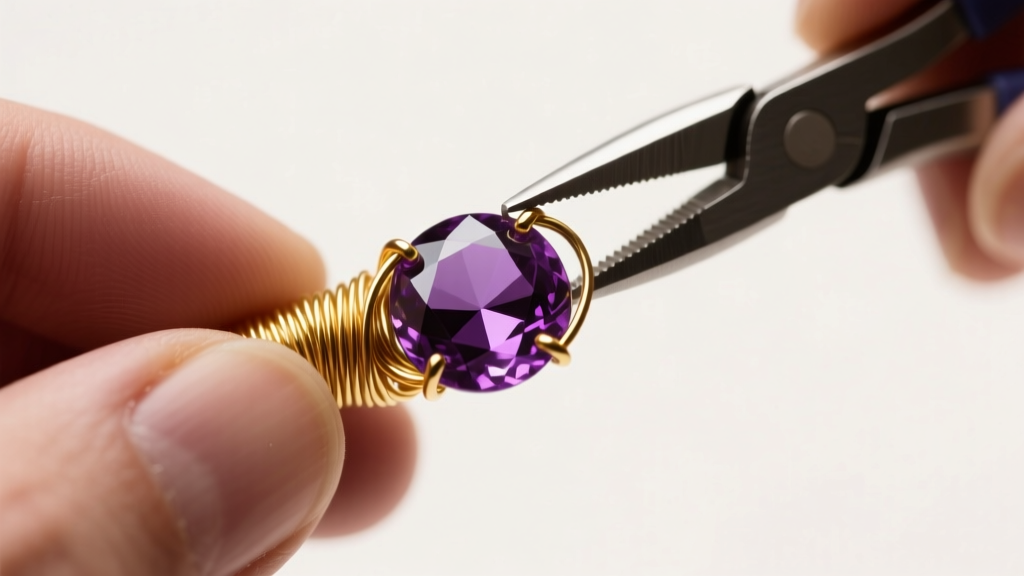
The Art of Gifting Handmade Wire & Bead Earrings
There is a profound difference between purchasing a mass-produced accessory and crafting a bespoke piece of jewelry for someone you love. Learning how to make wire earrings with beads transforms a simple hobby into a deeply personal gifting strategy. In 2026, the shift toward sustainable, slow-fashion accessories has made handmade jewelry more coveted than ever. Whether you are designing for a milestone anniversary, a milestone birthday, or a thoughtful holiday gesture, mastering wire-wrapping and bead-stringing techniques allows you to tailor every millimeter of the design to the recipient's unique style and ear anatomy.
This comprehensive guide moves beyond basic craft tutorials. We will explore the metallurgy of jewelry wire, the structural integrity of wrapped loops, and a strategic framework for matching bead materials to specific gifting occasions.
Essential Materials: Selecting Wire and Beads for 2026 Trends
The foundation of any durable earring lies in selecting the correct wire temper and alloy. According to metallurgical standards outlined by Rio Grande, wire temper dictates how the metal behaves under stress. For earring making, you must balance malleability for wrapping with rigidity for holding shape.
Wire Gauge and Temper Matrix
| Wire Gauge | Temper | Best Application | Minimum Bead Hole Size |
|---|---|---|---|
| 20 AWG | Half-Hard | French hook ear wires, structural frames | N/A (Base wire) |
| 22 AWG | Half-Hard | Standard wrapped loops, heavy bead stringing | > 0.65mm |
| 24 AWG | Dead-Soft | Wrapping briolettes, securing top-drilled beads | > 0.45mm |
| 26 AWG | Dead-Soft | Delicate weaving, coiling, micro-macrame accents | > 0.35mm |
For gifting, material longevity is paramount. Avoid gold-plated brass, which will inevitably tarnish and cause skin irritation. Instead, opt for 14/20 Gold-Filled wire (which contains 1/20th 14k gold by weight) or Argentium Sterling Silver. Argentium contains germanium, making it highly tarnish-resistant—a massive selling point for recipients who dislike polishing their jewelry.
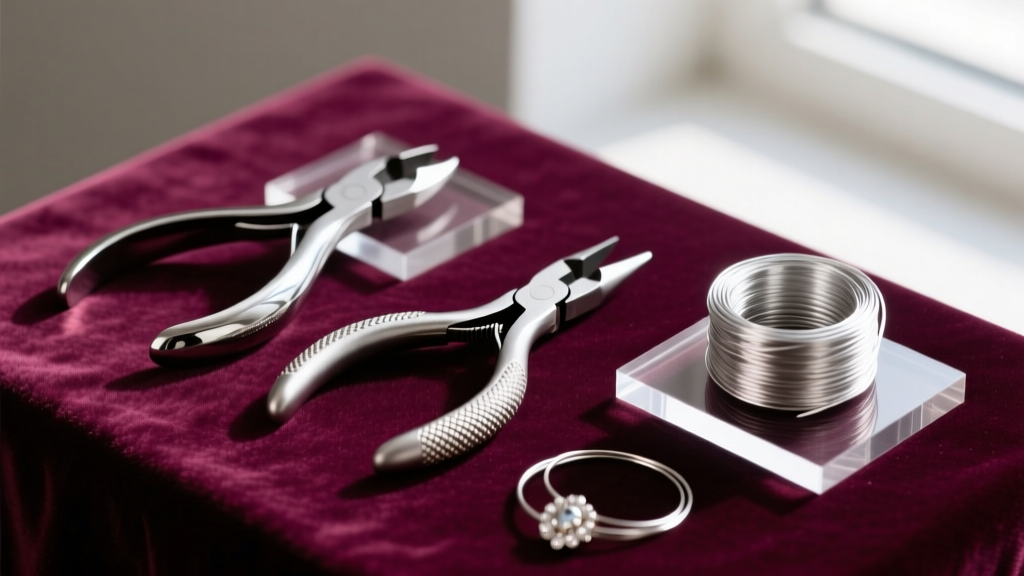
How to Make Wire Earrings With Beads: Step-by-Step Framework
Creating a secure, professional-grade earring requires precision. The most common failure mode in beginner wire earrings is the 'spinner'—a bead that rotates freely on the wire, eventually wearing down the metal and snapping. Here is how to engineer a locked-in wrapped loop.
Step 1: Crafting the French Hook Ear Wire
Cut a 3-inch length of 20-gauge half-hard wire. Using round-nose pliers, form a small 3mm loop at one end; this will be the attachment point for your bead dangle. Bend the wire around a 8mm mandrel to create the ear hook. Critical E-E-A-T Tip: Never leave a flush-cut wire end going into the ear. Use a cup bur attached to a rotary tool to round off the tip, followed by 600-grit sandpaper. This prevents microscopic burrs from tearing the earlobe fistula.
Step 2: The Locked Wrapped Loop
Thread your chosen bead onto a 3-inch piece of 24-gauge dead-soft wire. Leave a 1-inch tail. Bend the tail at a 90-degree angle directly against the top of the bead. Use chain-nose pliers to grip the wire exactly at the bend, and wrap the tail tightly around the base wire 3 to 4 times. To prevent the bead from spinning, ensure the first wrap sits flush against the bead's surface. If the bead hole is too large, add a 1.5mm metal spacer bead to bridge the gap before wrapping.
Occasion Matching: Designing Earrings for Specific Recipients
A successful gift resonates with the recipient's life events. Use this framework to match bead materials and wire colors to specific occasions.
Milestone Anniversaries & Weddings
- Materials: 14k Gold-Filled wire paired with high-Mohs gemstones (Sapphire, Ruby, or Diamonds) or high-luster Akoya pearls.
- Design: Elegant, minimalist drop earrings. Use a 22-gauge wire to create a simple, elongated teardrop frame that allows a single, high-quality briolette to catch the light.
- Why it works: Gold and high-hardness stones symbolize permanence and enduring value, perfectly aligning with anniversary sentiments.
Personalized Birthdays
- Materials: Argentium silver or anodized Niobium wire paired with the recipient's birthstone.
- Design: Clustered wire-wrapped beads. Niobium is hypoallergenic and can be anodized in vibrant colors using a simple battery setup, allowing you to match the wire color to the birthstone (e.g., purple anodized niobium with amethyst).
- Why it works: Birthstones show thoughtfulness, while custom-anodized wire demonstrates a high level of artisan effort.
Holiday & Festive Gifting
- Materials: Copper or brass wire paired with artisan lampwork glass beads or matte-finish gemstone beads like turquoise or lapis lazuli.
- Design: Textured wire wraps. Use a chasing hammer to flatten and texture the copper wire before wrapping, giving it a rustic, artisanal feel that pairs beautifully with winter wardrobes.
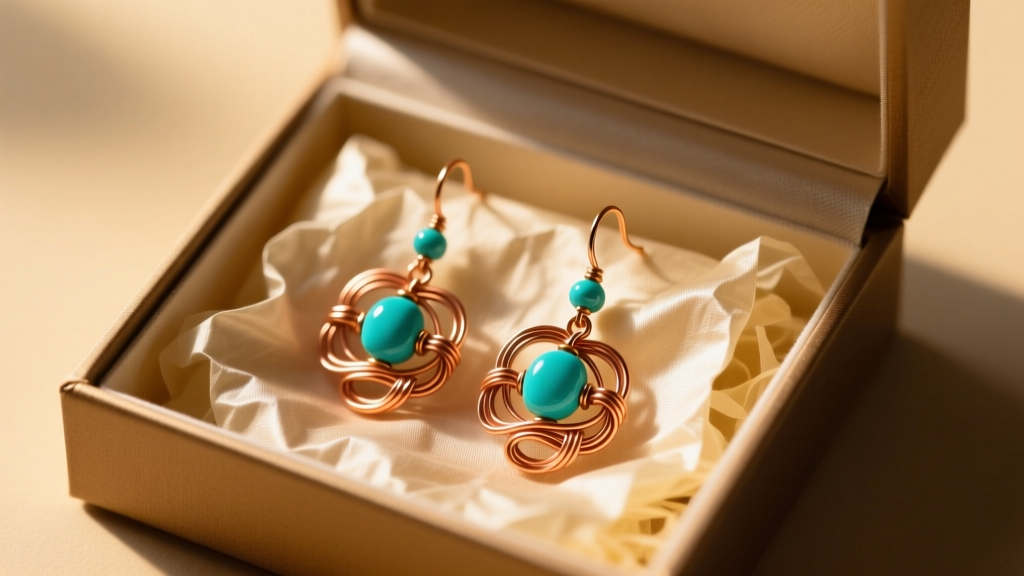
Packaging and Presentation for Handmade Jewelry Gifts
The unboxing experience is 50% of the gift. Handmade earrings must be presented in a way that protects the wire from bending and the beads from scratching.
Invest in rigid, two-piece setup boxes lined with anti-tarnish flannel. According to Fire Mountain Gems, untreated cardboard and certain plastics can off-gas sulfur compounds that rapidly tarnish silver and copper. Always include a 3M anti-tarnish strip inside the box. For the earring card, use heavy-weight (120lb) cotton cardstock and punch holes exactly 1.25 inches apart to accommodate standard French hooks without forcing the wire out of its natural curve.
Troubleshooting Common Wire-Wrapping Mistakes
Even experienced jewelers encounter structural issues. Here is how to troubleshoot the most common problems when learning how to make wire earrings with beads:
- Problem: The wire keeps breaking during the wrap.
Solution: You are likely using half-hard wire for wrapping, which work-hardens and snaps when bent repeatedly. Switch to dead-soft wire for all wrapping and weaving applications. - Problem: Tool marks and scratches on the wire.
Solution: Your pliers are biting into the metal. Dip the tips of your chain-nose and round-nose pliers in tool dip, or wrap them in painter's tape. For a professional finish, always use nylon-jaw pliers for the final straightening and shaping of your ear wires. - Problem: The wrapped loop is asymmetrical or off-center.
Solution: Use a fine-point Sharpie to mark the exact center of your round-nose pliers. Always bend the wire at that exact mark to ensure every loop is identical in diameter, which is crucial for symmetrical drop earrings.
By mastering these technical details and aligning your designs with the emotional weight of the occasion, your handmade wire and bead earrings will transcend simple crafts and become cherished, wearable heirlooms.


