Double Hoop Diamond Earrings: 2026 Trend Analysis
Explore the 2026 trend of double hoop diamond earrings. Discover styling tips, metal grades, clasp mechanics, and pricing for this layered ear look.

The Evolution of the Statement Lobe
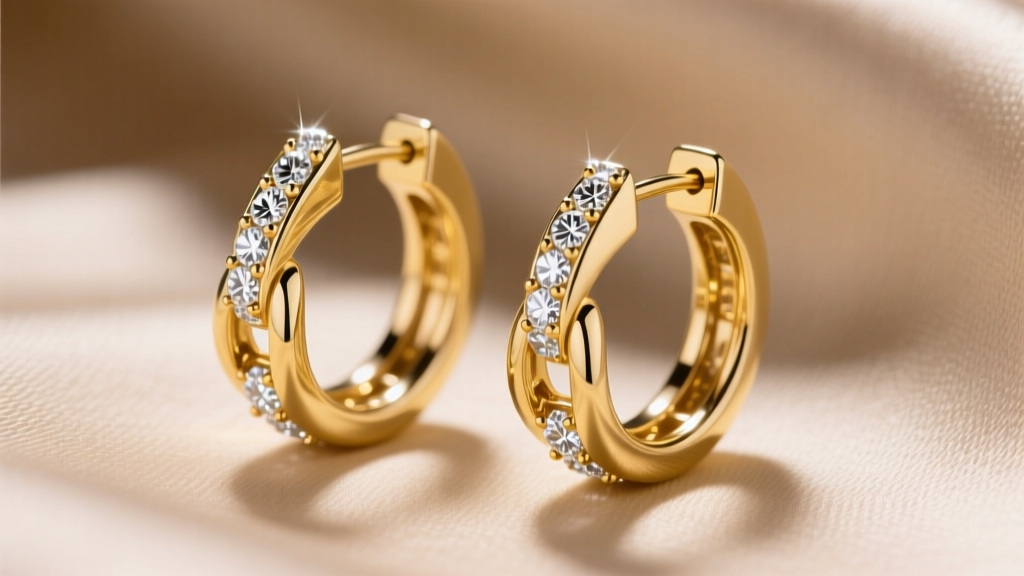
The curated ear movement has officially matured. As we navigate the 2026 fine jewelry landscape, the focus has shifted from scattered cartilage constellations to bold, concentrated lobe statements. At the forefront of this shift are double hoop diamond earrings, a design that marries the kinetic elegance of traditional hoops with the layered complexity of a multi-piercing setup. According to Vogue, the current fine jewelry zeitgeist favors high-impact, singular pieces that mimic the look of multiple piercings without requiring the additional healing time or anatomical commitment. Whether achieved through a specialized interlocking single-piercing design or a meticulously matched double-lobe stack, double hoop diamond earrings offer unparalleled versatility, bridging the gap between boardroom professionalism and evening maximalism.
Interlocking vs. Stacked: Defining the Architecture
When shopping for double hoop diamond earrings, consumers are generally looking at two distinct architectural categories. Understanding the structural differences is crucial for both comfort and aesthetic balance.
The Single-Piercing Interlocking Hoop
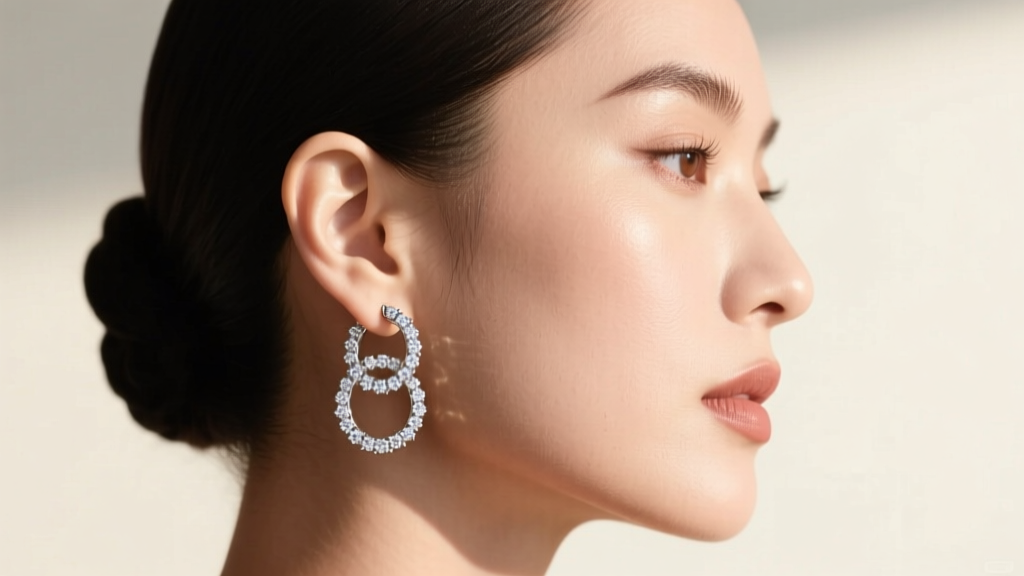
This engineering marvel utilizes a single, reinforced post that passes through the standard lobe piercing. Suspended from this post are two concentric or vertically cascading hoops, often connected by a rigid or semi-rigid precious metal bridge. The primary advantage is accessibility for those with only one lobe piercing. However, because the entire weight of two diamond-set hoops (often exceeding 6 grams per ear) rests on a single fistula, the wire gauge must be substantial—typically 16-gauge (1.2mm) or 14-gauge (1.6mm)—to prevent the 'cheese-cutter effect' that can slowly tear through the earlobe tissue over time.
The Double-Lobe Stacked Set
This approach requires two separate lobe piercings. The primary (lower) piercing hosts a medium-to-large hoop (25mm–40mm diameter), while the secondary (upper) piercing features a complementary huggie or smaller hoop (12mm–15mm diameter). This method distributes weight more evenly across the earlobe and allows for modular styling, where the wearer can swap out the secondary huggie for a diamond stud or pearl.
Material Science: Gold Karats and Platinum
The metal foundation of your double hoop diamond earrings dictates not only the color and luster but also the long-term security of the diamond settings. Hoops are high-friction jewelry; they catch on hair, scarves, and pillows. Therefore, metal hardness is a critical E-E-A-T factor often overlooked by casual buyers.
| Metal Type | Hardness & Durability | Prong Security for Pavé | Approx. Price Range (1.5 TCW) |
|---|---|---|---|
| 14K Gold (White/Yellow/Rose) | High (Excellent for daily wear) | Good; prongs resist bending | $2,200 - $4,500 |
| 18K Gold (White/Yellow/Rose) | Medium (Rich color, softer) | Moderate; requires annual checks | $3,000 - $6,500 |
| Platinum (950 Pt) | Very High (Dense, malleable) | Superior; prongs fold rather than snap | $5,500 - $9,000+ |
For diamond-heavy interlocking hoops, 14K gold or Platinum is highly recommended. While 18K gold offers a richer yellow hue, its softer nature means the micro-prongs securing the pavé diamonds are more susceptible to wear and tear from the constant motion of the hoops.
Diamond Grading for Motion Jewelry
Applying strict static grading standards to kinetic jewelry is a common consumer mistake. Because double hoop diamond earrings are in constant motion, catching light from dozens of angles per second, the visual priorities shift dramatically.
- Clarity: According to the Gemological Institute of America (GIA), SI1 (Slightly Included) clarity is often completely eye-clean in motion jewelry. The continuous movement and the reflective nature of pavé settings effectively mask minor inclusions. Paying a premium for VVS clarity in hoop earrings yields zero visible return on investment.
- Color: For white gold and platinum settings, G-H color grades provide a bright, white appearance. However, if you are setting diamonds in 18K yellow gold, you can safely drop to I-J color grades. The warm reflection of the yellow gold will mask the faint yellow tint of the diamonds, allowing you to allocate more budget toward higher carat weight or better cut quality.
- Setting Style: Avoid traditional micro-pavé for daily-wear hoops, as the tiny beads of metal can catch on knitwear. Instead, opt for channel-set or bead-set (flush) diamonds, which offer a smoother profile and significantly reduce snagging risks.
Face Shape Mapping and Visual Weight
The dual-layered nature of double hoop diamond earrings adds significant visual weight to the lower half of the face. Strategic selection based on facial geometry ensures the earrings enhance rather than overwhelm your features.
Round and Square Faces
Opt for elongated, vertically cascading double hoops (often called drop-hoops). The vertical lines draw the eye downward, creating an illusion of length that softens strong jawlines and balances wider cheekbones. Avoid wide, perfectly circular interlocking hoops, which can emphasize facial width.
Oval and Heart-Shaped Faces
These face shapes can carry the visual weight of wide, concentric circular double hoops. A medium-sized primary hoop (30mm) with a slightly smaller, diamond-encrusted secondary hoop resting just inside or below it adds a glamorous, balanced fullness to the lobe area without disrupting the natural symmetry of the face.
Clasp Mechanics and Lobe Health
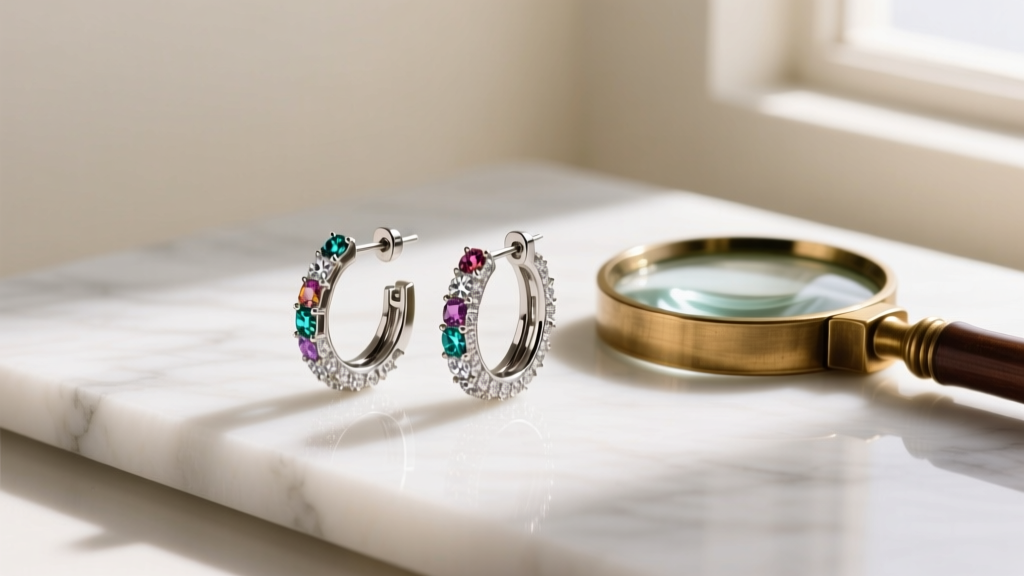
The failure point of any luxury hoop earring is the clasp. The added weight of a double diamond hoop demands superior mechanical engineering. Standard friction-post and butterfly-back combinations are entirely insufficient for this style; the weight will cause the earring to droop, and the friction back will inevitably slide off, leading to catastrophic loss.
Never rely on standard push-backs for multi-hoop designs. The kinetic energy generated by walking and talking will slowly work the backing off the post. Always demand a positive-locking mechanism.
The Hinged Snap-Back with Friction Groove: The industry standard for premium hoops. The post features a small notch that clicks securely into the hinged catch. For double hoops, ensure the catch has a secondary tension spring.
The Screw-Back: The most secure option available. The post is threaded, and the backing screws on. While it takes an extra ten seconds to put on, it is virtually impossible for a screw-back to detach during normal wear, making it the only advisable choice for heavy platinum double hoops.
Market Pricing: Lab-Grown vs. Natural
The 2026 market for diamond jewelry has been fundamentally reshaped by the maturation of the lab-grown sector. Industry data tracked by National Jeweler highlights that lab-grown diamonds now dominate the fashion-forward hoop category, offering identical optical and chemical properties at a fraction of the cost.
A high-quality, 2.0 Total Carat Weight (TCW) double hoop earring set in 14K gold will typically retail between $1,200 and $2,400 when featuring lab-grown diamonds. The exact same design, utilizing natural, earth-mined diamonds with comparable grading, will command anywhere from $4,500 to $8,500. For buyers prioritizing maximum visual impact and diamond coverage over resale value, lab-grown double hoop diamond earrings represent the most intelligent allocation of capital in the current jewelry market.
Final Styling Directives
To maximize the brilliance of your double hoop diamond earrings, maintain a strict cleaning regimen. The dual-layer design creates a micro-environment that traps sebum, hairspray, and lotion between the hoops, rapidly dulling the diamonds. Use a soft-bristled baby toothbrush and a solution of warm water with a single drop of mild dish soap once a week, ensuring you brush the underside of the diamond settings where light enters the stone. By understanding the structural, material, and aesthetic nuances of this trend, you can invest in a piece that offers both cutting-edge 2026 style and enduring wearable art.


