Droopy Earrings 2026: Mastering the Elongated Drop Trend
Discover the 2026 droopy earrings trend. Learn how to style elongated drops, manage lobe weight with proper gauge support, and choose the right materials.

The Anatomy of the Droopy Earring Trend
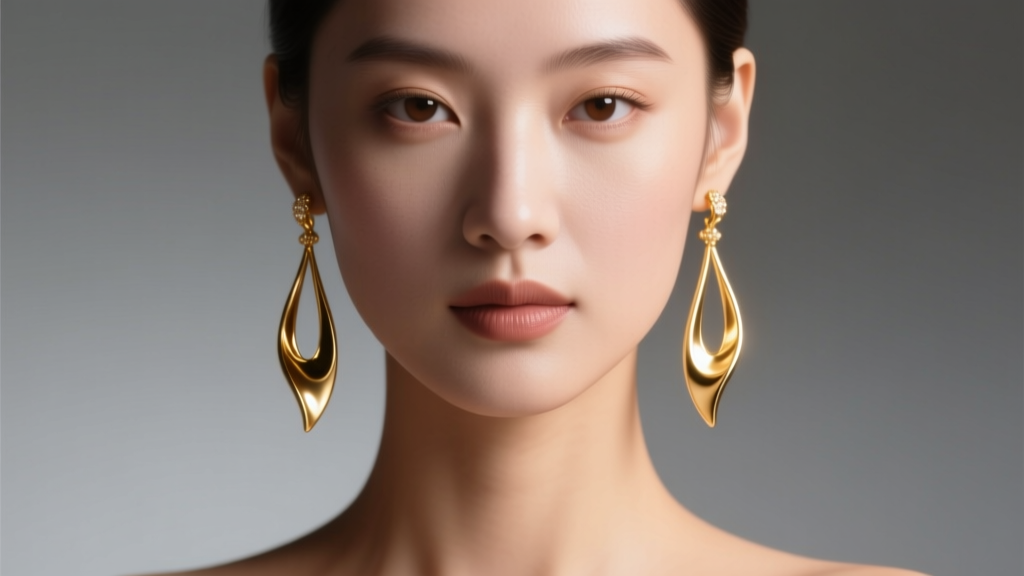
The jewelry landscape in 2026 has decisively shifted away from rigid, structured chandeliers toward fluid, gravity-embracing silhouettes. Enter the era of droopy earrings—an intentional, elongated drop style that prioritizes kinetic movement, dramatic vertical lines, and a deliberate 'slouch' that interacts with the wearer's anatomy. Unlike traditional dangle earrings that swing freely from a fixed pivot point, droopy earrings often feature articulated chains, heavy teardrop terminals, or asymmetrical wire-wrapping that pulls the lobe slightly downward, creating an edgy, relaxed aesthetic.
According to recent runway analyses by Vogue, the droopy silhouette is a rebellion against the minimalist, flush-to-the-ear stud trends of the early 2020s. Designers are experimenting with extreme lengths—some grazing the collarbone—and mixed-media elements like raw silk threads, melted wax casts, and heavy brass links. However, embracing this avant-garde trend requires a deep understanding of earlobe biomechanics, material science, and structural support to avoid permanent tissue damage.
Weight vs. Wearability: Material & Gauge Science
The most critical failure mode of the droopy earring trend is the 'cheese-cutter effect.' When an earring is excessively heavy and the post is too thin, gravity forces the metal wire to slice through the delicate tissue of the earlobe. A standard earlobe can comfortably support approximately 10 to 14 grams of weight before experiencing fatigue or discomfort. Many solid metal droopy earrings easily exceed 25 grams per ear.
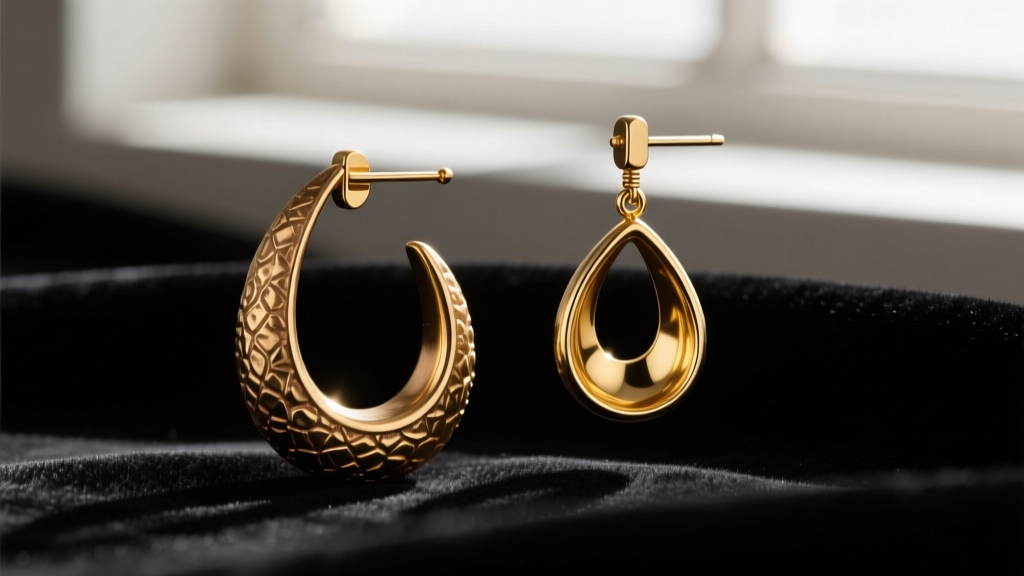
To mitigate this, you must pay strict attention to both the material density and the wire gauge of the earring post. Standard fashion earrings are typically crafted in 20-gauge (0.81mm) or 18-gauge (1.02mm) wire. For droopy earrings, these gauges are structurally insufficient. You must seek out designs that utilize 14-gauge (1.63mm) or 12-gauge (2.05mm) posts, which distribute the downward force across a wider surface area of the piercing channel.
| Material Composition | Density (g/cm³) | Est. Weight (3-inch Drop) | Lobe Strain Level |
|---|---|---|---|
| Solid 18k Yellow Gold | 15.6 | 22g - 28g | Extreme (Requires Support) |
| Solid Brass / Bronze | 8.5 | 14g - 18g | Moderate to High |
| Grade 5 Titanium (Ti-6Al-4V) | 4.43 | 7g - 10g | Low (Ideal for Sensitive Lobes) |
| Hollow Electroformed Gold | ~3.0 (Effective) | 5g - 8g | Very Low |
As noted by the Gemological Institute of America (GIA), electroforming is a vital technique for 2026 droopy styles. This process allows jewelers to create massive, voluminous gold drops that are hollow on the inside, reducing the weight by up to 70% compared to solid castings while maintaining the exact same exterior dimensions and luxurious finish.
Structural Support: Preventing Lobe Tear-Out
If you are investing in heavy, solid-metal droopy earrings, relying on a standard butterfly push-back is a recipe for disaster. The backing will inevitably slide down the post, causing the earring to droop excessively and put uneven pressure on the bottom of the piercing. To properly wear heavy elongated drops, you must upgrade your structural support system.
1. Silicone O-Rings and Disc Backs
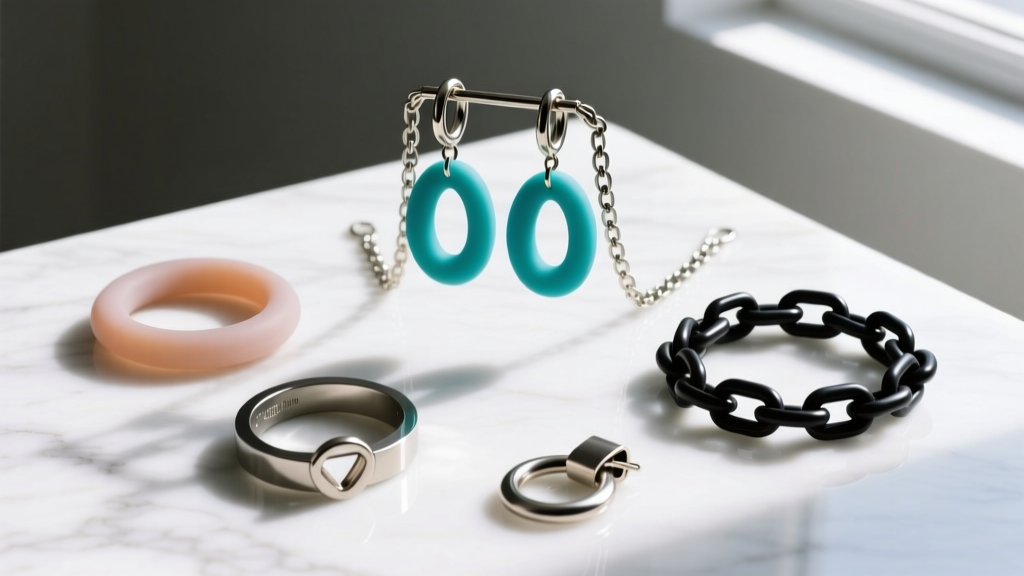
For French wire (fishhook) droopy earrings, standard metal scrolls are insufficient. Replace them with medical-grade silicone O-rings or wide flat disc backs. The increased surface area of a 10mm silicone disc rests flush against the back of the earlobe, acting as a shock absorber and preventing the heavy front terminal from pulling the lobe backward.
2. Omega and Leverback Closures
For post-style drops, an Omega clip back provides a wide, hinged paddle that grips the entire back of the earlobe. This distributes the 20+ gram weight across the whole lobe pad rather than concentrating it solely on the piercing hole. Leverbacks with a locking mechanism are also superior to standard wires, as they prevent the heavy earring from slipping out when the kinetic movement swings forward.
3. Cartilage-Assisted Weight Distribution
The most innovative solution in 2026 is the chain-linked ear cuff. These designs feature the primary droopy earring in the lobe, connected by a delicate 20-gauge gold chain to a secondary cuff that grips the helix or upper cartilage. Because cartilage is structurally firmer than the fatty tissue of the lobe, it can bear the brunt of the upward tension, effectively lifting the heavy drop and relieving the lobe piercing entirely.
Face Shape Mapping for Elongated Drops
Droopy earrings are not a one-size-fits-all trend. Their extreme verticality interacts directly with your facial geometry. Use this framework to select the right droop for your face shape:
- Round and Square Faces: You are the ideal candidates for extreme droopy earrings. The elongated vertical lines draw the eye downward, creating an optical illusion that lengthens the face and softens sharp jawlines or wide cheekbones. Opt for fluid, chain-based droops that introduce curves to angular features.
- Oblong and Rectangular Faces: Proceed with caution. A 4-inch solid drop will exaggerate the length of your face, making it appear drawn out. Instead, look for 'kinetic droops'—earrings that feature a slouchy, heavy bottom terminal but possess horizontal width or geometric flaring at the base to add necessary lateral volume.
- Heart-Shaped Faces: Balance a narrow chin and wider forehead by choosing droopy earrings that are top-light and bottom-heavy. Teardrop silhouettes or clustered pearl drops that pool at the jawline will beautifully harmonize your natural proportions.
2026 Designer Spotlights & Price Tiers
Navigating the market requires understanding what you are paying for. The droopy earring trend spans multiple price points, but the construction methods vary wildly.
High-End & Avant-Garde ($1,200 - $4,500+)
Luxury houses like Schiaparelli and Bottega Veneta have championed the heavy, surrealist droop. These pieces are often cast in solid brass or 18k gold, featuring intentional asymmetry and raw, unpolished textures. At this tier, you are paying for the sculptural art and the heavy gauge (often 12g or 10g) wire required to support the massive metal teardrops.
Mid-Tier & Contemporary ($300 - $800)
Brands like Missoma and Mejuri are utilizing electroforming and 3D-printed resin cores wrapped in 14k gold vermeil. This allows for the dramatic, oversized droopy silhouette without the punishing weight of solid metal. These are ideal for daily wearers who want the trend's aesthetic without the lobe fatigue. Always verify the base metal; ensure it is nickel-free to avoid contact dermatitis, a common issue with heavy jewelry that traps sweat against the skin, as warned by the American Academy of Dermatology.
Accessible & Experimental ($50 - $150)
Independent artisans on platforms like Etsy are pushing the boundaries with anodized Grade 5 Titanium and niobium. Because titanium can be anodized to produce vibrant, iridescent colors without the use of toxic dyes or heavy plating, these droopy earrings are exceptionally lightweight, hypoallergenic, and highly durable. Look for artisans who explicitly state their wire gauge; any titanium drop over 2.5 inches should be crafted in 16g or thicker.
Final Verdict: Are Droopy Earrings Right for You?
The droopy earring trend of 2026 is a masterclass in kinetic jewelry design, offering a bold, expressive alternative to traditional studs and hoops. However, it demands a disciplined approach to material selection and structural support. By prioritizing 14-gauge or thicker posts, exploring hollow electroformed metals, and utilizing cartilage-distributing chains, you can confidently wear these dramatic, elongated drops from morning to night without compromising the health of your earlobes. Embrace the slouch, respect the physics, and let gravity do the styling.


