Ear Climber Earrings Gold: Alloy Properties & Tension Guide
Discover the metallurgy behind ear climber earrings gold. Compare 14k vs 18k alloys, wire gauge tension, and hypoallergenic properties for lasting grip.

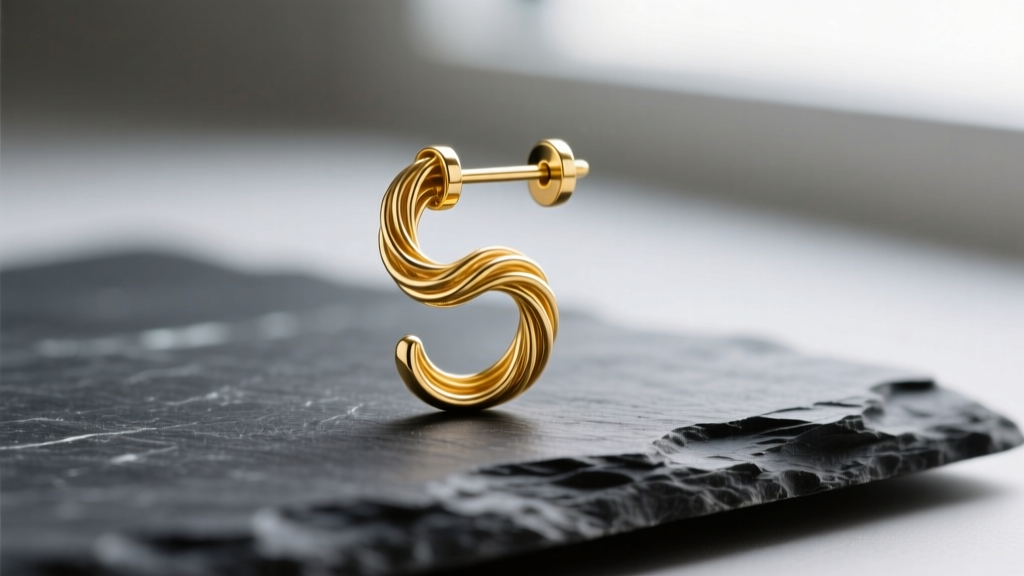
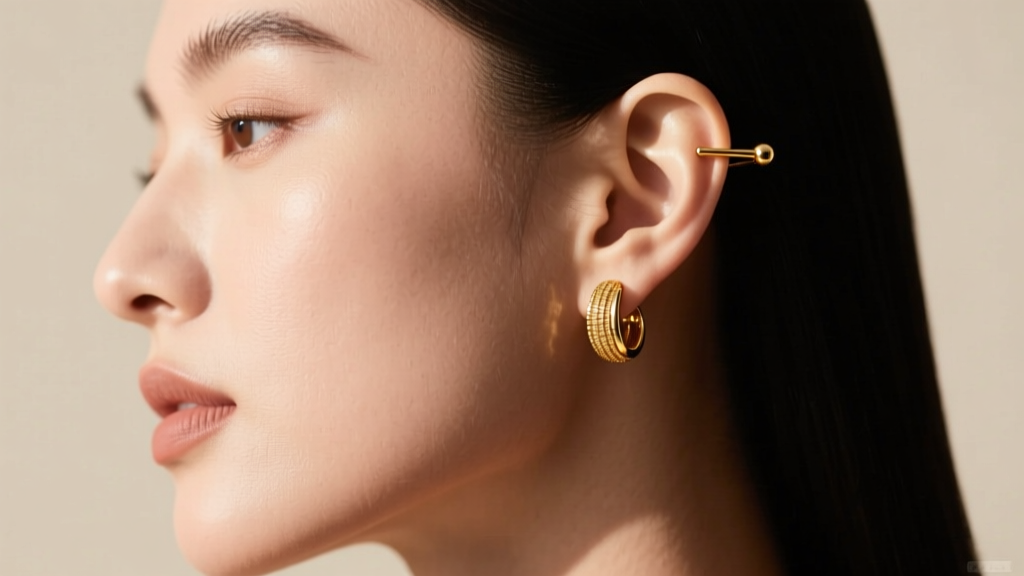
Ear climbers (often called ear crawlers) represent a unique intersection of decorative jewelry and structural engineering. Unlike standard studs or hoops that rely on gravity or a simple friction back, ear climbers utilize a precise tension mechanism to grip the earlobe and sweep upward along the cartilage. When selecting ear climber earrings gold remains the premier choice for both its biocompatibility and aesthetic warmth. However, not all gold is created equal. The success of an ear climber depends entirely on the metallurgical properties of the specific gold alloy used, dictating its tensile strength, elastic memory, and long-term wearability.
In this comprehensive material guide, we deconstruct the biomechanics of gold ear climbers, analyzing alloy compositions, Vickers hardness ratings, wire gauge specifications, and the hidden failure modes that cause these earrings to lose their grip over time.
The Biomechanics of Ear Climbers: Why Gold Alloys Matter
The anatomy of an ear climber consists of three critical components: the primary post (which passes through the piercing), the decorative face, and the rear tension wire (the "climber" spine). The tension wire sweeps behind the earlobe and applies a gentle, continuous pinching force against the back of the ear, securing the earring in place without the need for a traditional butterfly clutch.
This pinching mechanism requires a metal with a high elastic modulus—the ability of a material to deform under stress and return to its original shape. Pure 24-karat gold is entirely unsuitable for this design. With a Vickers Hardness (HV) of roughly 25-30, 24k gold is too malleable; it possesses almost no "springback." If an ear climber were crafted from pure gold, the simple act of putting it on would permanently bend the tension wire outward, destroying the grip immediately. Therefore, alloying gold with metals like copper, silver, zinc, and palladium is not just a cost-saving measure; it is a structural necessity to achieve the required tensile strength for the climber's S-curve wire.
Decoding Gold Purity and Tensile Strength
The karatage of your gold directly impacts the structural integrity of the ear climber. Below is a technical comparison of the most common gold alloys used in high-end ear crawlers, evaluating their hardness, tension memory, and market positioning.
| Material Grade | Gold Content | Vickers Hardness (HV) | Tension Memory | Avg. Price Range |
|---|---|---|---|---|
| 14k Yellow Gold | 58.5% | 120 - 140 HV | Excellent (High springback) | $150 - $450 |
| 18k Yellow Gold | 75.0% | 90 - 110 HV | Good (Requires thicker gauge) | $300 - $800+ |
| 14k White Gold (Nickel-Free) | 58.5% | 130 - 150 HV | Superior (Very rigid) | $180 - $500 |
| Gold Vermeil (Sterling Core) | 2.5 Microns | 60 - 80 HV (Core dependent) | Poor (Prone to permanent bending) | $40 - $90 |
According to the Gemological Institute of America (GIA), the addition of copper and silver in 14k gold significantly increases its durability and resistance to deformation. For ear climbers, 14k gold is generally the superior functional choice over 18k gold because its higher copper content provides the necessary rigidity to maintain the pinching tension over years of daily wear.
Allergen Profiles: White, Yellow, and Rose Gold
Because the tension wire of an ear climber rests firmly against the sensitive skin behind the earlobe and the outer cartilage, the alloy composition is a major factor in skin health. Contact dermatitis is a frequent complaint among ear climber wearers, usually stemming from the secondary metals used in the alloy.
The White Gold Nickel Problem
Historically, white gold was alloyed with nickel to achieve a hard, silvery-white finish. Nickel is a notorious contact allergen. The Mayo Clinic notes that prolonged skin contact with nickel-containing jewelry is a leading cause of allergic contact dermatitis. Because the ear climber's wire applies constant pressure to the skin, it increases the rate of nickel ion transfer through sweat. Always verify that your white gold ear climbers are alloyed with palladium or manganese (often labeled as "nickel-free" or "hypoallergenic") rather than nickel.
Copper Oxidation in Rose Gold
Rose gold achieves its warm, pinkish hue through a high copper content (sometimes up to 20-25% in 14k rose gold). While copper is generally safe for the skin, individuals with highly acidic sweat pH may experience a harmless but unsightly green or black oxidation transfer on the cartilage where the climber wire rests. This is a chemical reaction, not an allergy, but it requires more frequent cleaning of the tension wire with a mild jewelry polishing cloth.
Wire Gauge Specifications and Structural Memory
The thickness of the wire, measured in gauges, dictates how much force the ear climber can withstand before yielding. A standard earlobe piercing is typically 20-gauge (0.81mm) or 18-gauge (1.02mm). However, the decorative spine and tension wire of a high-quality ear climber must be significantly thicker to resist deformation.
- The Post: Usually 18G (1.02mm) to accommodate standard lobe piercings without causing tissue tearing.
- The Tension Wire (Rear):strong> Ideally 16G (1.29mm) or 14G (1.63mm). This thickness provides the structural backbone required to maintain the inward pinch.
- The Decorative Spine (Front):strong> Varies by design, but tapered wire starting at 14G and thinning to 18G at the tip ensures a smooth gradient of flexibility.
A common failure mode in mass-produced, budget ear climbers is the use of uniform 20-gauge wire for the entire piece. This results in a "floppy" tension wire that loses its grip within weeks of wear, forcing the user to constantly bend it back into place.
Restoring Tension: A Practical Maintenance Guide
Even the finest 14k gold ear climbers will eventually experience slight outward bowing due to the repetitive stress of being put on and taken off. When your ear climber loses its grip, you can restore the tension, but you must understand the concept of work hardening.
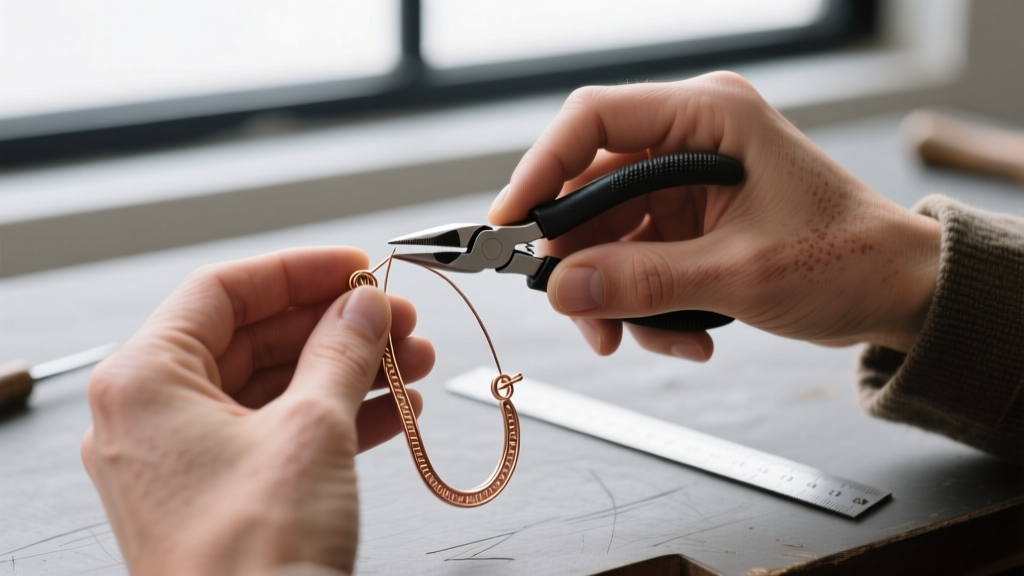
Every time you bend a gold alloy, its crystalline structure becomes more rigid and brittle. If you repeatedly bend the tension wire back and forth with your bare fingers or metal tools, the gold will eventually snap. To safely restore the grip of your ear climber earrings:
- Use the Right Tools: Never use standard metal jewelry pliers, as the steel teeth will mar and scratch the gold finish. Use nylon-jaw pliers or wrap the tips of your pliers in masking tape.
- Apply Gentle Pressure: Grip the base of the tension wire (near the post) and the middle of the S-curve. Apply a very gentle inward squeeze to reduce the gap between the post and the wire to roughly 4mm-5mm (the average thickness of an earlobe).
- Avoid Over-Correction: Do not squeeze the wire flush against the post. The gold needs a slight outward curve to provide the spring-loaded tension that holds the earring on the ear.
By understanding the specific alloy grades, gauge requirements, and structural limitations of your jewelry, you can invest in ear climbers that not only look spectacular but function flawlessly for years to come. Whether you opt for the rigid durability of 14k yellow gold or the premium weight of 18k palladium-white gold, prioritizing metallurgical quality ensures your ear crawlers stay exactly where they belong.


