Kate Spade Butterfly Earrings: Material Properties & Plating Guide
Discover the exact materials, plating thickness, and enamel properties of Kate Spade butterfly earrings, plus care tips to prevent brass oxidation.

The Metallurgy of Fashion Jewelry: Deconstructing the Butterfly Motif
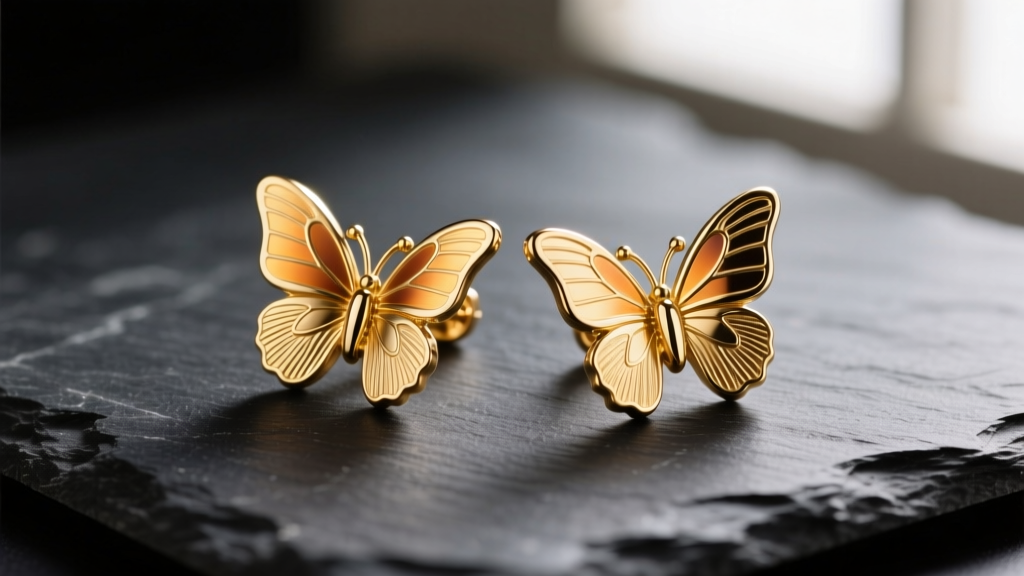
Kate Spade butterfly earrings have remained a staple in accessible luxury and fashion jewelry for years, celebrated for their whimsical silhouettes and vibrant aesthetic. However, from a metallurgical and material science perspective, these pieces represent a specific category of jewelry manufacturing: cast base-metal fashion jewelry with electroplated finishes and cold enamel accents. Understanding the exact material properties of these earrings is crucial for setting realistic expectations regarding their longevity, skin compatibility, and structural integrity over time.
Unlike fine jewelry crafted from solid 14k or 18k gold, fashion earrings rely on a complex layering of alloys, chemical plating baths, and synthetic resins. This guide breaks down the precise material composition of Kate Spade butterfly earrings, analyzing the base metals, plating micron thickness, and embellishment properties to help you make informed purchasing and care decisions.
Base Metals: The Role of Cartridge Brass in Intricate Casting
The foundation of the vast majority of Kate Spade's butterfly earring designs is brass, specifically an alloy closely resembling C26000 cartridge brass. This alloy is composed of approximately 70% copper and 30% zinc. Jewelers and manufacturers favor this specific copper-zinc ratio for fashion jewelry due to its exceptional fluidity during the lost-wax casting process.
Why Brass Outperforms Zinc Alloys for Butterfly Wings
While cheaper fashion jewelry often relies on zinc alloys (like Zamak) or pewter, these metals are brittle and prone to catastrophic snapping under stress. The intricate, lace-like venation of a butterfly wing requires a metal that can capture microscopic mold details without becoming fragile. Cartridge brass offers a Vickers hardness (HV) of roughly 100-150 in its annealed state, providing the perfect balance of malleability for casting and tensile strength to prevent the delicate wing tips from bending during daily wear.
However, brass is highly reactive. When exposed to the sulfur compounds naturally present in human sweat and environmental pollutants, the copper in the brass oxidizes, forming copper sulfide. This is the chemical mechanism responsible for the notorious 'green skin' effect if the protective outer plating layer is compromised.
The Plating Process: Gold-Tone and Silver-Tone Finishes
To achieve the luxurious look of precious metals without the associated cost, Kate Spade utilizes electroplating over the brass base. It is vital to distinguish between the plating used in fashion jewelry and the standards required for fine jewelry vermeil.
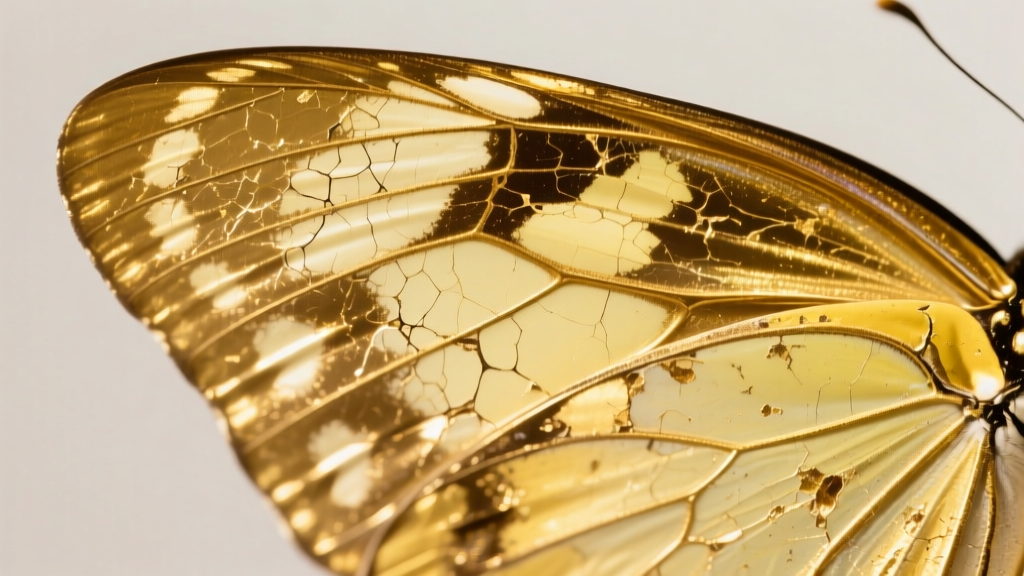
According to the FTC Jewelry Guides, for a piece to be legally marketed as 'vermeil' in the United States, it must feature a sterling silver base with a gold plating of at least 2.5 microns in thickness. Kate Spade butterfly earrings, classified as fashion jewelry, typically utilize flash plating or thin micron plating over brass, generally ranging from 0.1 to 0.5 microns.
While 0.5 microns of gold-tone or rhodium-tone plating provides a brilliant, authentic-looking initial luster, it is fundamentally a surface-level coating. Friction from hair, clothing, and skin oils will inevitably wear through this microscopic layer over months of regular use, exposing the brass substrate beneath.
The silver-tone variations of these earrings are usually plated with a micro-layer of rhodium or a proprietary silver-tone alloy over a nickel-free barrier layer. This rhodium flash provides exceptional initial tarnish resistance and a high-reflectivity mirror finish, though it shares the same vulnerability to abrasive wear as the gold-tone finishes.
Enamel and Stone Embellishments: Resin vs. Vitreous
Many Kate Spade butterfly designs feature vibrant, opaque blocks of color on the wings. In high-end antique or artisanal jewelry, this is achieved through vitreous enamel—glass powder fused to metal at temperatures exceeding 1,400°F. In modern fashion jewelry, however, manufacturers utilize 'cold enamel,' which is technically a two-part epoxy resin.
Properties of Cold Enamel (Epoxy Resin)
- Impact Resistance: Unlike kiln-fired glass enamel, which will shatter or chip if dropped on a hard surface, epoxy resin has slight flexibility, making it highly resistant to impact fractures.
- Solvent Vulnerability: The primary failure mode of cold enamel is chemical degradation. Exposure to acetone, alcohol-based perfumes, and harsh cleaning solvents will cause the resin to soften, cloud, or lift away from the brass backing.
- UV Degradation: Over several years of prolonged sun exposure, certain lighter-colored epoxy resins (particularly whites and pale pinks) can undergo photo-oxidation, resulting in a slight yellowing of the butterfly wings.
When cubic zirconia (CZ) or glass crystals are incorporated into the butterfly's body or wing edges, they are typically secured using prong settings rather than adhesive, leveraging the tensile strength of the brass base to hold the stones securely.
Material Comparison: Kate Spade vs. Fine Jewelry Alternatives
| Property | Kate Spade (Fashion Brass) | Standard Vermeil (Sterling Base) | Solid 14k Gold Fine Jewelry |
|---|---|---|---|
| Base Metal | C26000 Brass (Cu-Zn) | 925 Sterling Silver | 58.5% Gold Alloy |
| Plating Thickness | 0.1 - 0.5 microns | 2.5+ microns | N/A (Solid throughout) |
| Tarnish Resistance | Moderate (Until plated layer wears) | Low (Silver oxidizes easily) | High (Highly inert) |
| Structural Repair | Difficult (Replating requires stripping) | Moderate (Can be polished/replated) | Excellent (Can be soldered/polished) |
| Price Range (Studs) | $40 - $80 USD | $80 - $150 USD | $250 - $600+ USD |
Post and Clutch Materials: The Nickel Allergy Factor
One of the most critical aspects of earring material science is biocompatibility. Because the earring post penetrates the skin, it is subject to strict international health regulations. To comply with the EU REACH Nickel Restriction, which limits nickel migration to 0.5 µg/cm²/week for post-assembly jewelry, Kate Spade typically manufactures the actual earring posts and friction clutches from surgical-grade stainless steel or titanium, even if the decorative butterfly face is brass.
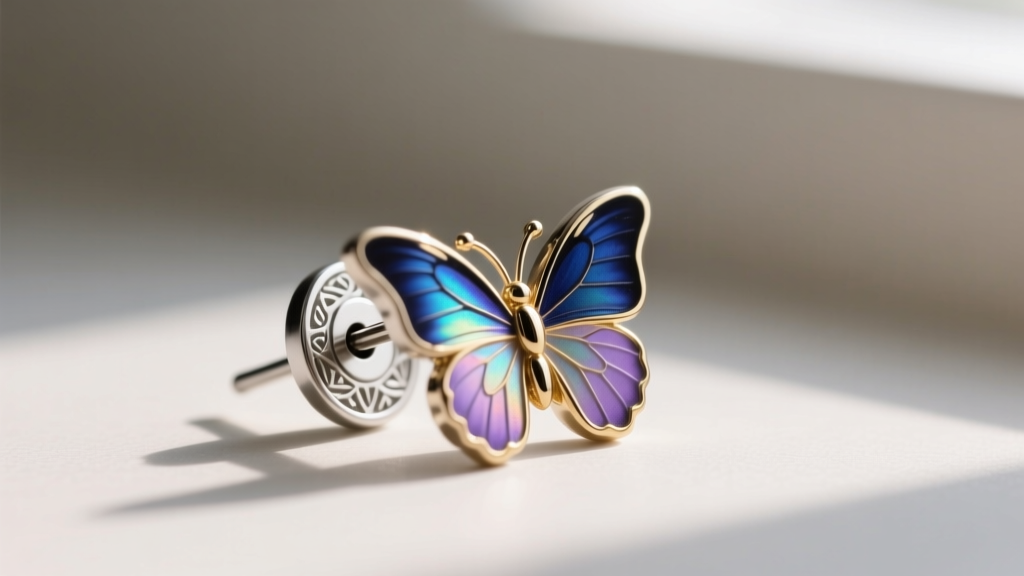
The posts are generally drawn to a standard 20-gauge (0.81mm) or 22-gauge (0.64mm) thickness. While the steel post is hypoallergenic for the vast majority of wearers, the decorative face of the earring rests against the outer lobe. If a wearer has a severe contact allergy to copper or zinc, they may still experience contact dermatitis where the brass butterfly wing touches the skin, despite the hypoallergenic nature of the post itself.
Longevity and Failure Modes: What to Expect Over Time
Understanding the specific failure modes of plated brass fashion jewelry allows you to mitigate damage and extend the life of your earrings. Based on material stress testing and common consumer wear patterns, here are the primary vulnerabilities:
- Galvanic Corrosion at the Solder Joint: The point where the steel post is soldered to the brass butterfly face creates a galvanic cell. When exposed to sweat (an electrolyte), microscopic corrosion can occur at this junction, eventually leading to the post snapping off if subjected to lateral force.
- Friction Clutch Fatigue: The metal scroll backs (butterfly clutches) rely on mechanical tension. Over time, the repeated bending of the metal loops causes work hardening, leading to a loss of grip on the earring post and increasing the risk of losing the earring.
- Abrasive Plating Loss: The highest points of the butterfly wings—the antennae and the outer edges of the wings—experience the most friction. These areas will be the first to show 'brassing,' where the yellow-gold color of the underlying copper alloy becomes visible.
Expert Care Protocol for Plated Butterfly Earrings
To maximize the lifespan of the 0.5-micron plating and protect the epoxy resin enamel, standard jewelry cleaning methods must be strictly avoided. For an in-depth look at how electroplated layers interact with chemical cleaners, the ScienceDirect Electroplating Overview highlights the extreme thinness and chemical sensitivity of flash-plated decorative coatings.
What to Avoid
- Ultrasonic Cleaners: The high-frequency cavitation bubbles will literally blast the microscopic plating layer off the brass base and can shatter glass crystal accents.
- Jewelry Dips and Polishing Cloths: Chemical silver dips and abrasive treated polishing cloths are designed to remove oxidation from solid metals. On plated fashion jewelry, they will strip the gold-tone or rhodium finish entirely.
- Perfume and Hairspray: Always apply aerosols and fragrances before putting on your earrings. The alcohol and propellants will degrade the cold enamel resin over time.
The Proper Cleaning Method
After each wear, gently wipe the earrings with a clean, dry, untreated microfiber cloth to remove skin oils and sweat. If the earrings require deeper cleaning, use a drop of mild, phosphate-free dish soap diluted in lukewarm water. Dampen a soft cotton swab, gently roll it over the enamel and metal surfaces, and immediately dry the piece thoroughly with a separate microfiber cloth. Store the earrings in an airtight anti-tarnish pouch to minimize the brass base's exposure to ambient humidity and sulfur, ensuring your butterfly earrings retain their structural and aesthetic integrity for years to come.


