The Nose Piercing Earrings Trend: 2026 Style Guide
Discover the 2026 nose piercing earrings trend. Learn how to style earring-inspired nose jewelry, master gauge sizes, and choose safe implant-grade metals.

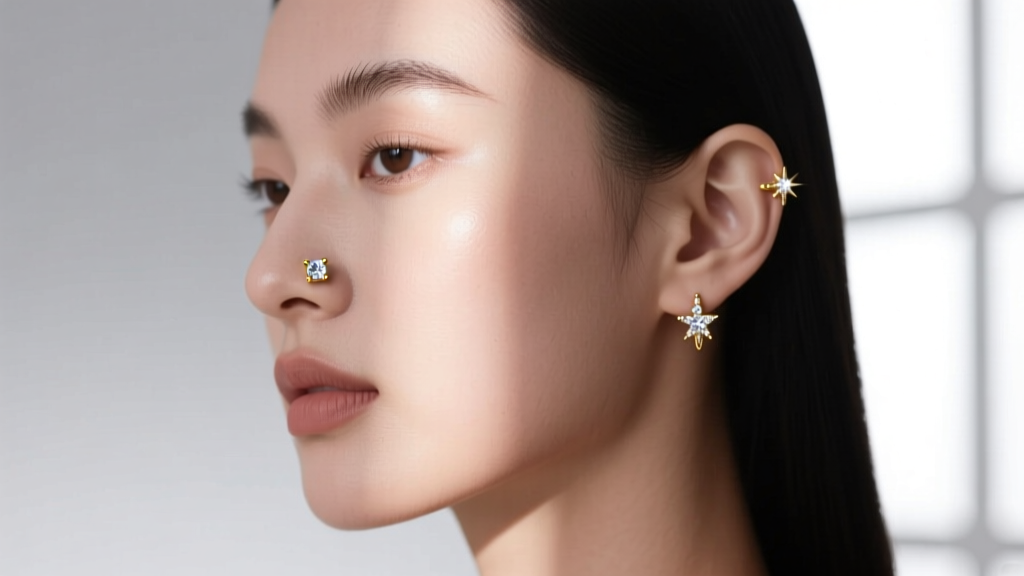
The Curated Face Movement: Why Nose Piercing Earrings Are Dominating 2026
For the past decade, the 'curated ear' has reigned supreme in the jewelry world. However, as we navigate the style landscape of 2026, a fascinating evolution has taken hold: the 'curated face.' At the center of this movement is the exploding search volume and stylistic demand for nose piercing earrings. This term does not refer to the dangerous practice of shoving standard lobe earrings into a nostril piercing. Instead, it defines a massive crossover trend where high-end, delicate earring aesthetics—like micro-pave drops, pearl huggies, and ear-cuff chains—are being re-engineered specifically for the unique anatomy of the nose.
Today's consumers want the visual impact of their favorite ear studs and hoops, but adapted for the 18-gauge reality of the nostril. In this comprehensive style and trend analysis, we break down the technical differences, the top trends defining 2026, and the exact material grades you need to know to pull off this look safely.
Technical Showdown: Ear Jewelry vs. Nose Jewelry
Before adopting earring-inspired designs for your nose, it is critical to understand why standard earrings fail in nostril piercings. The anatomy of the earlobe is vastly different from the nasal ala (nostril wing). According to the Association of Professional Piercers (APP), using improper jewelry lengths and backings in the nose can lead to embedding, granulomas, and severe irritation bumps.
Standard earring posts are typically 10mm to 12mm long. The average nostril thickness, however, ranges from 6mm to 8mm. If you place a standard earring in your nose, the excess post will protrude into the nasal cavity, scraping the delicate mucosal lining and acting as a lever that catches on towels and clothing.
| Feature | Standard Lobe Earring | Nose-Specific Jewelry |
|---|---|---|
| Gauge Thickness | 20G - 22G (0.81mm - 0.64mm) | 18G (1.02mm) or 20G (0.81mm) |
| Post Length | 10mm - 12mm (Standard) | 6mm - 8mm (1/4 inch to 5/16 inch) |
| Backing Mechanism | Butterfly Friction Clutch | Flat-Back Labret, L-Bend, Screw |
| Safe Materials | Sterling Silver, Plated Brass | ASTM F136 Titanium, 14k/18k Gold |
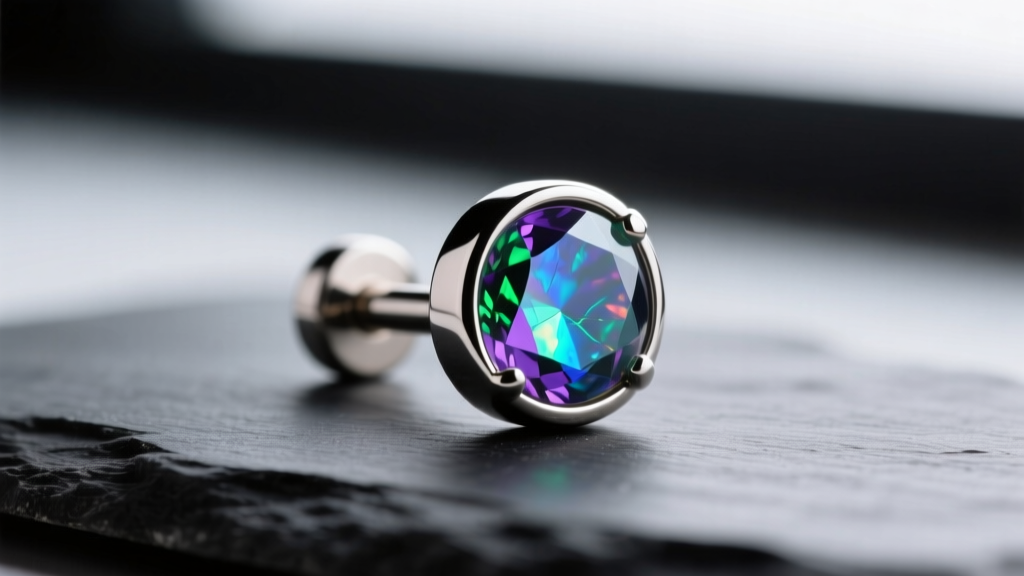
Top 3 Earring-Style Nose Jewelry Trends for 2026
The 'nose piercing earrings' trend is defined by three distinct aesthetic movements that bridge the gap between ear and face jewelry.
1. The Micro-Huggie Nostril Hoop
The huggie hoop has been a staple for earlobes and helixes for years. In 2026, the micro-huggie has been adapted for the nostril. Unlike traditional seamless nose rings that often flare outward due to the natural curve of the nostril, micro-huggies designed for the nose feature a tighter inner diameter (typically 6mm or 7mm) and a specialized 'snug-fit' bend. Brands like BVLA (Body Vision Los Angeles) and Intrinsic Body are leading the charge with clicker-style micro-huggies featuring pavé diamonds that sit flush against the nose wing, mimicking the look of a high-end ear huggie.
2. The Drop-Stud Illusion
Dangle earrings are a classic, but dangling nose jewelry has historically been prone to snagging. The 2026 solution is the 'drop-stud illusion.' This utilizes a threadless flat-back labret post where the decorative end features a tiny, rigid drop element—such as a 2mm pearl or a bezel-set teardrop opal. Because the drop is rigidly attached to the end rather than hanging from a jump ring, it provides the visual weight and elegance of a drop earring without the mechanical snag hazard. Pricing for these high-end threadless ends typically ranges from $45 for titanium to over $250 for 14k solid gold.
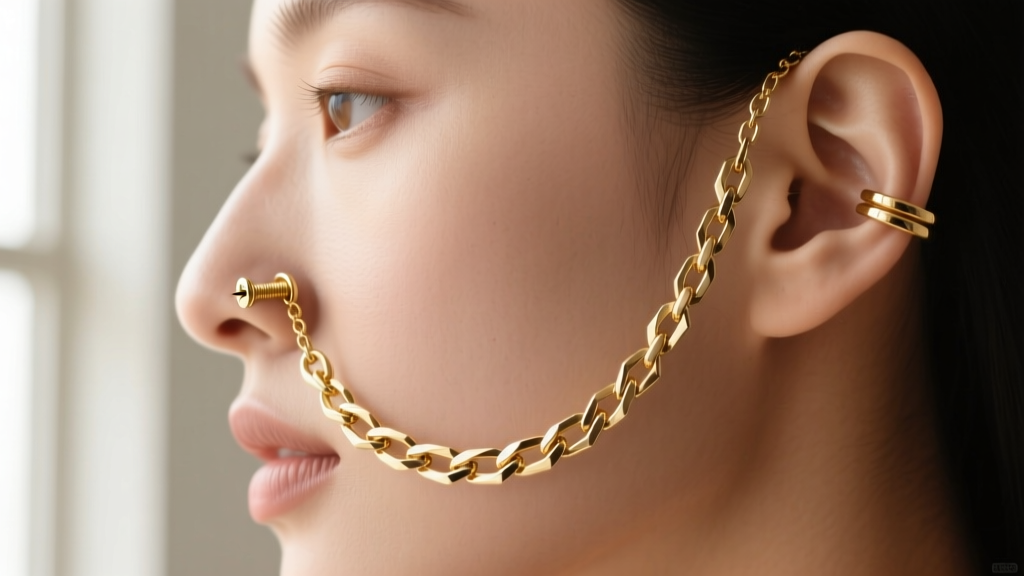
3. The Ear-to-Nose Chain Bridge
Perhaps the most avant-garde trend in the curated face movement is the nose-to-ear chain. This involves a delicate 14k or 18k gold chain that connects a specialized nostril screw or flat-back stud to an ear cuff or helix hoop. It creates a continuous line of jewelry across the side of the face. This look requires precise custom measuring by a professional piercer to ensure the chain has enough slack for facial expressions and chewing, but not so much that it droops below the jawline.
Material & Sizing Guide: Getting the Fit Right
To successfully wear earring-inspired nose jewelry, you must prioritize material purity and exact sizing. The nasal cavity is a moist, bacteria-rich environment, making it highly susceptible to contact dermatitis and allergic reactions.
- Implant-Grade Titanium (ASTM F136): The absolute gold standard for nose jewelry. It is completely nickel-free and biocompatible. If you are buying a 'nose earring' online, ensure the product description explicitly states ASTM F136, not just 'surgical steel,' which contains nickel and can cause severe reactions in the nose.
- Solid 14k or 18k Gold: Ensure the gold is nickel-free and alloyed for body jewelry. Avoid gold-plated or gold-filled nose jewelry, as the friction of insertion will quickly wear away the plating, exposing base metals to the healing fistula.
- Threadless vs. Internally Threaded: Ditch the 'nose bones' (straight posts with a bulbous end that must be forced through the piercing). The modern standard is the threadless (push-pin) labret, which uses tension to hold the decorative end in place. It is secure, easy to change, and causes zero tissue trauma upon insertion.
Troubleshooting Common Fit Issues
Even with the best earring-inspired designs, fit issues can arise. Here is how to troubleshoot the most common problems:
- The Hoop Flares Outward: If your nostril hoop sticks straight out instead of hugging the nose, the inner diameter is too large, or the ring was bent improperly. Visit a professional piercer to have the ring custom-bent to your specific nostril curvature, or size down from an 8mm diameter to a 7mm or 6.5mm.
- The Stud Sinks Into the Skin: If your flat-back labret is swallowing the decorative end, your post is too short. Swelling fluctuations or natural tissue settling can cause a 6mm post to become embedded. Upsize to a 7mm or 8mm post immediately to prevent the skin from growing over the jewelry.
- The Chain Pulls When Smiling: If your nose-to-ear chain feels tight when you smile or yawn, the chain is too short. Facial mobility requires at least 2mm to 3mm of extra slack in the chain measurement to prevent the jewelry from acting as a cheese-wire through your piercing.
Final Thoughts on the Crossover Trend
The nose piercing earrings phenomenon represents a maturation in the body modification and fine jewelry industries. By respecting the anatomical requirements of the nostril while borrowing the delicate, luxurious aesthetics of ear jewelry, the 2026 curated face movement offers endless avenues for personal expression. Whether you opt for a micro-pave huggie or a custom-fitted nose chain, always prioritize implant-grade materials and professional fitting to ensure your style is as safe as it is striking.


