How to Make Earrings: Technical Guide to Wire Gauges & Post Welding
Master how to make earrings professionally. Explore ASTM titanium grades, wire gauge biomechanics, and pulse arc welding for sensitive ears.

The Metallurgy of Hypoallergenic Earring Fabrication
When professionals make earrings for sensitive or freshly pierced ears, the endeavor transcends basic jewelry design; it becomes an exercise in bio-compatible engineering. The human fistula (the tube of healing tissue inside a piercing) is a highly reactive, saline-rich environment. According to the Association of Professional Piercers, the baseline for implant-grade jewelry requires specific metallurgical standards to prevent cytotoxicity and allergic contact dermatitis.
The gold standard for titanium body jewelry is ASTM F136 (Ti-6Al-4V ELI). The "ELI" stands for Extra Low Interstitial, meaning the alloy has strictly limited levels of oxygen, nitrogen, carbon, and iron. This reduction in interstitial elements dramatically improves fracture toughness and corrosion resistance compared to standard commercial alloys. Conversely, ASTM F67 covers Commercially Pure (CP) Titanium, which is softer and lacks the tensile strength required for thin wire posts or structural clickers. While CP titanium is highly biocompatible, its lower yield strength makes it prone to bending in 20-gauge or 22-gauge applications.
A common failure mode in amateur earring fabrication is the use of 316L "surgical" stainless steel. Despite the "surgical" moniker, 316L contains between 10% and 14% nickel. In the presence of sweat, sebum, and the slightly acidic environment of a healing piercing, nickel ions leach from the steel matrix, triggering severe immune responses in sensitized individuals. Furthermore, the ASTM International F136 Standard explicitly outlines the mechanical properties required for surgical implants, a benchmark that 316L fails to meet for long-term intradermal wear.
Wire Gauge Tolerances and Piercing Biomechanics
Selecting the correct American Wire Gauge (AWG) is critical when you make earrings intended for long-term wear. The gauge dictates not only the aesthetic proportion but the biomechanical interaction between the metal and the tissue. A wire that is too thin for the weight of the earring component will induce the "cheese-cutter effect," where the wire slowly migrates through the tissue due to localized pressure necrosis.
| AWG Gauge | Millimeters | Decimal Inch | Biomechanical Application |
|---|---|---|---|
| 22g | 0.64mm | 0.025" | Ear cuffs, lightweight threadless ends (high risk of cheese-cutter effect in fresh lobes) |
| 20g | 0.81mm | 0.032" | Standard lobe studs, delicate cartilage hoops, threadless post bases |
| 18g | 1.02mm | 0.040" | Standard cartilage/helix studs, small huggies, nose bones |
| 16g | 1.29mm | 0.051" | Conch, daith, rook, and tragus piercings; structural hoop wire |
| 14g | 1.63mm | 0.064" | Industrial barbells, heavy daith clickers, structural ear scaffolding |
Work Hardening and Wire Drawing
As wire is drawn through progressive dies to reach these precise tolerances, the metal's crystalline grain structure aligns and compresses. This process, known as work hardening, increases the tensile strength and yield point of the wire but severely reduces its ductility. If a jeweler attempts to bend work-hardened titanium wire into a tight hoop without annealing, the metal will experience a brittle fracture.
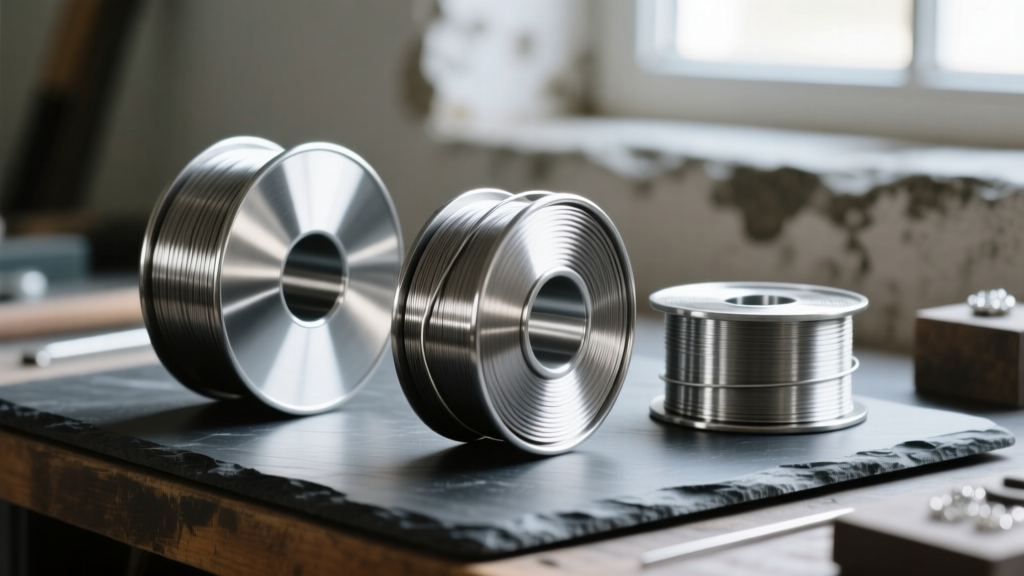
However, annealing titanium is vastly more complex than annealing silver or gold. Titanium is highly reactive to oxygen at elevated temperatures. If heated with a standard jeweler's torch in ambient air, the wire will rapidly oxidize, forming a brittle "alpha case" layer that compromises the structural integrity of the earring. Proper annealing requires a vacuum furnace or an argon-purged chamber to maintain the metal's bio-inert properties.
Fabrication Techniques: Soldering vs. Laser Welding
The method used to attach an earring post to a decorative face is the most frequent point of structural failure. Traditional torch soldering relies on capillary action, flux, and a filler metal with a lower melting point than the base metal. This approach is fundamentally incompatible with implant-grade titanium and niobium. The high heat required destroys the metal's passive oxide layer, and the flux residues can become trapped in microscopic pores, leading to localized corrosion and tissue irritation.
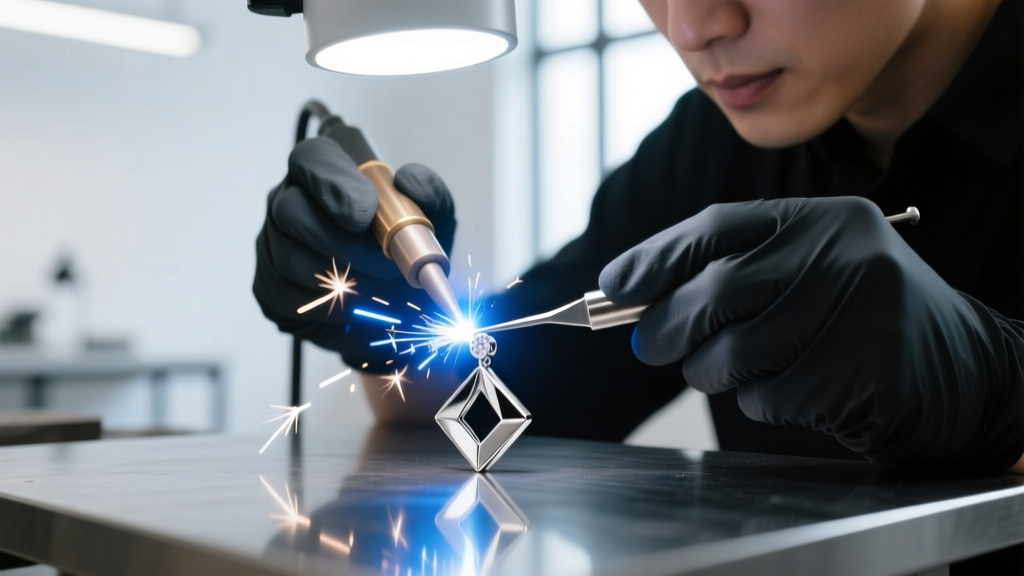
Instead, modern professionals make earrings using Pulse Arc Welding or Laser Welding. Pulse arc welders utilize a high-voltage electrical spark to fuse the base metals directly, without filler. Crucially, this process must be performed under a continuous flow of argon gas. The argon acts as a shielding gas, displacing atmospheric oxygen and preventing the formation of titanium dioxide slag at the weld joint. For a standard 20-gauge titanium post welded to a 1mm thick backplate, a pulse arc welder typically requires a setting between 15 and 25 Joules, depending on the specific capacitance of the machine.
Laser welding offers even greater precision, utilizing a focused beam of light to create a microscopic fusion zone. This is particularly advantageous for intricate filigree designs or when working near heat-sensitive gemstones, as the thermal affected zone (HAZ) is virtually non-existent. Equipment from specialized suppliers like Rio Grande Jewelry Supply has made these advanced welding technologies increasingly accessible to independent studio jewelers.
Surface Finishing and Passivation
The surface finish of an earring post is just as critical as its metallurgical composition. Surface roughness is measured in Ra (Roughness Average). A standard commercial mechanical polish often leaves microscopic striations with an Ra of 0.8 µm or higher. These microscopic valleys act as harbors for bacterial biofilms and dead skin cells, which can lead to localized infections and delayed healing.
Electropolishing and Mirror Finishes
To achieve a true implant-grade finish, the metal must be polished to an Ra of less than 0.2 µm. This is typically achieved through a multi-stage process: mechanical polishing with progressively finer abrasives (from 400 grit up to 2000 grit, followed by alumina rouge), and finally, electropolishing. Electropolishing uses an electrochemical bath to selectively remove the high points of the metal's surface at a microscopic level, revealing a pristine, mirror-like finish that is entirely smooth to the touch.
Furthermore, this ultra-smooth surface allows the titanium to rapidly form a uniform, dense layer of titanium dioxide (TiO2) when exposed to air. This passive oxide layer is what makes the metal bio-inert, effectively shielding the underlying alloy from the body's immune system.
Anodizing Niobium and Titanium
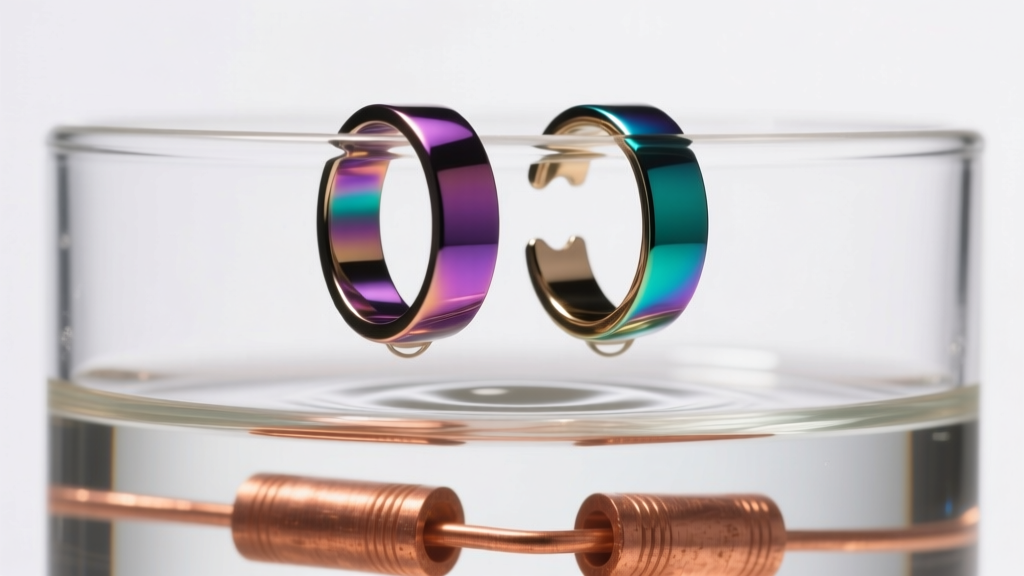
For jewelers looking to add color without using toxic chemical plating or enamel, anodizing is the premier technique. By submerging the titanium or niobium earring in an electrolyte solution (such as trisodium phosphate) and applying a specific DC voltage, the thickness of the passive oxide layer is artificially increased. Because light refracts differently through varying thicknesses of this oxide layer, the metal appears to change color. For instance, 15 volts yields a purple hue, while 90 volts produces a vibrant green. This color is structural, not a surface coating, meaning it will never flake or leach into the skin.
Quality Control and Failure Mode Analysis
Before any handmade earring reaches the consumer, it must undergo rigorous quality control. The most common failure mode in stud earrings is post shear—the post snapping or bending at the weld joint due to lateral force. A properly executed pulse arc weld on a 20-gauge titanium post should yield a shear strength capable of withstanding at least 15 Newtons of lateral force before deformation.
Additionally, the friction mechanism of the earring backing (the clutch or butterfly back) must be calibrated. If the tolerance between the post and the clutch is too loose, the earring will fall out during sleep or movement. If it is too tight, the wearer will apply excessive compressive force to the earlobe while inserting or removing the piece, causing micro-trauma to the fistula. Precision-machined threadless or internally threaded ends remain the superior choice for high-end fabrication, eliminating the unpredictable friction variables of standard push-pin clutches.
Ultimately, the decision to make earrings at a professional level requires a synthesis of metallurgical science, biomechanical awareness, and advanced fabrication technology. By adhering to strict ASTM standards, utilizing inert-gas welding, and prioritizing sub-micron surface finishes, jewelers can create pieces that are not only visually stunning but fundamentally harmonious with the human body.


