Define Drop Earring Styles: A Material Properties Guide
Learn how to define drop earring styles by material properties. We compare metal densities, wire gauges, and structural integrity for lasting wear.

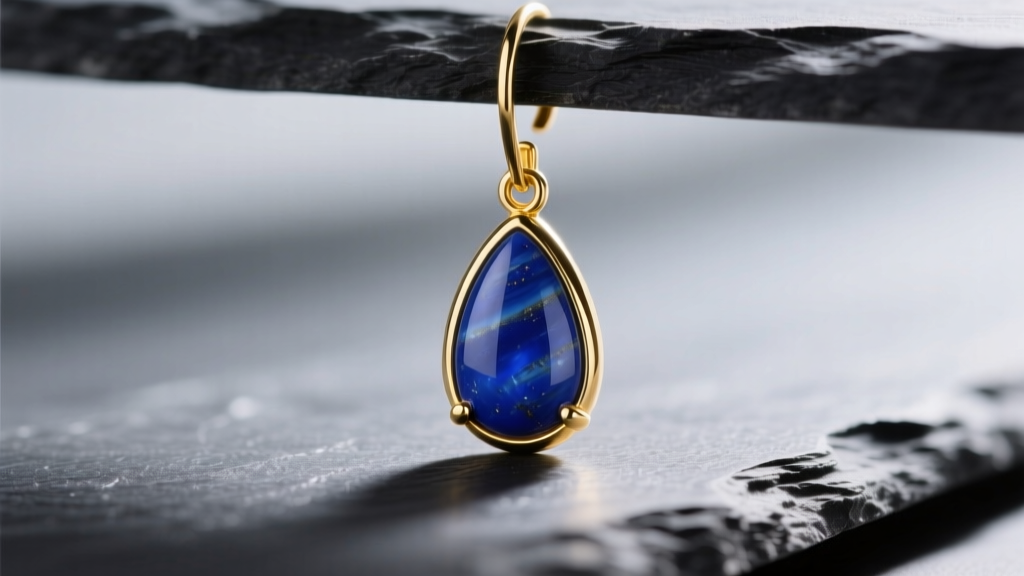
Decoding the Silhouette: How We Define Drop Earring Designs
When jewelry historians, designers, and gemologists define drop earring silhouettes, they are referring to a specific structural category: an ornament that hangs directly below the earlobe, typically stationary or featuring minimal articulation compared to a kinetic dangle. While the broader market often uses the terms interchangeably, understanding this distinction is crucial for jewelry makers and collectors alike. A true drop earring relies entirely on its vertical axis and the structural integrity of its materials to maintain its elegant posture.
However, the aesthetic definition of a drop earring is only half the equation. The true character, longevity, and wearability of these pieces are dictated by their material properties. In 2026, advanced metallurgy and precise gemological cutting have expanded the boundaries of what a drop earring can be. To truly master this category, one must look beyond the silhouette and examine the tensile strength, density, and hardness of the metals and stones that bring the design to life.
The Physics of the Drop: Gravity, Density, and Lobe Mechanics
Unlike a stud that sits flush against the ear, or a huggie that wraps around the cartilage, a drop earring acts as a pendulum anchored to a soft tissue fulcrum: the earlobe. The primary enemy of any drop earring is gravitational drag. When jewelers design these pieces, they must calculate the center of gravity to ensure the earring hangs perfectly vertical without pulling the piercing forward or downward.
The human earlobe can comfortably support a continuous static load of about 8 to 12 grams per ear before experiencing micro-tearing or long-term stretching. Therefore, the density of the chosen metal directly impacts the maximum volume of the drop design. A voluminous, hollow-form drop earring crafted from lightweight aluminum will behave entirely differently than a solid, compact drop forged from high-density platinum. Understanding material density is the first step in engineering a comfortable, structurally sound drop earring.
Precious Metals: Hardness vs. Density in Drop Construction
When working with precious metals, jewelers must balance the desire for purity with the necessity of structural rigidity. The hook or post of a drop earring undergoes immense mechanical stress every time it is inserted or removed, making the metal's Vickers hardness (HV) a critical metric.
14k and 18k Gold Alloys
Gold is the traditional standard for fine jewelry, but pure 24k gold is far too soft (approx. 25 HV) to support the weight of a drop earring without bending. According to the Jewelers of America, alloying gold with copper, silver, and zinc dramatically increases its durability. 14k gold (58.5% pure gold) boasts a Vickers hardness of roughly 140 to 150 HV, making it the ideal candidate for the structural hooks and thin wire wraps required in intricate drop designs. 18k gold (75% pure) is softer, sitting around 125 HV, and offers a richer, warmer color, but requires thicker wire gauges to prevent the ear wire from warping under the weight of a heavy gemstone drop.
Platinum and White Gold
Platinum is highly prized for its hypoallergenic properties and brilliant white luster, but it presents a unique challenge for drop earrings: extreme density. At 21.45 g/cm³, platinum is significantly heavier than 14k gold (approx. 12.9 g/cm³). As noted by the Gemological Institute of America (GIA), platinum's weight requires jewelers to use hollow-form construction or laser-sintered porous structures for large drop silhouettes to avoid exceeding the lobe's weight threshold. White gold, an alloy of gold and white metals like palladium or nickel, offers a similar aesthetic at a fraction of the density, making it a highly practical choice for elongated, dramatic drop earrings.
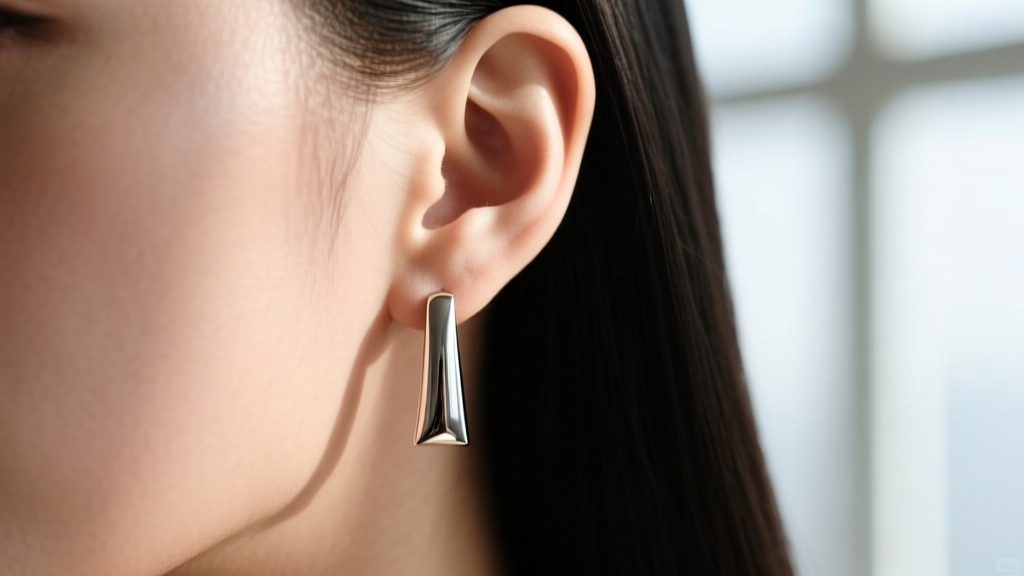
Hypoallergenic Alternatives: Titanium and Niobium
For clients with contact dermatitis or nickel allergies, the material properties of alternative metals are non-negotiable. Titanium and niobium have revolutionized the drop earring market by offering exceptional strength-to-weight ratios and complete biocompatibility.
Implant-grade titanium, specifically Grade 23 (Ti-6Al-4V ELI), is the gold standard for sensitive piercings. This alloy meets the strict ASTM F136 standard for surgical implants. It is remarkably lightweight (4.43 g/cm³), meaning jewelers can create oversized, avant-garde drop earrings that remain feather-light on the ear. Furthermore, titanium's high tensile strength allows for the use of ultra-thin 22-gauge ear wires that will not bend or snap.
Niobium is another exceptional choice. Slightly denser than titanium but highly malleable, niobium can be anodized using electrical currents to produce a vibrant spectrum of colors without the use of toxic plating or dyes. This property makes it a favorite for contemporary, colorful drop earring designs where the metal itself acts as the primary visual element.
Material Comparison Matrix
| Material | Density (g/cm³) | Vickers Hardness (HV) | Ideal Wire Gauge | Best Drop Style Application |
|---|---|---|---|---|
| 14k Yellow Gold | 12.9 | 140 - 150 | 20g (0.81mm) | Medium-weight geometric drops |
| 18k Yellow Gold | 15.6 | 120 - 130 | 18g (1.02mm) | Luxury, low-impact teardrops |
| Platinum (950) | 21.45 | 125 - 140 | 18g (1.02mm) | Compact, high-value diamond drops |
| Sterling Silver | 10.36 | 60 - 70 | 18g (1.02mm) | Textured, oxidized bohemian drops |
| Titanium (Grade 23) | 4.43 | 310 - 340 | 22g (0.64mm) | Oversized, lightweight avant-garde |
| Niobium | 8.57 | 60 - 100 | 20g (0.81mm) | Anodized, colorful kinetic drops |
Wire Gauge and Structural Integrity in Drop Designs
The most common point of failure in any drop earring is the ear wire (often called a fishhook). The gauge, or thickness, of this wire must be carefully matched to both the weight of the drop and the hardness of the metal. Wire gauge is measured inversely; a higher number indicates a thinner wire.
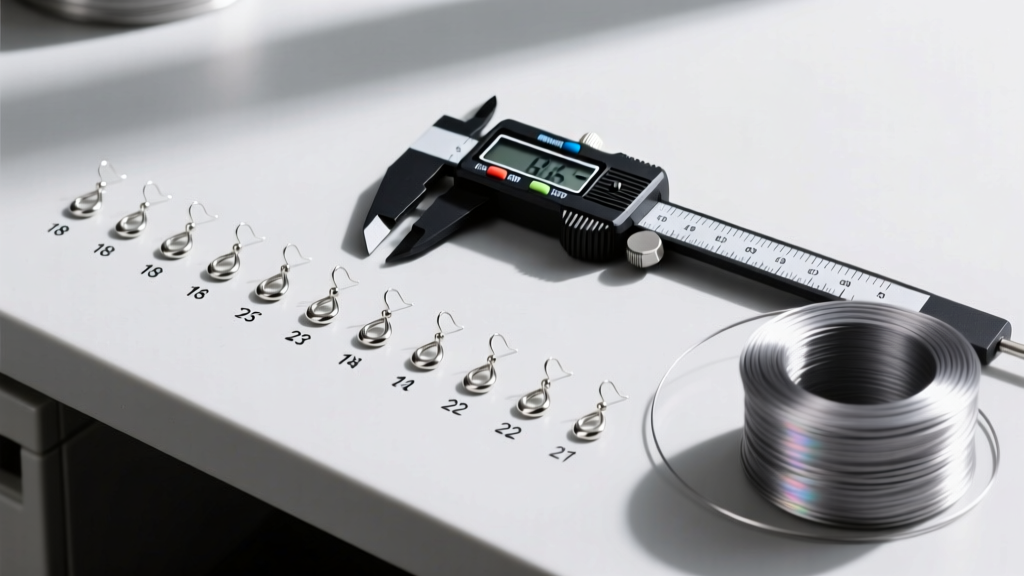
A 22-gauge wire (0.64mm) is incredibly thin and comfortable for the piercing, but it lacks the structural memory to support heavy drops. It is strictly reserved for ultra-lightweight materials like hollow resin, acetate, or Grade 23 titanium. A 20-gauge wire (0.81mm) is the industry standard, offering the perfect balance of piercing comfort and structural support for most gold, silver, and gemstone drops. Finally, an 18-gauge wire (1.02mm) is a heavy-duty option required for substantial drops featuring large cabochon stones, solid platinum components, or softer metals like pure silver that require extra thickness to resist bending.
Gemstone Inlays and the Center of Gravity
When defining drop earring aesthetics, the integration of gemstones fundamentally alters the physics of the piece. A top-heavy drop earring, where a large gemstone is set near the earlobe with a thin metal taper extending downward, will swing erratically and fail to maintain its vertical silhouette. Conversely, a bottom-heavy design, such as a pear-cut briolette suspended from a delicate chain or wire, naturally aligns with gravity.
Jewelers must also consider the setting style. Bezel settings, which encircle the gemstone in a metal rim, add structural rigidity and protect the stone's girdle, but they also add metal weight to the drop. Prong settings minimize metal usage, reducing the overall mass of the earring, which is vital when working with dense stones like cubic zirconia or natural sapphire. By meticulously calculating the combined density of the metal alloy and the specific gravity of the gemstone, master jewelers ensure that every drop earring hangs with effortless, calculated elegance.
Final Thoughts on Material Selection
To truly define drop earring excellence, one must look past the surface design and evaluate the engineering beneath. Whether you are selecting a feather-light titanium piece for daily wear, a classic 14k gold teardrop for structural reliability, or a dense platinum heirloom, understanding material properties ensures your jewelry will not only look spectacular but will preserve the health and posture of your earlobes for decades to come.


