2026 Ear Jewelry Cuff Trends: Styling, Fit & Sizing Guide
Discover 2026 ear jewelry cuff trends, from helix to lobe styles. Learn exact sizing, material grades, and pro styling tips for non-pierced ears.

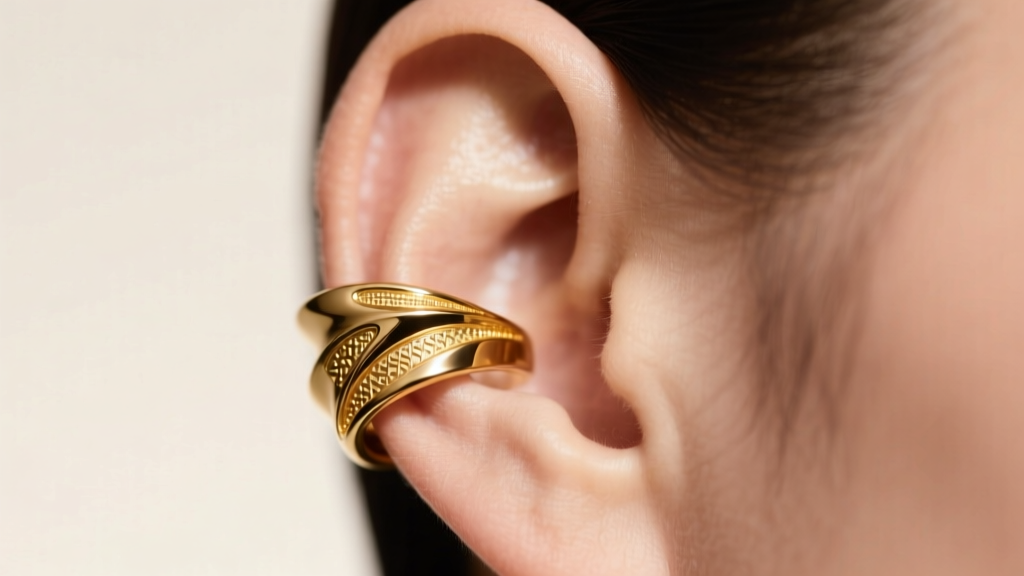
The Evolution of the Ear Jewelry Cuff in 2026
The ear jewelry cuff has undergone a radical transformation. Once relegated to the realm of flimsy, fast-fashion costume accessories that inevitably slipped off or turned skin green, the modern ear jewelry cuff has been elevated to a fine jewelry staple. In 2026, the trend landscape is dominated by architectural silhouettes, mixed-metal layering, and hyper-specific anatomical tailoring. Designers are no longer treating cuffs as mere afterthoughts for non-pierced ears; they are engineering them as primary focal points in curated ear stacks.
This shift is driven by consumer demand for high-impact aesthetics without the commitment or healing time of cartilage piercings. Today's premium cuffs utilize advanced metallurgy and precision tension mechanics, allowing them to mimic the look of complex industrial or conch piercings. Whether you are exploring asymmetrical styling or seeking a temporary statement piece for an event, understanding the engineering behind these accessories is crucial for both comfort and security.
Anatomy of a Secure Fit: Gauge, Tension, and Placement
The most common failure mode of an ear jewelry cuff is poor tension calibration. Unlike a post earring secured by a backing, a cuff relies entirely on the metal's 'memory' and spring-back tension to grip the cartilage or lobe. The wire gauge—the thickness of the metal—dictates how much tension the piece can hold without permanently warping.
- 18-Gauge (1.02mm): The gold standard for helix and conch cuffs. This thickness provides enough structural rigidity to maintain a firm grip on thicker cartilage folds without bending out of shape during daily wear.
- 20-Gauge (0.81mm): Ideal for delicate tragus or lobe wraps. Thinner wire allows for intricate, lace-like designs and tighter wrapping, but it requires careful handling to avoid work-hardening and snapping the metal.
- 16-Gauge (1.29mm): Reserved for heavy, sculptural statement pieces. Usually features an open-back design with adjustable tension bands rather than a continuous wire wrap.
To ensure longevity, jewelers recommend the 'Pinch Test' framework. When applying the cuff, gently squeeze the gap closed until you feel a light, even pressure against the skin. If the metal feels rigid and unyielding, the alloy is too hard and will cause pain. If it slides with zero resistance, the gauge is too thin or the diameter is improperly sized for your specific anatomy.
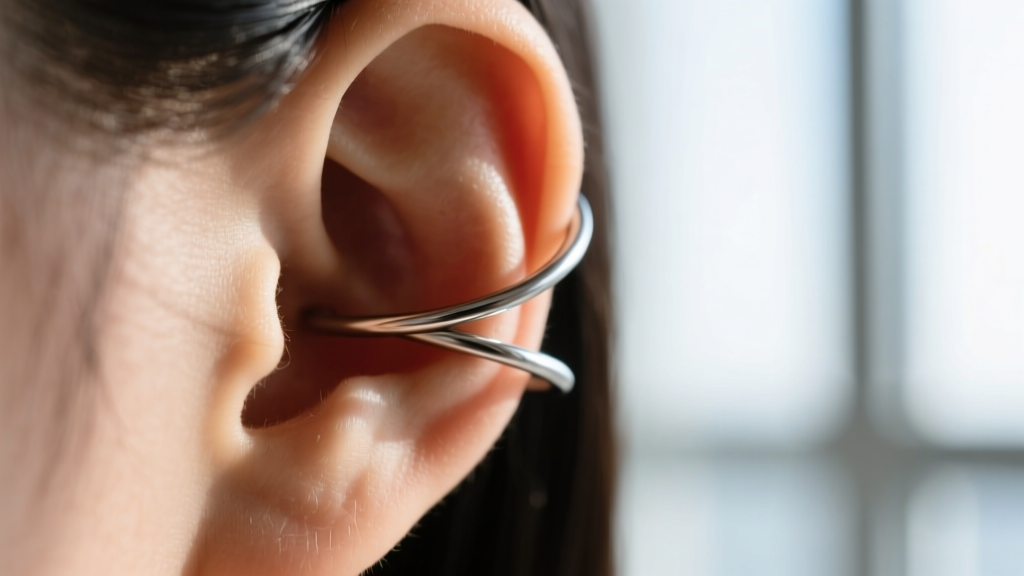
Material Grades: What to Buy and What to Avoid
Because an ear jewelry cuff sits in constant, high-pressure contact with the skin—often trapping sweat and natural oils—material biocompatibility is non-negotiable. The Association of Professional Piercers (APP) sets the benchmark for safe body jewelry materials, and these standards apply equally to high-tension non-pierced cuffs.
| Material | Pros | Cons | Best For |
|---|---|---|---|
| Implant-Grade Niobium | Hypoallergenic, highly malleable for custom tension adjustments, anodizable. | Cannot be cast; limited to wire-formed or machined designs. | Sensitive skin, daily wear, custom fits. |
| 14k / 18k Solid Gold | Tarnish-resistant, holds value, excellent spring-back memory. | Expensive, softer alloys (like 24k) will bend and lose tension. | Investment pieces, helix placements. |
| Gold Vermeil | Thick gold layer over sterling silver; affordable luxury. | Silver core can oxidize if sweat breaches the gold layer. | Occasional wear, lobe cuffs. |
| Plated Brass | Very cheap, allows for heavy, chunky cast designs. | High nickel content causes contact dermatitis; turns skin green. | Single-use events, editorial shoots only. |
For a comprehensive breakdown of how different alloys react to skin pH and environmental factors, the Gemological Institute of America (GIA) provides excellent educational resources on jewelry metals. As a rule of thumb, if you plan to wear the cuff for more than four hours at a time, avoid anything labeled simply as 'gold tone' or 'silver plated,' as the friction of the cuff will rapidly wear through the microscopic top layer.
Curated Ear Mapping: Where to Place Your Cuffs
The 2026 styling ethos moves away from the traditional, single helix wrap. Instead, stylists are utilizing 'ear mapping' to place cuffs in unconventional areas, creating the illusion of a fully pierced ear. Here is how to approach placement based on anatomical zones:
The Helix and Faux-Rook
The outer helix remains the most secure placement due to the distinct ridge of cartilage. However, the emerging trend is the 'faux-rook' cuff—a smaller, tighter diameter piece that hugs the inner antihelix fold. This requires a highly specific, asymmetrical design with a deep curve to hook over the ridge without sliding down the ear.
The Conch Shield
Conch cuffs are typically larger, shield-like pieces that clip onto the outer rim and lay flat against the inner conch bowl. Because the conch is a broad, relatively flat area, these cuffs rely on a wide surface area for friction rather than a tight pinch. Look for designs with silicone micro-grips on the inner plate to prevent rotation.
The Lobe Wrap
Lobe cuffs have evolved past the simple 'C' shape. Modern lobe cuffs feature a weighted bottom and a tapered top that threads through a standard piercing, wrapping around the outer edge to mimic a hoop. If you do not have a lobe piercing, opt for a tension-band lobe cuff with a padded inner grip to distribute the weight of the dangling elements.
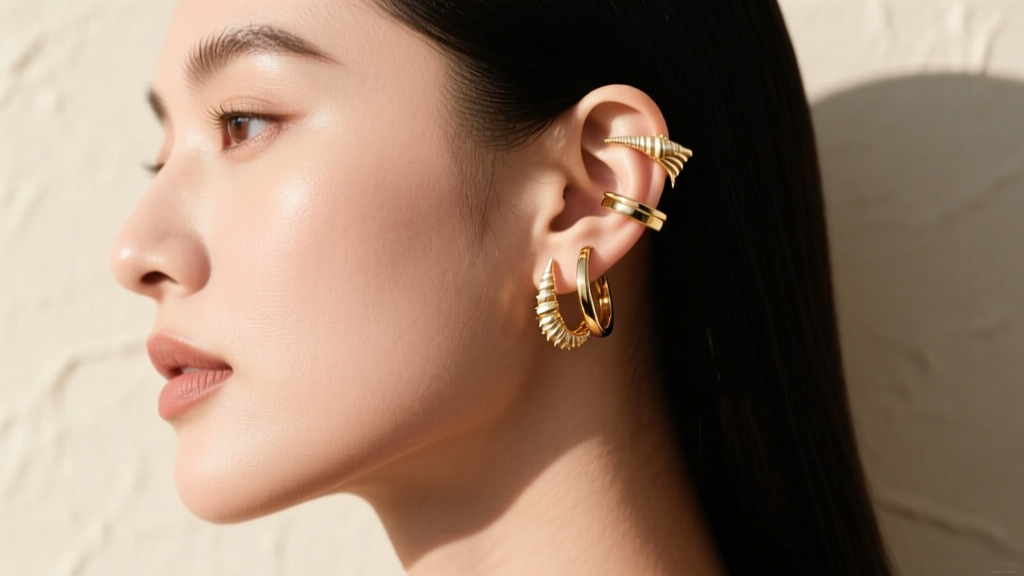
Proportional Balancing Rules
When stacking multiple ear jewelry cuffs on a single ear, maintain a minimum of 8 millimeters of negative space between each piece. Crowding the cartilage creates visual clutter and increases the friction that leads to slipping.
Troubleshooting Common Ear Cuff Failures
Even the finest 18k gold piece will fail if the mechanics of wear are ignored. Here are the most frequent issues encountered with ear cuffs and their precise solutions:
Issue: The cuff constantly rotates or slides down the helix.
Solution: This is almost always caused by natural sebum (skin oils) acting as a lubricant. Before applying the cuff, wipe the target cartilage area with an alcohol prep pad to remove oils and create a dry, high-friction surface. If the slipping persists, the inner diameter of the cuff is too large for your cartilage thickness. Gently squeeze the cuff to reduce the gap by 1-2 millimeters.
Issue: The cuff causes a sharp, pinching pain after an hour.
Solution: Inspect the terminals (the ends of the wire) under a magnifying glass. Mass-produced cuffs often have microscopic burrs left over from the cutting process. Use a fine-grit jewelry file or emery board to smooth the terminals until they are perfectly rounded. Additionally, ensure the cuff is not catching on fine hair, which pulls the metal and creates localized pressure points.
Issue: The metal is leaving a dark or green mark on the skin.
Solution: This is a chemical reaction between the copper or nickel in the base metal and your sweat. Immediately remove the piece. To salvage a favorite design, you can coat the inner contact points with a microscopic layer of clear nail polish or a specialized jewelry barrier coating, though upgrading to implant-grade titanium or solid gold is the only permanent fix.
Final Verdict: Investment Pieces vs. Trendy Accents
The ear jewelry cuff is no longer a compromise for those unwilling to pierce; it is a deliberate styling tool that offers unparalleled versatility. When building your collection, allocate your budget toward one or two high-tension, solid gold or niobium helix cuffs that will serve as your daily anchors. Reserve the heavier, cast-metal conch shields and intricate lobe wraps for trend-driven, occasional wear. By respecting the material science and anatomical mechanics behind these pieces, you can achieve a flawless, secure, and highly curated ear stack that defies the limitations of traditional piercings.


