Best Earbuds That Look Like Earrings: 2026 Buyer Guide
Discover the best earbuds that look like earrings in 2026. Our buying guide covers audio tech, metal gauges, weight limits, and luxury styles.

The Intersection of Audiophile Tech and Fine Jewelry
The era of clunky, visible wearable technology is over. As we move through 2026, the demand for seamless integration between high-fidelity audio and luxury fashion has given rise to a highly specialized market: earbuds that look like earrings. No longer confined to novelty gadgets, today’s audio-jewelry hybrids leverage micro-acoustic chambers, directional dipole speakers, and hypoallergenic metallurgy to deliver premium sound disguised as high-end accessories.
Whether you are navigating a busy corporate office, attending a gala, or simply running errands, the ability to take calls and listen to podcasts without sporting traditional silicone ear-tips is a game-changer. However, merging consumer electronics with body jewelry introduces unique challenges regarding weight distribution, piercing gauge compatibility, and material safety. This comprehensive buying guide breaks down exactly what to look for when investing in audio-integrated earrings.
Form Factors: Studs, Drops, and Chandeliers
The physical design of the earring dictates not only its aesthetic but also its acoustic capabilities and battery life. Because audio components require physical space, the form factor is your first major purchasing decision.
Pearl and Crystal Studs (The Stealth Approach)
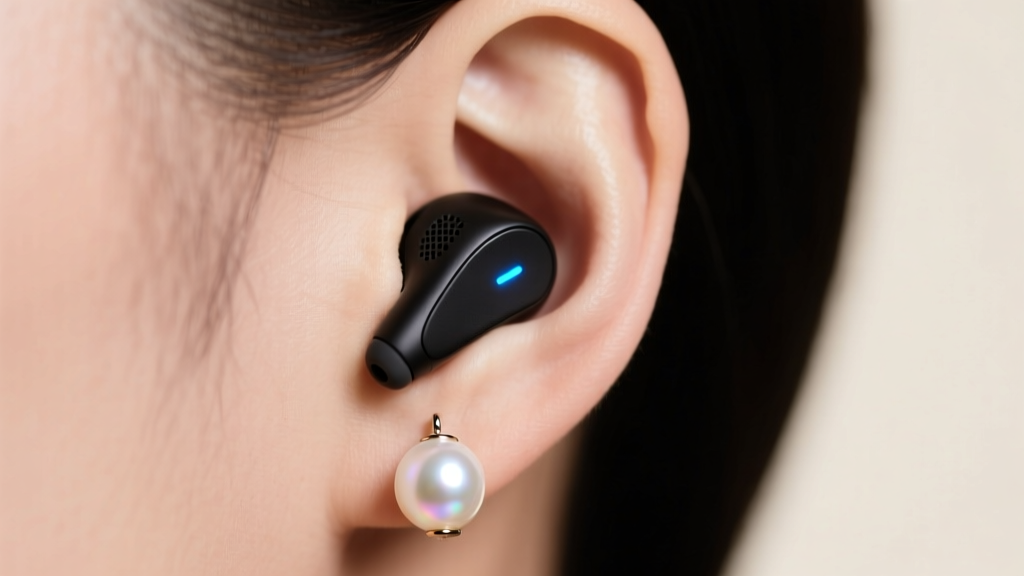
Stud-style audio earrings, such as the pioneering Nova H1 Audio Earrings, typically house the micro-speaker behind a freshwater pearl or a large cubic zirconia stone. These are ideal for minimalist styling and professional environments. However, the compact footprint limits the battery to roughly 3 to 4 hours of continuous playback. The acoustic chamber is small, meaning bass response is naturally limited, though mid-range frequencies (perfect for podcasts and vocal calls) remain crisp.
Drop and Dangle Earrings (The Statement Piece)
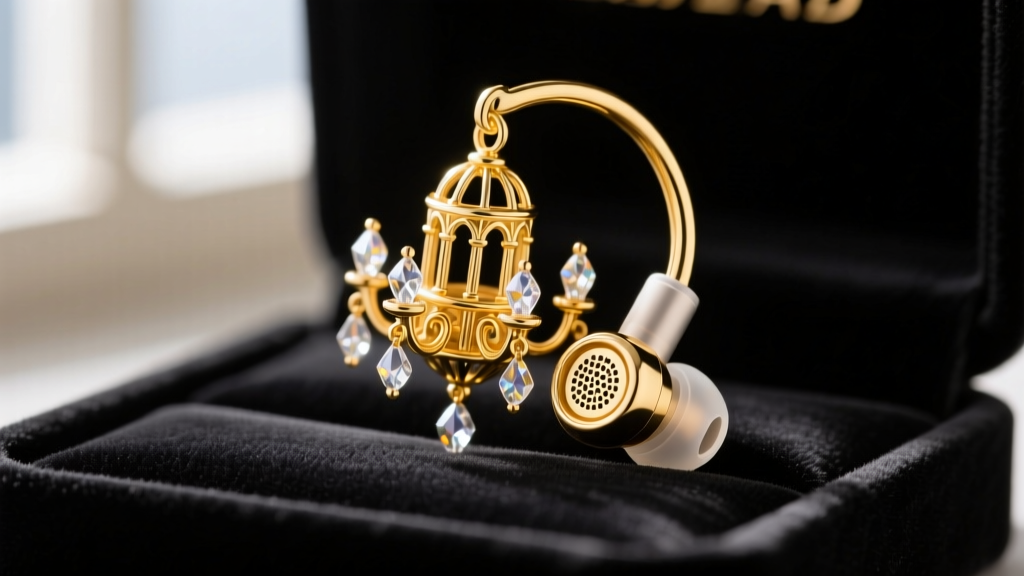
Drop earrings offer a larger chassis for engineers to work with. By elongating the body of the earring, manufacturers can include larger directional speakers and higher-capacity lithium-polymer batteries, often pushing playback time to 5 or 6 hours. The elongated shape also allows the speaker to sit closer to the ear canal without resting directly inside it, improving audio clarity while maintaining a striking, chandelier-like silhouette.
Weight Distribution and Piercing Gauge Compatibility
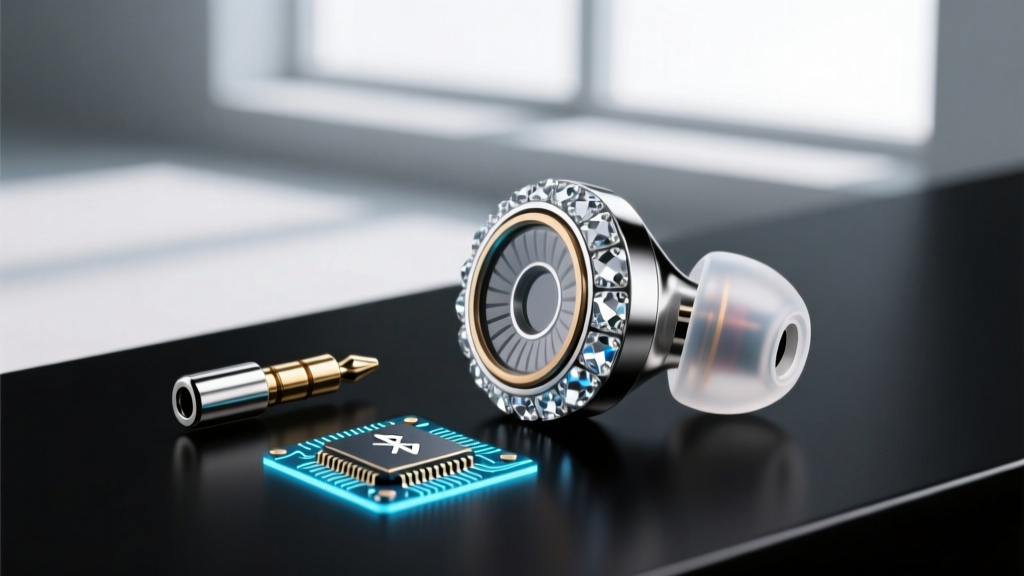
The most critical failure point for earbuds that look like earrings is not electronic—it is anatomical. Standard fashion earrings weigh between 2 and 5 grams. Audio earrings, burdened by batteries, Bluetooth 5.4 chips, and neodymium speakers, typically weigh between 8 and 14 grams per lobe. If worn on a standard, thin-gauge piercing, this weight will cause the "cheese-cutter effect," slowly migrating the piercing downward and causing permanent lobe damage.
When shopping, you must verify the post thickness (gauge) of the earring. Do not purchase heavy audio earrings with 20-gauge (0.8mm) or 18-gauge (1.0mm) wire posts. Instead, look for structural support.
| Earring Weight | Minimum Safe Gauge | Post Material Recommendation | Required Backing Type |
|---|---|---|---|
| Under 6g | 18G (1.0mm) | Surgical Steel / Gold Vermeil | Standard Silicone Friction Back |
| 6g to 10g | 16G (1.2mm) | Solid 14k Gold / 316L Steel | Wide-Base Silicone Support Back |
| 10g to 15g+ | 14G (1.6mm) | ASTM F136 Titanium | Screw-Back or Silicone Ear Support Patch |
Pro-Tip for Heavy Tech Jewelry: If you find a pair of audio earrings you love but they feature a thin 18G post, purchase adhesive silicone earlobe support patches. These invisible patches sit behind the lobe and distribute the 12g+ weight across a wider surface area, preventing tearing and sagging.
Audio Fidelity and Directional Sound Leakage
Unlike in-ear monitors (IEMs) that seal the ear canal, audio earrings operate as open-ear devices. The primary concern for buyers in 2026 is sound leakage—specifically, whether your coworkers or commute neighbors can hear your private calls. To combat this, premium audio earrings utilize dipole speaker arrays and anti-leakage acoustic phase cancellation.
A dipole setup features two micro-speakers: one directed toward your ear canal, and one directed outward. The outward-facing speaker emits an inverted sound wave that cancels out the inward-facing audio before it escapes into the environment. When reviewing specs, actively look for terms like "Directional Audio," "Dipole Tuning," or "Acoustic Privacy Shield." Avoid models that rely on a single, omnidirectional micro-driver, as these will leak sound heavily in quiet environments like libraries or shared offices.
Material Safety and Hypoallergenic Requirements
Because audio earrings are heavier, they exert more constant pressure and friction against the piercing fistula (the healed skin tunnel). This makes material purity non-negotiable. According to the American Academy of Dermatology, nickel is the most common culprit for allergic contact dermatitis in jewelry wearers.
- ASTM F136 Titanium: The gold standard for sensitive piercings. Lightweight, entirely nickel-free, and exceptionally strong. Ideal for heavier tech earrings.
- 316L Surgical Stainless Steel: A safe, affordable alternative, though it contains trace amounts of nickel that are usually trapped in the alloy's crystalline structure. Safe for fully healed lobes.
- Gold Vermeil vs. Solid Gold: Vermeil is a thick layer of gold over sterling silver. While beautiful, the friction of a heavy tech earring can wear the vermeil down to the silver core over time. If you have metal sensitivities, invest in solid 14k or 18k gold posts.
Maintenance: Cleaning Jewelry Without Frying Circuits
Traditional fine jewelry care is fundamentally incompatible with consumer electronics. You must completely alter your cleaning routine to protect the internal Bluetooth components and charging contacts.
What NEVER To Do
Never place audio earrings in an ultrasonic jewelry cleaner. The high-frequency vibrations will shatter the internal micro-soldering and destroy the Bluetooth antenna. Furthermore, never submerge them in water or chemical dips; most audio earrings carry an IPX4 rating, meaning they can survive sweat and light rain, but they are not waterproof.
The Safe Cleaning Protocol
To clean the pearls or crystals, follow the guidelines set by the Gemological Institute of America (GIA). Use a damp, lint-free microfiber cloth to gently wipe away skin oils and makeup. For the metal posts, use a cotton swab lightly dipped in 70% isopropyl alcohol to sanitize the area that enters the piercing. Crucially, you must clean the magnetic charging contacts on the back of the earring with a dry brush; accumulated skin oils and sweat will cause charging failures and copper corrosion over time.
Pricing Tiers and the 2026 Brand Landscape
The market for earbuds that look like earrings has stratified into distinct pricing tiers based on material quality and audio engineering:
- Entry-Level ($80 - $150): Typically features gold-plated brass or stainless steel, CZ stones, and basic omnidirectional speakers. Expect noticeable sound leakage and a 3-hour battery life.
- Mid-Tier ($150 - $280): Introduces 316L steel, freshwater pearls, and basic directional audio. Battery life improves to 4-5 hours, and charging cases are often disguised as elegant jewelry boxes.
- Luxury / Audiophile ($300 - $600+): Brands like Nova and emerging high-end tech-jewelers dominate this space. Expect solid 14k gold or titanium posts, premium Akoya pearls, advanced dipole anti-leakage technology, and seamless multipoint Bluetooth 5.4 connectivity.
As noted in Wired's coverage of wearable audio jewelry, the premium price tag is often justified by the dual-nature of the product: you are simultaneously purchasing a piece of fine jewelry and a high-tech wearable. When making your final decision, prioritize the post gauge and speaker directionality above all else. A beautiful pearl earring is useless if it tears your lobe or broadcasts your private phone calls to the entire office.


