What Are Drop Earrings? Troubleshooting Fit, Snags & Weight
Discover what drop earrings are and master troubleshooting for common issues like earlobe droop, clasp snagging, and metal sensitivity.

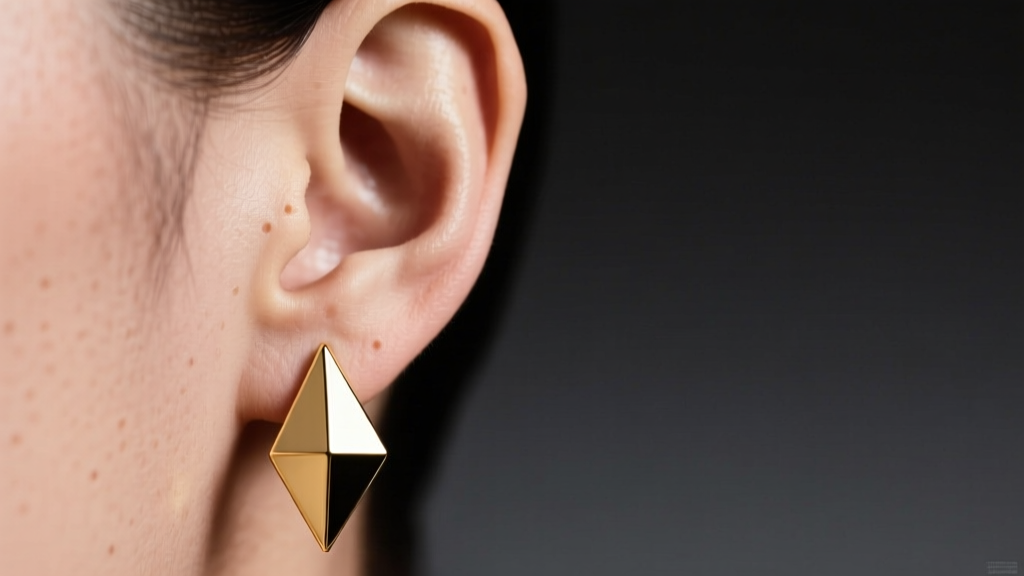
When navigating the vast landscape of fine and fashion jewelry, buyers and collectors frequently encounter a specific silhouette that bridges the gap between subtle studs and dramatic chandeliers. This leads to the fundamental question: what are drop earrings, and why do they present unique structural challenges compared to other styles? Unlike their dynamic counterparts, drop earrings are defined by their static suspension. They hang just below the earlobe but do not feature moving hinges or articulated joints. While this streamlined design offers an elegant, uninterrupted vertical line, it also introduces specific mechanical and ergonomic vulnerabilities.
As a jewelry specialist, I see countless enthusiasts struggle with forward-tilting drops, snagged French wires, and premature clasp failure. In this comprehensive troubleshooting guide, we will dissect the anatomy of the drop earring and provide actionable, expert-level solutions to the most common fit, weight, and maintenance problems you will encounter.
Defining the Silhouette: What Are Drop Earrings Exactly?
To effectively troubleshoot, we must first establish a precise diagnostic baseline. A true drop earring consists of a single, rigid element that suspends directly beneath the earlobe. The defining characteristic is static movement. When you turn your head, the earring moves as a single unit with your ear. This is in stark contrast to dangle earrings, which feature hinges, jump rings, or chains that allow the lower portion to swing independently.
Because drops lack articulation, the entire physical stress of the earring's weight and leverage is concentrated on a single point: the piercing channel and the clasp mechanism. This structural rigidity is the root cause of the most common complaints, including the dreaded 'forward tilt' and hair-snagging hazards. Understanding this load-bearing reality is the first step in selecting and maintaining high-quality drop earrings.
The Snag Hazard: Troubleshooting Catch and Clasp Failures
The most frequent point of failure for drop earrings is the posterior clasp mechanism. Because the earring does not swing freely to dissipate kinetic energy, any accidental tug on the drop element transfers 100% of the force directly to the backing.
Friction Backs (Butterfly Backs) and Tension Loss
Standard friction backs rely on the tension of the metal scrolls against the notches of the earring post. Over time, the metal fatigues, the scrolls spread, and the 'click' retention fails. The Fix: Do not attempt to squeeze the scrolls back together with standard pliers, as this often work-hardens the metal and causes it to snap. Instead, upgrade to La Pousette (push-pull) clutch backs or silicone O-ring stoppers. If you must use friction backs, ensure the post features deep, precision-machined notches rather than shallow grooves.
French Wires (Fishhooks) and Hair Snagging
Many lightweight drop earrings utilize French wires. The open gap at the back of the wire is a notorious magnet for hair, leading to painful snags and lost earrings. The Fix: Utilize silicone French wire guards (small, flexible discs that slide over the wire end). For a permanent solution, take the earrings to a bench jeweler to have a custom soldered hinged-snapback or a leverback mechanism installed, which completely encloses the wire path.
Weight Distribution & Earlobe Fatigue: Solving the 'Droop'
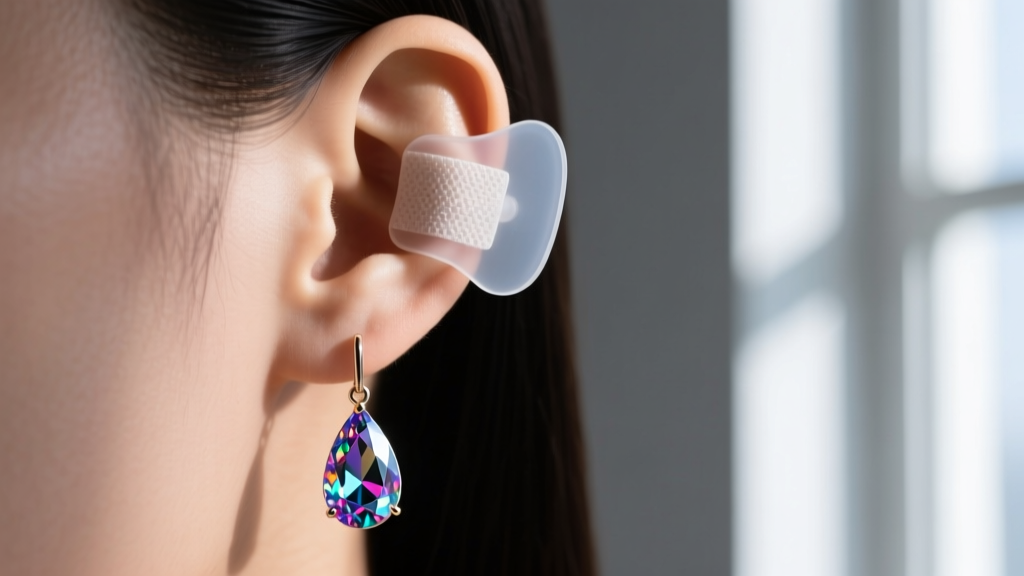
One of the most frustrating issues with heavy drop earrings—particularly those featuring solid gemstones like quartz, agate, or thick glass—is the 'forward tilt.' Because the center of gravity sits below the piercing, gravity pulls the bottom of the earring forward, causing the post to angle upward inside the earlobe. This not only ruins the visual silhouette but can cause micro-tears in the piercing channel over time.
Gauge Thickness and Structural Integrity
Many commercial drop earrings are manufactured using 22-gauge (0.64mm) wire to save on precious metal costs. This is entirely insufficient for drops weighing more than 4 grams. The Fix: When commissioning or purchasing high-end drops, insist on 20-gauge (0.81mm) or 18-gauge (1.02mm) posts or wires. The increased cross-sectional area provides the necessary rigidity to resist bending under the leveraged weight of the drop element.
Biomechanical Support Solutions
If you already own heavy drops that tilt forward, the issue is lobe elasticity, not just the jewelry. The Fix: Implement polyurethane or medical-grade silicone earring support patches (such as LobeWonder or BlingDots). These adhesive patches distribute the localized downward force across a wider surface area of the earlobe's posterior, providing a rigid backboard that forces the drop earring to hang perfectly vertical.
Diagnostic Chart: Drop vs. Dangle Failure Points
To ensure you are applying the correct troubleshooting methodology, use this diagnostic chart to differentiate between the structural behaviors of drops and dangles.
| Feature | Drop Earrings (Static) | Dangle Earrings (Dynamic) |
|---|---|---|
| Movement | None; moves as one unit with the head. | Articulated; swings independently via hinges/chains. |
| Stress Point | Concentrated entirely on the post/clasp junction. | Distributed across jump rings and hinge pins. |
| Primary Failure | Bent posts, lobe stretching, forward tilt. | Snapped jump rings, worn hinge pins, tangled chains. |
| Ideal Clasp | Screw-back, Leverback, or La Pousette. | Standard friction back (due to lower static leverage). |
Metal Sensitivity & Tarnish: Maintenance Protocols
Because drop earrings sit flush against the neck and jawline, they are highly susceptible to friction against the skin and exposure to cosmetics, perfumes, and sweat. This makes material selection and maintenance critical for avoiding contact dermatitis and rapid tarnishing.
Decoding Hypoallergenic Standards
The term 'hypoallergenic' is largely unregulated in the jewelry industry. If you experience itching or weeping piercings from your drops, the culprit is almost always nickel leaching from white gold alloys or base metal cores. The Fix: Demand verifiable material grades. For titanium, look for ASTM F136 certification, which is the standard for surgical implant-grade titanium (ASTM International). For silver, avoid standard 925 sterling if you have high acidity in your sweat; opt for Argentium 960, which replaces some copper with germanium to virtually eliminate tarnish and reduce allergic reactions.
Rhodium Plating Degradation
White gold drop earrings are typically plated with rhodium to achieve a bright white finish. However, the friction against the neck wears this plating away, exposing the yellowish alloy beneath. The Fix: When having drops replated, request a thickness of at least 1.0 to 2.0 microns. Standard 'flash' plating is often less than 0.25 microns and will wear through in a matter of weeks with daily wear.
Advanced Maintenance: Cleaning & Structural Repair
The static nature of drop earrings means they often feature complex, uninterrupted geometric shapes or bezel-set stones that trap debris at the posterior base. Furthermore, repairing a bent drop requires specific metallurgical knowledge to avoid snapping the piece.
Ultrasonic vs. Chemical Cleaning
While ultrasonic cleaners (operating at 40-45 kHz) are excellent for removing sebum and lotion buildup from the crevices of metal drop earrings, they can be catastrophic for certain gemstones. The Protocol: Never place drop earrings featuring porous stones (turquoise, opal, pearl, emerald) or fracture-filled diamonds into an ultrasonic bath. The high-frequency cavitation will shatter the stones or strip their treatments. Instead, use a soft-bristled infant toothbrush with a mild, ammonia-free dish detergent and warm water, focusing on the posterior bezel walls where skin cells accumulate.
Straightening Bent Headpins and Wires
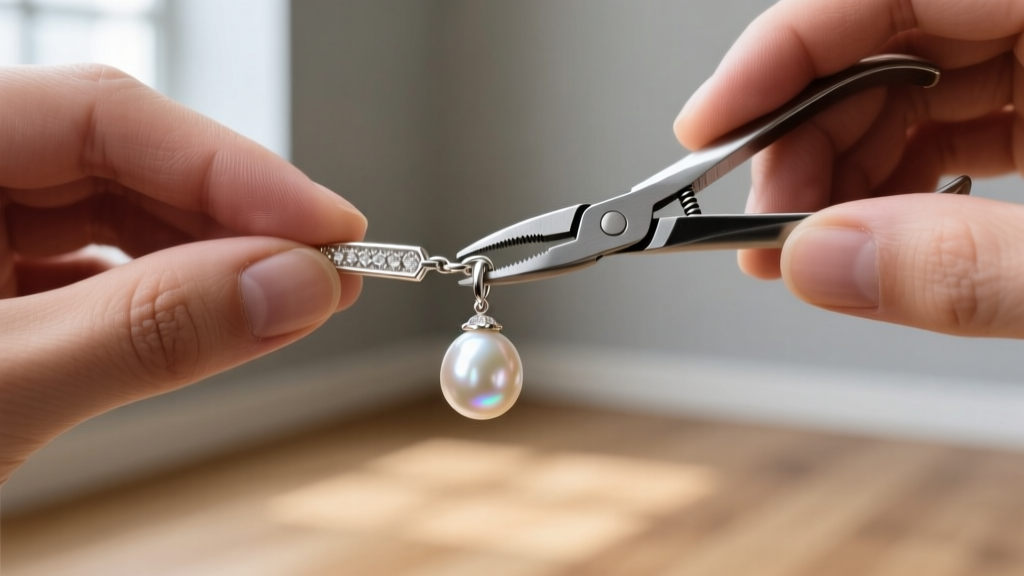
If a drop earring's wire becomes bent, using standard steel-jaw pliers will mar the metal finish and create stress fractures. The Protocol: Use nylon-jaw pliers to gently coax the wire back into alignment. If the wire is 'dead-soft' (fully annealed), it will bend easily but may become brittle if bent back and forth too many times due to work-hardening. If the wire is 'half-hard', it will resist bending and is more likely to snap; apply gentle, continuous pressure rather than sharp, jerking movements. For complex structural repairs, consult a professional bench jeweler who can anneal the metal with a micro-torch before reshaping it, as recommended by jewelry fabrication experts at Rio Grande.
Expert Takeaway: Understanding what drop earrings are goes far beyond their aesthetic silhouette. By recognizing them as static, load-bearing structures, you can proactively address clasp tension, upgrade post gauges, and implement proper biomechanical support, ensuring your drops hang perfectly and last a lifetime.


