Effective Earring Allergy Treatment: A Step-by-Step Healing Guide
Discover step-by-step earring allergy treatment methods, from identifying nickel reactions to safe hypoallergenic jewelry swaps for healing lobes.

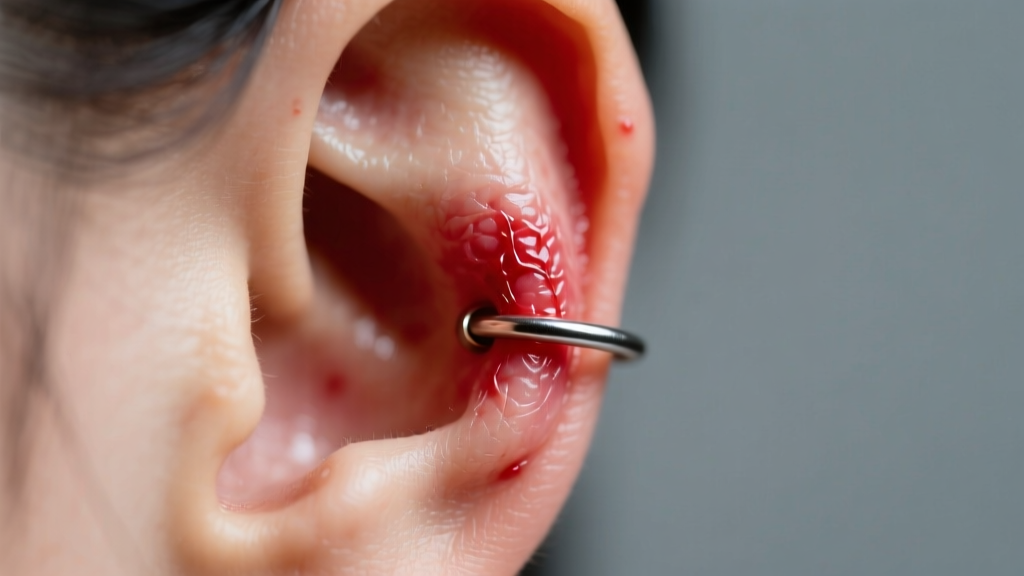
The Science of Earring Contact Dermatitis
When your earlobes become red, itchy, and swollen after wearing a new pair of studs or hoops, you are likely experiencing allergic contact dermatitis. This is a Type IV delayed hypersensitivity reaction, most commonly triggered by nickel. According to the American Academy of Dermatology, roughly 15% to 20% of the general population has a nickel allergy, and the ears are one of the most frequent contact points. In 2026, despite stricter global jewelry regulations, many fast-fashion and mid-tier brands still use alloys that leach nickel ions when exposed to the natural acids and sweat on your skin.
Proper earring allergy treatment requires more than just taking the jewelry out; it demands a systematic approach to calm the immune response, heal the compromised fistula (the piercing channel), and safely transition to biocompatible metals. Below is your comprehensive, step-by-step protocol for treating and preventing earring allergies.
Step 1: Immediate Triage and Safe Removal
The moment you suspect an allergic reaction, the offending jewelry must be removed. However, if the earlobe is severely swollen, the earring back or clutch may be embedded in the tissue.
How to Remove Embedded Earrings Safely
- Do not force the backing off: Pulling aggressively can tear the epithelial lining of the fistula, leading to scar tissue or blowouts.
- Apply a cold compress: Wrap an ice pack in a sterile gauze pad and hold it against the back of the lobe for 5 to 10 minutes to reduce localized edema (swelling).
- Use a water-based lubricant: Apply a small drop of sterile saline or a water-based personal lubricant to the post to help the backing slide off without friction.
- Switch to a flat back: If the post is too short for the swelling but you must keep the hole open, gently swap the earring for a longer, implant-grade titanium flat back labret stud (typically 6mm to 8mm in length for standard lobes).
Step 2: Medical and Topical Interventions
Once the jewelry is out, the goal is to halt the histamine response and prevent secondary bacterial infections. The Mayo Clinic recommends targeted topical treatments for mild to moderate contact dermatitis.
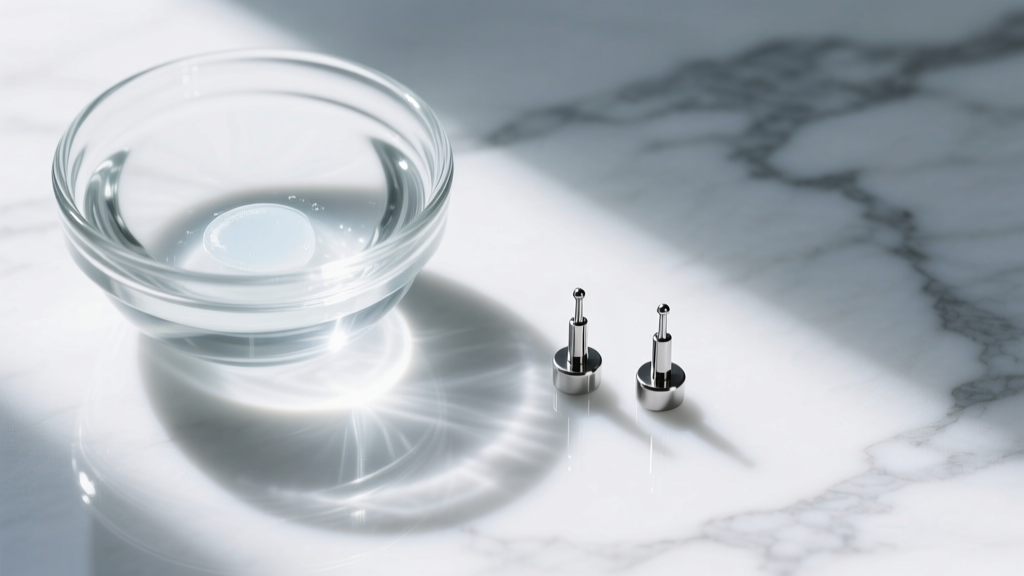
The Saline Soak Protocol
Avoid commercial piercing sprays that contain benzalkonium chloride or tea tree oil, as these can further irritate compromised skin. Instead, use a sterile saline soak.
- Mix 1/4 teaspoon of non-iodized sea salt into 8 ounces of warm distilled water (or use a pre-mixed 0.9% sterile saline wound wash).
- Soak a sterile non-woven gauze pad in the solution.
- Hold the compress against the front and back of the earlobe for 5 minutes.
- Pat completely dry with a disposable paper product. Moisture trapped in the fistula breeds bacteria.
Topical Steroids vs. Antibiotics
Apply an over-the-counter 1% hydrocortisone cream twice daily for up to 7 days to reduce itching and inflammation. Avoid Neosporin or triple-antibiotic ointments. The neomycin in these ointments is a known contact allergen that can trigger a secondary allergic reaction, compounding your earlobe's distress.
Step 3: Identifying the Culprit (Material Analysis)
To prevent future reactions, you must understand what caused the initial allergy. The term "surgical steel" is largely a marketing phrase. Most jewelry labeled as such is 316L stainless steel, which contains 8% to 12% nickel. While the nickel is usually bound within the alloy, sweat and friction can cause it to leach.
Metallurgy Comparison Chart for Sensitive Ears
| Metal / Alloy | Nickel Content | Biocompatibility Standard | Verdict for Allergies |
|---|---|---|---|
| 316L Surgical Steel | 8% - 12% | None (Commercial grade) | Avoid during active flare-ups |
| Implant-Grade Titanium | 0% | ASTM F136 / ISO 5832-3 | Gold standard for healing |
| Niobium | 0% | Unalloyed elemental metal | Excellent for hoops and cuffs |
| 14k Yellow Gold | 0% (usually) | Varies by manufacturer | Safe if alloyed with silver/copper |
| 14k White Gold | High (often) | Varies by manufacturer | Avoid (often alloyed with nickel) |
According to the Association of Professional Piercers (APP), ASTM F136 implant-grade titanium (Ti6Al4V ELI) is the absolute safest material for reactive ears. It is the exact same metal used in medical joint replacements and pacemakers, containing zero nickel.
Step 4: Safe Re-insertion and Fistula Maintenance
If you remove your earrings entirely during a flare-up, the fistula can shrink or close within hours, especially in newer piercings. You must keep the channel open while the skin heals.
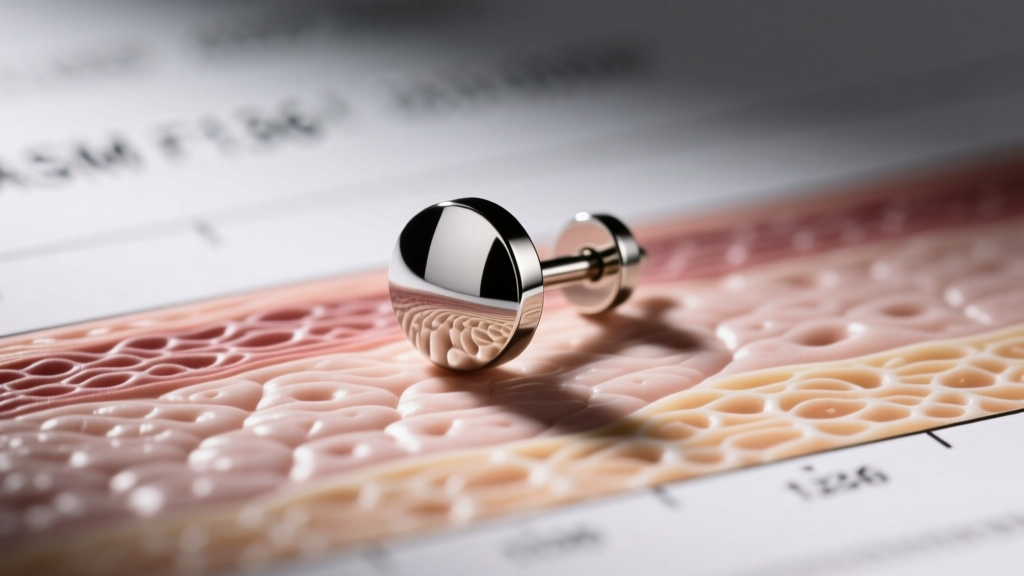
Using Retainers and Glass
If titanium is unavailable, borosilicate glass retainers are completely inert and will not trigger an immune response. For standard lobe piercings, you will typically need a 20-gauge (0.8mm) or 18-gauge (1.0mm) glass plug. Ensure the glass is polished to a mirror finish; microscopic scratches can harbor bacteria and irritate the delicate healing tissue inside the channel.
Pro Tip: Never use clear nail polish or "hypoallergenic" coatings on cheap metal earrings to prevent allergies. These coatings chip easily inside the warm, moist environment of the fistula, exposing your skin to the raw nickel underneath and trapping the flaking polymer inside the piercing channel.
Step 5: Long-Term Prevention and Jewelry Swaps
Once the contact dermatitis has fully resolved (usually 10 to 14 days with proper hydrocortisone and saline care), you can transition back to decorative jewelry. However, your wardrobe must be audited.
Building a Biocompatible Collection
- Studs: Invest in ASTM F136 titanium flat back labrets with threadless or internally threaded ends. Push-pin ends eliminate the sharp posts that scratch the fistula upon insertion.
- Hoops: Look for seamless rings made of solid 14k yellow gold or pure niobium. Avoid hinged hoop closures made of mystery metals, as the hinge mechanism is often soldered with nickel-containing alloys.
- Ear Cuffs: Since cuffs do not penetrate the skin, the allergy risk is lower, but prolonged contact on the cartilage ridge can still cause surface dermatitis. Opt for sterling silver coated in thick rhodium, or solid titanium wire cuffs.
By treating the initial reaction with medical precision and upgrading your jewelry to verified, implant-grade materials, you can permanently eliminate earring allergies and enjoy your curated ear aesthetic without discomfort.


