How to Match Earring Shapes to Your Face and Ear Anatomy
Discover how to choose earring shapes that flatter your face geometry while supporting your ear anatomy with the right gauge and hardware.

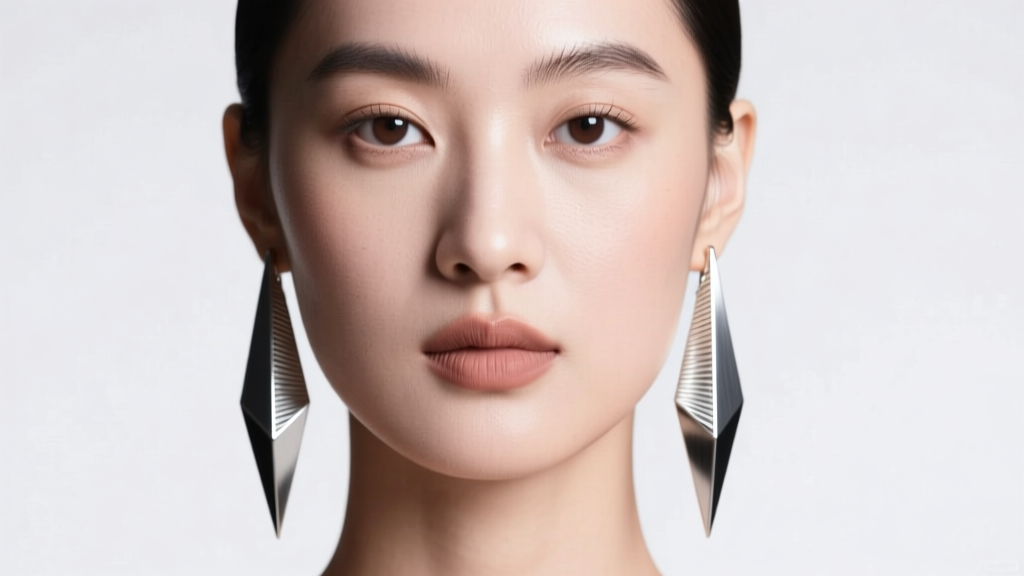
The Geometry of Glamour: Why Earring Shapes Matter
When browsing jewelry collections, most buyers focus exclusively on the visual appeal of earring shapes—whether a sleek geometric square or a sweeping teardrop complements their outfit. However, as a structural and stylistic investment, selecting the right earring shapes requires a dual-pronged approach: visual geometry (how the shape interacts with your facial structure) and physical engineering (how the shape's weight and hardware interact with your ear anatomy). A poorly chosen shape won't just clash with your jawline; it can cause lobe stretching, contact dermatitis, or hardware failure.
This comprehensive buying guide moves beyond basic style advice, diving deep into the material densities, post gauges, and structural red flags you must evaluate before purchasing statement earring shapes in 2026.
Mapping Earring Shapes to Facial Geometry
The fundamental rule of visual styling is contrast and balance. The goal is to use earring shapes to create an optical illusion that softens harsh angles or adds structure to soft curves. Here is the definitive framework for matching shapes to facial geometry.
Round and Oval Faces
Round faces benefit from vertical elongation. Avoid small hoops, circular studs, or wide button shapes, which will only emphasize the face's natural width. Instead, opt for linear drops, rectangular dangles, and sharp geometric shapes (like elongated hexagons or narrow marquise cuts). These shapes draw the eye downward, creating a slimming, lengthening effect.
Oval faces are the most versatile canvas. Almost any earring shape works, but to maintain natural balance, avoid extreme, shoulder-dusting chandeliers that can over-elongate the face. Medium-length teardrops and classic medium-diameter hoops are ideal.
Square and Heart Faces
Square faces feature strong, angular jawlines. The objective is to soften these features. Avoid stark geometric squares, sharp triangles, or rigid linear bars. Look for curved drops, oval hoops, and organic, asymmetrical shapes that introduce movement and softness near the jaw.
Heart-shaped faces are wider at the forehead and narrow at the chin. Avoid top-heavy shapes or inverted triangles, which exaggerate the narrow chin. Opt for bottom-heavy chandeliers, teardrops, and rounded huggies that add visual weight to the lower half of the face, balancing the proportions.
| Face Shape | Ideal Earring Shapes | Shapes to Avoid | Visual Goal |
|---|---|---|---|
| Round | Linear drops, narrow rectangles, angular dangles | Small hoops, circular studs, wide buttons | Vertical elongation |
| Oval | Teardrops, medium hoops, geometric clusters | Extreme shoulder-length dangles | Maintain natural balance |
| Square | Oval hoops, curved drops, organic asymmetricals | Sharp squares, rigid linear bars, triangles | Soften angular jawlines |
| Heart | Bottom-heavy chandeliers, teardrops, rounded huggies | Top-heavy shapes, inverted triangles | Add width to narrow chin |
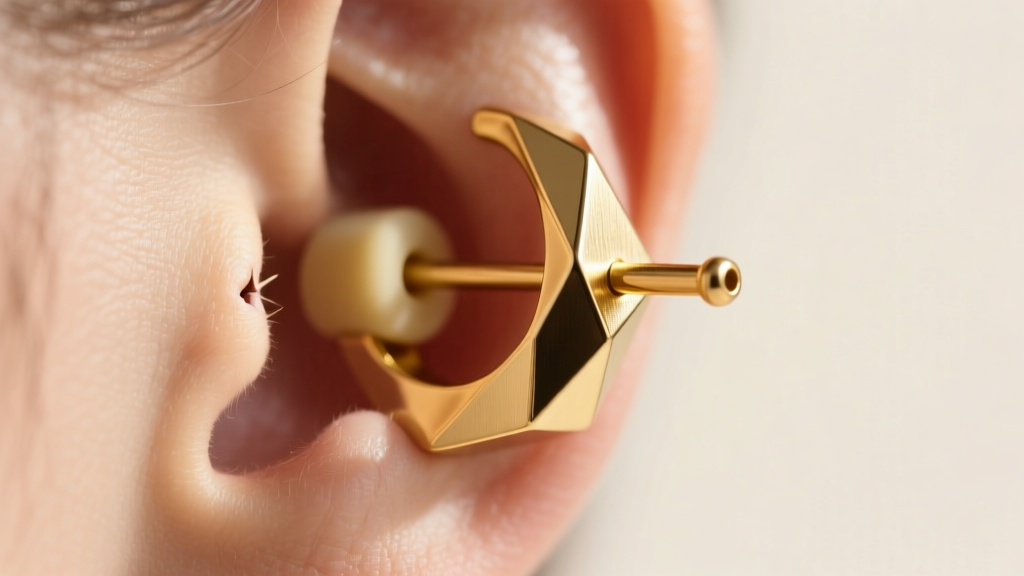
The Overlooked Factor: Ear Lobe Thickness and Hardware
The most critical mistake buyers make when selecting large or heavy earring shapes is ignoring the hardware. The standard lobe piercing is performed at 20-gauge (0.81mm) or 18-gauge (1.02mm). If you purchase a massive, solid brass geometric hoop or a heavy 14k gold square drop, the physical weight will pull downward on that tiny 18G post.
Over time, this creates a "cheese-cutter" effect, slowly stretching the piercing channel and causing the lobe to thin out. According to guidelines from the Association of Professional Piercers (APP), heavy jewelry requires thicker posts to distribute the weight safely across the tissue.
What to Look for in the Hardware:
- Post Gauge: For any earring shape exceeding 15 grams, look for brands that utilize 16-gauge (1.2mm) or 14-gauge (1.6mm) posts. If you have an 18G piercing, you may need to have a professional piercer taper it to 16G to safely wear heavy statement shapes.
- Backing Systems: Standard friction backs (butterfly clutches) are insufficient for heavy drop shapes. The weight will cause the earring to droop forward. Seek out screw-backs, locking clutches, or silicone support discs (like EarSecrets) that provide a wider surface area against the back of the lobe to keep heavy shapes sitting flush and upright.
- Hollow vs. Solid Construction: If you want the look of a massive 40mm gold cube, ensure the manufacturer uses electroforming or hollow-tube construction. Solid gold is incredibly dense; a solid 40mm gold cube would weigh over 30 grams, guaranteeing immediate lobe trauma.
Material Weight vs. Shape Volume: A Buyer's Matrix
The material of the earring dictates how large the shape can be before it becomes unwearable. When evaluating oversized earring shapes, use this material density guide to make informed purchasing decisions.
| Material | Density / Weight Profile | Best Shape Applications | Buying Caveats |
|---|---|---|---|
| Grade 5 Titanium (Ti-6Al-4V) | Ultra-light, high tensile strength | Massive sculptural shapes, large geometric hoops, architectural cuffs | Ensure it is implant-grade if you have metal sensitivities. |
| Solid 14k / 18k Gold | Very heavy, high density | Small to medium studs, huggies, delicate drops | Avoid solid gold in shapes larger than 25mm unless explicitly hollowed. |
| Acetate / Resin | Featherlight, bulky volume | Oversized 70s-style retro hoops, thick geometric blocks | Check the metal post housing; resin can crack around cheap alloy posts. |
| Brass / Bronze | Moderate weight, prone to tarnish | Textured organic shapes, medium boho dangles | Must be sealed or plated to prevent green skin and contact dermatitis. |
For buyers with sensitive skin, material choice is non-negotiable. Cheap, mass-produced geometric shapes often contain hidden nickel alloys. As noted by the Cleveland Clinic, nickel allergy is the leading cause of allergic contact dermatitis, resulting in itchy, blistered earlobes. Always verify that the metal touching your skin is implant-grade titanium, niobium, or at least 14k nickel-free gold.
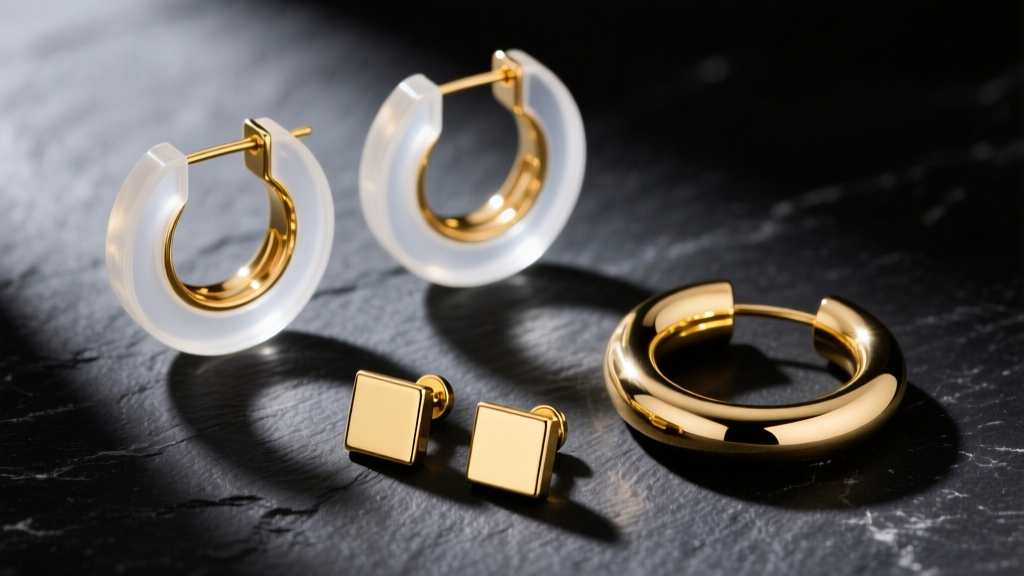
Structural Red Flags: What to Avoid When Buying
When inspecting earring shapes in person or reviewing high-res macro images online, look out for these manufacturing flaws that compromise both comfort and longevity:
The Snag Test: Run your thumb along the interior and exterior edges of any geometric or angular earring shape. If the edges are sharp or unpolished, they will catch on hair, knitwear, and silk blouses, potentially tearing the metal or injuring your ear.
- Poor Weight Distribution in Hoops: Some large hoop shapes are thicker at the bottom than the top. This causes the hoop to constantly rotate forward, making the earring look crooked. Look for hoops with a uniform cross-section or a counter-weighted design.
- Weak Solder Joints: On intricate, multi-layered geometric shapes, inspect where the post meets the main body. If the solder joint looks like a tiny, uneven bead of glue, it will snap under the leverage of a heavy drop. Laser-welded joints are vastly superior for structural integrity.
- Overly Tight Huggie Hinges: For huggie earring shapes, the hinge mechanism is a common failure point. If the hinge feels stiff or the clasp doesn't snap shut with an audible, secure click, the tension will eventually warp, and the earring will fall off.
Final Fitting Framework
Before finalizing your purchase, run your chosen earring shapes through this quick diagnostic checklist:
- Face Match: Does the shape contrast my face geometry to create balance?
- Gauge Check: Is the post thickness (16G/14G) appropriate for the physical weight of the shape?
- Material Verification: Is the primary metal nickel-free and suitable for my skin chemistry?
- Hardware Security: Does it feature a locking back or silicone support disc if the shape is front-heavy?
By treating earring shapes as a marriage of visual art and structural engineering, you will build a collection that not only elevates your personal style but also respects the delicate anatomy of your piercings.


