Troubleshooting Banana Earrings: Fix Cartilage Piercing Pain
Are your banana earrings causing pain or embedding? Learn to troubleshoot curved barbell fit, gauge, and radius for rook and tragus piercings.

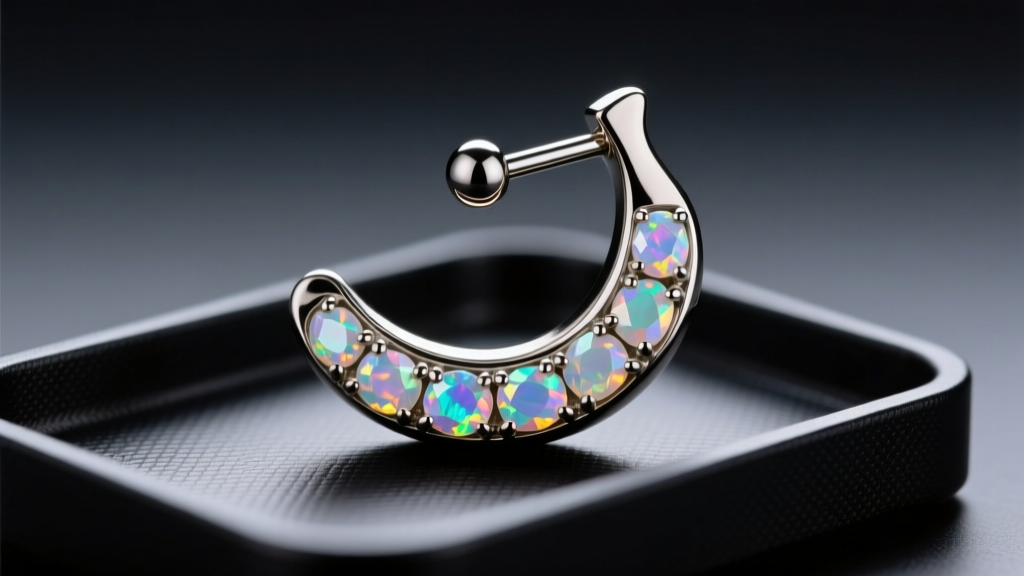
In the world of body modification and curated ear projects, the term banana earrings is a popular colloquialism for curved barbells. While traditionally associated with navel piercings, banana earrings are the undisputed workhorses of complex ear anatomy. They are the primary jewelry choice for rook piercings, frequently used in the tragus, and occasionally deployed in forward helix or daith placements. However, because cartilage is dense, unforgiving, and highly sensitive to pressure, wearing a curved barbell in the ear presents a unique set of biomechanical challenges.
If you are experiencing persistent pain, swelling, irritation bumps, or the dreaded "cheese-cutter" migration effect, your banana earrings are likely the culprit. As of 2026, advanced piercing standards dictate that troubleshooting these issues requires a deep understanding of jewelry geometry, metallurgy, and tissue tolerance. This comprehensive guide will help you diagnose the exact failure points of your curved cartilage jewelry and provide actionable, expert-level solutions to save your piercing.
The Anatomy of a Banana Earring: Beyond the Curve
To troubleshoot a problematic piercing, you must first understand the precise measurements that dictate how a banana earring interacts with your fistula (the piercing channel). A curved barbell is not merely a bent piece of metal; it is defined by three critical dimensions:
- Gauge (Thickness): The diameter of the metal shaft. In ear piercings, this is typically 16G (1.2mm) or 14G (1.6mm).
- Radius (Curvature): The measurement of the circle that the curve is derived from. Common radii for ear banana earrings are 1/4" (6.35mm), 5/16" (7.9mm), and 3/8" (9.5mm).
- Arc Length (Post Length): The total distance from one threaded end to the other, measured along the curve of the metal.
When any of these three variables mismatches your specific ear anatomy, the tissue reacts with inflammation, hypertrophic scarring, or rejection. According to the Association of Professional Piercers (APP), improper jewelry geometry is the leading cause of delayed healing in complex cartilage placements.
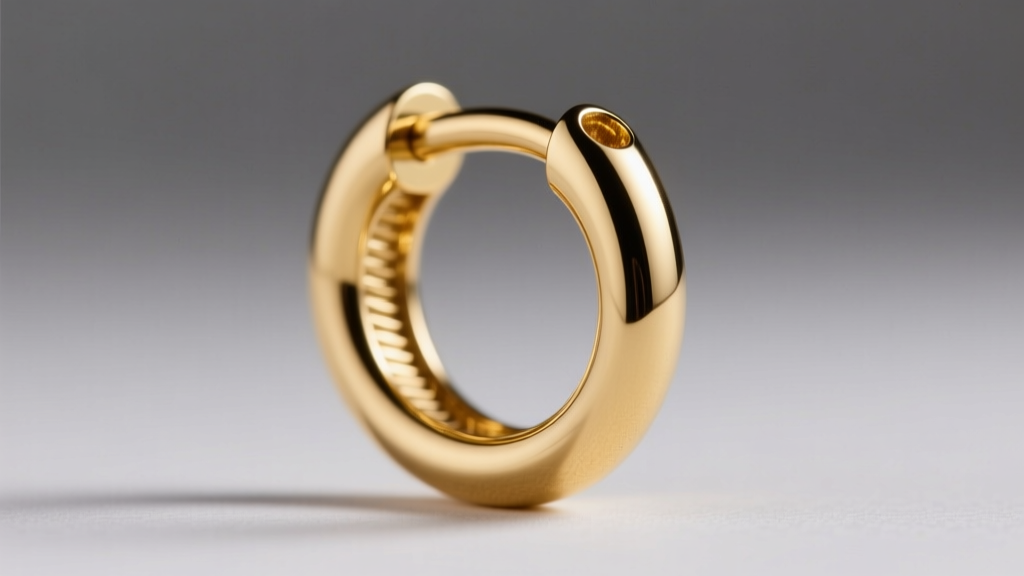
Troubleshooting Common Banana Earring Failures
Cartilage lacks the robust blood supply of the earlobe, meaning it cannot easily adapt to ill-fitting jewelry. Below are the most frequent failure modes associated with banana earrings and the exact mechanical fixes required to resolve them.
Problem 1: The "Cheese-Cutter" Effect and Migration
The Symptom: The piercing hole slowly elongates, moving closer to the edge of the cartilage fold. The jewelry feels like it is slicing through the tissue, especially when touched or slept on.
The Cause: This occurs when the gauge is too thin or the radius is too tight. A 16G (1.2mm) banana earring in a rook piercing concentrates all the mechanical stress onto a tiny surface area. If the curvature (radius) is too small for the thickness of your rook fold, the barbell acts like a wire cutting through cheese.
The Fix: 1. Upsize the Gauge: Transitioning from a 16G to a 14G (1.6mm) curved barbell increases the surface area distributing the weight, reducing the slicing effect by nearly 30%. 2. Adjust the Radius: If you are currently wearing a 1/4" radius, step up to a 5/16" or 3/8" radius to allow the jewelry to sit naturally within the fold without pulling the tissue taut.
Problem 2: Embedding and Tissue Swallowing
The Symptom: The decorative ends or the threading of the banana earring are sinking into the skin, causing severe swelling and localized heat.
The Cause: The arc length of the barbell is too short to accommodate the natural swelling of the cartilage, or the decorative ends are too small and lack a flat base (like a disk) to rest against the tissue.
The Fix: You must increase the overall length of the barbell. If you are wearing a 6mm arc length, upgrade to an 8mm or 10mm post. Additionally, swap out spherical beads for flat-back disks on the ends of the barbell to prevent the jewelry from being pulled into the fistula during sleep.
Problem 3: Persistent Irritation Bumps (Hypertrophic Scarring)
The Symptom: A raised, fleshy, or fluid-filled bump forms adjacent to the entry or exit point of the piercing.
The Cause: While moisture and friction play a role, the angle of the banana earring is often the hidden trigger. If the piercing was done at a 45-degree angle but the banana earring has a curvature designed for a 90-degree angle, the metal will constantly torque against the healing fistula, creating micro-tears that result in scar tissue.
The Fix: Consult an APP-certified piercer to assess the piercing angle. In many cases, switching from a banana earring to a flat-back labret stud (for the tragus) or a captive bead ring (for the daith) is the only way to align the jewelry with the natural geometry of the piercing channel.
Sizing Matrix: Matching Banana Earrings to Ear Placements
Use the following data table as a baseline reference when purchasing replacement banana earrings. Remember that individual anatomy varies wildly, and these are standard starting points for fully healed piercings.
| Piercing Placement | Ideal Gauge | Standard Radius | Common Failure Mode | Recommended End Type |
|---|---|---|---|---|
| Rook | 16G or 14G | 1/4" or 5/16" | Migration (Cheese-cutter) | Threaded Spheres or Disks |
| Tragus | 16G | 3/8" (Rarely used) | Angle Torque / Bumps | Flat-back (Labret preferred) |
| Forward Helix | 18G or 16G | 1/4" | Embedding due to swelling | Small Gem Disks |
| Snug / Anti-Helix | 14G | 5/16" or 3/8" | Severe Rejection | Threadless Push-Pin Ends |
Material Science: Why Your Metal Matters
Troubleshooting is incomplete without addressing metallurgy. Cartilage piercings are highly susceptible to contact dermatitis and nickel allergies, which manifest as weeping, itching, and chronic inflammation. Many cheap banana earrings are manufactured from "surgical steel" (316L), which contains up to 14% nickel. Even if the steel is polished, microscopic pitting can release nickel ions into the fistula over time.
For any problematic cartilage piercing, the 2026 standard of care demands a switch to ASTM F-136 Implant-Grade Titanium (Ti6Al4V). This specific alloy is entirely nickel-free, highly biocompatible, and can be polished to a mirror finish that prevents bacterial biofilm from adhering to the jewelry shaft. Alternatively, Niobium is an excellent, highly reactive-free metal that can be safely anodized to various colors without the use of toxic plating or paint.
"Jewelry for initial piercings and troubled cartilage placements must be made of materials that will not interfere with the body's natural healing processes. Implant-grade titanium remains the gold standard for minimizing adverse tissue reactions." — APP Aftercare and Jewelry Guidelines
The Threading Factor: Internal vs. External
If your banana earrings feature external threading (where the screw ridges are on the barbell itself), you are actively damaging your piercing every time you change the ends. Those sharp metal ridges act like a file, scraping the delicate epithelial lining of the fistula. Always invest in internally threaded or threadless (push-pin) banana earrings. In these designs, the barbell shaft is perfectly smooth, allowing it to glide through the tissue without causing micro-trauma.
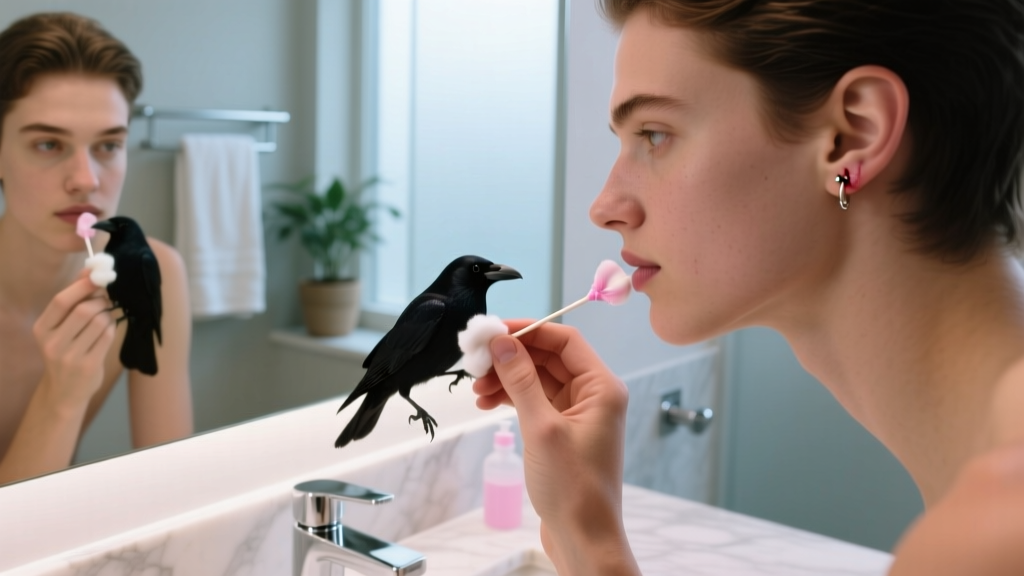
Step-by-Step Rescue Protocol for Irritated Cartilage
If your banana earrings have already caused severe irritation, swelling, or embedding, follow this strict rescue protocol to stabilize the tissue before visiting a professional piercer for a jewelry swap.
- Cease All Movement: Stop rotating, twisting, or touching the barbell. Cartilage heals through a delicate matrix of collagen; moving the jewelry shreds this matrix and resets the healing clock.
- Implement Sterile Saline Compresses: Spray sterile, 0.9% sodium chloride wound wash onto a piece of non-woven gauze. Hold it against the piercing for 3 to 5 minutes, twice daily. This softens lymphatic crusties without the mechanical friction of cotton swabs, which can leave behind microscopic fibers that cause granulomas.
- Manage Sleep Pressure: Use a travel neck pillow or a specialized piercing pillow with a hollow center. Sleeping directly on a curved barbell will force the metal into an unnatural angle, creating immediate pressure necrosis and irritation bumps.
- Avoid Topical Chemicals: Do not apply tea tree oil, hydrogen peroxide, rubbing alcohol, or antibiotic ointments. These substances are cytotoxic to fibroblasts (the cells responsible for rebuilding cartilage tissue) and will trap bacteria inside the fistula.
- Seek Professional Intervention: If the jewelry is visibly embedding or the tissue is hot to the touch, do not attempt to remove the banana earring yourself. The hole may close rapidly, trapping an infection inside the cartilage (perichondritis). Visit an APP-certified piercer or a dermatologist immediately to have the jewelry safely upsized or swapped for a flat-back titanium labret stud to relieve the pressure.
Final Thoughts on Curved Cartilage Jewelry
Banana earrings are brilliant pieces of jewelry engineering when applied correctly, but they leave zero margin for error in dense ear cartilage. By meticulously auditing your gauge, radius, material grade, and threading type, you can transform a painful, failing piercing into a stable, lifelong staple of your curated ear. Always prioritize anatomical precision over aesthetic trends, and never hesitate to consult a professional when tissue mechanics fail.


