Crystal and Pearl Drop Earrings: A Technical Buyer's Guide
Explore the technical anatomy of crystal and pearl drop earrings, from pearl luster grading and crystal cut precision to weight-bearing mechanics.

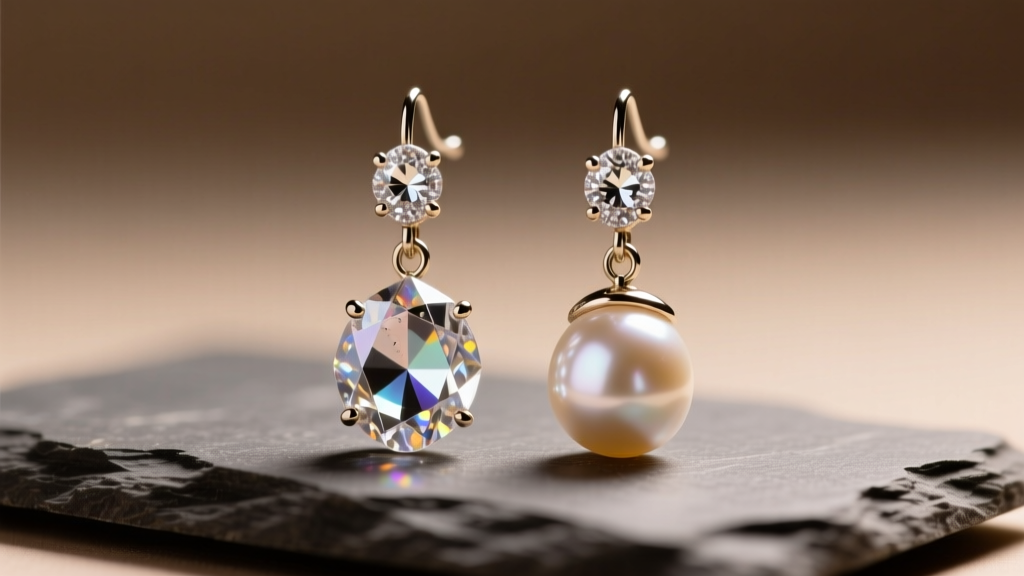
When evaluating fine jewelry, the intersection of organic gemstones and precision-cut synthetics requires a rigorous technical approach. Crystal and pearl drop earrings represent one of the most complex categories in jewelry design, demanding a perfect balance of optical physics, structural metallurgy, and weight distribution. Unlike simple studs, drop earrings suspend mass below the earlobe, introducing kinetic stress and leverage points that can lead to hardware failure or lobe tearing if improperly engineered. This guide deconstructs the material science, grading metrics, and structural mechanics you must evaluate before investing in high-end drop earrings.
The Structural Anatomy of Drop Earrings
In gemological and jewelry manufacturing terms, a 'drop' earring is distinct from a 'dangle.' A true drop earring features a focal element (the pearl and crystal assembly) that hangs just below the earlobe but remains largely stationary, connected via a rigid or semi-rigid jump ring. Dangles, conversely, feature multiple articulated joints that move freely. Because drops concentrate their mass at a single terminal point, the center of gravity must be meticulously calibrated. If the crystal component is disproportionately heavy compared to the pearl, the earring will tilt forward, causing the post to angle downward and the backing to dig into the wearer's neck.
Pearl Grading: Beyond the Marketing Myths
The pearl component in premium drop earrings is typically an Akoya or South Sea saltwater pearl, chosen for its high-luster, mirror-like surface. However, consumers are often misled by unregulated 'AAA' grading systems. To evaluate pearls with technical precision, you must look at nacre thickness and luster sharpness.
Nacre Thickness and Luster Metrics
According to the Gemological Institute of America (GIA), nacre thickness is the primary determinant of a pearl's longevity and optical performance. For Akoya pearls used in drop earrings, the minimum acceptable nacre thickness is 0.4mm. Anything thinner risks 'peeling' or cracking under the mechanical stress of being drilled and mounted on a drop wire. South Sea pearls should exhibit a minimum of 0.8mm to 2.0mm of nacre.
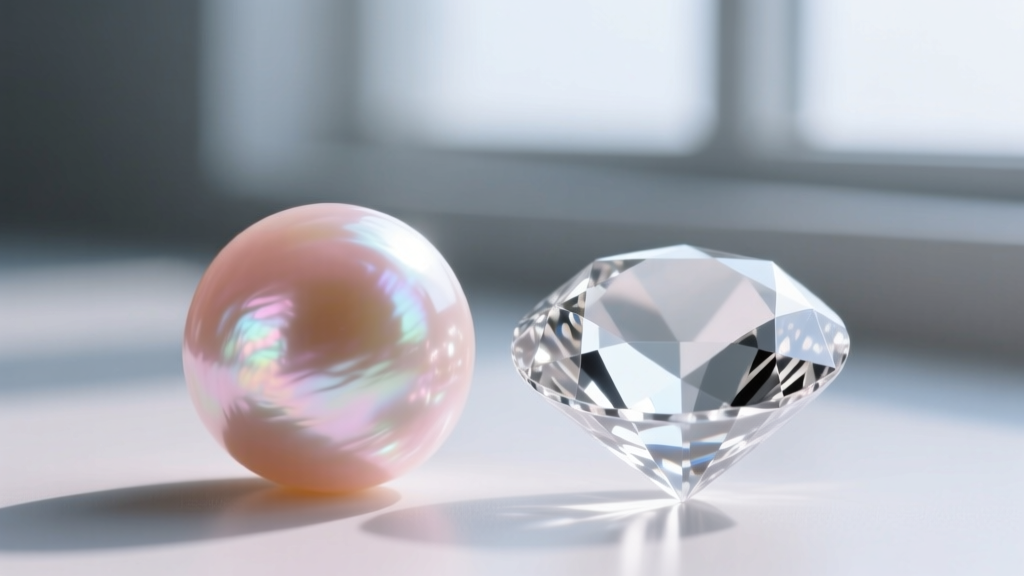
To test luster sharpness, jewelers use the 'pin-prick' test: reflecting a pinpoint light source off the pearl's surface. A high-quality pearl will reflect a sharp, distinct point of light with a crisp edge, indicating tightly stacked, well-aligned aragonite platelets within the nacre. Furthermore, look for a subtle rosé or silver overtone, which indicates optimal light interference within the nacre layers.
Crystal Precision and Refractive Index
The crystal elements in these earrings are designed to provide scintillation that contrasts with the soft, satin luster of the pearl. Historically, high-end jewelry utilized Strass crystal, which contained up to 32% lead oxide (PbO) to achieve a high Refractive Index (RI) of ~1.7. However, modern environmental and health standards have shifted the industry toward lead-free alternatives.
Today, premium brands utilize Advanced Crystal formulations, substituting lead with barium oxide and potassium oxide. According to research highlighted by The Gemmological Association of Great Britain (Gem-A), these modern formulations maintain an RI of approximately 1.65 to 1.68. While marginally lower than leaded glass, the difference in scintillation is virtually imperceptible to the naked eye, provided the facet alignment is machine-cut to exact tolerances. When inspecting the crystal drop, ensure the meet-points (where facets intersect) are perfectly sharp, with no 'girdle' rounding or polishing burns that scatter light inefficiently.
Weight-Bearing Hardware Mechanics
The most common failure point in crystal and pearl drop earrings is the hardware. The weight of a 10mm South Sea pearl (approx. 1.5 to 2.0 grams) combined with a multi-faceted crystal drop (approx. 2.5 to 4.0 grams) creates significant downward leverage on the ear piercing.
| Hardware Type | Standard Gauge | Wire Diameter | Max Weight Capacity | Best Application |
|---|---|---|---|---|
| Post & Butterfly Clutch | 20-Gauge | 0.81mm | ~3.5 grams | Lightweight, short drops (<25mm) |
| Post & Screw Back | 18-Gauge | 1.02mm | ~6.0 grams | Medium drops requiring secure locking |
| Leverback Wire | 18-Gauge | 1.02mm | ~8.0+ grams | Heavy, elongated crystal/pearl drops |
| French Wire (Fishhook) | 20-Gauge | 0.81mm | ~4.0 grams | Classic drops (requires silicone stoppers) |
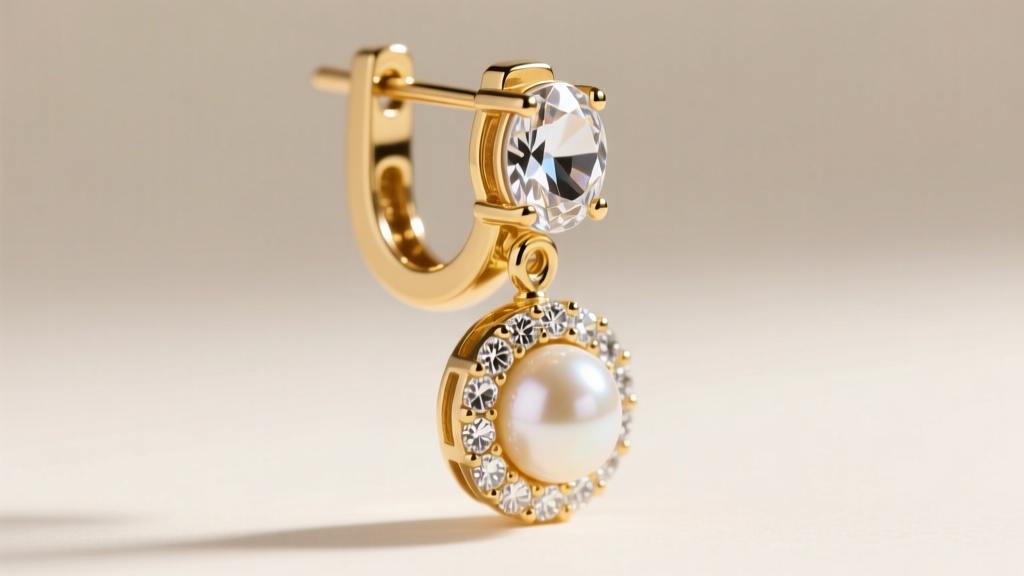
For drops exceeding 30mm in length or 5 grams in total weight, an 18-gauge leverback is the mandatory standard. The leverback mechanism distributes the weight across the cartilage of the ear's upper lobe, rather than concentrating it entirely on the piercing hole. Furthermore, ensure the jump ring connecting the crystal drop to the pearl cap is soldered closed; unsoldered jump rings will inevitably warp and open under the pendulum motion of daily wear.
Proportional Scaling and Face Shapes
Technical design also encompasses aesthetic ergonomics. The millimeter length of the drop must be scaled to the wearer's facial geometry to maintain visual equilibrium.
- Round Faces: Require elongated, linear drops (45mm - 65mm) to create a vertical optical illusion. Avoid teardrop shapes that widen at the bottom, as they emphasize cheek width.
- Square Faces: Benefit from curved, oval, or classic teardrop crystal and pearl combinations (35mm - 50mm) to soften the angularity of the jawline.
- Oval Faces: Structurally versatile; can support heavy, chandelier-style drops or compact 20mm cluster drops without disrupting facial harmony.
Maintenance and Failure Mode Troubleshooting
Even expertly crafted earrings require specific maintenance protocols to prevent catastrophic failure. The most frequent issue in pearl drop earrings is 'epoxy creep' within the pearl cup. Many manufacturers seat the pearl on a metal peg using cyanoacrylate adhesives. Over 12 to 18 months, exposure to skin oils, cosmetics, and body heat degrades this bond, causing the pearl to detach.
Expert Troubleshooting Tip: If you notice a slight 'click' or rotational movement when gently twisting the pearl on its drop wire, the adhesive has failed. Do not wear the earrings. Take them to a bench jeweler to have the pearl re-seated using a high-viscosity, two-part jeweler's epoxy, or ideally, request a mechanical wire-wrap conversion if the pearl's drill hole permits.
Furthermore, cleaning requires strict compartmentalization. As noted in the GIA Pearl Care Guidelines, pearls are highly susceptible to acidic degradation and dehydration. Never place crystal and pearl drop earrings in an ultrasonic cleaner. The high-frequency cavitation will not only strip the pearl's delicate nacre but can also cause internal fracturing in crystals that possess microscopic tension lines from the cutting process. Instead, clean the crystal components with a microfiber cloth and a mild, ammonia-free glass cleaner, carefully avoiding the pearl, which should only be wiped with a damp, lint-free cloth after wear.


