Earring Piercing Solution: 2026 Cost & Value Assessment
Evaluating the true cost of an earring piercing solution in 2026. Compare gun vs. needle pricing, titanium grades, and hidden healing expenses.

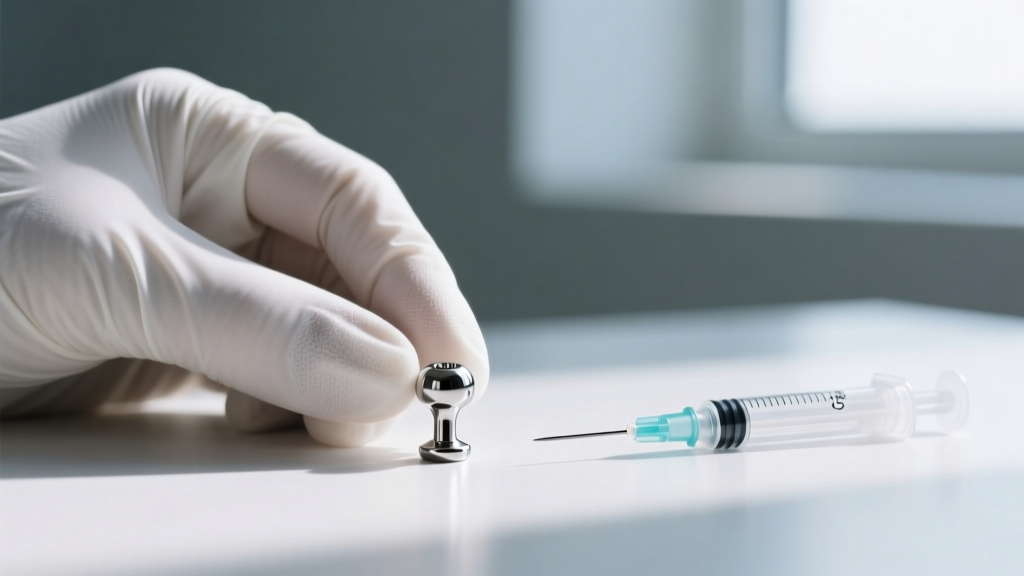
The True Economics of an Earring Piercing Solution
When evaluating an earring piercing solution, the initial price tag is rarely the final cost. In 2026, the piercing industry has seen a definitive split between high-volume, low-cost retail kiosks and specialized, medically-aligned professional studios. For consumers, understanding the true value of a piercing requires looking beyond the upfront service fee and analyzing the metallurgical quality of the starter jewelry, the biomechanical impact of the piercing tool, and the statistical likelihood of expensive complications.
A genuine earring piercing solution encompasses three distinct financial pillars: the sterilization and technique protocol, the biocompatibility of the initial jewelry, and the aftercare ecosystem. Cutting corners on any of these three pillars inevitably leads to a cascade of hidden costs, ranging from hypertrophic scarring treatments to dermatological interventions for severe contact dermatitis. This guide breaks down the exact material grades, gauge specifications, and long-term value metrics you need to make an informed anatomical investment.
Tissue Trauma: Spring-Loaded Guns vs. Hollow Needles
The most critical variable in your piercing budget is the tool used to create the fistula (the piercing channel). Mall kiosks predominantly use spring-loaded piercing guns, while professional studios utilize single-use, sterilized hollow needles. The U.S. Food and Drug Administration (FDA) and global health organizations have repeatedly warned against the use of piercing guns on cartilage, yet they remain a staple of budget retail solutions due to their low overhead and rapid throughput.
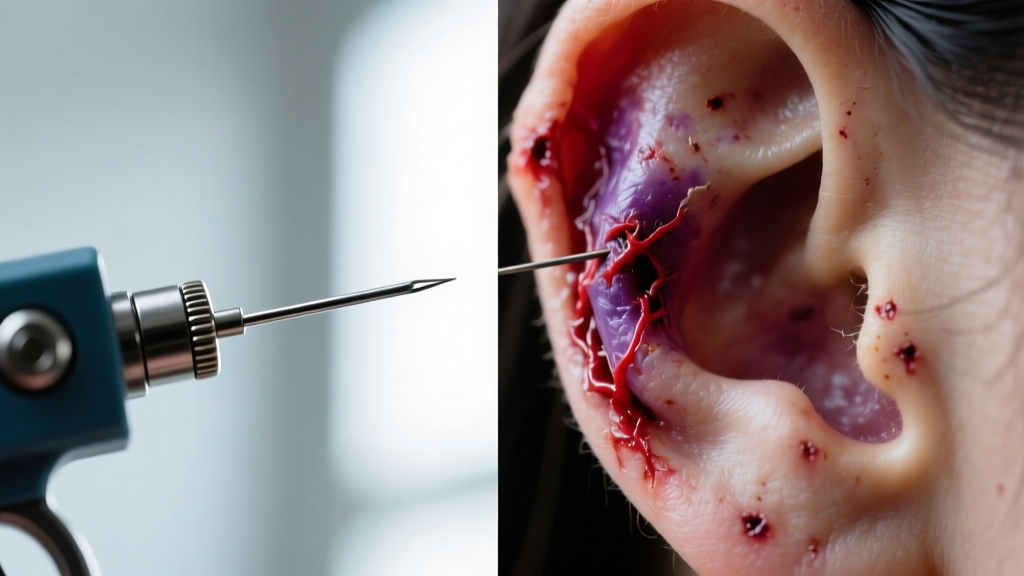
The Hidden Cost of Blunt Force Trauma
A hollow needle (typically 16-gauge or 1.2mm for standard lobes, and 14-gauge or 1.6mm for cartilage) features a tri-bevel tip that cleanly slices and removes a microscopic crescent of tissue. This creates a smooth channel that heals efficiently. Conversely, a piercing gun relies on blunt force to push a relatively dull, thick earring post through the skin. This causes massive cellular crush damage, leading to immediate swelling, prolonged inflammation, and a high risk of hypertrophic scarring.
- Gun Piercing Cost: $30 - $50 upfront. Hidden Costs: High probability of embedded jewelry due to swelling, requiring a $150+ urgent care visit for surgical removal.
- Needle Piercing Cost: $70 - $120 upfront (includes premium jewelry). Hidden Costs: Minimal, assuming proper aftercare.
From a pure value perspective, the needle method is vastly superior. The initial savings of a gun piercing are frequently erased by the cost of treating blowouts, keloids, or severe localized infections caused by inadequate sterilization of reusable plastic gun components.
Material Science: Where Budget Meets Biology
The jewelry inserted into a fresh wound dictates the biological response of your immune system. Budget earring piercing solutions often rely on misleading marketing terms like "hypoallergenic" or "surgical steel" to cut manufacturing costs. As a domain expert, I urge you to ignore these terms and look strictly for ASTM certification codes.
Decoding the Alloys: 316L vs. ASTM F-136
"Surgical Steel" (usually 316L or 316L VM) contains between 8% and 10% nickel. While the alloy is generally stable in healed piercings, the acidic environment of an open, healing wound can cause nickel ions to leach into the bloodstream, triggering allergic contact dermatitis. In 2026, the gold standard for fresh piercings is ASTM F-136 Implant-Grade Titanium (Ti-6Al-4V ELI). This alloy is entirely nickel-free, highly polished to prevent bacterial adhesion, and is the exact same material used in orthopedic joint replacements.
| Material Grade | Average Retail Cost | Nickel Content | Healing Value Score | Best Use Case |
|---|---|---|---|---|
| "Mystery" Alloy / Plated | $5 - $15 | Unknown / High | 1/10 (High Risk) | Never use in fresh piercings |
| 316L Surgical Steel | $20 - $40 | 8% - 10% | 5/10 (Moderate Risk) | Fully healed lobes only |
| Niobium (Pure) | $35 - $60 | 0% | 8/10 (Excellent) | Cartilage and sensitive lobes |
| ASTM F-136 Titanium | $45 - $95 | 0% | 10/10 (Optimal) | All fresh piercings |
According to the Association of Professional Piercers (APP), implant-grade titanium should be the absolute minimum standard for any initial body jewelry. Paying an extra $30 for verified ASTM F-136 titanium is a fractional premium that virtually eliminates the risk of metal-induced rejection.
Mechanical Design: Threading and the Fistula
Beyond the metal itself, the mechanical construction of the earring post plays a massive role in healing value. Budget starter earrings utilize external threading, where the screw-like ridges are carved into the post that passes through your flesh. Pushing externally threaded jewelry through a fresh wound acts like a cheese grater, tearing the delicate forming fistula and introducing microscopic pathways for bacteria.
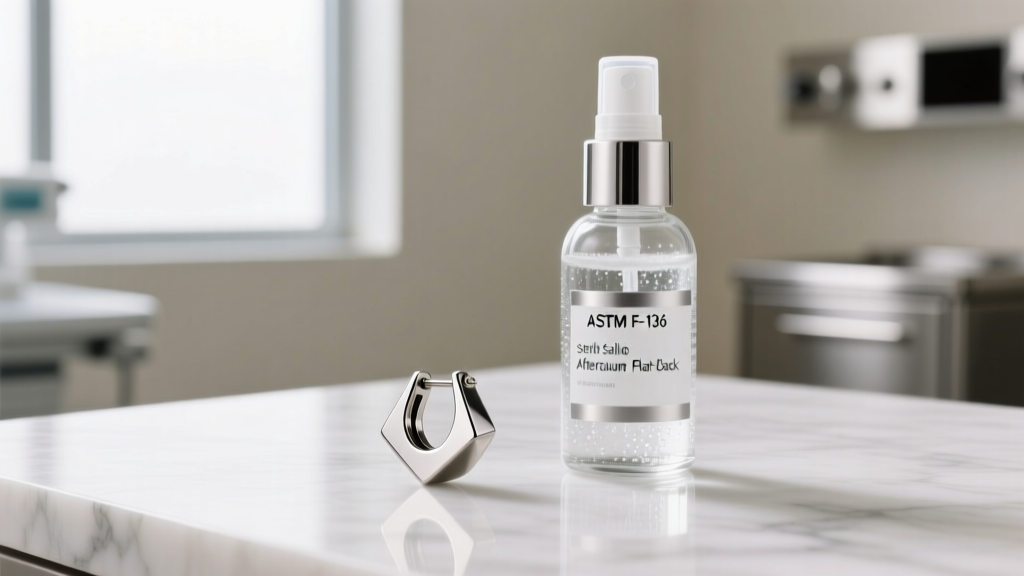
The Threadless and Internally Threaded Advantage
Professional earring piercing solutions utilize either internally threaded jewelry (where the screw is on the decorative end, and the post is perfectly smooth) or threadless (press-fit) jewelry. Threadless titanium labrets use tension to hold the decorative end in place, offering a completely smooth insertion that guarantees zero tissue tearing. While a threadless titanium setup might cost $65 compared to a $15 externally threaded butterfly-back earring, the elimination of insertion trauma reduces healing time by up to 30%.
Lobe vs. Cartilage: Adjusting Your Budget Strategy
Not all ear anatomy heals equally, and your budget strategy should reflect this biological reality. Earlobes are highly vascular, consisting of soft adipose and connective tissue. They heal relatively quickly (6 to 8 weeks) and are more forgiving of minor material impurities or slight gauge variations.
Cartilage (such as the helix, conch, or tragus), however, is avascular. It receives nutrients through diffusion rather than direct blood flow, meaning healing takes anywhere from 6 to 12 months. Furthermore, cartilage is prone to severe swelling. A professional piercer will use a 16-gauge or 14-gauge titanium flat-back labret with an extra-long post (e.g., 8mm or 10mm) to accommodate this swelling. Budget solutions often use short, tight posts that become embedded in the swelling cartilage within 48 hours, requiring emergency intervention. When planning your budget, allocate at least 40% more for cartilage piercing solutions to ensure you are paying for the necessary downsizing appointments (usually required at the 8-week mark) and premium, high-polish titanium.
Aftercare Economics: Sterile Saline vs. Toxic Alternatives
The final component of the earring piercing solution is aftercare. The most cost-effective, medically sound aftercare solution is sterile 0.9% sodium chloride (saline) wound wash. A canister of sterile saline costs roughly $5 to $8 and contains no preservatives that could irritate the wound.
Conversely, many budget kits include small bottles of benzalkonium chloride, tea tree oil, or rubbing alcohol. These harsh astringents destroy the fragile new epithelial cells trying to line the fistula, effectively resetting the healing process and increasing the likelihood of irritation bumps. Spending $6 on sterile saline and avoiding DIY chemical mixtures is a non-negotiable aspect of protecting your initial piercing investment.
Final Verdict: Investing in Your Anatomy
As we navigate the jewelry market in 2026, the data is unequivocal: the cheapest earring piercing solution is rarely the most economical in the long run. A professional needle piercing using ASTM F-136 threadless titanium, performed by an APP-certified piercer, represents the highest value proposition. It minimizes tissue trauma, eliminates nickel exposure, and drastically reduces the statistical probability of expensive medical complications. When assessing your budget, view the piercing not as a mere accessory purchase, but as a minor surgical procedure where material science and anatomical expertise dictate the ultimate return on your investment.


