Rhodonite Earrings Troubleshooting: Fading, Fakes & Stretched Lobes
Troubleshoot common rhodonite earring issues. Learn how to fix stretched lobes from heavy stones, clean safely, and spot dyed howlite fakes.

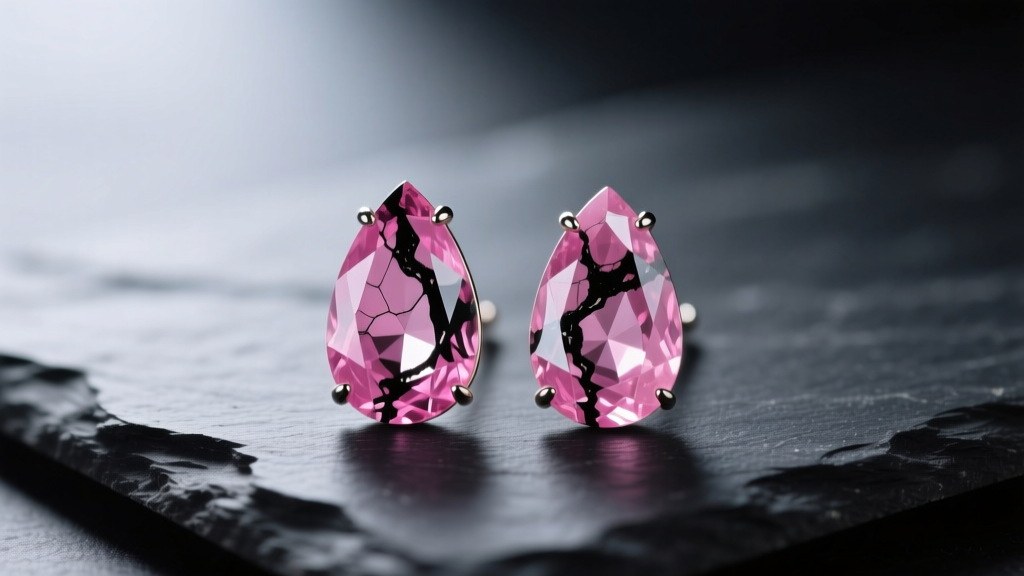
Rhodonite is a captivating manganese inosilicate prized for its striking pink-to-red matrix and dramatic black dendritic inclusions. However, as we navigate the jewelry market in 2026, the surge in opaque gemstone popularity has brought a wave of poorly constructed rhodonite earrings and convincing synthetics. Because rhodonite sits at a modest 5.5 to 6.5 on the Mohs hardness scale and carries a surprisingly high specific gravity, it presents unique structural and chemical vulnerabilities. If your favorite pair is causing earlobe fatigue, losing its luster, or showing signs of chemical bleeding, this comprehensive troubleshooting guide will help you diagnose and resolve the issue using gemological best practices.
The Heavy Stone Dilemma: Preventing Stretched Lobes
The most frequent complaint regarding rhodonite drop earrings and large hoops is earlobe stretching. This is not a design flaw, but a matter of mineral physics. According to Mindat.org's mineral database, rhodonite has a specific gravity of 3.57 to 3.73. To put that in perspective, quartz (amethyst, citrine) has a specific gravity of roughly 2.65. This means a 20mm rhodonite teardrop is significantly heavier than an identically sized amethyst teardrop.
When this dense mass is suspended from a standard 20-gauge (0.81mm) earring post with a basic friction butterfly back, gravity and daily movement create a "cheese-cutter effect," slowly elongating the piercing hole.
Hardware Upgrades for Heavy Stones
- Post Gauge: Upgrade your earring findings to 18-gauge (1.02mm) or 16-gauge (1.29mm) titanium or surgical steel posts. The thicker metal distributes the weight across a wider surface area of the earlobe tissue.
- Locking Backs: Discard standard butterfly backs. Use La Pousette locking backs or jumbo silicone O-rings to prevent the heavy stone from pulling the earring out of the ear during sleep or exercise.
- Support Patches: For existing stretched lobes, apply adhesive earring support patches (like Lobe Wonder) behind the ear to bear the brunt of the stone's weight.
Surface Degradation: The Hidden Dust Hazard
If your rhodonite cabochons have lost their polished luster and appear cloudy, you are likely a victim of environmental dust. Household dust contains microscopic particles of quartz, which ranks at a 7 on the Mohs scale. Because rhodonite maxes out at 6.5, wiping your earrings dry with a jewelry cloth effectively drags quartz particles across the softer stone, creating thousands of micro-scratches.
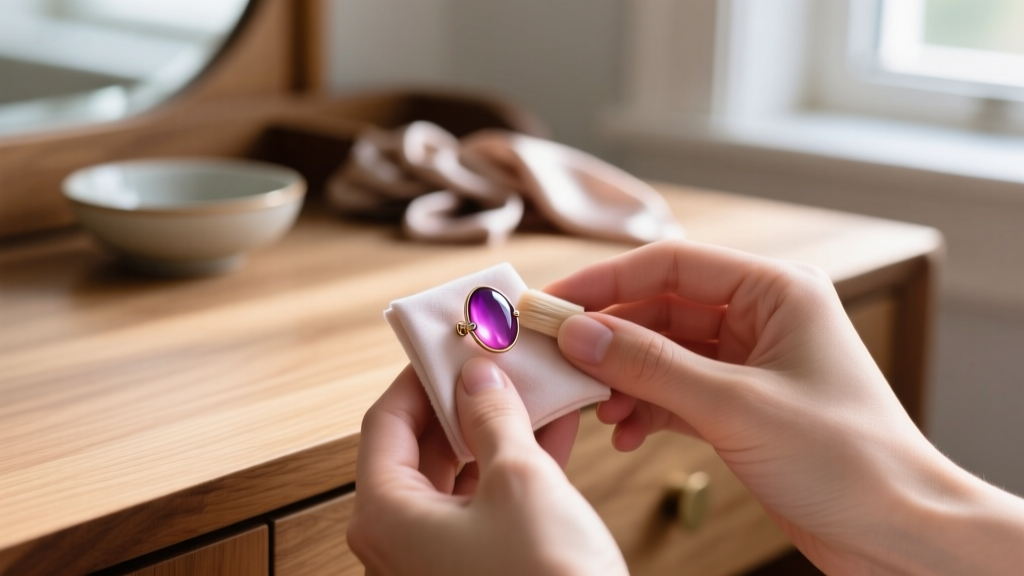
To restore the polish without causing further abrasion, you must lift the dust rather than drag it. The International Gem Society (IGS) recommends a wet-cleaning approach for silicate gems of this hardness.
"Never dry-wipe opaque, matrix-heavy gemstones. The varying hardness levels between the host rock and the inclusions mean that dry friction will wear away the softer matrix faster, leaving a pitted, uneven surface."
The Safe Cleaning Protocol
- Submerge the earrings in a bowl of distilled water mixed with a single drop of pH-neutral dish soap (avoid soaps with moisturizers or citric acids).
- Let them soak for three minutes to loosen oils and dust.
- Gently agitate the water with your fingers; do not use a toothbrush, as stiff bristles can scratch the manganese inclusions.
- Rinse with distilled water and pat dry with a lint-free microfiber cloth.
The Ultrasonic Disaster: Fractured Inclusions
One of the most catastrophic mistakes owners make is placing rhodonite earrings into an ultrasonic jewelry cleaner. The black veins in rhodonite are composed of manganese oxide. While the pink silicate matrix is relatively stable, the boundary where the manganese meets the rhodonite is a natural fault line. The high-frequency cavitation bubbles generated by ultrasonic cleaners create microscopic shockwaves that exploit these fault lines, causing the black inclusions to fracture, crumble, or completely detach from the pink stone. If your rhodonite looks "dusty" or chalky around the black veins after a cleaning, the stone has suffered acoustic fracturing and requires professional lapidary re-polishing.
Exposing Fakes: Dyed Howlite vs. True Rhodonite
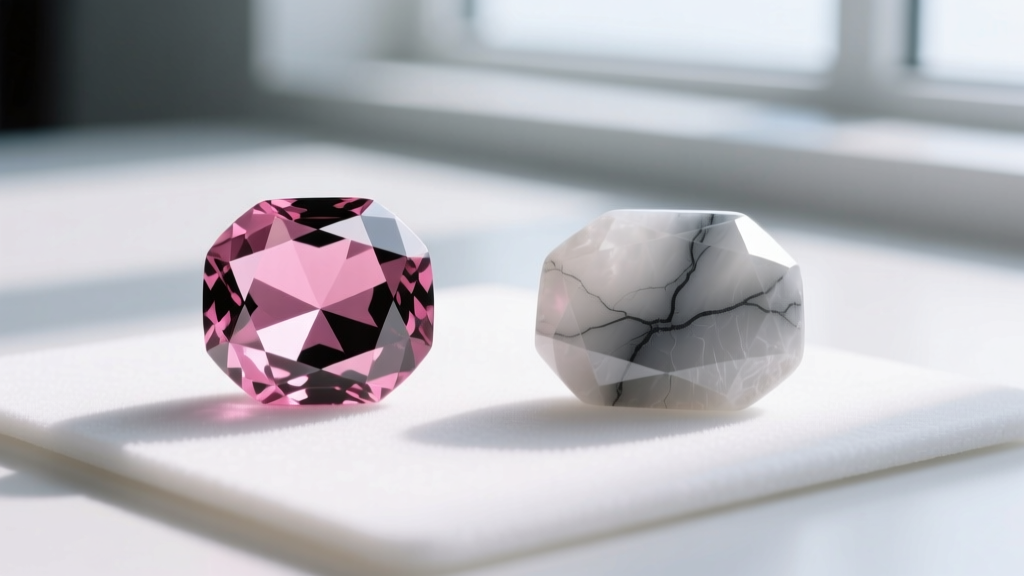
As of 2026, the market is heavily saturated with dyed howlite and marble masquerading as rhodonite. Howlite is a highly porous borate mineral (Mohs 3.5) that easily absorbs pink dyes. Because rhodonite is relatively inexpensive in its raw form, fakes are usually sold in fast-fashion settings or marketed as "rare cherry stone."
The Acetone and Visual Verification Test
To troubleshoot whether your earrings are genuine, perform a visual and chemical inspection:
- Vein Sharpness: Genuine rhodonite features sharp, jagged, pitch-black manganese veins. Dyed howlite usually retains its natural grey/brown webbing, which looks blurry and muted even after dyeing.
- The Acetone Swab: Dip a cotton swab in pure acetone (nail polish remover) and rub it vigorously on an inconspicuous area of the stone, such as the back of the cabochon or the post hole. If the swab turns pink, you have a dyed fake. Genuine rhodonite is colorfast and will not bleed onto the swab.
- Weight Check: Because howlite has a much lower specific gravity (2.53) than rhodonite (3.7), a fake pair of earrings will feel suspiciously light and plastic-like compared to the dense, glassy heft of real rhodonite.
Hardware Tarnish and Manganese Bleeding
Rhodonite is frequently set in sterling silver, copper, or brass. When worn against the skin, the combination of sweat (which is mildly acidic) and body heat can trigger a chemical reaction if the stone has micro-fractures. The manganese oxide can oxidize further, leading to "manganese bleeding," where a dark, rusty residue leaches out of the stone and stains the surrounding metal setting and your skin. Furthermore, if the earring post is made of copper or low-karat gold, the sulfur in your sweat combined with the metallic elements in the stone can accelerate galvanic corrosion, turning the earring backing green or black.
The Fix: Always remove rhodonite earrings before exercising or swimming. If the metal setting is heavily tarnished, use a specialized silver polishing cloth on the metal only, taking extreme care not to rub the polishing compound onto the porous stone, which can trap chemicals in the manganese veins.
Quick-Reference Troubleshooting Matrix
| Problem Symptom | Root Cause | Actionable Solution |
|---|---|---|
| Earring constantly droops or falls out | High specific gravity (3.7) overpowering standard friction backs | Switch to 18g posts with La Pousette locking backs or silicone O-rings |
| Cloudy, dull surface with micro-scratches | Dry-wiping quartz-containing dust across a Mohs 5.5 surface | Soak in distilled water and pH-neutral soap; never dry-wipe |
| Black veins crumbling or looking chalky | Ultrasonic cavitation fracturing the manganese oxide inclusions | Stop ultrasonic use immediately; seek lapidary re-polishing |
| Pink color rubbing off on skin or swab | Dyed howlite or marble imposter (Mohs 3.5) | Perform acetone swab test; return to vendor as counterfeit |
| Dark rusty residue staining the metal setting | Manganese bleeding triggered by acidic sweat and micro-fractures | Remove during exercise; clean metal with a dry polishing cloth only |
Troubleshooting rhodonite earrings requires an understanding that you are dealing with a complex, multi-mineral composite rather than a uniform crystal. By respecting its density, avoiding harsh acoustic and chemical cleaners, and verifying its authenticity, you can preserve the striking contrast and structural integrity of your jewelry for years to come.


