Expert Cleaning and Care for 14k Gold Cat Earrings
Learn how to safely clean, polish, and maintain your 14k gold cat earrings. Expert tips on alloy care, gemstone protection, and daily wear.

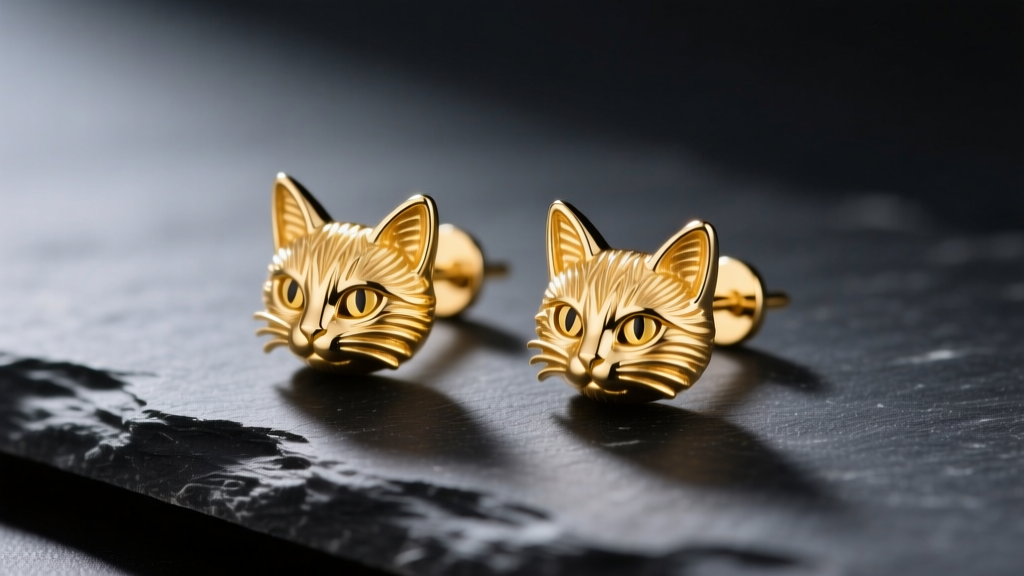
The Metallurgy of 14k Gold: Why Your Cat Earrings Need Specific Care
To properly maintain your jewelry, you must first understand the material. Pure 24-karat gold is too soft for intricate, wearable designs like detailed feline silhouettes or delicate cat whiskers. Therefore, jewelers use 14k gold, which consists of 58.3% pure gold and 41.7% alloy metals—typically a blend of copper, silver, zinc, and sometimes nickel or palladium. This alloy mixture provides the necessary tensile strength to hold gemstone eyes and maintain the structural integrity of delicate cat ear tufts.
However, this 41.7% alloy is precisely why your earrings require a specialized cleaning regimen. While pure gold is virtually impervious to tarnish, copper and silver are highly reactive. When exposed to the natural acidity of your skin, sulfur in the air, or chemical residues from cosmetics, these alloy metals oxidize. This oxidation manifests as a dull, cloudy film over your cat earrings or, in severe cases, a dark tarnish that settles into the microscopic crevices of the design. According to the Gemological Institute of America (GIA), understanding your specific gold alloy is the first step in preventing irreversible chemical damage to your fine jewelry.
Environmental Hazards and Stress Corrosion Cracking
The most critical threat to 14k gold cat earrings is not physical scratching, but chemical degradation. Many jewelry owners are unaware of a metallurgical phenomenon known as stress corrosion cracking (SCC). When 14k gold is exposed to chlorine—commonly found in swimming pools, hot tubs, and household bleach—the chlorine attacks the copper and zinc atoms at the alloy's grain boundaries. Because the earring post and the solder joints connecting the cat silhouette to the post are under natural mechanical tension, chlorine exposure can cause the earring post to snap cleanly off without warning.
Sulfur is another major adversary. Hot springs, certain industrial environments, and even everyday items like rubber bands or hard-boiled eggs emit sulfur compounds that rapidly tarnish the silver and copper in your 14k gold. Furthermore, everyday cosmetics, including hairsprays, dry shampoos, and heavily fragranced lotions, leave a microscopic film that traps dead skin cells and sebum against the metal, accelerating oxidation and dulling the reflective finish of your feline designs.
The Step-by-Step 14k Gold Cleaning Protocol
When your cat earrings lose their luster, avoid abrasive commercial dips and opt for a gentle, chemically safe cleaning method. This routine is designed to lift sebum and environmental grime from intricate details like micro-paved diamond eyes or etched whiskers without damaging the alloy.
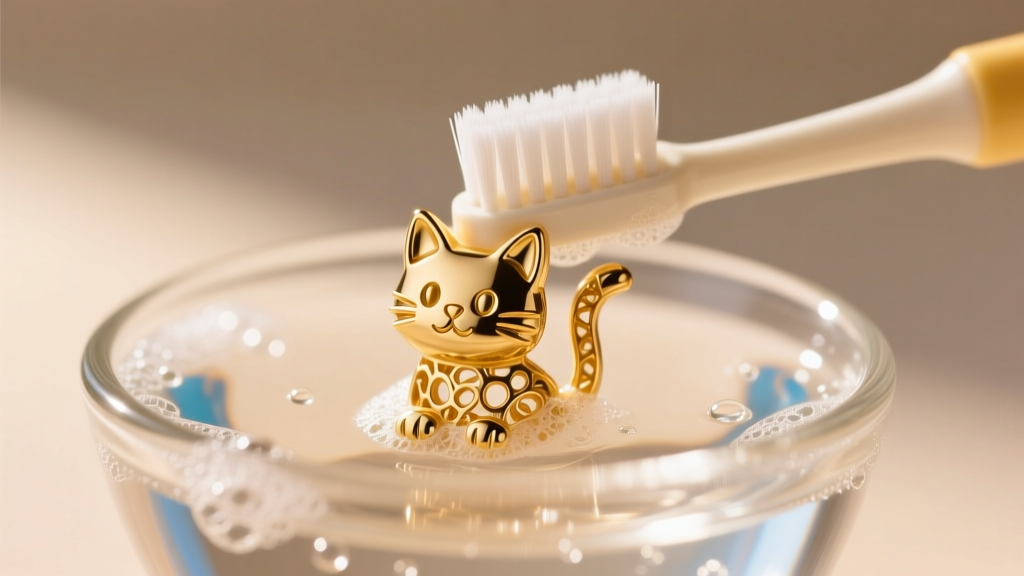
- Prepare the Solution: Fill a small glass bowl with lukewarm distilled water. Tap water contains trace minerals and chlorine that can leave hard water spots on high-polish gold. Add three drops of a mild, phosphate-free dish soap (such as original Dawn).
- Soak Briefly: Submerge your 14k gold cat earrings in the solution for exactly 3 to 5 minutes. This softens hardened sebum and cosmetic buildup trapped behind the earring post and within the design's crevices. Do not exceed 10 minutes.
- Agitate Gently: Using a brand-new, ultra-soft baby toothbrush, gently brush the earrings. Use sweeping motions away from any gemstone settings to avoid loosening the prongs. Pay special attention to the earring post and the butterfly clutch, where dead skin cells accumulate heavily.
- Rinse Thoroughly: Rinse the earrings under a gentle stream of lukewarm distilled water. Ensure the drain is securely plugged or use a small mesh strainer to prevent losing a small cat stud.
- Dry and Polish: Pat the earrings dry with a lint-free microfiber cloth. Avoid paper towels or tissues, as their wood-pulp fibers can inflict micro-scratches on the high-polish surfaces of your 14k gold.
Navigating Enamel, Gemstones, and Intricate Details
Cat earrings frequently incorporate mixed media to bring the design to life. Cold enamel is often used to create vibrant green or blue cat eyes, while vitreous (kiln-fired) enamel might be used for a sleek, black nose. Micro-pave diamonds or black onyx are also common accents. These materials dictate strict limitations on your cleaning methods.
Cold enamel is essentially a hardened resin. It is highly susceptible to thermal shock and chemical dissolution. Never use hot water, steam cleaners, or alcohol-based cleaners on enameled cat earrings, as the resin will cloud, crack, or lift from the gold setting.
If your cat earrings feature fracture-filled gemstones (like certain emeralds or treated rubies used for exotic cat eyes), ultrasonic cleaners are strictly prohibited. The high-frequency vibrations can shatter the stones or boil out the fracture-filling oils, leaving the gems opaque and heavily fractured. For gemstone-accented pieces, stick to the manual baby-toothbrush method and avoid soaking the stones for prolonged periods.
Safe vs. Unsafe Cleaning Agents for 14k Gold
Choosing the wrong chemical agent can strip finishes, degrade alloys, or ruin gemstone treatments. Use the following reference table to ensure you are using appropriate agents for your 14k gold cat earrings.
| Cleaning Agent | Safety for 14k Gold | Impact on Earring Details |
|---|---|---|
| Mild Dish Soap & Distilled Water | Highly Safe | Lifts oils safely; protects enamel and gems. |
| Jeweler's Polishing Cloth | Safe (Use Gently) | Removes light tarnish; avoid rubbing matte finishes. |
| Baking Soda Paste | Unsafe | Highly abrasive; will scratch high-polish gold. |
| Chlorine Bleach | Extremely Dangerous | Causes stress corrosion cracking; destroys alloy. |
| Ammonia-Based Cleaners | Unsafe for Alloys | Can pit copper alloys and cloud enamel eyes. |
| Ultrasonic Cleaners | Conditionally Safe | Only for solid gold without enamel or treated gems. |
| Toothpaste | Unsafe | Contains silica abrasives that permanently scar gold. |
Storage, Prong Tightening, and Hardware Maintenance
Proper storage is an extension of the cleaning process. When not adorning your ears, 14k gold cat earrings should be kept in an environment that minimizes exposure to oxygen and humidity. Store each earring individually in an anti-tarnish flannel pouch or a jewelry box lined with treated Pacific cloth. These fabrics are impregnated with microscopic silver or copper particles that absorb ambient sulfur and moisture before it can reach your earrings.
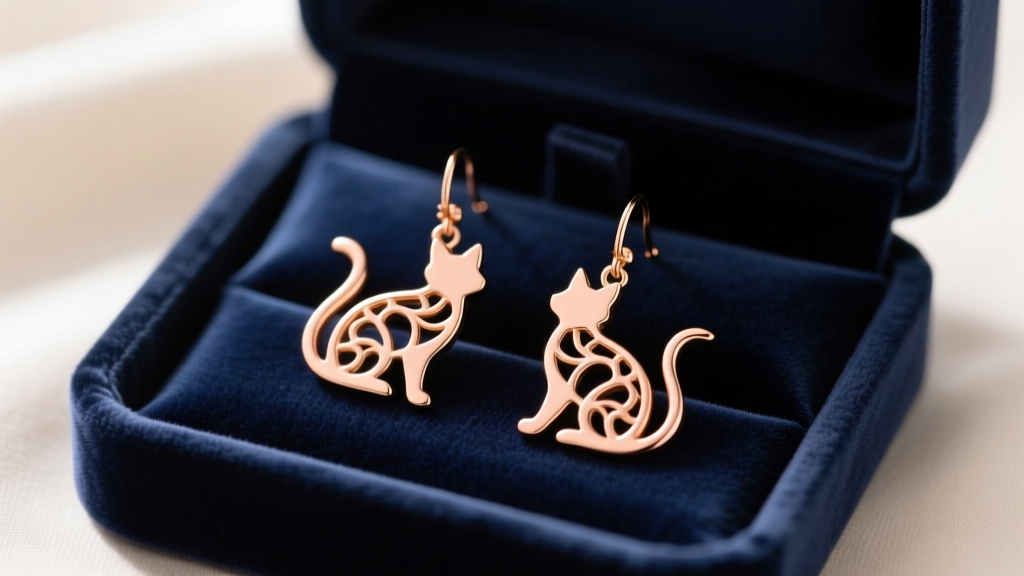
Hardware maintenance is equally crucial. The standard friction back (butterfly clutch) relies on tension to stay on the earring post. Over time, the metal loops stretch, increasing the risk of losing a valuable 14k gold piece. Upgrade your earring backs to La Pousette locking clutches or silicone O-rings for added security. Additionally, inspect the earring post solder joint every six months. If the cat silhouette wiggles independently of the post, the solder is failing, and the piece requires immediate laser welding by a professional jeweler to prevent loss.
White Gold Rhodium Plating and Professional Servicing
If your cat earrings are crafted in 14k white gold, they are plated with a microscopic layer of rhodium to achieve a bright, silvery-white finish. The natural color of 14k white gold alloy is actually a warm, yellowish-grey. Over time, friction from hair, skin, and cleaning will wear away the rhodium, particularly on the high-contact areas like the earring post and the outer edges of the cat silhouette.
When this happens, do not attempt to polish the yellowish areas, as you will only remove more rhodium. Instead, take the earrings to a certified jeweler for a professional re-rhodium plating. The Jewelers of America recommends professional servicing every 12 to 18 months for frequently worn white gold pieces. During this visit, the jeweler will also use a microscope to check the integrity of any gemstone prongs holding diamond cat eyes, ensuring your feline companions remain secure and brilliantly maintained for years to come.