Can I Wear Earrings in Passport Photo? Rules & Best Budget Studs
Can I wear earrings in passport photo? Learn official rules, avoid costly retakes, and discover the best budget-friendly studs for ID pictures.

The Short Answer: Can I Wear Earrings in a Passport Photo?
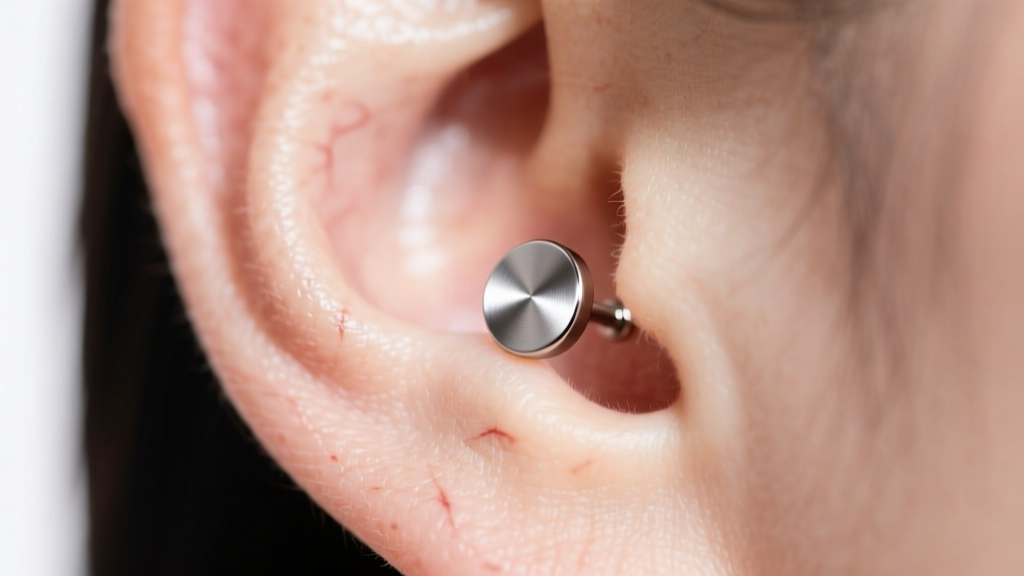
When preparing for an official ID or travel document, a highly common question among jewelry lovers is: can I wear earrings in passport photo sessions? The short answer is yes, but with strict limitations regarding size, reflectivity, and shadow-casting. According to the U.S. Department of State, jewelry is permitted as long as it does not obscure your face, hairline, or cast shadows that interfere with facial recognition software. However, from a budget and value assessment perspective, wearing the wrong pair of earrings can lead to costly application rejections, mailing delays, and unnecessary retake fees.
In 2026, biometric scanning technology is more sensitive than ever. The International Civil Aviation Organization (ICAO) mandates that Machine Readable Travel Documents (MRTDs) must feature unobstructed facial mapping. High-polish metals and large gemstones create 'hotspots' under studio flash photography, confusing the algorithmic nodes used to measure the distance between your eyes, nose, and jawline. Therefore, assessing the value of your passport-safe earrings isn't just about aesthetics; it is about protecting the financial investment of your passport application.
The Hidden Financial Cost of Passport Photo Rejections
Many travelers view passport photos as a trivial $15 expense at a local pharmacy. But if your photo is rejected due to jewelry glare or shadows, the compounding costs quickly destroy your budget. Let us break down the true cost of a rejected passport photo:
- Initial Application Loss: While the $130 application fee isn't lost, your processing time resets, causing massive value loss if you have upcoming travel.
- Expedited Service Fees: If a rejection forces you to expedite a re-submission to meet a travel deadline, you will incur an additional $60 expedite fee.
- Third-Party Retake Costs: Passport acceptance facilities rarely offer free retakes. You will pay $15-$25 for a new photo at a shipping center or pharmacy.
- Time Value: Returning to an acceptance agent, finding parking, and waiting in line costs an average of 2-3 hours of your time.
When you calculate these hidden fees, investing in a dedicated pair of $20 matte-finish, biometric-safe studs offers immense financial protection compared to risking a rejection with your $1,500 high-polish diamond solitaires.
Budget vs. Value: Choosing the Right ID-Safe Earrings
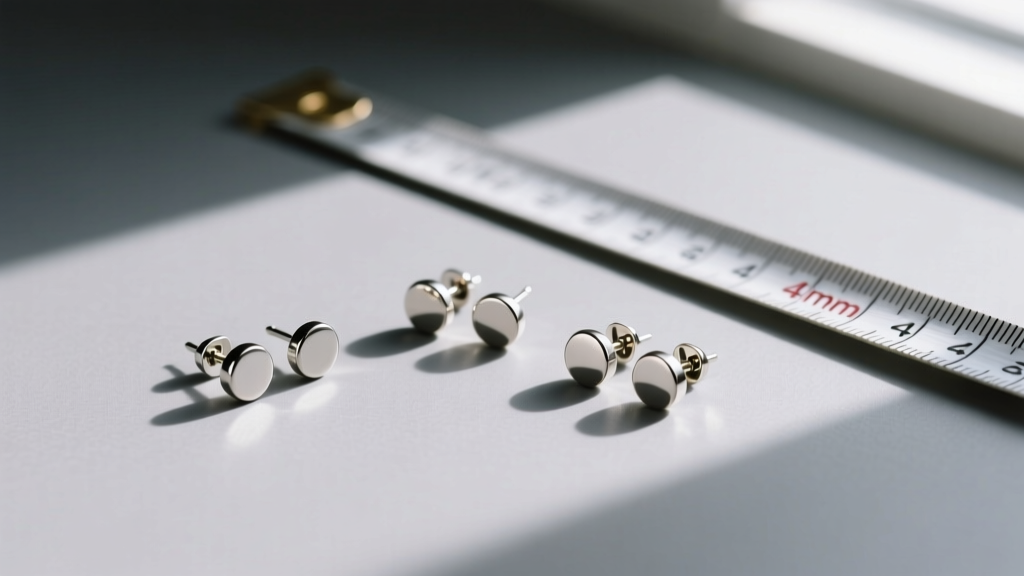
Not all budget earrings are created equal. When evaluating materials for passport photos, you must balance low cost with low reflectivity. Below is a value assessment chart comparing popular earring materials based on biometric safety, average budget pricing, and glare risk.
| Material / Finish | Avg. Budget Cost | Glare Risk | Biometric Safety |
|---|---|---|---|
| 316L Surgical Steel (Matte) | $12 - $18 | Very Low | Excellent |
| Grade 23 Titanium (PVD Coated) | $18 - $25 | Low | Excellent |
| 14k Gold Plated Brass (High Polish) | $10 - $15 | High | Poor |
| Cubic Zirconia (Bezel Set) | $15 - $30 | Moderate | Good (if under 4mm) |
| High-Polish Diamond / Moissanite | $300+ | Extreme | Poor |
Why Matte and Bezel-Set Studs Offer the Best Value
For the budget-conscious consumer, Grade 23 Titanium (Ti-6Al-4V ELI) with a brushed or matte finish represents the pinnacle of value. Priced typically between $18 and $25 from reputable online body jewelry retailers, these studs offer hypoallergenic security for freshly pierced lobes while completely eliminating flash bounce. The matte surface absorbs studio lighting rather than reflecting it, ensuring your facial biometrics remain the sole focus of the camera sensor.
If you prefer a hint of sparkle, bezel-set Cubic Zirconia (CZ) is a superior budget alternative to diamonds. A bezel setting features a metal rim that encircles the stone, reducing the number of exposed facets that catch light. A 3mm bezel-set CZ stud costs roughly $15, providing a premium look without the extreme glare risk of prong-set diamonds.
Sizing, Gauge, and Shadow Physics
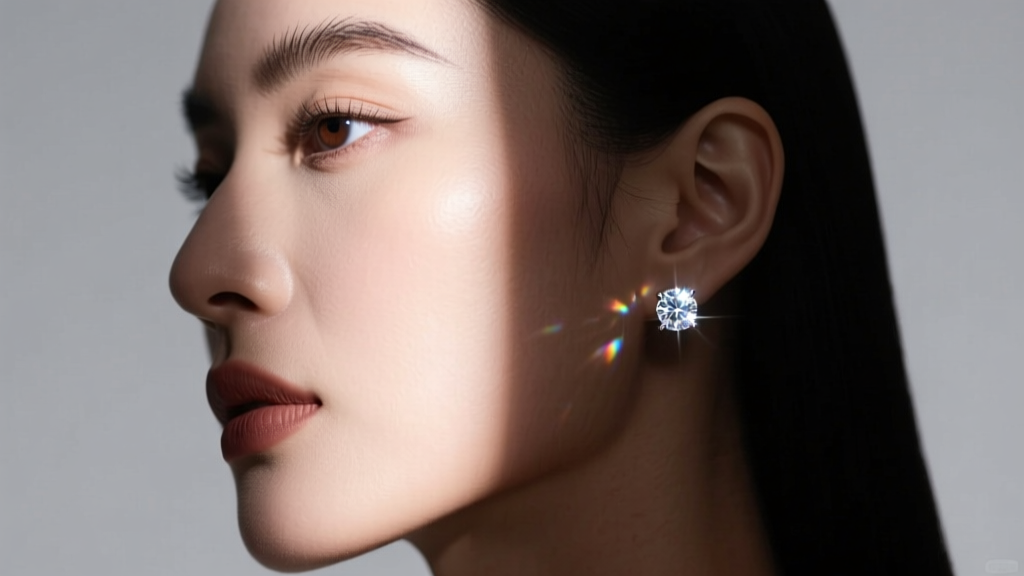
Understanding the physics of passport photo lighting is crucial for assessing earring value. Official ID photos are typically taken with dual studio flashes positioned at 45-degree angles to the subject's face. This lighting setup is designed to eliminate facial shadows, but it inadvertently creates harsh neck and jawline shadows if your earrings protrude too far.
The 3mm to 5mm Rule
To guarantee your photo passes the State Department's strict algorithmic checks, your earrings should not exceed 5mm in diameter. Anything larger risks casting a shadow on your jawline or neck, which the software may interpret as an obstruction or an anomaly in your facial structure. A 4mm stud is the absolute sweet spot for visibility and safety.
Gauge Thickness Matters
Standard lobe piercings are usually 20-gauge (0.81mm) or 18-gauge (1.02mm). When purchasing budget-friendly studs online, ensure the post thickness matches your gauge. Buying a cheap 14-gauge (1.6mm) earring meant for cartilage and forcing it through a standard lobe can cause micro-tears and inflammation, which will be visibly red in your passport photo. Stick to 18g or 20g posts with secure friction backs or flat-back labrets to ensure the earring sits flush against the earlobe, minimizing protrusion and shadow-casting.
Expert Checklist for Your Next Passport Photo
Before you sit in front of the camera, run through this quick value-protection checklist to ensure your jewelry won't trigger a rejection:
- Check the Finish: Are your studs matte, brushed, or bezel-set? Avoid high-polish metals and exposed gemstone facets.
- Measure the Diameter: Use a digital caliper or a standard ruler to confirm your earrings are 5mm or smaller.
- Assess the Profile: Look in a mirror from a side profile. Do the earrings stick out more than a quarter-inch from your earlobe? If so, swap to flat-back labrets.
- Remove Dangles and Hoops: Even small 10mm huggie hoops can cast shadows on the neck under overhead studio lights. Stick exclusively to studs.
- Avoid Magnetic Backs: Some budget earrings use weak magnetic backs that can sit crookedly on the ear, creating an asymmetrical appearance that might flag manual review.
Final Verdict on Passport Jewelry Value
So, can I wear earrings in passport photo appointments without risking my application? Yes, provided you prioritize function over flash. The true value of a passport-safe earring lies in its ability to remain invisible to the camera's biometric sensors while keeping your personal style intact. By spending $15 to $25 on a pair of high-quality, matte-finish titanium or bezel-set studs, you effectively insure yourself against the frustrating and expensive cycle of photo rejections. Leave the heavy, high-polish statement pieces at home, and let your face be the only thing that shines in your official travel documents.


