Troubleshooting Fading White and Yellow Gold Earrings
Is your jewelry losing its luster? Learn how to troubleshoot fading, rhodium wear, and tarnish on your white and yellow gold earrings with expert tips.

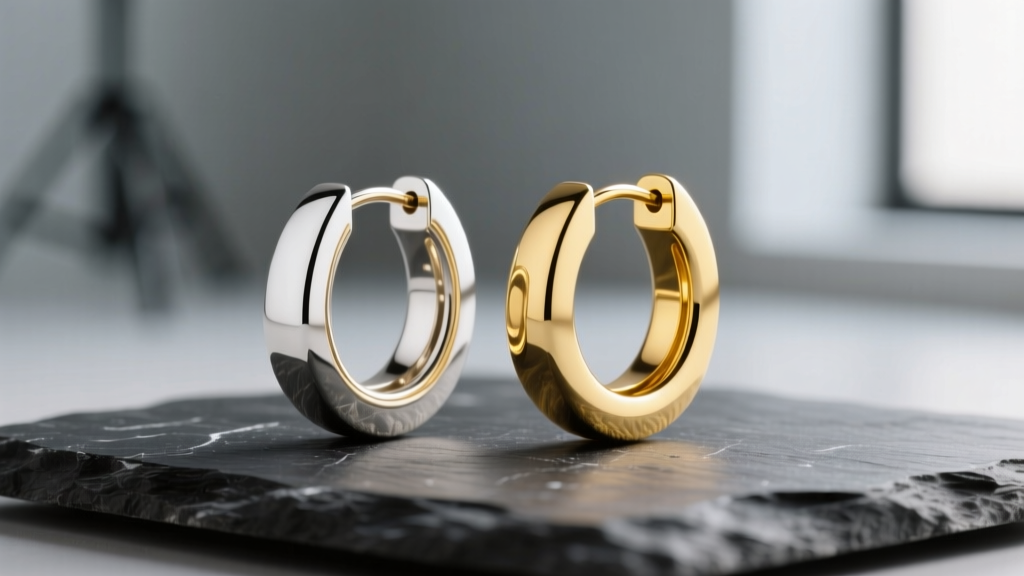
Mixed-metal jewelry has dominated ear curation trends for years, offering a versatile bridge between warm and cool tones. However, owning and maintaining white and yellow gold earrings presents a unique set of metallurgical challenges. Unlike platinum or sterling silver, karated gold relies on complex alloy blends to achieve its color and structural integrity. When you combine two different gold alloys into a single earring—such as a two-tone huggie hoop or a mixed-metal drop earring—you are essentially managing two entirely different chemical environments on a single piece of jewelry.
As of 2026, advancements in alloy mixing and palladium-based white golds have improved longevity, but wearers still frequently encounter issues like uneven tarnishing, rhodium depletion, and localized skin irritation. This guide provides a masterclass in troubleshooting these specific problems, backed by gemological science and professional bench-jeweler techniques.
The Metallurgy of Two-Tone Earrings: Why Colors Shift
To troubleshoot color changes, you must first understand what you are actually wearing. Pure 24k gold is naturally yellow but far too soft for earring posts, clasps, or secure gemstone prongs. Therefore, jewelers alloy it with other metals. According to the Gemological Institute of America (GIA), the karatage dictates the ratio of pure gold to alloy metals.
- 14k Yellow Gold: Typically 58.5% pure gold, 31.5% copper, and 10% silver. The high copper content gives it a warm, rich hue but makes it susceptible to oxidation (tarnish) when exposed to sulfur and environmental pollutants.
- 14k White Gold: Typically 58.5% pure gold, mixed with bleaching agents like nickel, palladium, or manganese. Crucially, naturally occurring white gold is not actually white; it possesses a faint yellowish-grey tint. To achieve a brilliant mirror finish, it is electroplated with rhodium, a platinum-group metal.
When you wear white and yellow gold earrings, the yellow gold may slowly darken due to copper oxidation, while the white gold may begin to look yellowish as the microscopic rhodium plating wears away. Because these two degradation processes happen at different rates, mixed-metal earrings often look "mismatched" after a year of daily wear.
Diagnosing the Issue: Tarnish vs. Rhodium Depletion
Before applying any chemical cleaners or taking your earrings to a bench jeweler, you must accurately diagnose the visual defect. Use the diagnostic matrix below to identify the root cause of your earring's discoloration.
| Symptom | Affected Metal | Root Cause | Professional Solution |
|---|---|---|---|
| Dull, brownish, or black film on the surface | Yellow Gold | Copper/Silver oxidation from sweat, lotions, or sulfur exposure. | Gentle surfactant cleaning or professional ultrasonic bath. |
| Yellowish tint emerging on the "white" sections | White Gold | Rhodium plating depletion (typically 0.75 - 1.0 microns thick) wearing off due to friction and skin pH. | Professional polishing and rhodium electroplating (re-dipping). |
| Pitting, chalky white residue, or structural weakness | Both Alloys | Stress corrosion cracking caused by exposure to chlorine (pools, bleach, household cleaners). | Immediate jeweler assessment; prongs may need re-tipping or shank replacement. |
Step-by-Step Troubleshooting Guide
If your white and yellow gold earrings are looking fatigued, follow this sequential troubleshooting protocol before spending money on professional restoration.
Step 1: The Distilled Water Cleaning Test
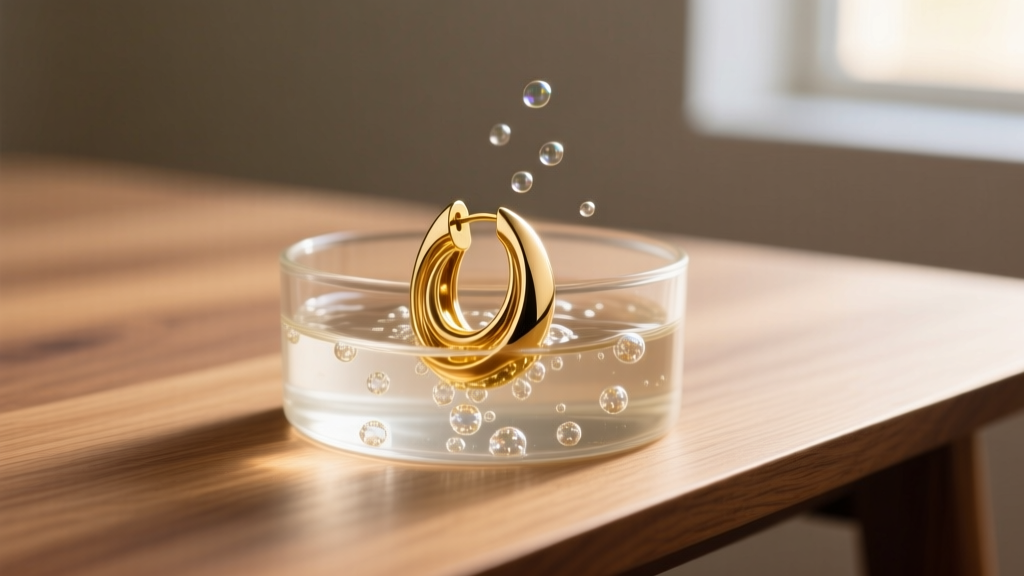
Never use commercial "dip" cleaners on mixed-metal earrings. Many commercial silver dips contain thiourea, which can strip rhodium plating and leave a permanent cloudy residue on the yellow gold alloy. Instead, create a neutral pH cleaning solution.
- Mix three drops of phosphate-free, mild dish soap (like Dawn) into a bowl of lukewarm distilled water. Tap water contains trace minerals and chlorine that can exacerbate tarnish.
- Submerge the earrings for exactly 15 minutes to loosen sebum and cosmetic buildup.
- Using a brand-new, extra-soft baby toothbrush, gently sweep the bristles across the earring posts, hinge mechanisms, and gemstone settings.
- Rinse with fresh distilled water and dry immediately with a lint-free microfiber cloth. Do not air dry, as water spots will mimic tarnish.
Diagnostic Check: If the yellow gold brightens but the white gold still looks yellow, you are dealing with rhodium depletion, not surface dirt. Cleaning will not fix this; replating is required.
Step 2: Assessing Rhodium Thickness and Prong Integrity
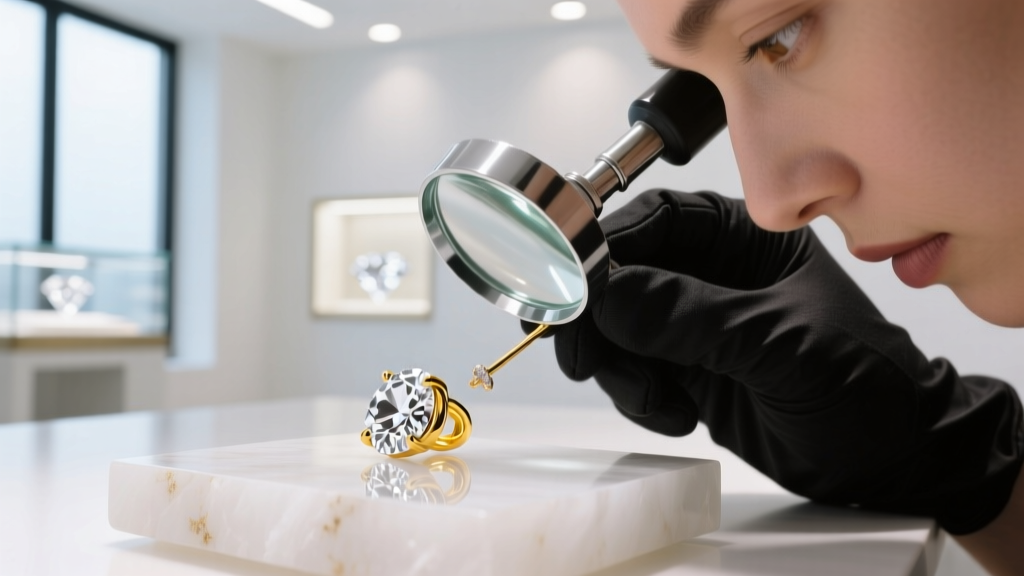
If you determine that the white gold sections require replating, you must first inspect the prongs holding your gemstones. Rhodium plating baths involve mild sulfuric acid and electrical currents. If the prongs on your two-tone earrings are worn thin, the acid can penetrate and weaken the structural integrity of the setting. According to the Federal Trade Commission (FTC) Jewelry Guides, jewelers must disclose if replating processes could affect the stability of set stones. Always request a microscopic prong check before authorizing a rhodium dip.
Managing Contact Dermatitis in Mixed Alloys
A frequent troubleshooting complaint with white and yellow gold earrings is localized skin irritation or "green ear." This is almost exclusively an alloy issue, not a gold allergy (pure gold is hypoallergenic). The culprit is usually nickel, which is historically used as a bleaching agent in 14k and 18k white gold.
When sweat acts as an electrolyte, it draws nickel ions out of the white gold alloy, leading to allergic contact dermatitis. The American Academy of Dermatology notes that nickel allergy is one of the most common causes of contact dermatitis worldwide. If your earlobes or cartilage piercings itch specifically where the white gold touches the skin, but not where the yellow gold touches, you are likely reacting to the nickel alloy.
The Fix: You cannot "clean" an allergy away. You must take the earrings to a jeweler and request a heavy rhodium flash (at least 1.5 microns) to create a physical barrier between the nickel alloy and your skin. Alternatively, upgrade your next purchase to palladium-alloyed white gold, which is naturally white, nickel-free, and does not require rhodium plating.
Long-Term Preventative Care Protocols
Preserving the dual-tone contrast of your earrings requires a proactive approach to storage and environmental exposure. Because the yellow gold relies on copper and the white gold relies on rhodium, their enemies are different.
- Combat Sulfur Exposure: Copper tarnishes rapidly in the presence of sulfur. Avoid wearing your two-tone earrings in hot springs, geothermal areas, or while using sulfur-based skincare products (like acne treatments).
- The Chlorine Ban: Never wear karated gold earrings in swimming pools or hot tubs. Chlorine reacts with the copper and zinc in the alloy, causing "stress corrosion cracking." This microscopic fracturing frequently causes earring posts to snap cleanly off the backing.
- Friction Management: Rhodium wears away primarily through friction. If you wear two-tone hoop earrings, avoid sleeping in them. The friction against cotton pillowcases accelerates the degradation of the rhodium on the inner curve of the hoop.
- Proper Storage: Store your earrings in an airtight polyethylene bag with a 3M anti-tarnish strip. The strip absorbs airborne sulfur compounds, protecting the yellow gold, while the sealed environment prevents moisture buildup that can degrade the rhodium finish over time.
Expert Takeaway: The beauty of white and yellow gold earrings lies in their striking contrast, but that contrast is inherently temporary due to the differing metallurgical properties of the alloys. Expect to budget $40 to $85 every 12 to 18 months for professional rhodium replating to maintain the crisp, icy white sections against the warm yellow gold.
By understanding the specific chemistry of your mixed-metal jewelry, you can move past frustrating guesswork and implement targeted, effective solutions that keep your ear curation looking flawless for decades.


