Clear Stud Earrings: The Ultimate Buying Guide for Sensitive Ears
Discover the best clear stud earrings for sensitive ears. Our expert buying guide covers glass, quartz, and acrylic materials, gauge sizes, and care.

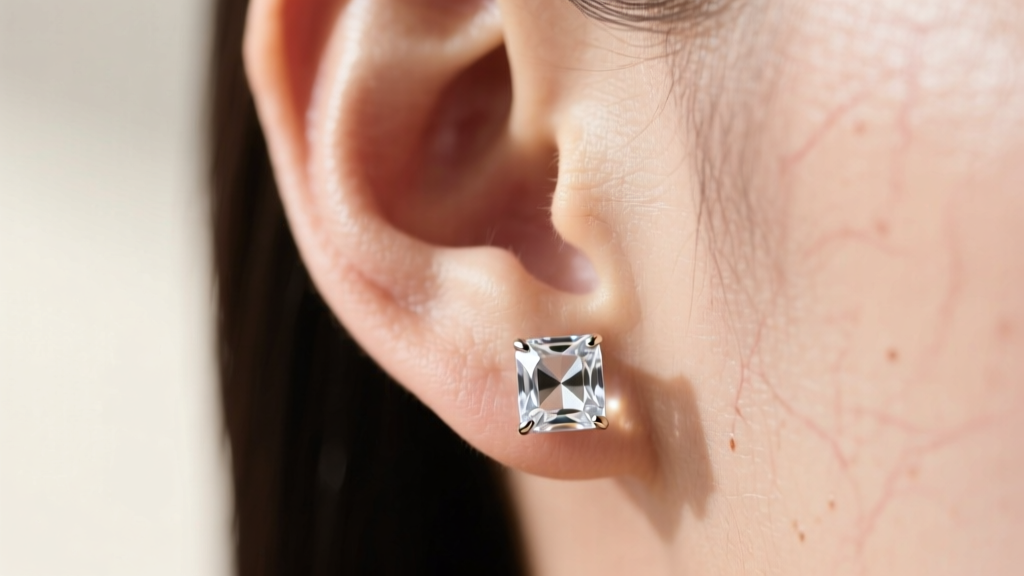
The Rise of the Minimalist Clear Stud
In the world of body jewelry, clear stud earrings occupy a unique and highly functional niche. Whether you are navigating a fresh piercing, preparing for an MRI scan, working in a strict corporate environment, or simply preferring an ultra-minimalist aesthetic, clear studs are the ultimate utilitarian accessory. However, the market is flooded with misleading terminology. Retailers frequently conflate 'clear' with 'hypoallergenic,' leading to severe contact dermatitis and rejected piercings for unwary buyers.
As a domain expert in jewelry materials and piercing aftercare, I have analyzed the structural integrity, biocompatibility, and aesthetic longevity of clear ear studs. This comprehensive buying guide will dissect the material science behind these translucent accessories, helping you separate medical-grade options from porous, mass-produced plastics.
Material Science: What Are Your Clear Studs Actually Made Of?
When shopping for clear stud earrings, the visual similarity between glass, quartz, acrylic, and cubic zirconia can be deceiving. Their chemical structures, however, dictate how your body reacts to them. According to the Association of Professional Piercers (APP), material porosity is the primary vector for bacterial colonization in healing fistulas.
1. Borosilicate Glass (The Gold Standard)
Borosilicate glass (often known by the brand name Pyrex) is the undisputed champion of clear retainers and studs. It is completely non-porous, meaning bacteria cannot embed themselves in the surface. It is autoclave-safe, MRI-safe, and highly resistant to thermal shock. Brands like Glasswear Studios produce borosilicate glass ends with flat titanium backs that are ideal for both fresh and healed piercings.
2. Fused Quartz
Fused quartz offers a higher refractive index than borosilicate, giving it a brilliant, diamond-like clarity. It is also non-porous and biocompatible. However, quartz is significantly more brittle than borosilicate glass. While it looks stunning in a healed lobe, it is not recommended for high-impact areas like the tragus or industrial piercings where accidental bumps are common.
3. PMMA (Acrylic)
Polymethyl methacrylate (PMMA), commonly sold as acrylic, is a porous plastic. While cheap and lightweight, acrylic degrades when exposed to alcohol-based cleaners, leading to 'crazing' (micro-fractures). These micro-fractures harbor bacteria and can cause severe irritation in unhealed piercings. Acrylic should strictly be reserved for fully healed, temporary wear.
4. Cubic Zirconia (CZ) in Titanium Settings
For those seeking the 'clear' diamond look without the diamond price tag, CZ stones set in implant-grade titanium are the premier choice. High-end brands like NeoMetal and Intrinsic Body use precision-machined ASTM F-136 titanium settings that snap together without threading, ensuring a seamless, irritation-free post.
| Material | Porosity | Autoclave Safe | Best Use Case | Avg. Price Range |
|---|---|---|---|---|
| Borosilicate Glass | Non-Porous | Yes | Fresh piercings, MRIs, sports | $12 - $35 |
| Fused Quartz | Non-Porous | Yes | Healed lobes, aesthetic clarity | $25 - $60 |
| PMMA (Acrylic) | Highly Porous | No | Temporary wear in healed holes | $4 - $15 |
| CZ in Titanium | Non-Porous | Yes | Everyday wear, formal events | $40 - $110 |
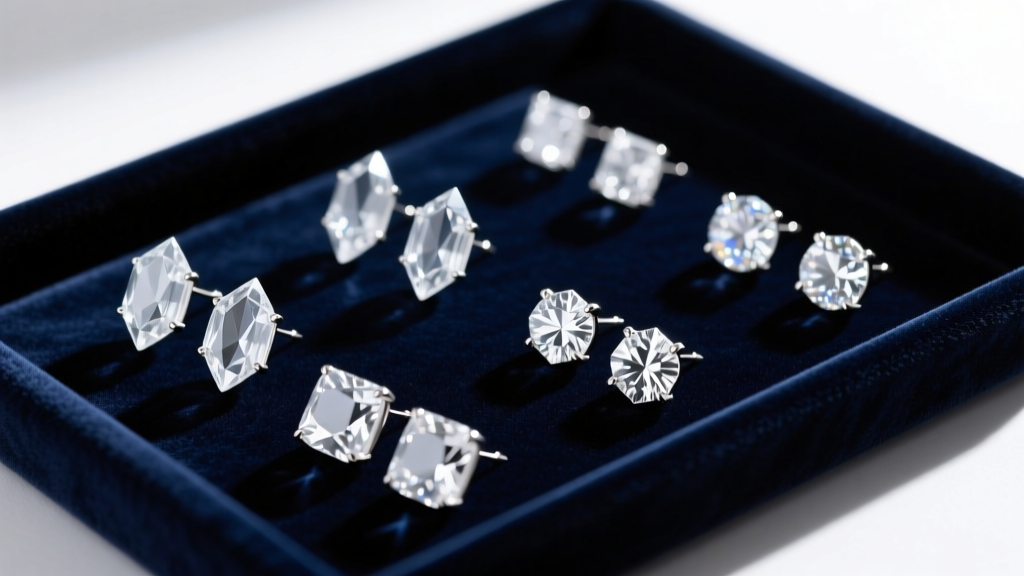
Decoding Gauge Sizes and Post Lengths
A clear stud is only as good as its fit. Wearing the wrong gauge or post length will cause migration, embedding, or the 'cheese-cutter effect.' Here is the precise dimensional data you need before purchasing:
- 20 Gauge (0.81mm): The standard for traditional earlobe piercings done with a needle. Most commercial CZ clear studs are manufactured in this size.
- 18 Gauge (1.02mm): A versatile size used for standard lobes and some rook or snug piercings. Highly recommended if you want a slightly sturdier post that resists bending.
- 16 Gauge (1.29mm): The universal standard for cartilage piercings (helix, tragus, conch, forward helix). If you are buying clear glass retainers for cartilage, 16G is mandatory to prevent tissue rejection.
- 14 Gauge (1.60mm): Rarely used for standard ear studs, but necessary for industrial scaffolds or stretched lobes.
Post Length Matters: Standard posts are usually 1/4 inch (6mm). However, if you are buying clear studs for a fresh piercing or one prone to swelling, you must opt for a 5/16 inch (8mm) or 3/8 inch (10mm) post. A post that is too short will embed into the tissue, requiring emergency surgical removal.
The Hypoallergenic Reality: Nickel and Contact Dermatitis
The most critical mistake buyers make is assuming that because the front of the earring is clear glass or acrylic, the entire piece is hypoallergenic. The post and the backing are almost always metal. If that metal contains nickel, your ear will react.
The American Academy of Dermatology identifies nickel as the leading cause of allergic contact dermatitis. Even 'surgical steel' (often 316L stainless steel) contains 8-12% nickel, which can leach into the skin when exposed to sweat and sebum.
Expert Rule of Thumb: Always verify that the metal post and backing of your clear stud earrings are crafted from Implant-Grade Titanium (ASTM F-136) or Niobium (ASTM F-67). Avoid 'surgical steel' or unmarked 'hypoallergenic alloys' entirely.
Threadless (press-fit) titanium backs are vastly superior to traditional butterfly clutches. Butterfly clutches trap dead skin cells and moisture against the earlobe, creating a breeding ground for staphylococcus bacteria, whereas flat-back titanium discs sit flush against the skin.
Common Failure Modes and How to Avoid Them
Understanding how clear earrings fail will save you money and protect your piercings. Here are the most frequent structural failures:
- Acrylic Crazing: Cleaning acrylic studs with rubbing alcohol or witch hazel causes the polymer chains to break down, resulting in cloudy, brittle plastic that can snap inside the piercing channel. Solution: Clean acrylic only with warm water and mild, fragrance-free soap.
- Glass Chipping: While borosilicate is tough, dropping a glass stud on a ceramic bathroom tile will chip the edges. A chipped glass post acts like a microscopic saw blade inside your fistula. Solution: Always insert and remove glass jewelry over a folded towel or a soft surface.
- CZ Foil Degradation: Low-quality cubic zirconia stones use a painted foil backing to increase sparkle. Over time, sweat degrades this foil, turning the back of your 'clear' stone black. Solution: Only purchase CZ stones that are faceted all the way through, or those set in open-back titanium bezels.
Cleaning and Maintenance Protocols
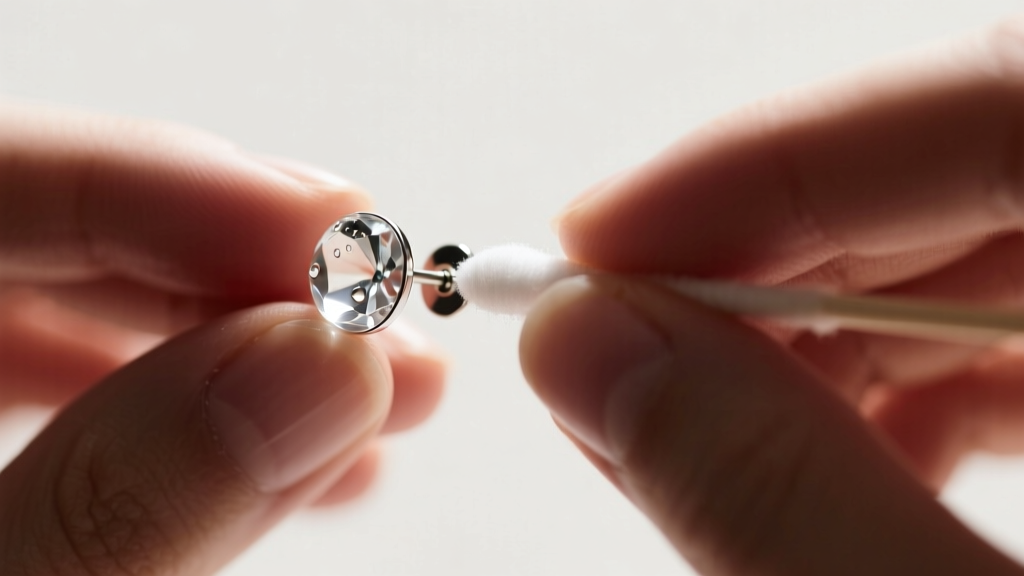
To maintain the optical clarity and biocompatibility of your clear studs, implement a strict maintenance routine. For glass and titanium CZ pieces, a weekly ultrasonic bath in a mild saline solution will dissolve sebum buildup that clouds the jewelry. For everyday maintenance, a sterile saline wound wash (0.9% sodium chloride) sprayed onto a non-woven gauze pad is sufficient to wipe down the post and backing. Never use hydrogen peroxide, as it oxidizes titanium and degrades the polishing of glass surfaces.
Final Verdict: Which Clear Stud Should You Buy?
If you are purchasing clear stud earrings for a healing piercing or medical procedure, invest in borosilicate glass retainers with an implant-grade titanium flat back. If you are looking for everyday minimalist elegance in a healed lobe or cartilage piercing, threadless cubic zirconia ends set in ASTM F-136 titanium offer unparalleled brilliance and lifetime durability. Avoid acrylic entirely unless it is a temporary, short-term necessity for a fully healed fistula. By prioritizing material science over marketing buzzwords, you ensure your piercings remain healthy, comfortable, and beautifully understated.


