Earring Anatomy Guide: 2026 Gift Matching by Piercing Type
Master earring anatomy to choose the perfect 2026 jewelry gift. Learn gauge sizes, post lengths, and piercing-specific occasion matching.

The Hidden Science of Gifting: Why Earring Anatomy Matters
Gifting fine jewelry is an intimate gesture, but when it comes to earrings, a beautiful design is only half the battle. The true secret to a flawless gift lies in understanding earring anatomy. A stunning 18-karat gold daith clicker will be entirely useless if the recipient’s piercing requires a 16-gauge post rather than a 14-gauge ring. In 2026, as curated ear projects and highly specific cartilage placements continue to dominate personal style, gift-givers must look beyond the display case and understand the mechanical and anatomical realities of the wearer's ear.
Buying earrings without considering the fistula (the healed piercing channel) is the leading cause of jewelry returns. By mastering the components of earring anatomy—from threading mechanisms to exact millimeter post lengths—you can transition from a well-meaning guesser to a precision gifter. This guide breaks down the technical specifications required to match the perfect piece of jewelry to specific piercings and milestone occasions.
Decoding Earring Anatomy: The Gift-Giver’s Glossary
Before selecting a gemstone or metal, you must understand the structural vocabulary of body jewelry. Standard fashion earrings often rely on friction backs and thin, flimsy posts. High-end body jewelry, however, is engineered for long-term wear, security, and tissue health.
Threading Mechanisms: Threadless vs. Internally Threaded
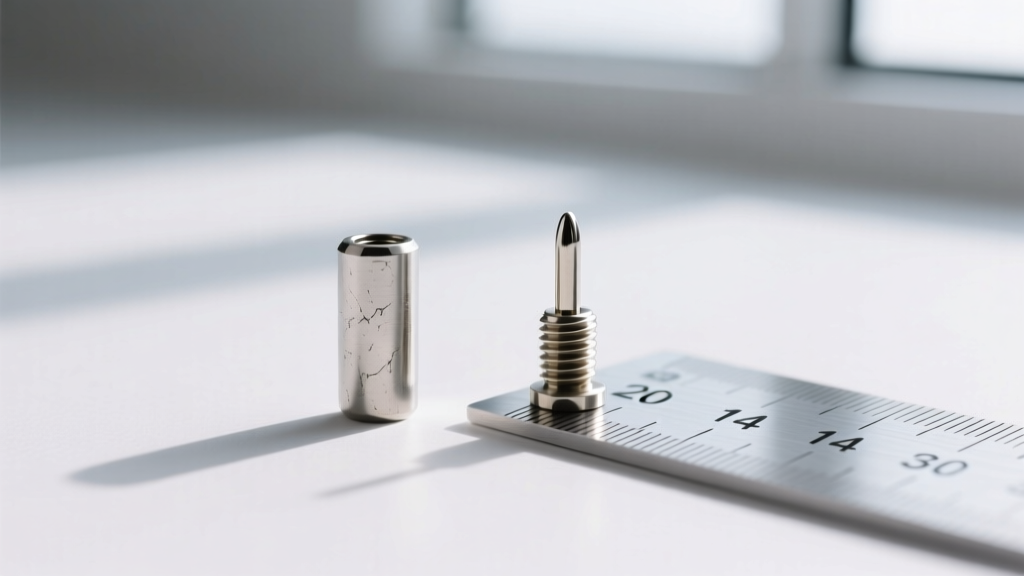
The connection point between the decorative end and the post is critical. According to the Association of Professional Piercers (APP), externally threaded jewelry (where the screw is on the post) should never be worn, as the sharp threads tear the fistula upon insertion. For gifting, you have two premium options:
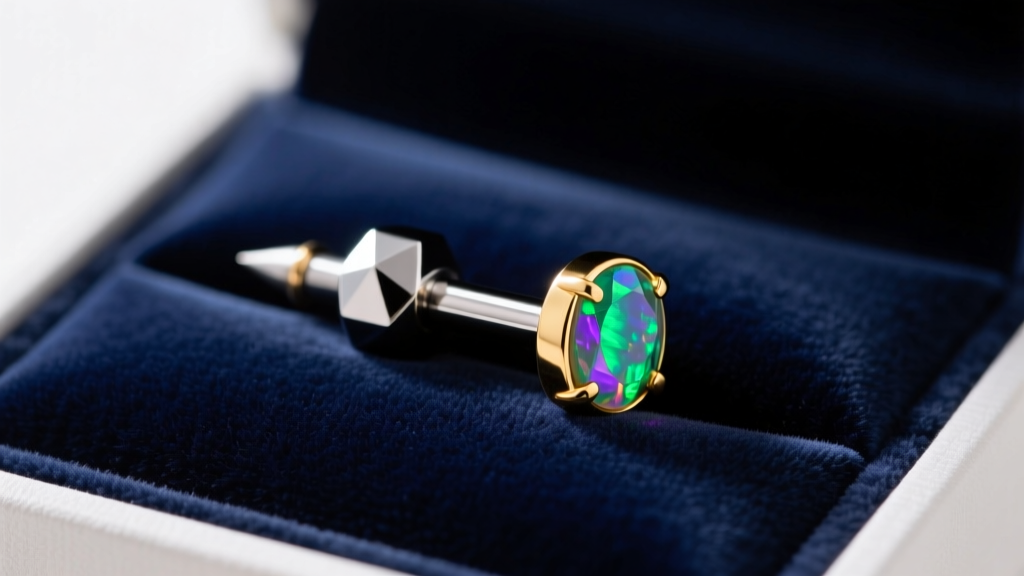
- Threadless (Push-Pin): The decorative end features a slightly bent pin that inserts into a hollow post, creating tension. Brands like Neometal and BVLA dominate this space. It is the most secure option for active recipients and requires no tiny screwdrivers.
- Internally Threaded: The screw is located on the decorative end, sliding smoothly into the tapped post. This is ideal for heavier, larger-gauge pieces where tension alone might not suffice.
Post Lengths and Gauge Sizes
Gauge refers to the thickness of the post, while length dictates how much tissue the jewelry spans. Gifting a post that is too long will cause the jewelry to snag and irritate the piercing; a post that is too short will embed into the skin, requiring professional removal.
| Piercing Location | Standard Gauge | Standard Post Length | Best Jewelry Style for Gifting |
|---|---|---|---|
| Standard Lobe | 18G or 16G | 6mm (1/4") to 8mm (5/16") | Threadless flat-back studs |
| Helix / Upper Cartilage | 16G | 6mm (1/4") to 8mm (5/16") | Bezel-set gem ends, small hoops |
| Tragus | 16G | 6mm (1/4") | Low-profile 2mm to 4mm gems |
| Conch | 16G or 14G | 8mm (5/16") to 10mm (3/8") | Large cluster ends, shield designs |
| Daith / Rook | 16G | N/A (Ring Diameter) | Hinged segment clicker rings |
Occasion Matching: Piercing-Specific Gift Guide for 2026
Matching the jewelry style to the occasion—and the specific ear anatomy—ensures your gift is both emotionally resonant and physically wearable.
The Lobe & Helix: Milestone Birthdays & Anniversaries
For major milestones like a 30th birthday or a 10-year anniversary, the goal is timeless luxury. The standard lobe and helix are the most versatile canvases. Opt for 14k or 18k solid gold threadless ends featuring high-clarity diamonds or ethically sourced sapphires. Brands like Maria Tash and Anatometal offer exquisite bezel settings that protect the stone while maintaining a low profile. Gifting Tip: If the recipient wears glasses, avoid helix studs larger than 4mm, as they will press uncomfortably against the frames.
The Tragus & Conch: Subtle Professional Upgrades
The tragus (the small flap of cartilage over the ear canal) and the conch (the large inner bowl) are prime real estate for professionals who want to express personal style without violating corporate dress codes. For graduations or career-promotion gifts, consider a 16-gauge, 6mm titanium post topped with a subtle 2.5mm bezel-set diamond or a dark grey spinel. These pieces catch the light subtly during boardroom meetings but remain entirely appropriate. Avoid dangling charms or large prong-set stones in the tragus, as they interfere with earbuds and phone receivers.
The Daith & Rook: Edgy Statement Pieces
The daith (pierced through the innermost cartilage fold) and the rook (the anti-helix ridge) require specialized ring anatomy. You cannot gift a standard captive bead ring here; the tension required to open it is frustrating, and the ball easily gets lost in a carpet. Instead, gift a hinged segment clicker ring. These feature a seamless hinge and a satisfying 'click' closure mechanism. A 16-gauge, 10mm diameter clicker ring adorned with a pavé diamond curve is the ultimate gift for an edgy, fashion-forward recipient celebrating a milestone trip or festival season.
Material Grades: Avoiding the Allergic Reaction Gift Fail
Nothing ruins a thoughtful gift faster than contact dermatitis. The Gemological Institute of America (GIA) frequently highlights the prevalence of nickel allergies in jewelry wearers. Many commercial brands use 'surgical steel' or 'hypoallergenic' labels as marketing buzzwords, but these alloys often contain up to 10% nickel.
To guarantee your gift is biocompatible, strictly adhere to these material grades:
- Implant-Grade Titanium (ASTM F136): The gold standard for sensitive ears and healing piercings. It is entirely nickel-free, lightweight, and can be anodized to create vibrant colors without using paints or dyes.
- Niobium: A highly reactive, hypoallergenic metal that is slightly softer than titanium, making it excellent for intricate, dark-colored anodized designs.
- 14k or 18k Solid Gold: Must be nickel-free and cadmium-free. Avoid gold-plated or gold-filled jewelry for cartilage piercings, as the microscopic friction of the fistula will eventually wear away the plating, exposing the base metal and causing severe reactions.
The Stealth Sizing Checklist for the Jewelry Buyer
How do you determine the recipient's exact earring anatomy without ruining the surprise? Use this discreet checklist:
- The Photo Audit: Take a high-resolution, close-up photo of their ear while they are sleeping or watching a movie. Send it to a professional piercer or a high-end jewelry consultant; they can often estimate the gauge and required post length based on the tissue thickness and jewelry proportions.
- The 'Borrow' Trick: If they have a spare flat-back stud in their jewelry box, borrow it for 10 minutes. Use a digital caliper (available for under $15 online) to measure the post thickness (gauge) and length. Put it back exactly as you found it.
- The Brand Audit: Check their social media tags. If they frequently tag specific piercing studios or luxury body jewelers, note the brands. Brands like BVLA and Tawapa use standardized sizing systems, making reordering specific ends much easier.
By respecting the intricate details of earring anatomy, you elevate your gift from a simple accessory to a highly customized, deeply personal artifact. In 2026, luxury is defined by precision, and understanding the mechanics of the ear is the ultimate expression of gifting expertise.