Troubleshooting Fading and Damage in Red Gemstone Earrings
Learn how to troubleshoot fading, scratches, and irritation in red gemstone earrings. Expert fixes for ruby, garnet, and spinel jewelry care.
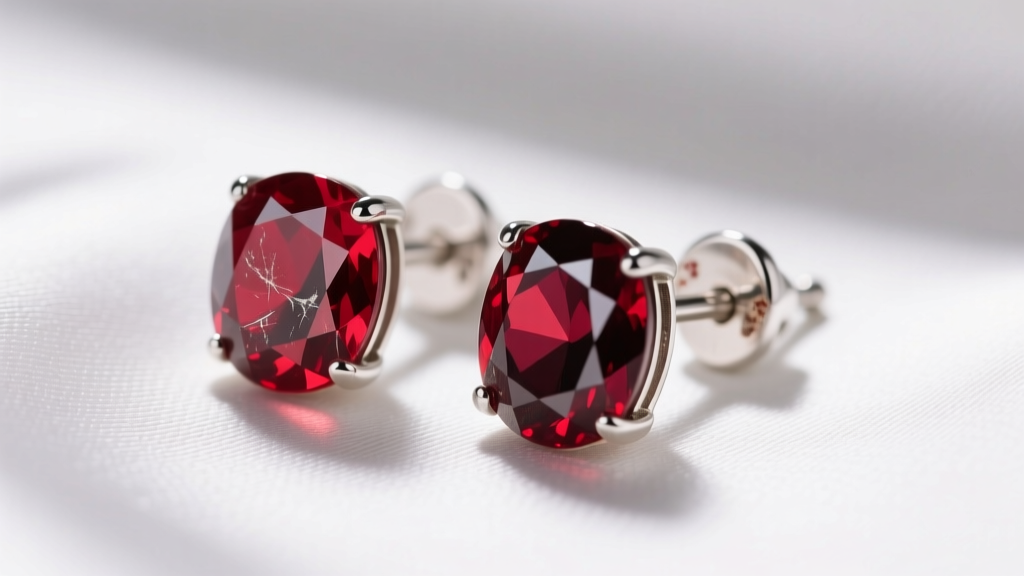
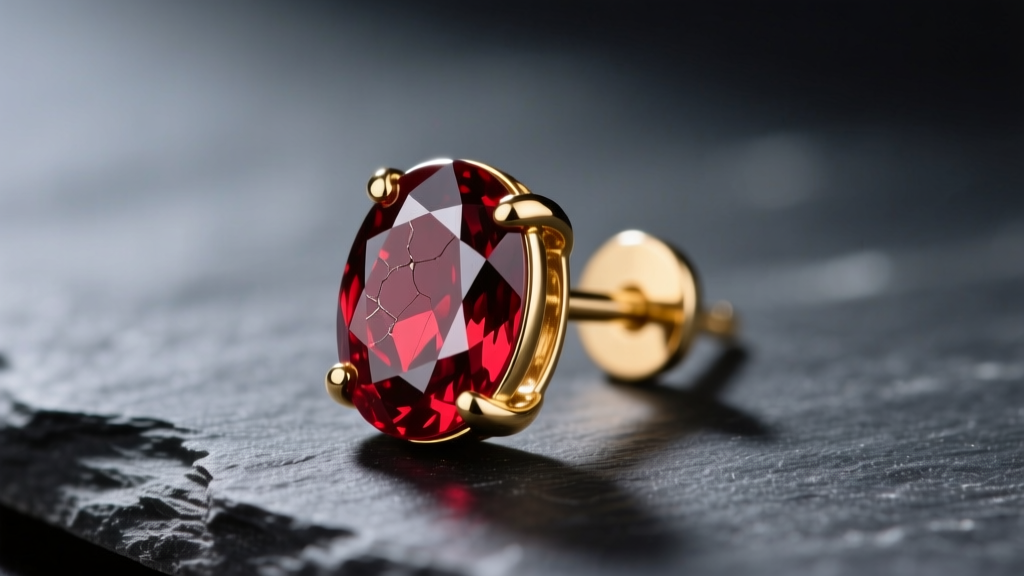
Red gemstone earrings are among the most coveted accessories in fine jewelry, prized for their fiery brilliance and rich saturation. Whether you own a pair of pigeon blood ruby studs, deep red almandine garnet drops, or vibrant red spinel huggies, these pieces are meant to be investment-grade staples. However, a common frustration among collectors and daily wearers alike is the gradual deterioration of these stones. Owners frequently report that their red gemstone earrings appear to be "fading," losing their refractive fire, or suffering from surface abrasions and setting damage.
As a gemological troubleshooting guide, this article bypasses generic cleaning advice to diagnose the specific structural, optical, and metallurgical failures that plague red gemstone earrings. By understanding the exact Mohs hardness, cleavage planes, and treatment vulnerabilities of your specific stones, you can restore their brilliance and prevent irreversible damage.
The Optical Illusion: "Fading" vs. Light Blockage
True color fading in natural red gemstones is exceedingly rare, with the notable exception of dyed carnelian or lower-grade composite stones exposed to prolonged UV radiation. When a ruby or garnet appears to lose its iconic red hue, you are almost always witnessing a failure of light return.
Red gemstones rely on precise pavilion facet angles to bounce light back through the table (the top flat surface). Over time, a microscopic layer of sebum, hairspray, and cosmetic powders builds up on the pavilion facets located behind the earlobe. This grime layer alters the refractive index (RI) boundary between the stone and the air, causing light to "leak" out the back of the stone rather than reflecting to the eye. A 40% reduction in light return can make a vibrant Pigeon Blood Ruby look like a muddy, opaque brown stone.
Gemological Troubleshooting Matrix
Before attempting any restoration, you must accurately identify your red gemstone. The market is saturated with red stones that look identical to the untrained eye but possess vastly different physical properties. Consult the matrix below to determine your stone's vulnerabilities.
| Gemstone | Mohs Hardness | UV / Heat Sensitivity | Primary Vulnerability | Safe Cleaning Protocol |
|---|---|---|---|---|
| Natural Ruby (Corundum) | 9.0 | None (unless fracture-filled) | Girdle chipping from hard impacts | Warm soapy water, soft brush |
| Red Spinel | 8.0 | None | Conchoidal fracturing if dropped | Warm soapy water, ultrasonic safe |
| Garnet (Almandine/Pyrope) | 7.0 - 7.5 | Sudden temperature changes | Internal liquid inclusions shattering | Warm soapy water, NO ultrasonic |
| Carnelian (Chalcedony) | 6.5 - 7.0 | High (if artificially dyed) | Color leaching from harsh chemicals | Damp microfiber cloth only |
Problem 1: The Ultrasonic Cleaner Hazard
One of the most frequent causes of catastrophic damage to red gemstone earrings is the improper use of ultrasonic jewelry cleaners. These devices use high-frequency sound waves to create microscopic bubbles in a liquid solution—a process called cavitation. When these bubbles collapse against the surface of the gemstone, they generate intense localized shockwaves.
Fracture-Filled Rubies and Lead Glass
In the modern jewelry market, a significant percentage of affordable ruby earrings are "fracture-filled" or "lead-glass filled." This treatment involves infusing surface-reaching fractures in low-grade corundum with a high-refractive-index glass to improve clarity. According to the Gemological Institute of America (GIA), ultrasonic cavitation will aggressively attack the boundary between the ruby and the glass filler, causing the glass to dissolve or cloud, effectively ruining the stone. Furthermore, even mild acids like lemon juice or harsh jewelry dips can etch the lead glass, leaving a pitted, white, and irreversible scar on the surface of your earring.
The Garnet Inclusion Trap
Garnets, particularly the deep red Almandine variety, frequently contain liquid inclusions or internal stress fractures. While a flawless garnet might survive an ultrasonic bath, the shockwaves can easily propagate an internal stress fracture, causing the stone to split cleanly in half while sitting in the cleaner. Always default to a manual cleaning method: 1 part mild dish detergent (like Dawn) to 4 parts distilled water, agitated with a baby-soft toothbrush.
Problem 2: Micro-Abrasions and Girdle Chipping
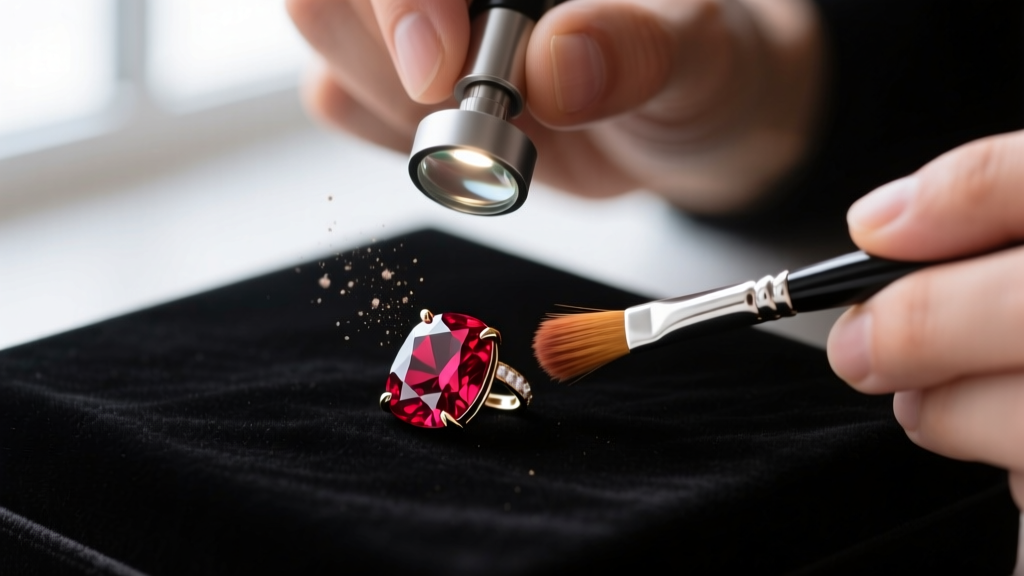
If your red gemstone earrings look cloudy even after a thorough cleaning, inspect the girdle (the outermost edge of the stone) under a 10x jeweler's loupe. You will likely find a network of micro-scratches and abrasions.
This damage is rarely caused by wearing the earrings; it is caused by storing them. Rubies (Mohs 9) are harder than diamonds? No, diamonds are a 10. However, rubies are significantly harder than gold, silver, and platinum. When ruby earrings are tossed loosely into a jewelry box, the metal settings scratch easily, but if they are stored alongside other gemstones like quartz, topaz, or emeralds, the ruby will act like sandpaper, scratching the softer stones while potentially chipping its own delicate girdle edges against the metal prongs of neighboring pieces.
The Fix: Never store red gemstone earrings in communal trays. Each pair must be housed in an individual, lint-free microfiber pouch or a compartmentalized wooden box with plush velvet inserts. If the girdle is already heavily abraded, the stone must be sent to a lapidary for a professional re-polish, which typically removes 0.05 to 0.10 carats of weight but restores perfect optical clarity.
Problem 3: Hardware Failures, Sagging Lobes, and Dermatitis
Troubleshooting red gemstone earrings isn't limited to the stones themselves; the metallurgical hardware and ergonomics play a massive role in wearability. Red gemstones are notoriously dense. A standard 10mm x 8mm oval garnet can easily weigh over 4 carats per stone. When set in heavy 14k gold drop settings, the total weight can exceed 8 grams per ear.
Upgrading Your Posts and Backings
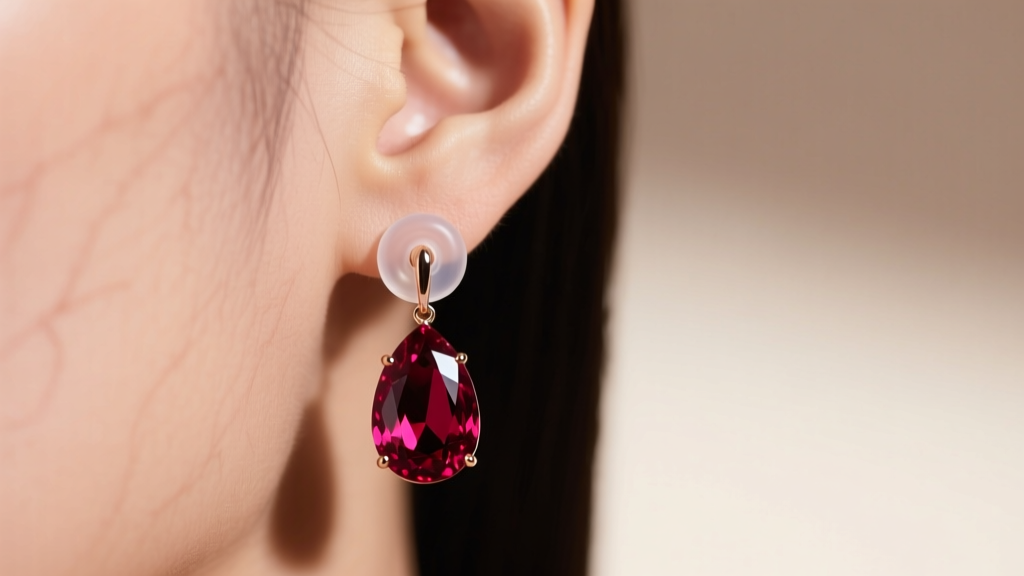
Standard 20-gauge or 22-gauge earring posts paired with traditional butterfly friction backs are entirely inadequate for heavy red gemstone drops. The thin metal cuts into the earlobe, causing the earring to droop forward. This not only ruins the aesthetic drape of the earring but also stretches the piercing hole permanently over time.
To solve this, upgrade your hardware:
- Silicone Support Discs: Replace metal butterfly backs with wide, flat silicone O-rings or specialized support discs (such as LobeWonder pads). These distribute the weight of the gemstone across a wider surface area of the earlobe.
- Locking Levers or Screw Backs: For heavy dangles, swap standard posts for locking lever-backs or screw-backs, which provide mechanical resistance against the downward pull of gravity.
- Post Gauge Thickness: If your piercings allow, have a jeweler solder thicker 18-gauge or 16-gauge posts onto the settings to prevent the metal from bending under the stone's weight.
Contact Dermatitis and the Nickel Factor
If the skin behind your earlobe becomes red, itchy, or flaky after wearing your red earrings, you are likely experiencing allergic contact dermatitis. Many 10k and 14k gold alloys contain copper, silver, zinc, and occasionally trace amounts of nickel to increase durability. When the heavy gemstone pulls the post tightly against the skin, sweat acts as an electrolyte, breaking down the metal ions and triggering an immune response. According to the GIA's guidelines on jewelry wear and care, maintaining strict hygiene of the earring post and the earlobe is critical. For a permanent fix, have a bench jeweler replace the posts with ASTM F136 implant-grade titanium or upgrade to 18k or 24k gold, which are largely hypoallergenic.
Expert Troubleshooting Tip: Before assuming your red gemstone is damaged or fading, perform the "Flashlight Test." Turn off the room lights and shine a concentrated LED penlight directly through the back (pavilion) of the earring toward your eye. If you see a sharp, bright red flash, the stone's internal structure is intact, and the issue is merely surface-level grime or a failing light environment. If the light looks fractured, webbed, or cloudy, the stone has internal structural damage and requires professional lapidary assessment.
By respecting the unique gemological properties of your stones and upgrading your mounting hardware, you can ensure your red gemstone earrings remain vibrant, secure, and comfortable for decades of daily wear.


