The Ultimate Technical Guide to Silver Garnet Earrings
An expert gemological and metallurgical breakdown of silver garnet earrings, covering sterling alloys, garnet species, and setting durability.

The Metallurgy of Sterling Silver in Earring Design
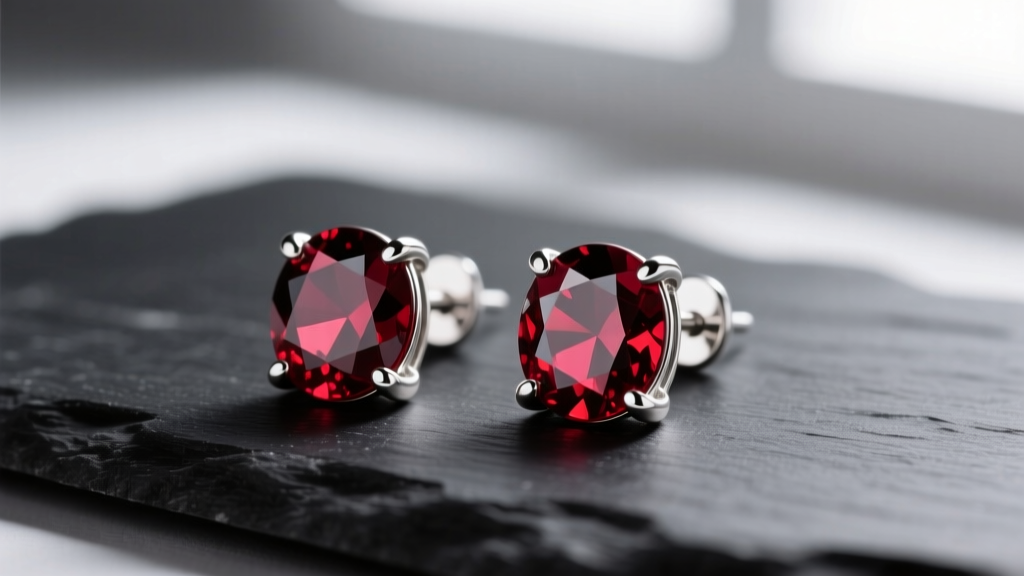
When evaluating silver garnet earrings, the untrained eye focuses solely on the gemstone, but a domain expert begins with the metallurgical foundation of the mounting. The term 'sterling silver' is legally defined as an alloy containing exactly 92.5% pure silver and 7.5% base metals, almost universally copper. This 925 standard provides the necessary tensile strength for earring posts, which must endure repeated bending and shear stress during insertion.
However, the 7.5% copper content is the primary catalyst for tarnish (silver sulfide formation). For buyers with hypersensitive ears or those living in high-humidity environments, seeking out Argentium silver (typically 935 or 960 purity) is a superior technical choice. Argentium replaces a portion of the copper with germanium, which forms a transparent, self-healing oxide layer that drastically slows tarnish rates without requiring rhodium plating.
Post Gauge and Structural Integrity
The structural failure point of most silver drop earrings is the solder joint connecting the post to the backplate. To mitigate this, manufacturers utilize specific wire gauges based on the earring's total mass:
- 20-Gauge (0.81mm): The industry standard for lightweight garnet studs (under 3 grams). Offers high comfort but is prone to bending if the wearer sleeps in them.
- 18-Gauge (1.02mm): Required for medium-weight dangle or drop earrings featuring larger garnet briolettes. Provides the rigidity needed to support dynamic movement without metal fatigue.
- 16-Gauge (1.29mm): Reserved for cartilage piercings or heavy silver huggies featuring pavé garnet accents, ensuring the wire does not warp under lateral pressure.
Gemological Breakdown: Which Garnet Species Are You Buying?
The term 'garnet' does not refer to a single mineral, but rather a complex nesosilicate group with a shared crystal structure (isometric) but varying chemical compositions. According to the Gemological Institute of America (GIA), identifying the specific garnet species in your silver earrings dictates their optical properties, durability, and fair market value.
The Big Three in Silver Jewelry
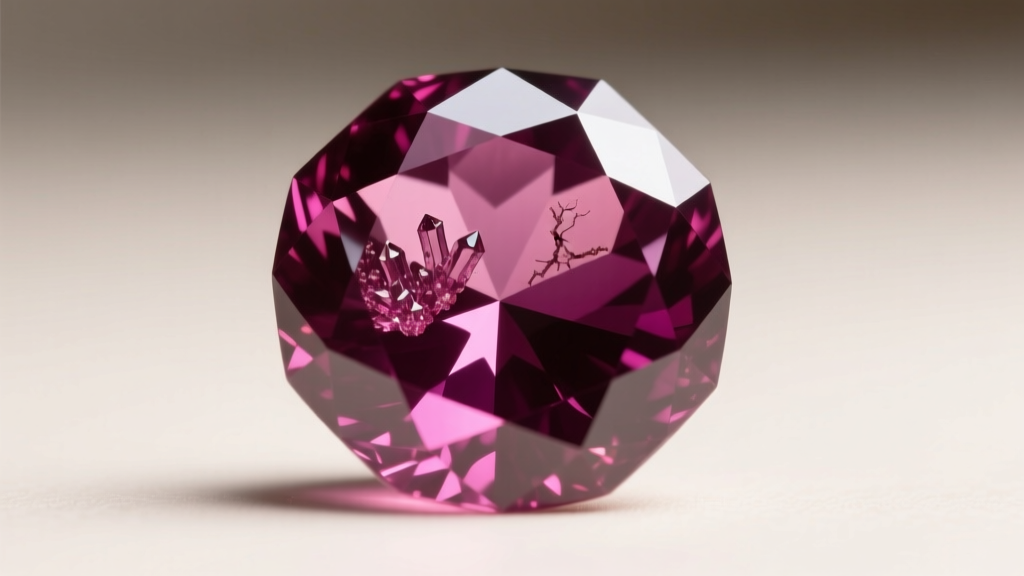
- Almandine (Fe3Al2(SiO4)3): The most abundant and affordable species. Almandine exhibits a deep, brownish-red hue with a refractive index (RI) of roughly 1.83. It is frequently cut with a domed cabochon or a deep pavilion to maximize color saturation. Because it is heavily included and relatively inexpensive, it is the default stone in mass-market 925 silver garnet earrings.
- Pyrope (Mg3Al2(SiO4)3): Known for its vivid, blood-red color and lack of brown modifiers. Pyrope has a slightly lower specific gravity (3.58) and an RI of 1.714. High-quality pyrope in silver settings is often sourced from Mozambique or Tanzania and commands a 30-50% premium over almandine.
- Rhodolite: A highly prized intermediate variety between pyrope and almandine, exhibiting purplish-red to raspberry hues. Rhodolite is exceptionally clean (eye-clean is standard) and possesses a brilliant light return, making it the premier choice for precision-cut faceted stones in premium silver mountings.
Setting Mechanics: Prong vs. Bezel for 7.5 Mohs Stones
Garnet registers between 6.5 and 7.5 on the Mohs hardness scale. While it lacks cleavage (meaning it will not split along defined crystallographic planes like a diamond or topaz), it is highly susceptible to thermal shock and chipping at the girdle if struck against a hard surface. Therefore, the silver setting must be engineered to protect the stone's geometry.
| Setting Style | Light Return | Girdle Protection | Best Earring Type |
|---|---|---|---|
| 4-Prong Basket | Maximum | Low (Exposes 70% of girdle) | Drop / Dangle Earrings |
| 6-Prong Crown | High | Medium (Exposes 50% of girdle) | Statement Studs |
| Full Bezel | Reduced (Blocks side light) | Maximum (100% encased) | Everyday Huggies / Sleepers |
| Half-Bezel | High | Medium-High | Geometric Dangles |
For dangle earrings, a 4-prong basket setting is optimal because the stone moves freely, allowing light to enter the pavilion from multiple angles. However, if you are purchasing silver garnet studs for daily wear, a bezel or low-profile 6-prong setting is technically superior to prevent the silver prongs from catching on hair or textiles, which can eventually lift the prong and dislodge the stone.
Tarnish, Sulfur, and Silver: The Chemical Reality
Silver does not react with oxygen at room temperature; rather, it reacts with hydrogen sulfide (H2S) in the atmosphere to form silver sulfide (Ag2S), the black layer we recognize as tarnish. The Silver Institute notes that environmental factors such as humidity, sulfur-rich foods, and even the natural pH of the wearer's skin can accelerate this process.
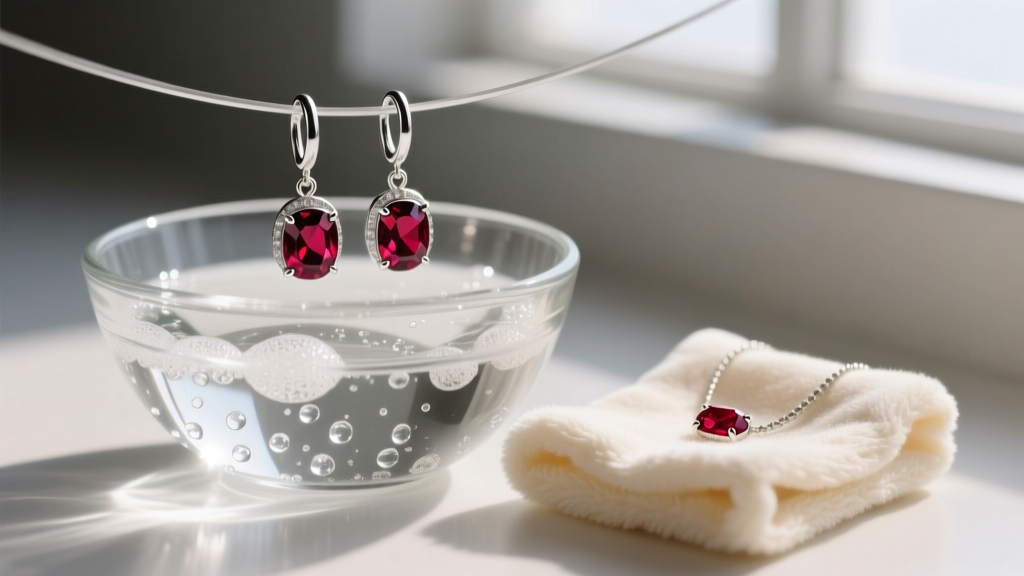
Expert Maintenance Protocol: Never use ultrasonic cleaners or harsh chemical silver dips on silver garnet earrings. The high-frequency vibrations can fracture internal stress points within the garnet, and the acidic nature of silver dips can etch the stone's polish. Instead, use a mild, phosphate-free dish soap, lukewarm water, and a soft-bristled infant toothbrush to clean the pavilion, followed by a dedicated anti-tarnish microfiber cloth for the silver mounting.
Expert Purchasing Framework: What to Inspect Before Buying
When acquiring silver garnet earrings, bypass generic product descriptions and demand the following technical specifications from the jeweler:
- Hallmark Verification: Ensure the earring post or backplate is stamped with '925' or 'Sterling'. Beware of unmarked pieces or those stamped simply 'Silver', which often indicates silver-plated brass or nickel alloys that will cause contact dermatitis.
- Stone Origin and Treatment: While garnets are rarely treated with heat or radiation (unlike sapphires or topaz), some lower-grade almandine may be fracture-filled with a lead-glass resin to improve clarity. Ask the jeweler for written confirmation that the garnets are 'untreated and non-enhanced'.
- Rhodium Plating Thickness: If the silver earrings are rhodium-plated to prevent tarnish and mimic white gold, inquire about the plating thickness. A standard flash plate (0.05 microns) will wear off the earring backs within weeks due to friction. A high-quality earring should feature a minimum of 0.1 to 0.5 microns of rhodium over a nickel-free palladium barrier layer.
- Backplate Soldering: Inspect the earring under a 10x jeweler's loupe. The solder seam where the post meets the earring body should be smooth, flush, and free of pitting. Pitted solder joints indicate poor temperature control during manufacturing and are the primary precursor to post breakage.
By applying this gemological and metallurgical framework, you transition from a passive consumer to an informed collector, ensuring your silver garnet earrings are not only visually striking but structurally engineered for longevity.


