Earring Clutch Buying Guide: Budget vs Premium Value
Discover if premium earring clutch backs are worth the cost. We compare budget friction nuts, silicone grips, and locking mechanisms for true value.

The Hidden Economics of Earring Security
In the world of fine jewelry, a glaring value mismatch occurs daily: a $5,000 diamond stud is routinely secured to the earlobe by a $0.20 piece of stamped brass. As we navigate the precious metals and gemstone market in 2026, the financial stakes of losing an earring have never been higher. The earring clutch—often dismissed as a mere afterthought or generic "backing"—is actually the primary structural failure point in stud earring wear. Assessing the budget versus premium value of an earring clutch requires looking beyond the initial purchase price and calculating the risk-adjusted cost of loss prevention, material longevity, and dermatological safety.
Whether you are securing a pair of heirloom pearls or everyday 18-karat gold hoops, understanding the metallurgy and mechanics of earring stoppers is essential. This guide deconstructs the three primary tiers of earring clutches, evaluating their true cost-per-wear and failure modes to help you allocate your jewelry budget intelligently.
Tier 1: Budget Friction Clutches (The Baseline)
The standard "butterfly" or scroll friction clutch is the most ubiquitous earring back globally. Typically included for free with the purchase of stud earrings, these clutches are mass-produced via high-speed metal stamping.
Material Grades and Failure Modes
Budget clutches are usually crafted from brass or base alloys, sometimes plated with a microscopic layer of silver or gold. The primary failure mode of a stamped friction back is metal fatigue and work hardening. The two looped wings that grip the earring post rely on spring tension. Over months of daily removal and insertion, the base metal undergoes work hardening, losing its elasticity. Eventually, the loops stretch outward, reducing the friction coefficient against the post's notch. When the tension drops below the threshold required to counteract the weight of the earring and the friction of hair or clothing, the earring falls out.
Furthermore, cheap alloy clutches are a leading cause of contact dermatitis. Even if the earring post is hypoallergenic, the clutch rests directly against the sensitive skin behind the earlobe. The American Academy of Dermatology frequently cites nickel exposure from jewelry backings as a primary trigger for allergic contact dermatitis, making unverified budget clutches a hidden health liability.
- Average Cost: $0.10 to $1.50 per pair.
- Lifespan: 6 to 12 months of daily wear before tension loss.
- Best For: Low-value fashion jewelry, temporary wear, or secondary piercings where loss is not financially devastating.
Tier 2: Silicone and Hybrid Grips (The Comfort Upgrade)
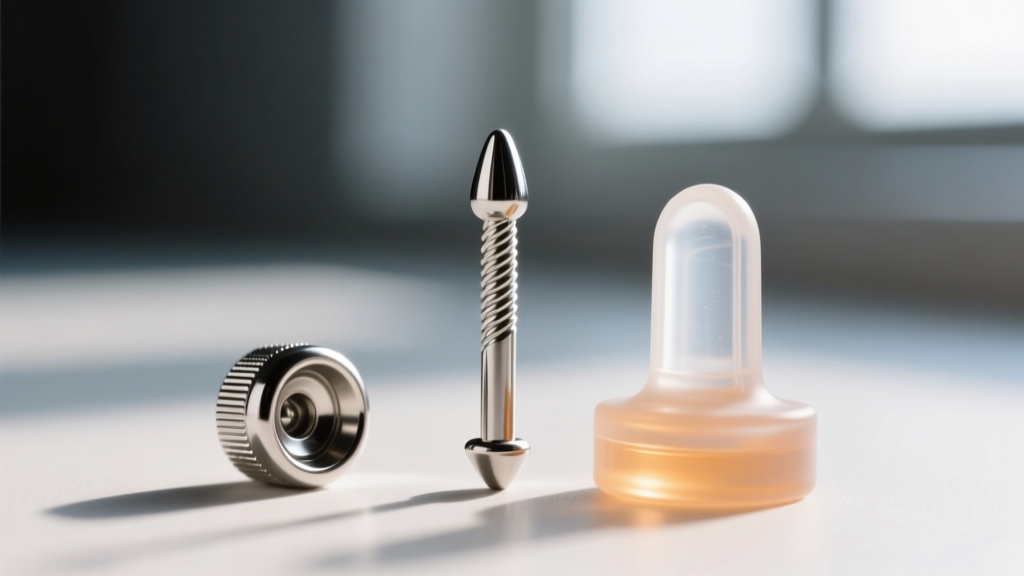
Silicone earring clutches emerged as a popular alternative to metal friction backs, primarily marketed for comfort and hypoallergenic properties. However, not all silicone is created equal, and the value proposition depends heavily on the polymer grade.
Medical-Grade vs. Industrial Silicone
Premium silicone stoppers are manufactured from ISO 10993-compliant medical-grade polymers. These are entirely free of latex, BPA, and heavy metals, making them the gold standard for newly pierced ears or individuals with severe metal sensitivities. However, silicone introduces a different failure mode: lipid degradation. Human sebum (skin oils), combined with hair care products and UV exposure, slowly breaks down the polymer chains. Over time, the silicone loses its elasticity, becoming brittle and prone to tearing when pulled off a 20-gauge or 18-gauge post.
From a budget perspective, silicone clutches are a consumable good. While they eliminate the risk of metal-induced allergic reactions, they require regular replacement, shifting the cost from a one-time purchase to a recurring subscription model.
Gauge Compatibility Matrix
One of the most overlooked aspects of buying earring clutches is post gauge compatibility. A clutch designed for a thicker post will slide off a thinner one, resulting in immediate loss.
| Post Gauge | Millimeter (mm) | Standard Metal Clutch Fit | Silicone Stopper Fit | Premium Locking Fit |
|---|---|---|---|---|
| 22G | 0.64mm | Too Loose (High Loss Risk) | Snug (Requires specific micro-bores) | Rarely Available |
| 20G | 0.81mm | Standard Fit | Standard Fit | Standard for Fine Jewelry |
| 18G | 1.02mm | Tight (May bend post) | Tight (High tear risk) | Requires 18G specific mechanism |
| 16G | 1.29mm | Incompatible | Incompatible | Specialty Cartilage Locks Only |
Tier 3: Premium Locking Mechanisms (The Investment)
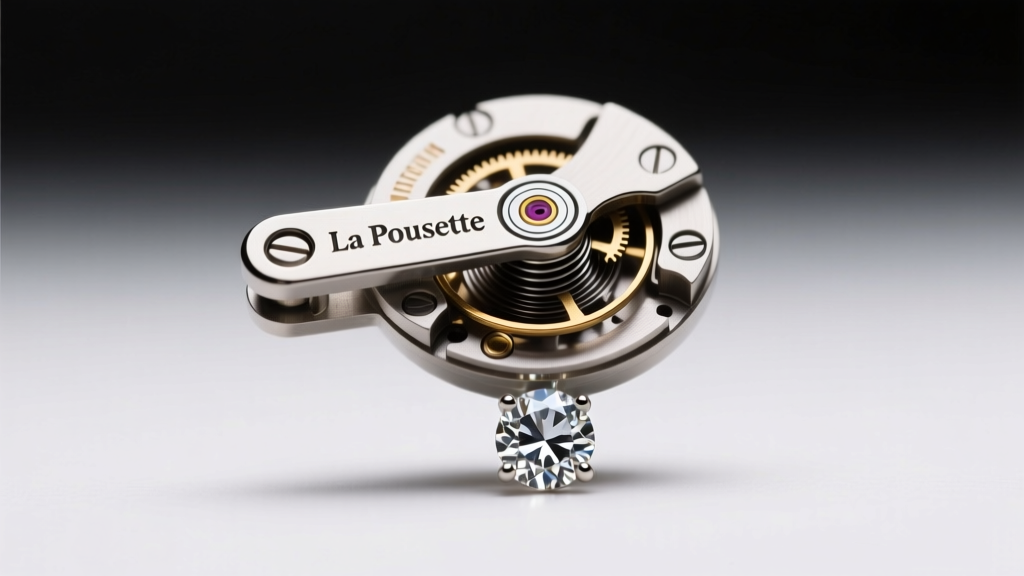
When securing high-value assets like a 2-carat diamond or a rare sapphire, relying on friction is a mathematical gamble. Premium locking clutches, such as the patented La Pousette mechanism or precision-machined screw-backs, represent the highest tier of earring security.
The Engineering of the La Pousette Clutch
The La Pousette earring clutch operates on a mechanical locking principle rather than simple friction. It features an internal spring-loaded dual-lever system. When you squeeze the tabs, the internal collet opens, allowing the post to pass through. Releasing the tabs engages the collet into the grooved notch of the earring post. To remove it, the user must intentionally squeeze the tabs. This eliminates the risk of the clutch being pulled off by a towel, a sweater, or while sleeping.
Unlike stamped brass, premium locking clutches are CNC-machined from solid 14k or 18k gold, or aerospace-grade titanium. The manufacturing tolerances are measured in microns, ensuring that the locking mechanism engages perfectly with the post without causing abrasive wear. According to security guidelines discussed by the Gemological Institute of America (GIA), mechanical locking backs are the recommended standard for securing high-value gemstones against accidental loss during transit or daily activity.
- Average Cost: $45.00 to $120.00 per pair (depending on karat weight).
- Lifespan: Decades; internal springs can be serviced or replaced by a bench jeweler.
- Best For: Diamond studs over 0.50 carats, heirloom pieces, and active individuals who refuse to remove earrings for sports or sleep.
Value Assessment: Calculating Risk-Adjusted Cost
To determine if a premium earring clutch is worth the investment, jewelry economists use a Risk-Adjusted Value (RAV) framework. The formula weighs the cost of the clutch against the financial and emotional cost of replacing the lost earring, multiplied by the probability of failure.
Consider a pair of 1-carat total weight (CTW) diamond studs valued at $3,500. A standard friction back has an estimated annual failure (loss) probability of roughly 2% due to metal fatigue and accidental snags. The expected annual loss value is $70. A $60 pair of 14k gold La Pousette locking clutches reduces the failure probability to near 0.05% (only occurring if the mechanism is intentionally squeezed or catastrophically crushed). Therefore, the premium clutch pays for itself in risk mitigation within the first 10 months of wear, while simultaneously offering a 50-year usable lifespan. In contrast, replacing a lost single diamond stud often requires paying a premium retail markup to match the remaining stone, turning a minor accident into a massive financial penalty.
Expert Verdict: Where to Allocate Your Budget
The value of an earring clutch is entirely contextual to the asset it protects and the biology of the wearer.
- For Fine Jewelry & High-Value Gems: Bypass budget friction backs entirely. The $60-$100 investment in CNC-machined locking clutches or heavy-duty 18k screw-backs is a non-negotiable insurance policy. The structural integrity of a machined lock vastly outperforms the temporary tension of stamped metal.
- For Sensitive Skin & Healing Piercings: Allocate your budget to ISO-certified medical-grade silicone stoppers. Treat them as a consumable health product, replacing them every 3 to 4 months to prevent lipid degradation and subsequent tearing.
- For Everyday Fashion & Low-Value Metals: Standard 316L surgical steel friction backs offer the best budget compromise. They resist corrosion better than brass and avoid the nickel allergies associated with cheap base metals, providing reliable security for earrings valued under $200.
Ultimately, an earring clutch is not just an accessory; it is the vault door to your jewelry investment. Upgrading your locking mechanism is one of the highest-ROI decisions you can make in your jewelry maintenance routine.


