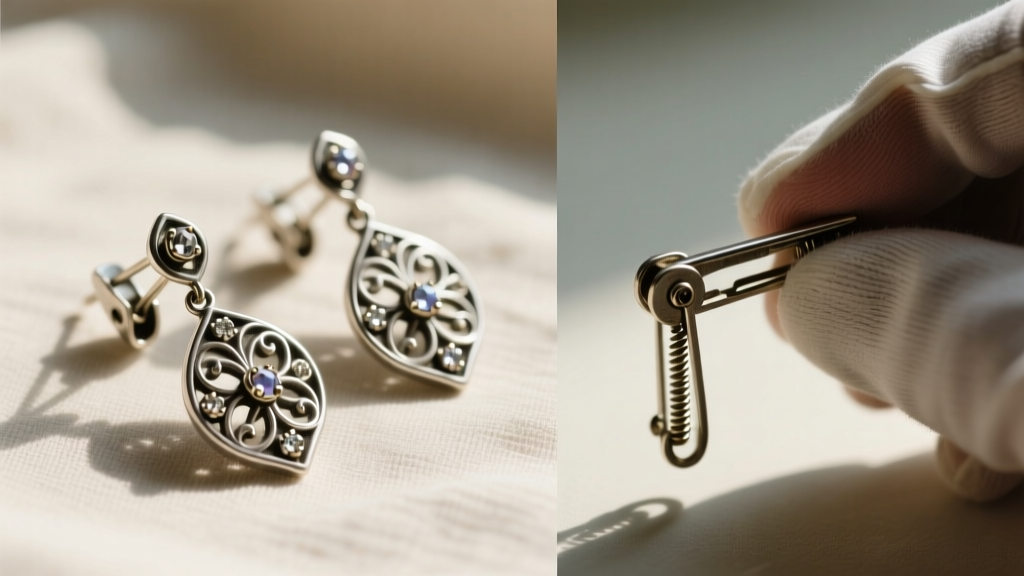
Earring Earlobe Care: How to Clean, Heal, and Maintain Piercings
Master earring earlobe care with expert cleaning protocols, material guides, and troubleshooting tips for healthy, beautiful piercings.

The Anatomy and Gauge Standards of the Earring Earlobe
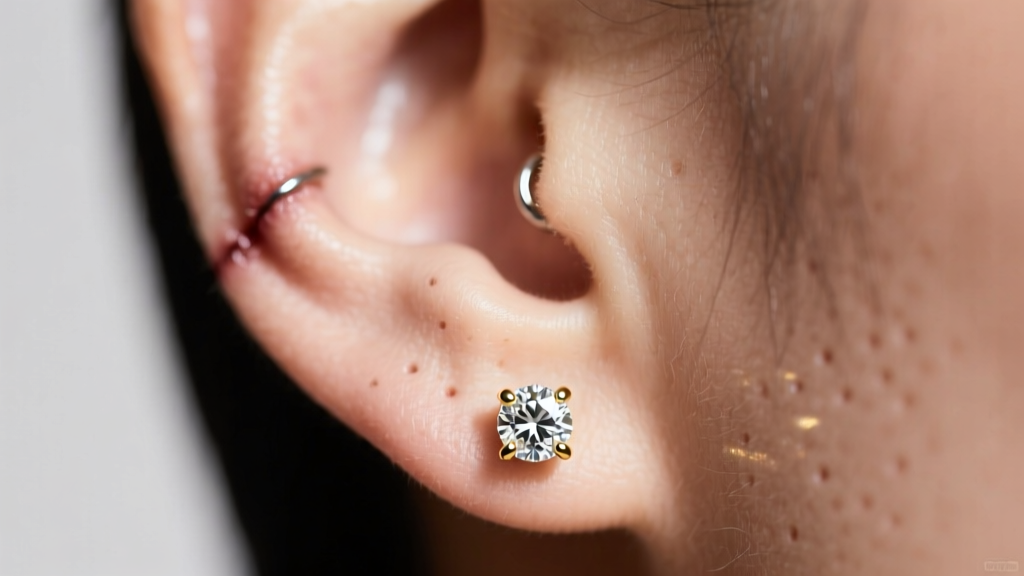
Unlike cartilage piercings, which are dense and avascular, the earlobe is composed of adipose (fat) tissue, collagen, and a robust network of blood vessels. This high vascularity means the earring earlobe heals faster and is more forgiving of minor trauma, but it also makes the tissue highly susceptible to stretching and tearing under sustained weight. Understanding your gauge size is the first step in proper maintenance.
Standard commercial earrings typically sit at 20-gauge (0.81mm) or 18-gauge (1.02mm). However, professional piercers often recommend starting at 16-gauge (1.2mm) or 14-gauge (1.6mm) for initial lobe piercings. A thicker post provides greater structural integrity, reducing the dreaded 'cheese-cutter effect' where thin wire slowly slices through the lower tissue margin. If you are transitioning from standard mall-kiosk jewelry to professional body jewelry, you may need to have your piercer gently taper your lobes up to a 16G to accommodate high-quality, implant-grade pieces.
Healing Timelines and Safe Up-Sizing Protocols
While the surface of an earlobe piercing may appear closed within 4 to 6 weeks, full tissue maturation takes 6 to 12 months. During this fistula formation phase, the body is laying down a delicate tube of epithelial cells. Changing jewelry too early or rotating the post (an outdated and harmful practice) causes micro-tears in this new tissue, inviting bacterial biofilms and hypertrophic scarring.
If you plan to stretch your lobes in the future, patience is non-negotiable. Safe up-sizing requires waiting a minimum of 3 to 4 months between single-size increments (e.g., moving from 14G to 12G). Always use single-flare glass or implant-grade titanium (ASTM F-136) for stretching. Never use acrylic or silicone tapers, as these porous materials harbor bacteria and can cause severe blowouts if worn inside a freshly stretched fistula.
Daily Maintenance vs. Deep Cleaning Protocols
A common mistake in earring earlobe care is over-cleaning, which strips the skin's natural acid mantle and leads to contact dermatitis. Your cleaning routine should be split into daily maintenance and weekly deep cleans.
The 60-Second Daily Wipe-Down
For healed lobes, daily cleaning requires nothing more than warm water and a gentle, fragrance-free cleanser while showering. Allow the suds from a mild soap (like Dr. Bronner’s Unscented Baby Mild Castile Soap) to run over the front and back of the earlobe. Rinse thoroughly and pat dry with a disposable non-woven gauze pad or a clean microfiber cloth. Avoid standard bath towels, as their looped threads can snag on earring clasps and introduce laundry detergent residue into the piercing channel.
The Weekly Deep Soak
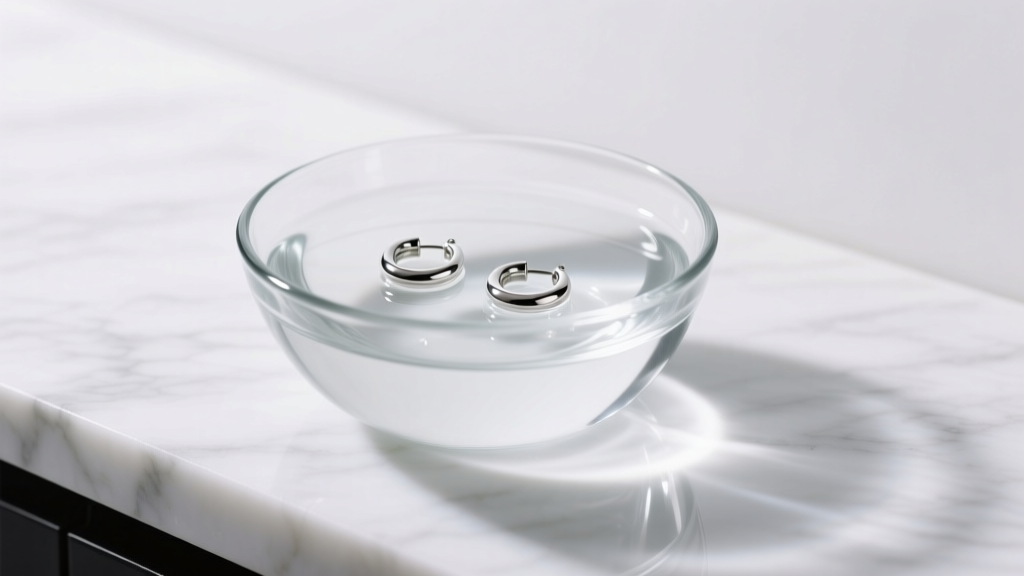
Once a week, remove your earrings entirely to clean both the jewelry and the tissue. Soak your earrings in a dedicated cleaning solution based on their material (see matrix below). For the earlobe itself, saturate a cotton pad with sterile 0.9% sodium chloride saline solution and hold it against the front and back of the lobe for three minutes. This softens and lifts accumulated sebum and dead skin cells without disrupting the skin barrier.
Material-Specific Cleaning Matrix
Not all metals react the same way to cleaning agents. Using harsh chemicals on porous or plated metals can destroy the finish or trigger allergic reactions. Use the following matrix to guide your jewelry maintenance:
| Material | Tarnish Risk | Best Cleaning Agent | Strictly Avoid |
|---|---|---|---|
| Implant-Grade Titanium (ASTM F-136) | None | Mild soap, saline, ultrasonic cleaner | Nothing (highly resilient) |
| 14k / 18k Solid Gold (Nickel-Free) | Low | Warm water, mild dish soap, soft brush | Chlorine, bleach, abrasive pastes |
| Sterling Silver (.925) | High | Silver polish cloth, specialized dips | Saline soaks, sulfur, rubber bands |
| Surgical Steel (316L) | Low | Mild soap and water | Wearing in unhealed piercings (nickel risk) |
| Gold Vermeil / Plated | High (Wear) | Dry microfiber cloth only | Liquid soaks, ultrasonic cleaners, friction |
Source: For comprehensive data on safe body jewelry metals, consult the Association of Professional Piercers (APP) Metals Guide.
Troubleshooting Common Earring Earlobe Issues
Dealing with Sebum Buildup ('Cheese Ear')
That distinct, unpleasant odor emanating from your earring holes is a mix of desquamated stratum corneum cells (dead skin), sebum, and environmental debris. To eliminate it, remove the jewelry and use a silicone-tipped swab dipped in diluted castile soap to gently clean the inside of the fistula. Do not use rubbing alcohol; it dries out the tissue, prompting the sebaceous glands to overproduce oils, worsening the cycle.
Sagging and Lobe Stretching from Heavy Dangles
The modern trend of oversized, heavy geometric dangles poses a significant risk to lobe integrity. Earrings weighing more than 15 grams can cause micro-tears in the collagen matrix, leading to permanent sagging and elongated slit-holes. If you love heavy statement pieces, invest in silicone O-rings or specialized lobe support patches (like Bling On) that adhere to the back of the earlobe and distribute the weight across a wider surface area.

Contact Dermatitis and Nickel Allergies
If your earring earlobe becomes itchy, red, flaky, or weeps clear fluid, you are likely experiencing a Type IV hypersensitivity reaction to nickel. Even jewelry labeled 'hypoallergenic' or 'surgical steel' can contain 8-12% nickel. The only definitive cure is removing the offending metal and switching to solid 14k/18k gold, platinum, or implant-grade titanium. For severe flare-ups, a dermatologist may prescribe a topical corticosteroid to calm the inflammation.
Source: The American Academy of Dermatology (AAD) provides extensive clinical guidelines on identifying and managing nickel allergy contact dermatitis.
Safe Storage and Travel Tactics
How you store your earrings when they aren't in your lobes is just as critical as how you clean them. Tossing mixed metals into a single jewelry box causes galvanic corrosion and micro-scratches. Store each pair individually in airtight ziplock bags or a lined jewelry box with anti-tarnish strips (such as 3M Anti-Tarnish Strips), which absorb ambient sulfur and hydrogen sulfide from the air.
When traveling, never pack loose studs or hoops in checked luggage where pressure changes and temperature fluctuations can degrade certain gemstone treatments. Use a dedicated, hard-shell travel case with individual padded compartments to prevent posts from bending and clasps from snapping under pressure.