Earring in Left Ear for Guys: 2026 Style & Trend Guide
Discover what an earring in the left ear for guys means in 2026. We analyze modern men's earring trends, placements, gauge sizes, and styling rules.


The Death of the "Left Ear Rule": A Cultural Autopsy
For decades, the search intent behind an earring in left ear for guys was rooted in a very specific, outdated cultural reflex. In the 1980s and 1990s, the "left is right, right is wrong" mnemonic served as a covert signaling system for sexual orientation. A single stud in the left ear was deemed the "straight" standard, while the right ear carried a taboo stigma. However, as we navigate the men's jewelry landscape of 2026, that archaic code is entirely obsolete. Today, choosing to wear a single earring in the left ear is a deliberate exercise in asymmetry, facial framing, and high-fashion styling.
According to historical retrospectives by BBC Culture, the rigid gender binaries that once dictated men's grooming and accessory choices have completely dissolved. Pop culture icons from Harrison Ford to George Michael wore left-ear studs not as a strict adherence to a rule, but as a subtle rebellion against conservative menswear norms. In 2026, the conversation has shifted from "what does it mean?" to "how does it elevate my personal aesthetic?"
"The modern man's jewelry box is no longer defined by archaic codes, but by intentional asymmetry, facial geometry, and material integrity." — Jewel Style Radar Editorial Board, 2026
2026 Trend Report: Asymmetry and the "Curated Ear"
Why does the single left earring remain a dominant trend in 2026? The answer lies in visual weight and asymmetry. Most people are right-handed, making the left side of the face slightly more prominent during handshakes, conversations, and candid photography. A single, well-chosen piece in the left ear draws the eye, creating a focal point that balances out heavier right-side features or prominent jawlines.
The Shift from "Bling" to "Quiet Luxury"
The oversized diamond studs and flashy cross pendants of the early 2010s have been replaced by the "Quiet Luxury" movement. Men are now opting for high-density, low-visual-noise pieces. Think bezel-set black onyx, matte-finished titanium, and micro-pave hoops that catch the light only when the head turns. Vogue's recent menswear reports highlight that the single left-ear piece is now considered a staple of the "elevated minimalist" wardrobe, bridging the gap between streetwear and tailored suiting.
Technical Specifications: Gauges, Materials, and Sizing
A common failure mode for men entering the earring space is purchasing cheap, mass-market jewelry that leads to contact dermatitis or piercing rejection. To curate a left-ear aesthetic that lasts, you must understand the metallurgy and anatomy of your piercings.
Understanding Gauge Sizes
Piercing thickness is measured in gauges (G). The higher the number, the thinner the metal. Most standard mall-kiosk lobe piercings are done at 20G or 18G, but professional piercing studios typically recommend 16G for better structural integrity and reduced "cheese-cutter" effect (where thin wire slowly migrates through the earlobe). For cartilage placements like the helix or tragus, 16G is the undisputed industry standard.
The Material Hierarchy
According to the Association of Professional Piercers (APP), only specific materials should touch a healing or sensitive piercing. Avoid "surgical steel" (which contains nickel) and gold-plated brass. Instead, invest in the following:
| Placement | Standard Gauge | Best Material | Price Range (2026) |
|---|---|---|---|
| Standard Lobe | 18G - 16G | 14k or 18k Solid Gold | $85 - $350 |
| Upper Lobe / Flat | 18G - 16G | ASTM F-136 Titanium | $40 - $150 |
| Helix / Cartilage | 16G | Niobium or Titanium | $50 - $200 |
| Industrial / Scaffold | 14G | Implant-Grade Titanium | $90 - $250 |
Pro-Tip: If you prefer the look of black metal, avoid black-plated steel, which will chip and expose your skin to base alloys. Instead, look for PVD (Physical Vapor Deposition) coated titanium or black zirconium, which are hypoallergenic and scratch-resistant.
Styling Framework: Matching the Piece to Your Aesthetic
The beauty of the single left earring is its versatility. However, the piece you choose must harmonize with your broader wardrobe and lifestyle. Below is a 2026 decision framework for selecting your left-ear anchor piece.
- The Corporate Minimalist: If you work in a conservative environment but want to express personal style, opt for a 3mm to 4mm bezel-set stud. A flush-set diamond or a matte black spinel in a 14k white gold housing offers a subtle glint that doesn't distract during board meetings. Avoid dangling elements or hoops larger than 8mm.
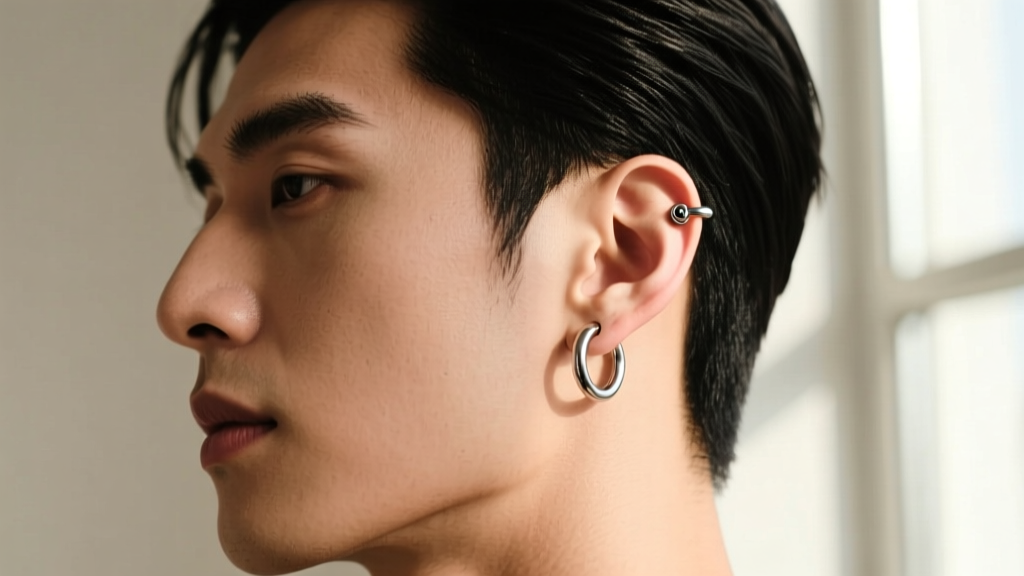
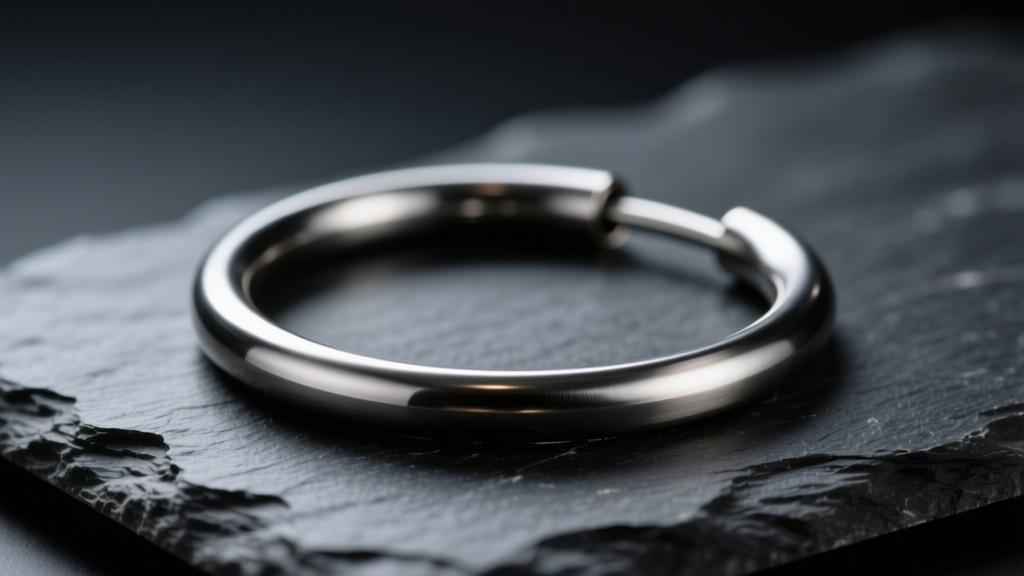
- The Streetwear Enthusiast: Asymmetry thrives in streetwear. A 12mm to 15mm seamless clicker hoop in yellow gold or PVD black titanium adds an edge that pairs perfectly with heavyweight hoodies and structured outerwear. Consider adding a secondary, smaller 8mm huggie in the upper lobe to create a curated "ear scape" without committing to a full-cartilage project.
- The Avant-Garde Creative: For those in creative industries, the single drop earring is making a massive resurgence. A solitary pearl drop or a geometric chain-link dangle in the left ear creates a striking, high-fashion silhouette reminiscent of modern runway styling. Balance this by keeping the right ear completely bare to let the statement piece breathe.
Expert Verdict: Should You Still Follow the "Left Ear" Code?
The short answer is no. The historical baggage of the "left ear rule" has been entirely shed by the cultural zeitgeist. In 2026, wearing an earring in your left ear is not a statement about who you are; it is a statement about how you view design, proportion, and self-expression.
When selecting your piece, prioritize material safety (ASTM F-136 titanium or solid gold), respect your anatomy's gauge requirements, and lean into the visual power of asymmetry. Whether you choose a micro-stud or a sculptural hoop, the left ear remains the perfect canvas for the modern man's jewelry evolution.


