Earring Loops Material Comparison: Titanium, Gold & Steel
Compare the best materials for earring loops. Discover tensile strength, biocompatibility, and pricing for titanium, gold, and steel hoops.

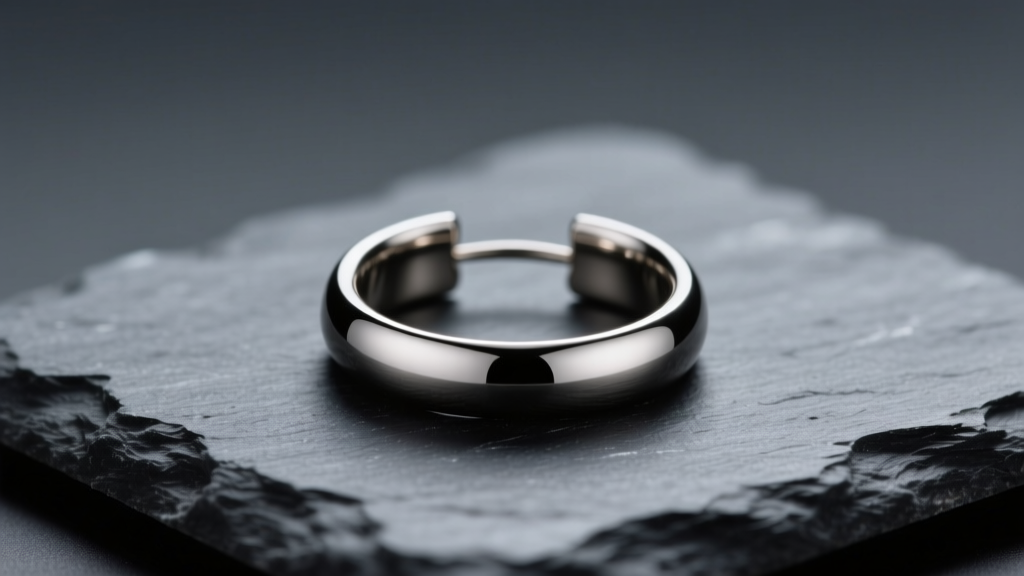
The Metallurgy of Earring Loops: Why Material Dictates Performance
When selecting continuous hoops, sleeper earrings, or seamless rings, the term earring loops encompasses a unique category of jewelry that relies entirely on the physical properties of its metal. Unlike stud earrings backed by a friction post or butterfly clutch, earring loops utilize a tension-based closure or a continuous wire joint. This mechanical design means the metal must possess high 'memory' and yield strength to maintain its shape, resist warping, and keep the joint securely closed without snapping or pinching the earlobe or cartilage.
In 2026, advancements in metallurgical refining have made hypoallergenic options more accessible than ever. However, not all metals behave identically when drawn into thin wire gauges (typically 18g to 14g). Choosing the wrong material for an earring loop can result in permanent deformation, tension loss, or severe contact dermatitis. Below, we break down the exact material properties, failure modes, and pricing structures of the top metals used for earring loops.
Evaluating the Top Alloys for Continuous Hoops
Implant-Grade Titanium (ASTM F136)
Titanium is the undisputed champion for fresh piercings and highly reactive ears. Specifically, implant-grade titanium (ASTM F136) is an alloy containing aluminum and vanadium, engineered for surgical implants. For earring loops, titanium offers an exceptional strength-to-weight ratio. A 16-gauge titanium continuous loop will retain its circular memory far better than steel, meaning the tension joint stays tightly closed even after repeated insertion and removal. Furthermore, titanium naturally forms a passive oxide layer that prevents corrosion and completely eliminates the risk of nickel allergies.
Niobium
Niobium is a highly biocompatible, elemental metal that shares many hypoallergenic properties with titanium. Its unique advantage for earring loops is its malleability and its ability to be anodized into vibrant colors without the use of toxic dyes or platings. However, niobium has a lower yield strength than titanium. While this makes it incredibly easy to bend and adjust for a custom fit around a healed cartilage piercing, it also means thinner gauges (like 18g or 20g) are prone to warping if snagged on clothing or hair.
Solid 14k and 18k Gold
Pure 24k gold is far too soft for earring loops; a seamless 24k ring would pull open under its own weight. Therefore, gold must be alloyed. 14k gold (58.5% pure gold) offers superior tensile strength compared to 18k gold (75% pure gold), making it the ideal choice for thin, continuous wire loops that require structural rigidity. When shopping for gold earring loops, always verify that the alloy is nickel-free, as many traditional white gold alloys use nickel as a hardening agent, which can trigger severe allergic reactions in the confined space of a piercing fistula.
Surgical Stainless Steel (316L)
316L stainless steel is the most common and budget-friendly metal on the market. It contains a passive chromium layer that resists tarnish. However, it also contains 8-10% nickel. While the nickel is largely trapped within the alloy's crystalline structure, prolonged exposure to sweat and body oils can cause microscopic nickel leaching. According to the Nickel Institute, 316L is generally safe for external wear, but for earring loops that pass directly through the skin, it is only recommended for fully healed lobes on individuals with no known nickel sensitivities.
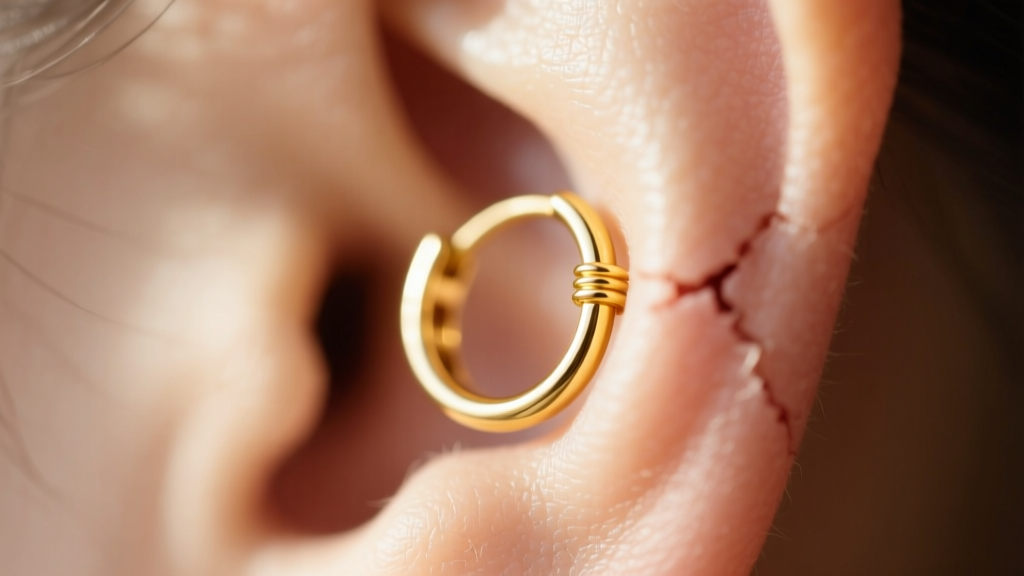
Material Properties and Pricing Matrix
To make an informed purchasing decision, it is crucial to compare the mechanical and financial aspects of these metals. The table below outlines the core specifications for standard 16-gauge (1.2mm) earring loops with a 10mm inner diameter.
| Metal / Alloy | Standard / Grade | Approx. Yield Strength | Nickel Content | Avg. Price Range (Pair) |
|---|---|---|---|---|
| Titanium | ASTM F136 | 830 MPa | 0% | $25 - $60 |
| Niobium | Elemental (99.9%) | 250 MPa | 0% | $20 - $50 |
| 14k Gold | Alloyed (Nickel-Free) | 350 - 450 MPa | 0% (if alloyed properly) | $90 - $250 |
| 18k Gold | Alloyed (Nickel-Free) | 250 - 300 MPa | 0% (if alloyed properly) | $130 - $350 |
| Surgical Steel | ASTM F138 (316L) | 530 MPa | 8% - 10% | $10 - $25 |
Gauge Thickness and Tensile Failure Modes
The thickness of the wire—measured in gauge—drastically alters how a material behaves when subjected to stress. Understanding these failure modes is essential for selecting the right earring loops for your specific piercing location.
- 18-Gauge (1.0mm): Best for delicate lobe piercings or secondary cartilage holes. At this thickness, 18k gold and niobium are highly susceptible to stretching. If an 18g gold loop catches on a towel, the wire will likely permanently elongate, ruining the tension joint. Titanium and steel perform better at this thin gauge due to their higher yield strengths.
- 16-Gauge (1.2mm): The industry standard for most cartilage and lobe piercings. This gauge provides an optimal balance between structural rigidity and comfort. All metals listed above perform reliably at 16g, though niobium may still require occasional gentle reshaping.
- 14-Gauge (1.6mm): Ideal for daith, rook, or industrial piercings where thicker jewelry is required. At 14g, even softer metals like 18k gold and niobium possess enough cross-sectional mass to resist casual snagging. However, inserting a 14g continuous loop without a proper opening tool can cause micro-fractures in the metal joint over time.
Expert Insight: Never use standard jewelry pliers to open and close high-karat gold or titanium earring loops. The hardened steel jaws of the pliers will mar the polished surface and compromise the passivation layer. Always use specialized brass-jawed loop opening pliers or seek assistance from a professional piercer.
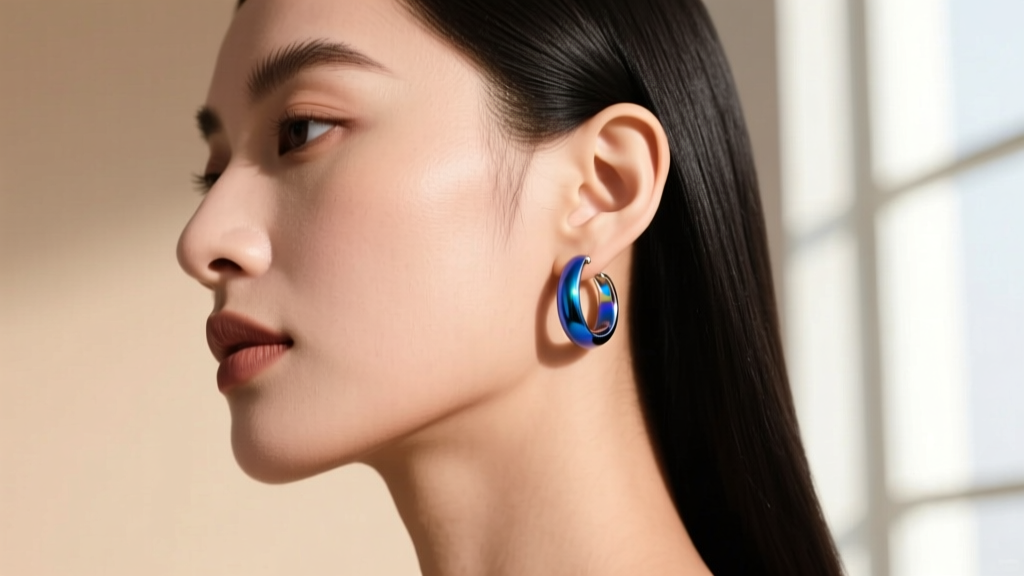
Best Practices for Loop Maintenance and Longevity
Regardless of whether you choose budget-friendly surgical steel or premium 14k gold, proper maintenance ensures the tension joint remains functional and the metal retains its luster. Follow these actionable guidelines to extend the lifespan of your earring loops:
- Avoid Chlorine and Bromine: Halogens can degrade the alloying metals in gold and break down the passive oxide layer on titanium and steel. Always remove your earring loops before swimming in treated pools or hot tubs.
- Clean the Tension Joint: Sebum, dead skin cells, and hair products accumulate precisely where the wire meets the receiving tube or dimple. Use a soft-bristled interdental brush dipped in mild, fragrance-free liquid soap to gently clear the joint once a week. This prevents the 'click' closure from failing due to debris buildup.
- Polishing Without Abrasives: For high-polish gold and steel loops, use a dedicated microfiber jewelry cloth. Avoid silver polish or chemical dips, as these are formulated for sterling silver and can strip the rhodium plating off white gold or dull the anodized finish on niobium.
- Storage Protocol: Store continuous loops in a hard-sided jewelry box with individual compartments. Tossing them loosely into a drawer allows heavier items to press against the wire, subtly bending the loop out of its perfect circular geometry and compromising the closure tension.
By understanding the metallurgical realities of the materials used in earring loops, you can invest in jewelry that not only complements your personal style but also supports the long-term health and comfort of your piercings. Whether you prioritize the unbreakable memory of ASTM F136 titanium or the luxurious warmth of nickel-free 14k gold, matching the metal's properties to your specific gauge and lifestyle is the key to effortless, lifelong wear.


